Of everything that came out of yesterday’s PlayStation State of Play, the thing that’s stuck with me—in all the worst ways—is the announcement of Thief VR. Thief is, on most days, my favorite gaming series (it’s Deus Ex on the others). The idea of getting a new game in the franchise, even after the woefully irrelevant Thief (2014), is thrilling. But god, no, not as some VR gimmick. But no, I’m not going to wallow! Instead, I’m going to take this opportunity to celebrate what we already have, and what we can still enjoy.
Look, I’ll be honest. I was about to go all-in with a furious rant about what a disgrace this is, before noticing that PC Gamer’s Fraser Brown has already done a splendid job of it. Covering the embarrassing awfulness of Embracer Group’s handling of every property it mindlessly snaffled up, and indeed the mediocrity of 2014’s peculiarly missing-the-point Eidos-Montreal-made entry, Fraser articulates why this is the opposite of what anyone should want to do with the franchise. So kudos there, and go give it a read. Although I will repeat the vital point here: sure, Half-Life Alyx and Superhot VR are great, and maybe by some miracle Thief VR will be the third game worth owning the tech for, but if you don’t own a PSVR2 hat, then this is a game that’s going to cost you $400+ minimum!
(And can I make clear, this is no qualitative judgement on Thief VR which I obviously haven’t played, nor is it one on the no doubt enormously talented, incredibly hard-working people who are making this game. I wish them the very best. I also wish they’d been given the chance to make a full Thief game that everyone could play.)
But we’re here to be optimistic! Yes, it’s horrendous that the rights to one of gaming’s greatest franchises—the games that began the stealth genre, and indeed inspired everything from Deus Ex to Hitman to Dishonored—are in the hands of a management so inept that the only ambition they have for it is to waste it on a VR game that only a handful of people will play. But that doesn’t make the original games disappear. They’re still with us. And they’re still utterly amazing.
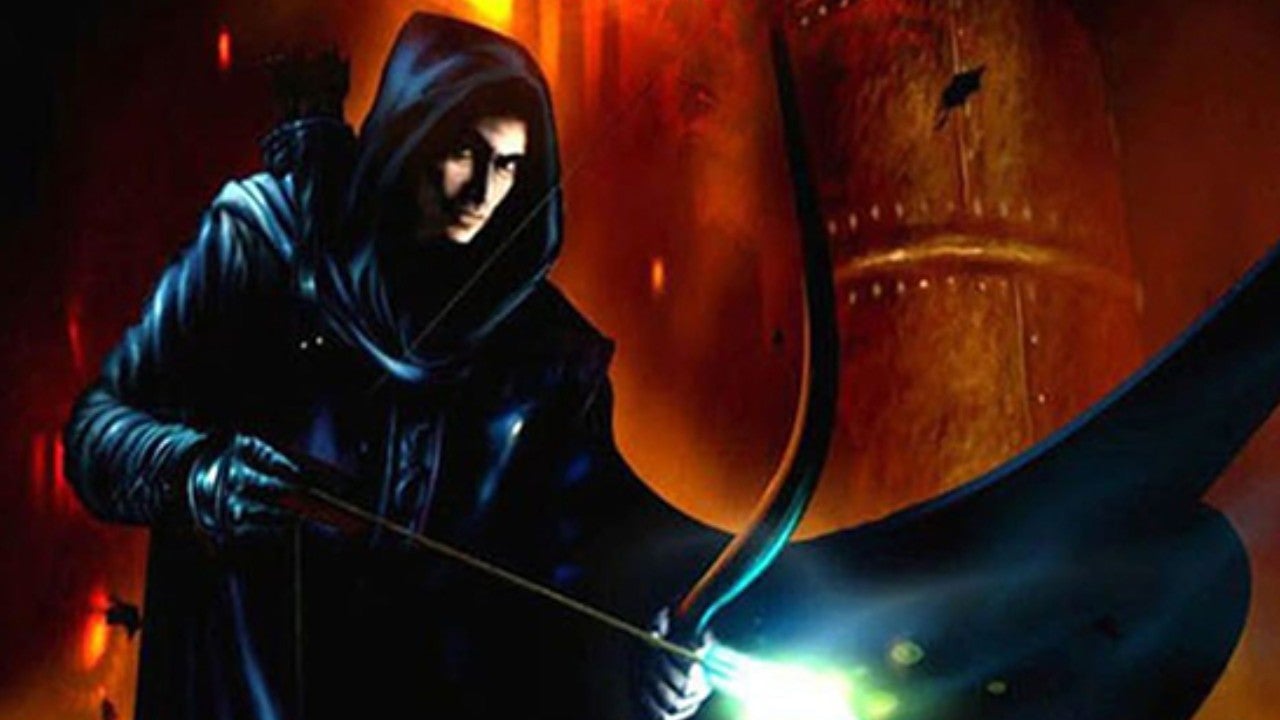
Thief is about a guy named Garrett. Growing up as a homeless orphan, Garrett is now a master thief, living in The City, set in a fantasy version of the Middle Ages; part steampunk, part wizardry. There are three factions: The Keepers, the Pagans and the Hammerites, with Garrett assigned to none, and willing to steal from all. The games see Garrett reluctantly get involved in the complex storylines betwixt the trio of groups vying for power, doing his best to have nothing to do with any of them, but profiting from the mayhem.
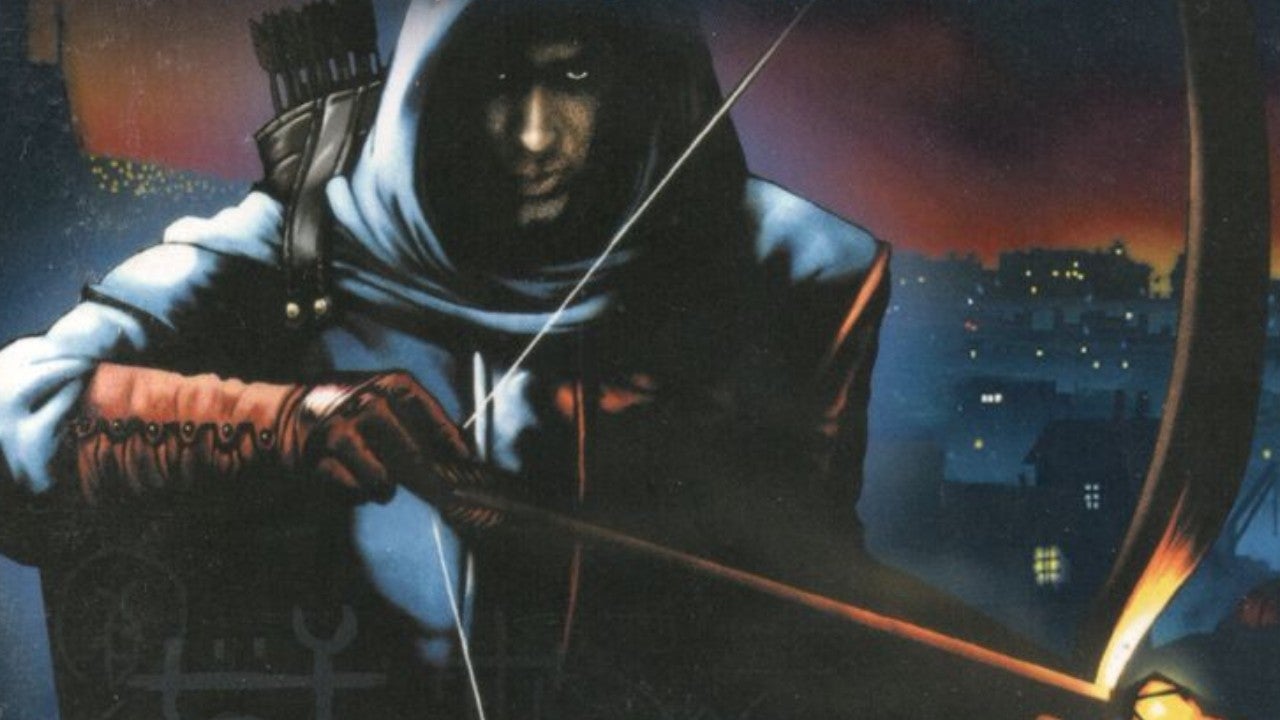
1998’s Thief: The Dark Project is an astonishing creation. You might think, being 27 years old, that it has long since stopped being playable, but I’m delighted to tell you that you’re wrong. Thanks to the wonderful work of modders, the definitive version of the original game—Thief Gold (which, by the way, is 97c on Steam at the time of writing)—plays in glorious widescreen and works on modern machines with projects like NewDark and OldDark. As with any classic game, it’s always worth checking the PCGamingWiki page for all the best patches and improvements before starting to play.
That done, believe me, the incredibly dated graphics matter for about 13 seconds. Heck, Thief’s graphics were criticized for being dated when it was released in ‘98, and it didn’t matter then any more than it does now. Because Thief is a game about atmosphere, and by “atmosphere” I mean “darkness,” and it has that by the metric ton. Seriously, the textures on the walls in the Hammerite temples matter very little when the first thing you do on entering any room or corridor is snuff out all the torches. Light is your enemy, shadows your only safety, and you’ll immediately embrace the darkness.
It’s incredible how quickly this draws you in, how soon you’re entirely in the role, scooping up every piece of loot as you nip from corner to corner, bonking an enemy on the back of the head to slip through to a passageway. It’s totally absorbing, and absolutely compelling.
But what I think makes Thief such a stand-out game almost 30 years later is a philosophy that far too few games have had the courage to try: this is a game where the higher you make the difficulty, the fewer people you’re allowed to kill. Garrett absolutely can murder in these games, and should you choose to, you can go through a level killing each and every guard you encounter. But turn up the difficulty, and rather than the enemies getting stronger or more difficult to kill, you’re not allowed to hurt them at all! That’s revolutionary! It’s still revolutionary 27 years on. Instead of demanding better twitch reflexes or greater amounts of durability, the harder the game, the better you had to be at being a thief.
Thief II: The Metal Age is very similar game, but in the best possible way. It’s more! It’s more of one of the best games ever! Where the first Thief rather over-relied on the presence of zombies (it was as if developers Looking Glass didn’t quite dare not to include a traditional gaming enemy), here there are fewer monsters and instead more humans to avoid, set in larger, more sprawling levels with astonishing variety in how you can approach a challenge. It was, I would argue, the emergence of the immersive sim.
Thief II came out in 2000, when I was at university, and one of my most profound memories of the game took place outside of it. I had been playing it a great deal, just delighted to be back in The City, loving every second. On this particular evening, I was going to see a friend, and so I walked into town. As I went down the street, I found myself walking only in shadows, looking ahead to see where streetlights were shining, and calculating a path that would avoid them as best as possible. It was a concerningly long time before I realized what I was doing. (Another real-world symptom was starting to view the world by the potential of its rooftops, looking out windows to plan paths where I could get between buildings, before remembering that I probably ought not.)
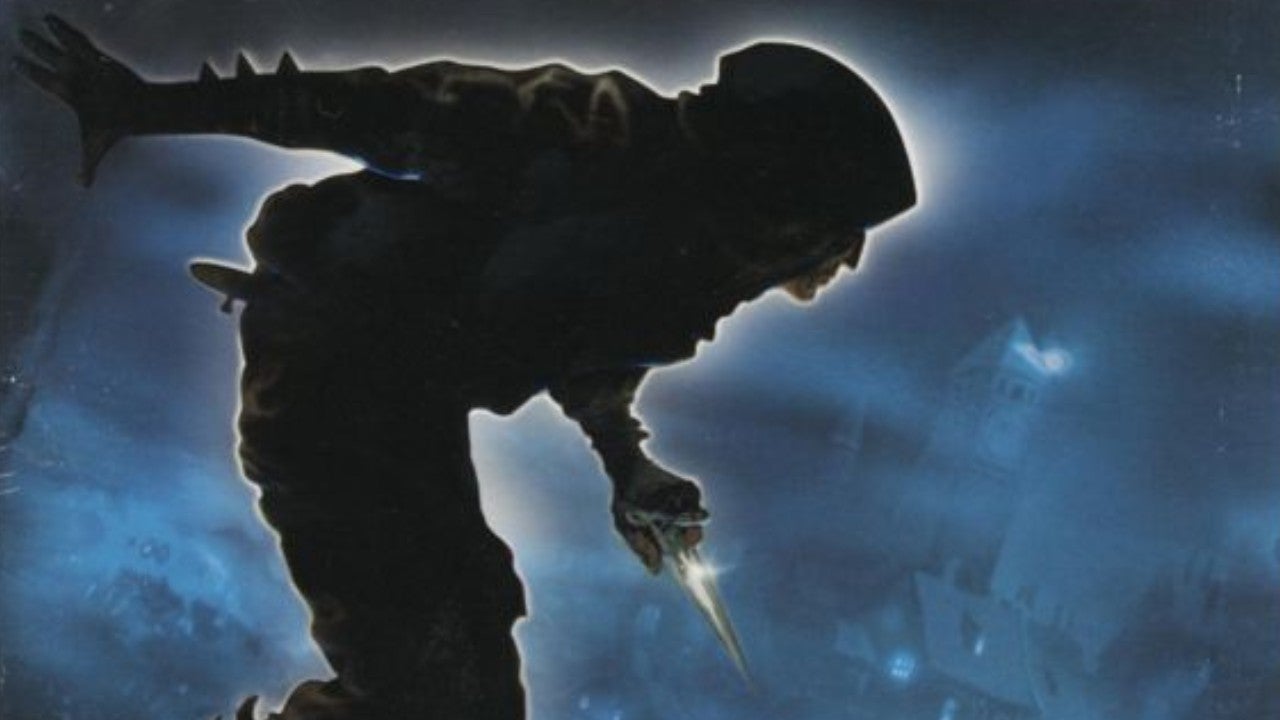
2004’s Thief: The Dark Shadows was, on its release, embroiled in some woefully unnecessary complaining. At this point, with the voice of the internet becoming an unavoidable thing, people were determined to find everything they could to be pre-emptively cross about. Looking Glass Studios, the legendary development studio that gave us Ultima Underworld, System Shock and Thief, had tragically come to an end in 2000. Ion Storm Austin may have given us the extraordinary Deus Ex in 2000, but they’d also given us follow-up Deus Ex: Invisible War just a year before Thief III, a game that had unquestionably been restricted in scope by 2003’s need to co-develop for the fledgling Xbox. (It remains massively underrated, but it also undeniably didn’t match its predecessor due to the wild constraints and tiny levels imposed by the weakness of the Xbox as a machine.) So people were ready to absolutely unload on Deadly Shadows
Yes, the levels were smaller than in Thief II. Yes—and dear god, it’s incredible to remember just how much stupid asinine fuss was made about this some two decades on—the loot did glint. But oh my goodness, this is an extraordinarily good game. Deadly Shadows may not have had the acres-wide playing areas, but instead it sported some of the finest level design in all of gaming, boosted by stunning storytelling, and one of the most memorable levels ever created in any game ever, The Cradle. It was, and is, one of the most all-consuming games you’ll ever play, where you’ll lose yourself into the character you’re playing like nothing else, fearing all forms of light for weeks after you play.
So yes, it sucks beyond all belief that Embracer has the rights to this greatest of series. The company could be offering established indie teams the opportunity to craft a new Thief game in the spirit of the original three, or even trying to get the band back together and offering Looking Glass/Ion Storm alumni the chance. It could be doing so much, and instead its decision is to make a VR game that’s already buried under the logo of the unloved 2014 game that had so little to do with the games before it, for a format that most people are long over.
But it cannot take away what we already have, and that is something to be treasured. And right this moment, by sheer lovely coincidence, you can get all three games for less than a dollar each! That’s incredible! (You can even get the daft, goth-ridden, watched-The-Crow-too-much-as-a-kid 2014 Thief for $3.) Also, while you’re at it, play The Dark Mod too!
And you should. You’ll be so glad you did.