When you create one of the most treasured franchises in video game history, what do you do next? When you work on that franchise for 20 years, can you ever really move on?
For Hironobu Sakaguchi, the man who created Final Fantasy back in 1987, these have been easy questions to answer. (1. Move to Hawaii and go surfing a lot; 2. Yes.) But for fans, Sakaguchi’s legacy has become a little bit puzzling. In 2004, Sakaguchi left Square Enix, the company he saved from bankruptcy all those years ago, and started his own company, Mistwalker. Since then, the games he’s touched have ranged from unexceptional (Blue Dragon) to great (Lost Odyssey) to… well, surfing games for iOS.
Most recently, much to the dismay of people who want more console RPGs, Sakaguchi and Mistwalker have been developing games for iOS and Android. Sakaguchi’s next game, Terra Battle, comes out in October for mobile phones. It’s a free-to-play strategy game with RPG trappings that uses a microtransaction-based energy system—all poisonous words to many gamers, who have been burned by unethical free-to-play games like, incidentally, Final Fantasy: All The Bravest
Not exactly what you’d expect from the creator of Final Fantasy
I sat down with Sakaguchi on Sunday for an extensive interview with the iconic developer, who was jovial and pleasant, frequently laughing and often chiming in with short English responses to my questions. “[Final Fantasy XV] is taking too long,” he joked when I asked his thoughts on the state of the series he’s left behind. Sakaguchi was also candid about his thoughts on mobile gaming, ports, and Final Fantasy VI. (“When I hear you and other fans saying, ‘Yeah, VI was my favorite!’ I’m like, ‘Hey, so why didn’t you buy it back then?'”)
You can read the full conversation right here.
Interview edited for clarity and brevity. When not otherwise noted, Sakaguchi spoke through a translator and all pronouns have been switched to first-person.
Schreier: First of all, can you talk a little bit about why you guys have moved from the big, sprawling RPGs for the Wii, Xbox 360 to, well first there was the surfing game, and now this… I’m wondering why you guys have transitioned from console to mobile?
Sakaguchi: Rather than concentrating on which device, it was based on more the team. So to be honest with Terra Battle there’s one programmer, and when I met this guy, I said, ‘That’s guy I want to work with. And then I also have a couple of artists. Right now I have eight people on my team, including myself. Obviously I wear a lot of hats. But I figured with that team, the best device for development would be on smartphones. Also with the surfing game.
Schreier: So when people think of Hironobu Sakaguchi they think of big RPGs. This in many ways feels like an RPG, but the basic gameplay is tile-based strategy… what made you decide to make a game like this instead of a turn-based RPG or something more like what you’ve done in the past?
Sakaguchi: First and foremost, it was based on a decision with that one programmer that I really wanted to work with. But also, not just RPGs, but the game industry is more like a tree. You start off with Nintendo and PS2 and Xbox. There’s a certain tree, an evolution that I’ve been anticipating. And you’ve got your open world RPGs. It’s just gotten a lot bigger. Where I see Terra Battle and mobile development is more like a branch. It’s part of that tree, but it’s a different branch. In a good way, I think that branch is untapped—you don’t know where it’s going, you don’t know how thick it’s going to be. But I do see that branch. I think we’re in the middle of that transition.
In a way I think I’ve come full circle, because when I was doing stuff on Famicom, when I first saw Dragon Quest, I thought, ‘Oh my god, it’s really hard to get a whole RPG in that sort of space.’ And then with regular mobile phones, when I first thought of mobile games, I thought, ‘Oh they’re just tapping, that’s all they’re doing.’ But then I started playing Puzzle & Dragons, and I saw the amount of data, the amount of strategy, the gameplay element of it, and thought, ‘Wow, you can actually get a decent game in there.’ It’s something new to me. So I think this new device is gonna give me a new vehicle to get new ideas.
Schreier: That’s interesting. Puzzle & Dragons seems to be what’s driving the industry in Japan right now. You’re in Hawaii, but are you focusing on the Japanese industry, and that’s why you’re looking this way and playing games like Puzzle & Dragons?
Sakaguchi: When I develop a game, I don’t really think about regions or trends or the target audience, really. But I’m not deaf to what’s going on in the industry, so I take that as a challenge. I looked at the landscape, and this is what I came up with. So it’s not really looking at it, but actually just knowing what’s going on.
Schreier: So you describe the video game world as a tree, and you’re on the mobile branch. Do you think the mobile branch is taking away from console RPGs in Japan, and harming the growth of the rest of the tree? It seems like more and more Japanese developers are moving to that mobile branch. Do you think they’ll all head that way?
Sakaguchi: It’s been about ten years since I’ve been at a big company. So there’s probably a lot of reasons other companies do their own decisions. I really don’t know too much. But in terms of what I’m doing now, I’m anticipating games on mobile to be completely different three years from now. So as a creator, that’s something I’m looking forward to, I really don’t know what it’s going to turn into, but I’m anticipating something completely different.
Schreier: Got any predictions?
Sakaguchi: If I knew, it wouldn’t be that hard. (laughter) I’ve been making games for horizontal screens for 30 years. And the shock of actually making something for a vertical screen is completely different. You don’t have as much real estate, you have to worry about the layout, how it’s gonna look. Also, you’re playing with a single hand. It has to be easily accessible. You need to worry about people playing in their spare time instead of that 50-60 hour experience that you’re gonna get out of console. So I’m working under a different set of rules. In that sense, I feel that I’m under new challenges and new ideas.
Schreier: Have you played Final Fantasy Dimensions for mobile devices?
Sakaguchi: Just a little bit. It was hard to actually control. (laughter) I wish you could use controllers. It was probably made for controllers, and if I’m gonna make a game for mobile, it should be for mobile.
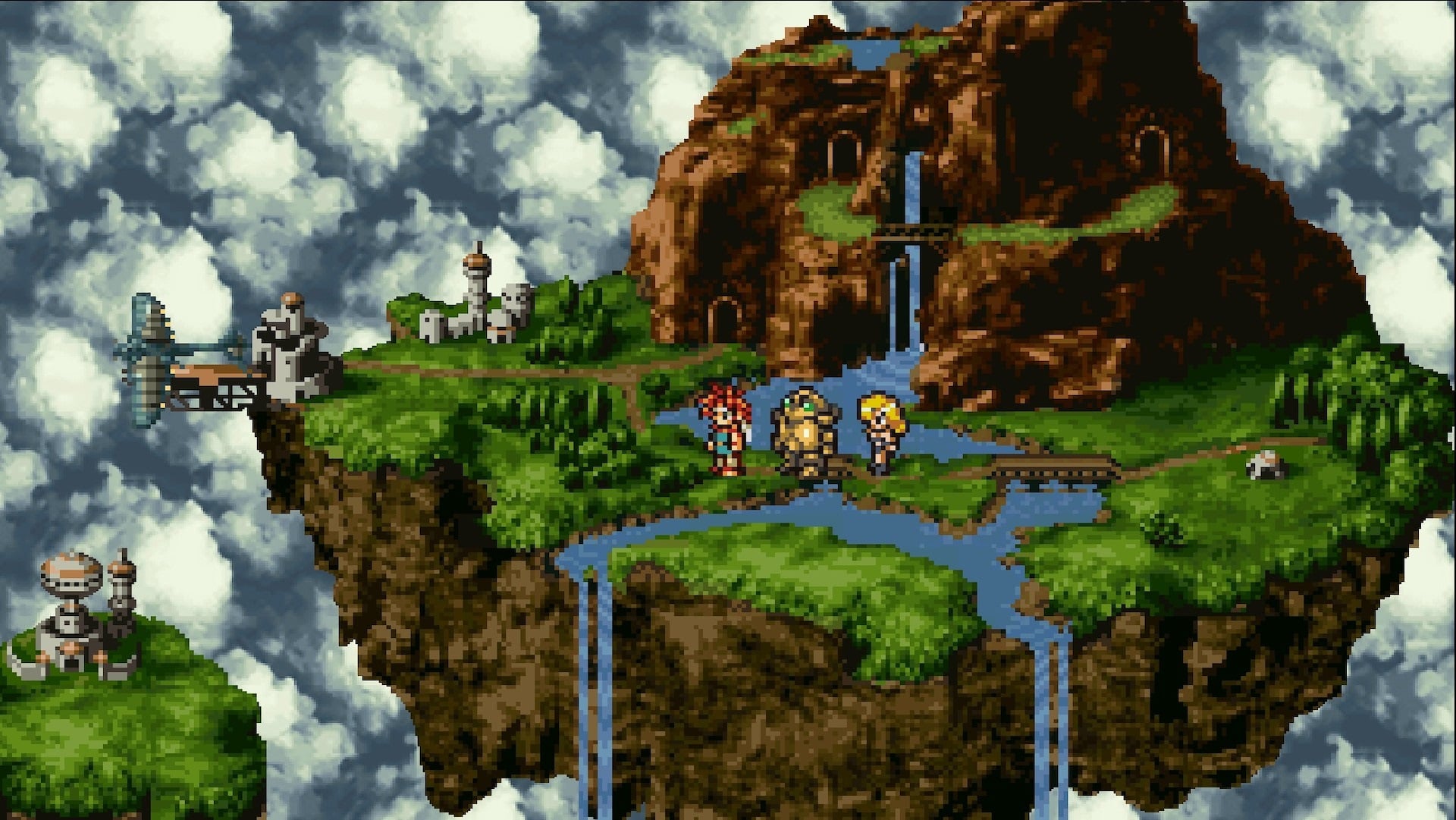
Schreier: It’s interesting you say that, and I’m curious to get your thoughts on this—companies like Square Enix are bringing games like Chrono Trigger and the old Final Fantasys to mobile. What’re your thoughts on that?
Sakaguchi: When I was at Square Enix, the rule was, you can’t do any ports. [In English] I don’t like. [In Japanese] So I have the same mentality right now, where if I’m gonna work on a port, I’d rather work on something new. So it’s really hard to knock Square Enix for what they’re doing, but in my mind, I’d rather work on something else, and do new challenges.
Schreier: I do remember a couple of ports back in the day, like Final Fantasy Anthology… I remember a couple of ports when you were still at Square. There was Final Fantasy Chronicles?
Sakaguchi: [English] Just once. (laughter) [Speaking in Japanese for a while, untranslated.]
Translator: Company direction, is what he’s talking about.
Sakaguchi: [in English] From U.S. side. (laughter)
Schreier: I wanted to ask about Terra Battle. Here in the U.S., there are a lot of negative connotations to the idea of energy, and having to pay more to keep playing a game. Did you anticipate negative reactions at all? I know you’ve said you don’t want people to have to worry about buying energy, but it’s still something that a lot of hardcore gamers aren’t big fans of. Did you anticipate that at all? What would you say to someone who likes RPGs but won’t play games with energy systems at all?
Sakaguchi: I always have both types of fans in mind, so obviously there is that system of energy and how it depletes, but also there’s that rich experience. You’re never gonna feel like you’re forced to actually use those energies or buy energy. It’s always a balance. And there’s always a business side, always a creative side; you can’t really just ignore one or the other. But I feel like hardcore gamers are not gonna feel slighted with the structure.
Schreier: So it’s been a few years since we’ve seen you work on one of those big RPG projects like The Last Story or Lost Odyssey. I saw your panel on Friday, and I know the moderator was asking a lot of questions about all those games. Clearly people are interested. Do you have a desire to start another one of those projects? Is it a financial thing, or are you personally more interested in doing smaller games like Terra Battle now?
Sakaguchi: In terms of sequels and stuff, it’s not that I don’t have interest in it, but there are a lot of obstacles that would have to line up. So the door’s never really closed on that stuff. But it goes back to the previous conversation of this one programmer that’s there in Japan, and I really wanted to work with him. And compared to the past, the technology is just there where in terms of the game engine, the server, we can work very efficiently and very concisely. So I feel like there’s a new genre: the tech’s there, the guy I trust is there, everything’s kind of in line to make something good. That’s one of the reasons why I’m there.
Schreier: Well I wasn’t actually wondering about sequels as much as if you want to make another big RPG — do you have the desire to make something totally new, something original that’s another big console RPG as opposed to something that’s on mobile?
Sakaguchi: What I think of the console world is reflected in the end-goal of our download-starter, where we start a game based on Terra Battle.
[Note: The Terra Battle “download-starter” offers rewards to players based on how many total people download the game. At two million downloads, Sakaguchi and crew say they will create an MMO based on the world of Terra Battle.]
Obviously it’s not gonna be a port. It’s gonna be 3D. Nothing’s really set in terms of game design, but obviously it’s gonna be 3D, it’s gonna have that rich experience. We’re gonna have the core of what Terra Battle is. Right now we have 165 characters, it’s gonna be a lot of characters. And the whole lining up your characters for attacking, it’s gonna be a different way where you actually line your guys in a formation, and maybe if they’re off from the formation, the attack’s not gonna activate or something. You have your core values from Terra Battle, from the mobile, and you’ll be able to tell where they’ve got it from, but it’s gonna be console-based.
Schreier: I wanted to ask about the MMO — why an MMO instead of a single-player RPG?
Sakaguchi: Nothing is really set. I don’t really mind if it’s single-player or MMO. But where you’re lining up your characters, I was thinking MMO kind of fits better.
Schreier: Well, an MMO has different rules and connotations as opposed to a single-player game—with an MMO you think am I gonna have to pay monthly for this, am I only gonna be able to play it on the internet? As opposed to a single-player RPG, where maybe people can get different experiences out of it. So I’m wondering why you decided on an MMO—is the only reason because of line-ups?
Sakaguchi: As a creator, that’s probably the latter part of what I worry about. The most important part is how to make it fun, how to make a rich experience for players. There’s different ways of getting around the whole monthly payment thing, you can release it and then have something that revolves around the server—there are different ways of going about it. The game is more important than the business model.
Schreier: I’m a little bit confused about one thing: the MMO, that’s a big project, so… have you guys already started on that, working under the assumption that you’ll hit 2 million downloads?
Sakaguchi: No.
Schreier: So won’t that be a long time from now before the game actually gets made? Won’t that take a few years?
Sakaguchi: (laughter) It should be good. I’m not too worried about the timing.
Schreier: I wanted to ask, after seeing your panel on Friday, a lot of people were very interested in you mentioning that you were fighting for a sequel to Chrono Trigger. I was curious if you could share more details—
Sakaguchi: The person at that time has actually quit, so I was thinking the statute of limitations was probably good, but I’m not sure if I can go into details about it. (laughter) I don’t know if they’re gonna call us and complain. But I’m thinking, that guy probably forgot about this. I’m never gonna forget about it, but he might have forgotten about it.
Schreier: So if he forgot about it, maybe you can say more…
Sakaguchi: (laughter) We used a lot of creative, famous people: developers, and Toriyama as well. Once you stop, it’s really hard to say, ‘Hey let’s do it again.’ It’s not that easy. There has to be a lot of momentum. And a lot of things have to go right to actually do it.
Schreier: What do you think of the current state of Final Fantasy?
Sakaguchi: (laughter) 15 is taking too long.
Schreier: That’s what everybody thinks.
Sakaguchi: [In English] Congratulations, ten years! (laughter)
Schreier: (laughter) Almost. I was talking to Tabata at Square Enix about XV, and he mentioned some of their struggles.
Schreier: Can you give me an example of the types of conversations you guys have? I think a lot of people would love to be a fly on the wall there.
Sakaguchi: (laughter) That’s trade secrets, sorry. Especially because if something does come to fruition, it gets kinda tricky.
Schreier: Have you ever thought about working with Square again?
Sakaguchi: Not at this time.
Schreier: Have you ever wanted to return to Final Fantasy?
Sakaguchi: So like for example when Uematsu-san does a concert or something, people will say, ‘Play some Final Fantasy songs!’ The franchise has actually gotten bigger than the actual creator, in some sense. I feel like I’ve been able to distinguish myself from Final Fantasy. At this point I feel like I’m doing new and great things, and I don’t look back. So to be honest, probably not.
Schreier: I have to say, when people first saw The Last Story, they said, ‘Oh, The Last Story, it’s like Final Fantasy.’
Sakaguchi: [In English] No, no.
Schreier: It’s not a reference?
Sakaguchi: We started from the game system, to completely change it, so I feel like that’s completely different.
Schreier: Oh, I mean the name, the title itself—it seems like a reference to Final Fantasy.
Sakaguchi: I think it’s the type of titles that I like. (laughter)
Schreier: While we’re talking about The Last Story, I wanted to ask… I really enjoyed the game, and thought it was really interesting in a lot of ways, but it felt like it was kind of struggling, saddled with the Wii hardware. It felt like it needed to be on a more powerful platform. I know you don’t like ports, but have you ever considered bringing it to a system where it could run better and be in HD, feel like it’s running on more proper hardware?
Sakaguchi: Even if the platform gets really powerful, there is always gonna be that bottleneck, where, even if you have a powerful machine, you need to get that creative control in the beginning. And so, to be honest, even in the Famicom days, I’ve never worked under the non-restriction where I can design any sort of game I want. So I don’t feel like if it gets on a different platform, it’s gonna get better. There are just going to be different sets of rules and problems that I’m going to have to solve.
I’m a real audio guy, so when I load up a song, and I wanna play it at a high quality, and they’re like, yeah it’s about one gig, and the loading time is like 30 seconds, it’s kinda like, there’s always a balance, right? Even if the hardware becomes really powerful, that doesn’t necessarily mean that the player’s gonna get that experience.
Schreier: It’s interesting you say that, because I remember reading an interview with Kitase recently, where he talked about how the restrictions of the hardware and the development cycle made Final Fantasy VI a better game because they were working under really tight memory limits and stuff like that. How do you feel about that?
Sakaguchi: Sometimes you have a director’s cut, right? Where you see it and you say oh the original was better. So sometimes when you’re restricted, and there’s a set of rules, sometimes it cleans up everything, and it makes things better. So I do agree in some sense with Kitase-san.
Schreier: Speaking of Kitase-san, I think he said Final Fantasy VI was developed in only a year, which was very surprising to me—is that the case?
Sakaguchi: Wow, a year? I think it’s a little bit longer. A year and a half, probably.
Schreier: Still, that seems very short.
Sakaguchi: That was about 50 or 60 people.
Schreier: Wow, that’s a small team and a very short amount of time.
Sakaguchi: Final Fantasy 1 was made by four people in the beginning. So now it’s the whole full circle thing, where I have eight people [on Terra Battle].
Schreier: That’s almost unbelievable. Part of me wonders if the shift to 3D development and these bigger teams and more money… I wonder if maybe the shift from 2D to 3D development for RPGs like Final Fantasy made them less interesting, less powerful experiences because those restrictions were no longer there. Do you think that might be the case?
Sakaguchi: I really can’t say which is better in terms of old-school RPGs or new-school RPGs, but when you have a rich experience with a bunch of cut-scenes and whatnot, the player’s gonna get that rich experience with the visuals. But when you go back to, even with books, when you write something with books, then the reader is gonna use his imagination to actually imagine stuff. So with a limited way of telling a story, there’s a lot of good and bad as well. I can’t really pick either one, but there’s good in both.
Schreier: You’ve been doing this for a long time. I’m sure you have a lot of great stories. Do you have any favorite memories from your time on the Final Fantasy series, or moments that have stuck out to you over the years?
Sakaguchi: So it was the night before I thought of the job change system. I went to work and called a meeting right away and said, ‘This is the way we’re gonna do it.’ So the reaction was like, when I said it, everyone’s like, ‘Oh great, Sakaguchi-san’s at it again.’ So the team members didn’t think it was a big deal, but once they started building it, they knew. Terra Battle‘s the same thing, where I came to work and said, ‘This is the greatest thing!’
Schreier: So I think my readers would be very angry at me if I didn’t ask you a little more about Final Fantasy VI, because that’s a lot of people’s favorite in America. I think it impacted people here a lot. Do you have any interesting stories that maybe we haven’t heard before about what it was like to work on that game?
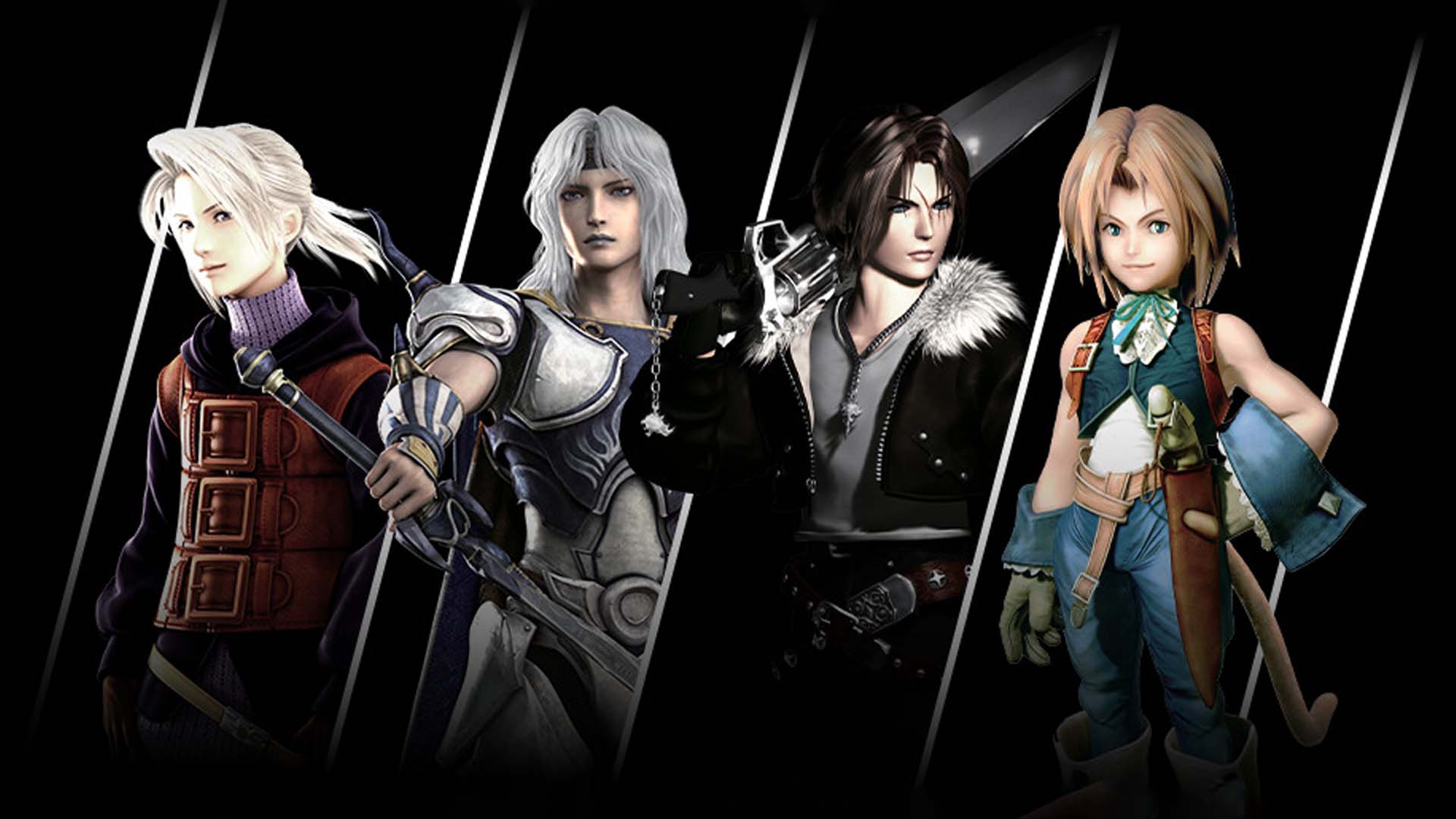
Sakaguchi: I’m surprised you mention VI, because at that time, it actually didn’t sell too well, you know, in terms of the pixel art, and the character size, and it actually didn’t jive. That’s why for VII, it got bigger, we got CGI graphics and whatnot. So when I hear you and other fans saying, ‘Yeah, VI was my favorite!’ I’m like, ‘Hey, so why didn’t you buy it back then?’ (laughter)
Schreier: I bought it!
Sakaguchi: [In English] Original?
Schreier: Yeah, the original. Final Fantasy III, it was called here.
Sakaguchi: [In English] Great, great. [Japanese] So with remakes and stuff, that’s why the impression is a little bit better right now, but in my mind it’s kind of like, at that time it was an uphill battle for me.
Schreier: So is there anything you wish you had done differently with that game?
Sakaguchi: Technology-wise we’re going in threes from Famicom and Super Famicom and stuff, so I feel like as a title, we pretty much exhausted the technology. So as a complete package it was well done. Personally I don’t have too many regrets.
Schreier: While we’re on that note, do you have any regrets from your history? You’ve been doing this for a very long time—is there anything you wish you had done differently over the past three decades?
Sakaguchi: There are things where I shouldn’t have done that. (laughter) I have a lot of games like those.
Schreier: Like which ones?
Sakaguchi: So these are basically titles that didn’t get to the market. Right now, when I’m doing presentations and stuff, people think Chrono Trigger, Final Fantasy, whatever I touched everything got out to the world and everything was a success. But there are games where I’ve gone 50% of the way or 60% of the way and it didn’t get to the market. So I guess the only regret that I have is that I wish those titles actually got to the market.
Schreier: Is there any specific one of those that you can talk about?
Sakaguchi: Tobal 1. [In English] Not success. But I liked. (laughter)
Schreier: A lot of people point to Final Fantasy: The Spirits Within as a moment that really changed things, really had a big impact on Square Enix. How do you feel about that, looking back ten years later?
Sakaguchi: I don’t know. It’s more business-related, so like I mentioned, I’m more about the games and whatnot. So I really can’t say too much about that.
Schreier: Is there anything else you’d like to share with our readers that we haven’t touched upon yet?
Sakaguchi: One of the questions I have is why is Kotaku ‘Otaku with a K’? (laughter)[In English] I want to know. What is Kotaku?
Schreier: (laughter) I don’t know. It’s weird.
Sakaguchi: I want to ask all the Kotaku members why the K is there.
Schreier: That’s a great question. (laughter) So is there anything else you want to share, or tell our readers, even about Terra Battle, is there anything you’d like to say?
Sakaguchi: We explained a bit about the download-starter. I see it as a festival where creators, fans, it’s a very fluid process, so the more the fans get involved, the more hype it’s gonna get, and we’ll be able to implement a lot of stuff, so the distance between the creator and the fan is very short compared to what I did in the past. I’d like to get that sort of vibe going on in this game.
Schreier: Thank you so much for your time.