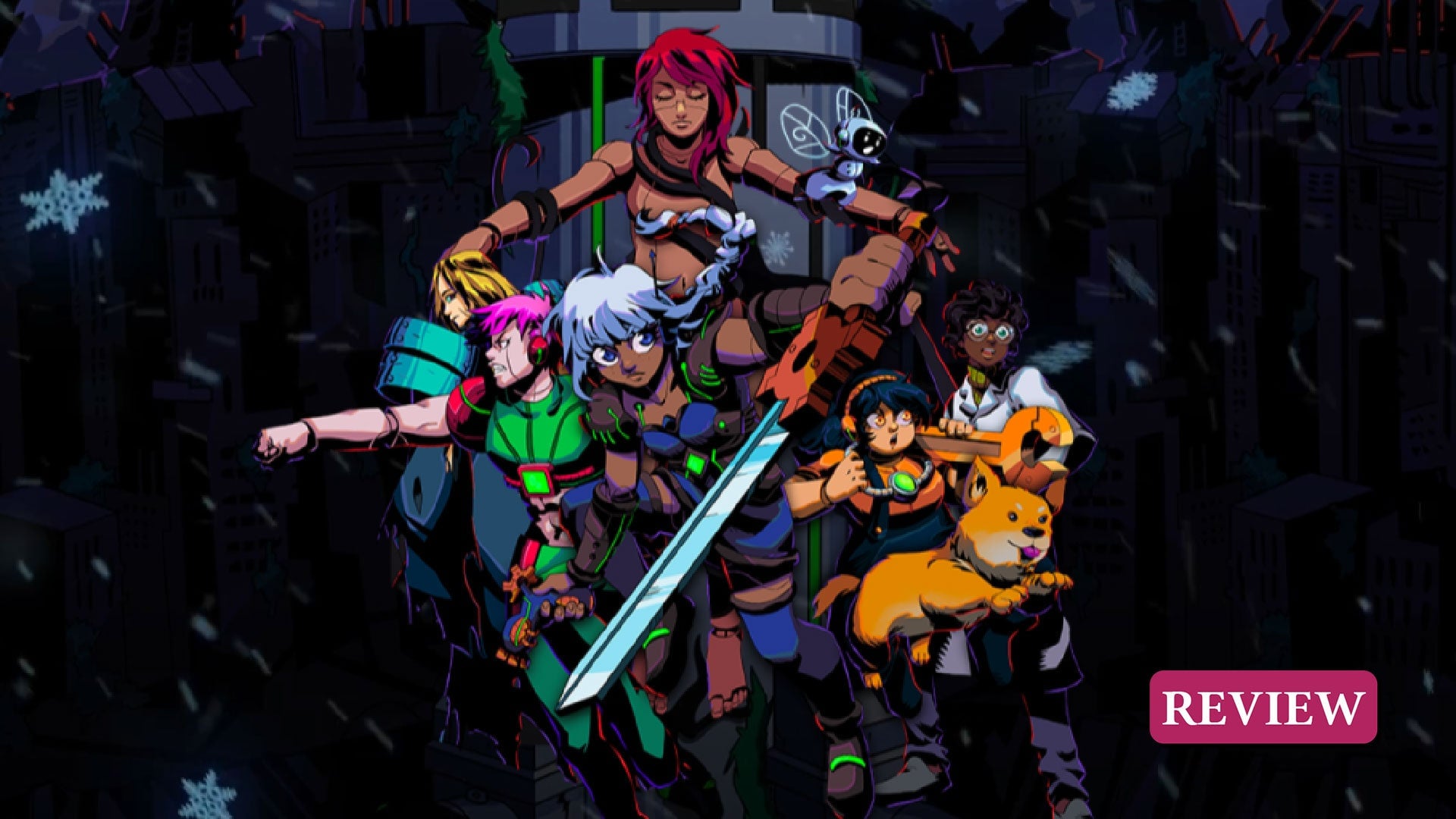
Unsighted, the recent isometric Metroidvania from two trans Brazilian developers, Studio Pixel Punk, is the genre at its best. From its impeccable art, music, and atmosphere, to its open-ended “explore how and where you want” structure, deliciously anxiety-inducing time limit, and satisfying combat, it is a near-perfect Metroidvania. And it is so much more than that too.
Unsighted takes place in a world where automatons have gained sentience from a strange resource called Anima, which humanity has clamped down on as a new energy source. You take up the role of Alma, a combat automaton who is attempting to liberate her kin from humanity’s brutal regime and regain her memory after months of dormancy. Liberation involves acquiring five meteor crystals from five impeccably crafted dungeons, each with their own signature mechanic and enemies, all the while watching Alma and her friends slowly lose their sentience from a lack of Anima—turning them into the game’s titular “unsighted.”
Unsighted is either a game about transness, or a game about chronic illness. I am not sure it knows the difference. Some days I don’t either.
I take four drugs a day to keep my body going: spironolactone, the default testosterone blocker in the US; estradiol; progesterone; and a sleep aid for my narcolepsy. Seven pills and nine grams of sodium structure my days. I haven’t taken my narcolepsy medicine in over a week, because my new insurance company has decided I don’t deserve to function.
Right now, thinking feels like drowning.
Unsighted’s combat feels great. As far as top-down action games go, it’s doing just about everything right. The hits are chunky, the parry timings are appropriately demanding, and the boss patterns are rewarding. While I wouldn’t blame you for asking for more complexity from the combat, I really think that Studio Pixel Punk have made exactly what they needed to keep the game feeling great for all of its 8-10+ hours.
My one complaint would be the simplicity of the game’s weapon upgrade system. Basically any weapon will do the job just fine, and upgrades only slightly boost their damage. Some firearms do meaningfully benefit from upgrades—a 1 damage auto-rifle being boosted to 2 damage is a significant difference—but going from 11 damage on my fire sword to 12 isn’t a huge deal. I would’ve loved for upgrades to have mattered more, or to have been cut altogether.
Unsighted’s other upgrades are phenomenal though. Like many recent Metroidvanias, the game eschews linear health and ammo upgrades in favor of a more customizable “chip” system. Chips, which are scattered throughout the world, can be slotted into Alma in order to boost and change her capabilities. There are health chips, stamina chips, weapon-specific chips, and even more arcane options like the vampire chip, which lets you restore health from kills, or the vitality chip, which gives you four additional health in exchange for removing your only healing item. The system allows for just enough customizability to feel good, while not expecting you to craft the perfect build for every encounter.
Without humanity to oversee them, the automatons have taken control over their own bodies. These chips modify and supplement their default functions, and allow them to better realize their selfhood. Unsighted imagines healthcare and body modification as facilitative and joyous—its primary goal is to best allow the automatons to feel at home in themselves and their communities.
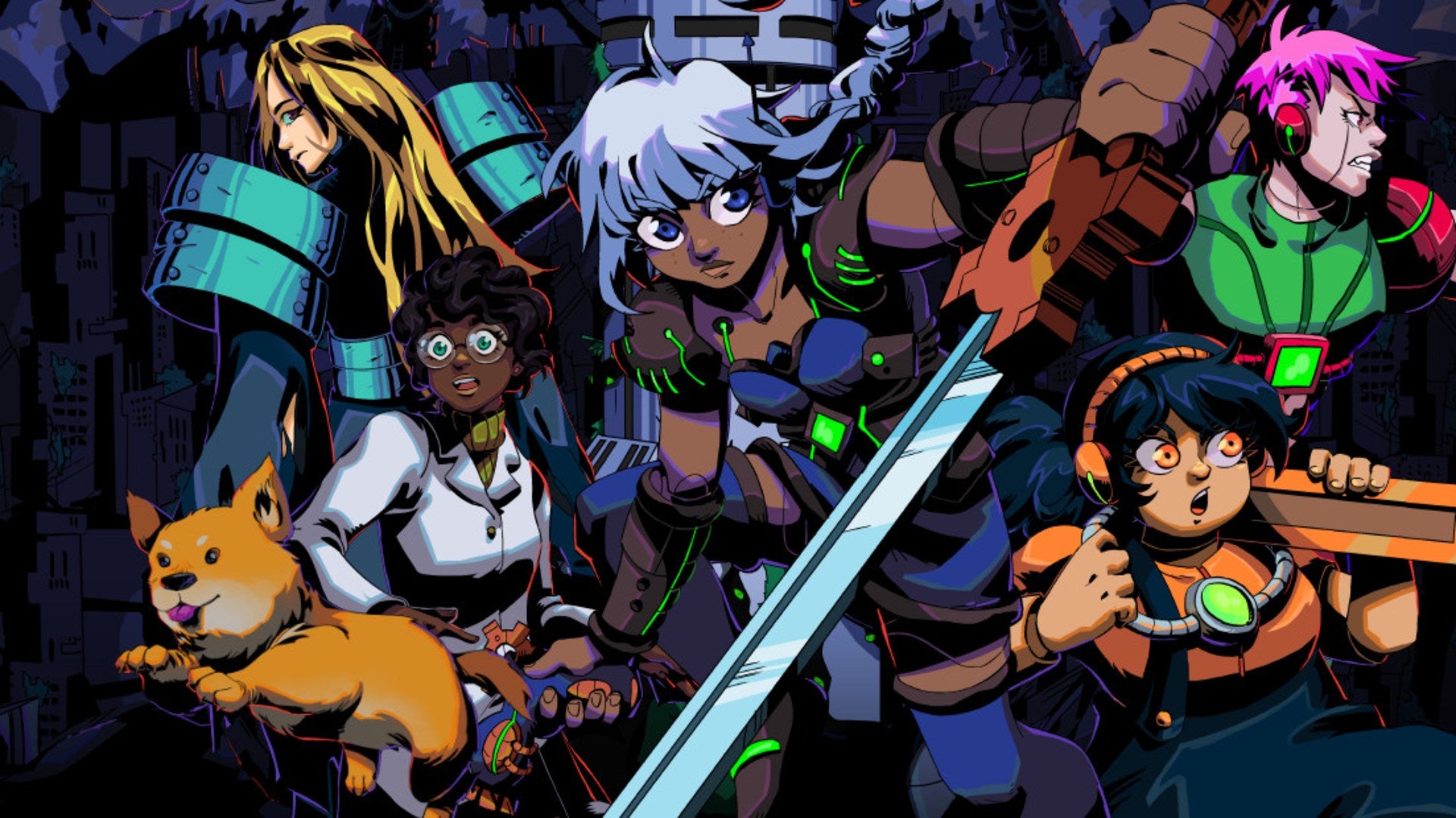
Unsighted
-
Back of the box quote
"For people who really love grief."
-
Type of game
Isometric Metroidvania
-
Liked
Great art design, solid character writing, strong combat, stellar puzzle and world design, lesbianism.
-
Disliked
Unnecessary weapon upgrades, a few difficulty spikes here and there.
-
Developer
Studio Pixel Punk
-
Platform
PC, Switch, PS4, Xbox One
-
Release Date
September 30th, 2021
-
Played
To completion in around 9 or 10 hours
Many queer people, transfemmes in particular, will start HRT without a prescription—ordering what they can from online pharmacies and hoping the pills will fill their blood just right. Couple this with the total lack of familiarity many general practitioners have with HRT, and it is no wonder that most trans people I know may as well be amateur endocrinologists. Understanding the science of our own bodies is all but a necessity, especially when we cannot trust the state to give a damn about us.
The same reality exists for those of us subject to disability and chronic illness. When asked about my narcolepsy, I can explain not only the neurochemistry of the condition (which, in my case, is actually an auto-immune disorder), but the role my many medications play in regulating my sleep patterns—many of my doctors can’t.
Nor should they really be expected to, but the demands of a medical system that attaches outrageous costs to specialists means that relying on your GP is often the only option. It is, in my experience, rarely a good one.
There’s also Stephen, an automaton who sells chips and treats the maladies of the village’s numerous automatons. He’s just one of the many impeccably designed characters you encounter during your time in the game’s world.
Stephen uses a wheelchair—was built to, actually. The game’s many automatons were built to resemble humanity in all of our varied configurations, and Stephen is no different. Most science fiction will either write away or conveniently forget the existence of disability—Unsighted instead frames it as an essential part of the human condition. This depiction is made doubly strong by his central position in his community. He knows how to care for it, because he is a part of it.
Many doctors just don’t listen to queer or disabled people talk about their problems. Any malady becomes a symptom of your condition, or an unfortunate side effect of your medication—even if you, the patient, know this isn’t the case. My family used to ask me, any time I got sick, if it was my hormones. It wasn’t. I was just trans and alive. Sometimes people just get sick. But a medical system without trans and disabled doctors will always forget that—because it is built to.
Unsighted, in its most hopeful moments, imagines a world where we dictate our own healthcare. A world where a wheelchair-using automaton is at the heart of its medical system, and patient comfort and community care are at the center of everything.
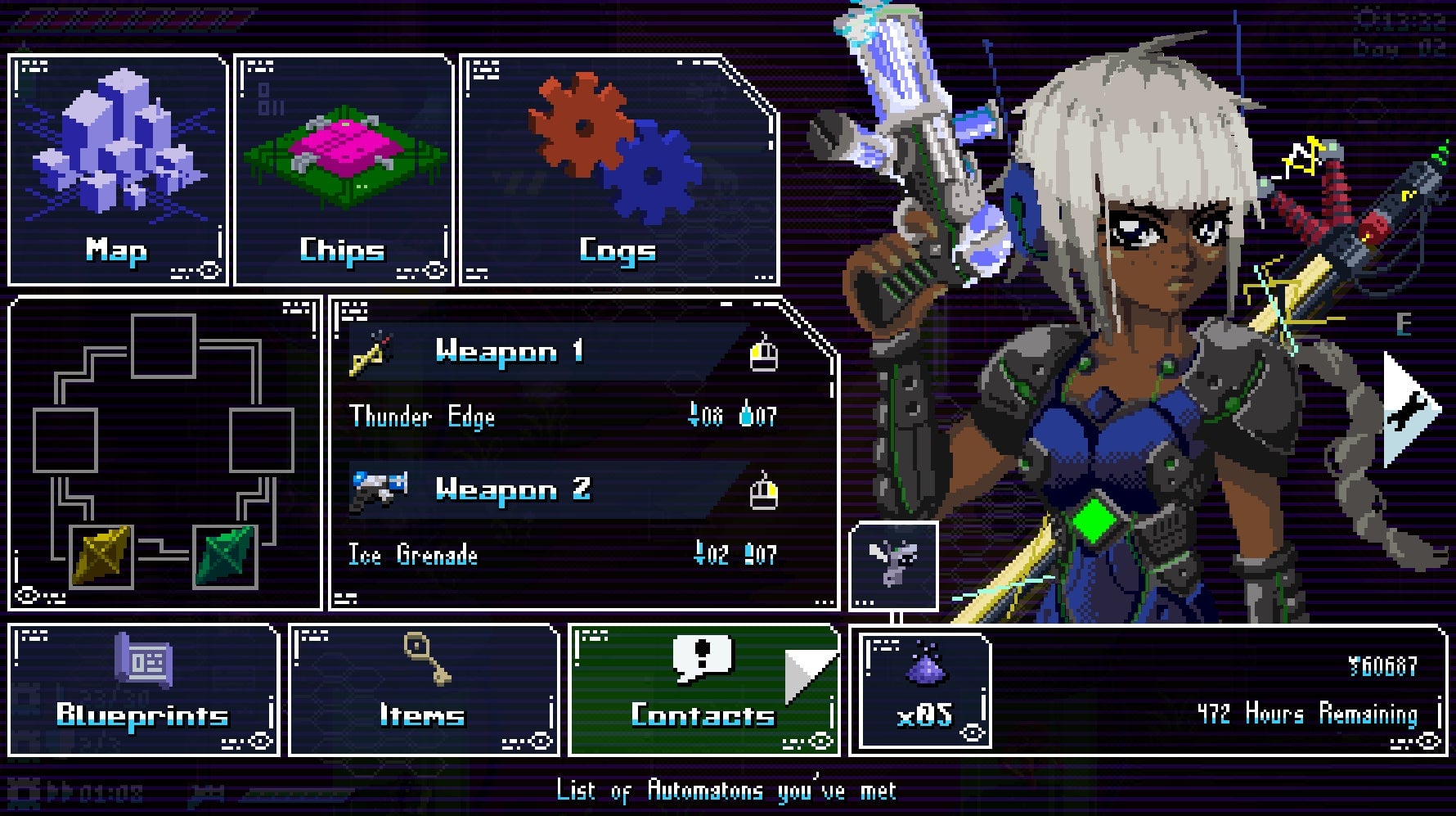
Each of Unsighted’s dungeons introduces another tool to Alma’s kit, including a beyblade-esque spinning murder-top she can ride, the ever-beloved hookshot (you can get two actually), and a pair of high-jump boots. Each feels unique, and lays the foundation for subsequent dungeons to build on each piece of equipment. As effectively as these dungeons build on one another if you play them in the suggested order, Unsighted also gives you the option to tackle them in any sequence, making the game a speedrunner’s dream.
And speedrunning is all but a necessity in Unsighted, given its constantly ticking clocks. Automatons are fueled by Anima, a resource which is now under lockdown by the game’s power-hungry humans. Without Anima, every automaton only has so much time left to live, which you can check at any time after meeting them.
When they reach their final 24 hours they become sluggish, despondent, and pained. It is a slow kind of dying, one where meaning slowly slips away only to be replaced by a yawning desire for its return. The automatons must be governed by a crueler god than most—to have been given, and then stripped of their sentience—to learn their own names only to lose them.
I’ve been sleeping over 13 hours a day. When I manage to wake up, I have to keep moving or I’ll just start to fade again. I have written 500 words in the last three days—normally that would take me an hour.
The primary testosterone blocker in the US, spironolactone, is known for causing brain fog. This is, most likely, due to dehydration. Spiro prevents the body from retaining water, and can cause sodium levels to plummet. This causes brain fog. My narcolepsy medication contains almost nine grams of sodium, which would be enough to throw a normal person’s sodium levels through the roof. This odd chemical balancing act makes me incredibly lucky. It also makes being without either even more brutal.
When my meds run low, I start to ration until I can get the next prescription ordered. I pick the days where it’s important to feel alive, and cling to them.
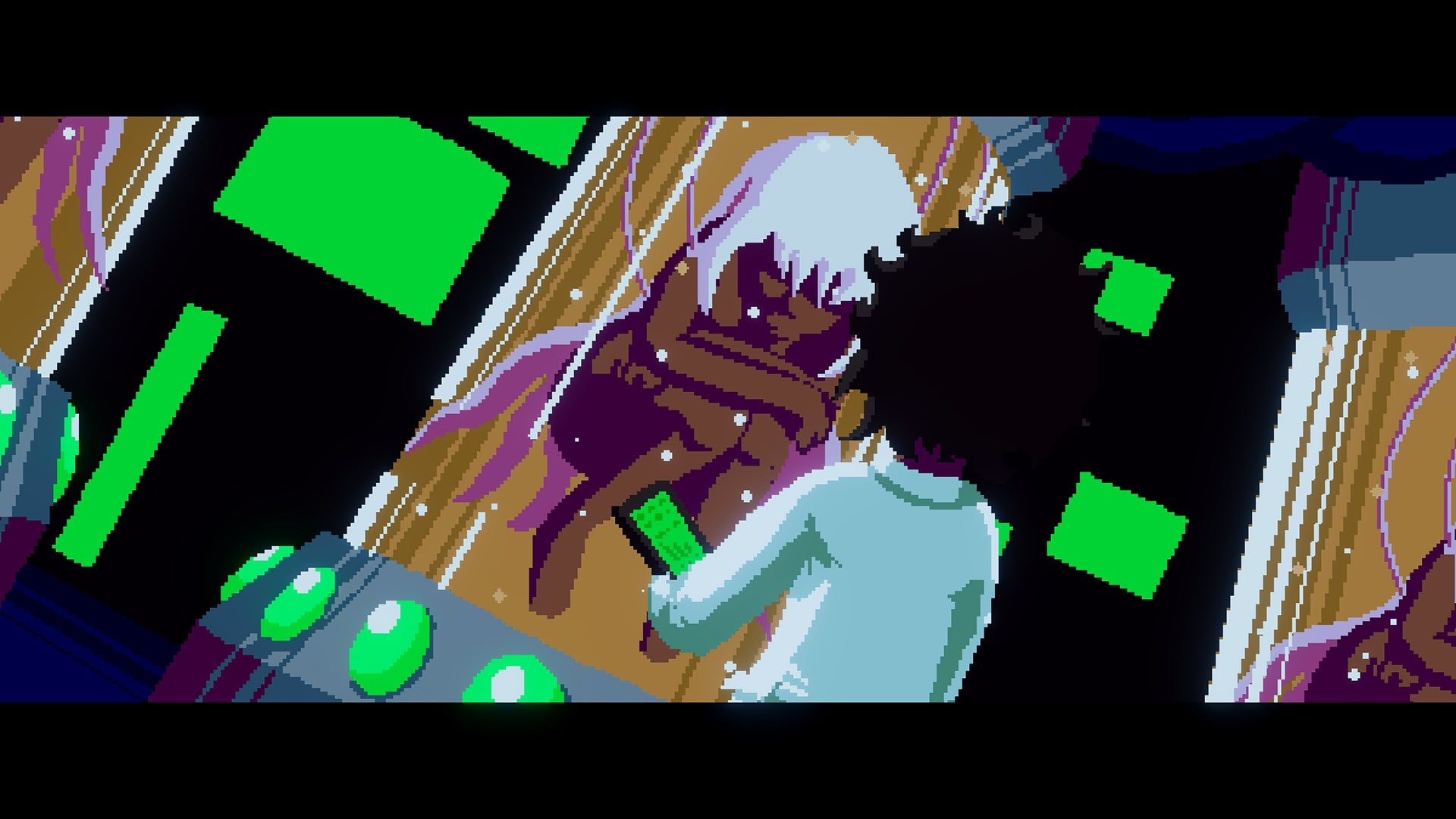
Alma’s clock starts at around 200 hours while other characters aren’t so lucky. Teresa, the game’s resident…cog farmer, is an older woman, and starts with only 100 or so hours to live. To prolong the lives of your favorite automatons you can give them meteor dust, a rare resource you find by exploring side areas throughout the game, but from my experience there will never be enough. Someone will always go unsighted, setting them on a rampage—one you will be tasked with ending.
These many, anxiety-inducing time limits elevate a lot of the backtracking and exploration to something really interesting. Learning the fastest routes through each area isn’t just for your personal convenience; it’s a matter of life or death for the many automatons under your care.
This is made especially complicated by the social utility of each character. Do you prioritize Teresa, the old woman who sells cogs? Or do you prioritize Stephen, the doctor? These decisions don’t just affect the individual, but the community as a whole. It is a brutal calculus—made even harder by the fact that some characters have rewards for keeping them alive. The weaponsmith, for example, will give you a sword that uses each of the game’s three elements if you give him four pieces of meteor dust. Your own needs will, inevitably, factor into who ends up going unsighted.
If time limits sound too stressful, there is an alternate difficulty called “Explorer’s Mode” that allows you a boatload of extra time, so you don’t have to worry about your fellow charming robots succumbing to a lack of Anima. It’s a great way to take the stress off without undercutting the game’s narrative and thematic use of Anima.
Your own time limit still appears after every death. The remaining hours for every character you’ve met are only a screen away. It is a constant refrain, even if they have plenty of time left. You know that it will run out someday. Unsighted will not let you forget that your time is limited, and that you are dependent on an uncaring state for life-saving resources. Decay becomes its leitmotif.
The intersections of queer culture and the medical-industrial complex are often quietly violent: denied healthcare, total ambivalence to essential research, and a medical system which will do anything to maintain the bare minimum of care and nothing more.
The best testosterone blocker for hormone replacement therapy is Lupron. Lupron is also an essential part of prostate cancer treatments, which makes it outrageously expensive. Most insurance companies will refuse to cover it for HRT, because cheaper (and worse) alternatives exist. This is not a question of resource scarcity, but of access.
That is, until the game’s conclusion. Heavy spoilers from here on out.
 Unsighted ends with a boss fight against the physical manifestation of anima, as she deems if you are worthy of her grace. If you beat her, you free the glowing meteor shard at the game’s heart, and the automatons’ resource crisis ends. Scarcity over.
The presence of the state, however, is not. Humanity still hangs in the air overhead, and there are still occupied cities where automatons languish without anima. Resistance, then, doesn’t stop when the first revolution ends.
A few weeks ago, I wrote about the end of the world as a changing of referents. I think that’s what liberation is, at its best. A world in which capital falls away as a referent for our lives, and we are left with only each other. Only bodies, in all their many configurations, that are relentlessly alive.
Until then though, Unsighted asks that you watch the clock only when you must. Ignore it when you can. Find solace in your community, and create systems of care in spite of a world that does anything but. Keep the body running long enough to dream the world into something new and better.