In a new two-hour documentary from Valve, current and former members of the company talk openly about the creation of Half-Life 2 as well as finally spilling the beans on what happened to Episode 3, and even showing gameplay of early prototypes of the canceled game.
On November 15, Valve released a large update for Half-Life 2 to celebrate the game’s 20-year anniversary. The update includes new commentary, quality-of-life features, Steam Workshop support, and more. However, perhaps the most exciting thing to come out of this big Half-Life 2 celebration is a new two-hour documentary from Valve detailing the development of the famous first-person shooter and its follow-up episodes. And yes, they talk about Half-Life 2 Episode 3, the game that never came to be despite millions of players begging Valve to make it.
Here’s the documentary if you haven’t watched it yet:
At the end of the doc, after talking about Episodes 1 and 2, numerous people who worked on Half-Life 2 and its episodes then began talking about Episode 3. Valve was apparently working on an ice gun that would let players create icy structures, pathways, and barricades during combat. Valve was also working on a blob-like monster that could split into multiple parts and go through vents and chain-link fences. However, this was all very early stuff, with HL2 engineer David Speyrer suggesting they were only about six months into development before plans changed.
“Even into Episode 3, I still don’t know what that would have been if we’d built it because it hadn’t been built,” said series writer Marc Laidlaw.
“That was the the feeling of excitement. Of something I can’t even imagine is going to happen with this team. I was not imposing a top-down, ‘This is what we must do to tell our very important tale,’ you know? It’s like, ‘Oh, we have new features, how do we use [them]? What kind of story can we do with these now?’”
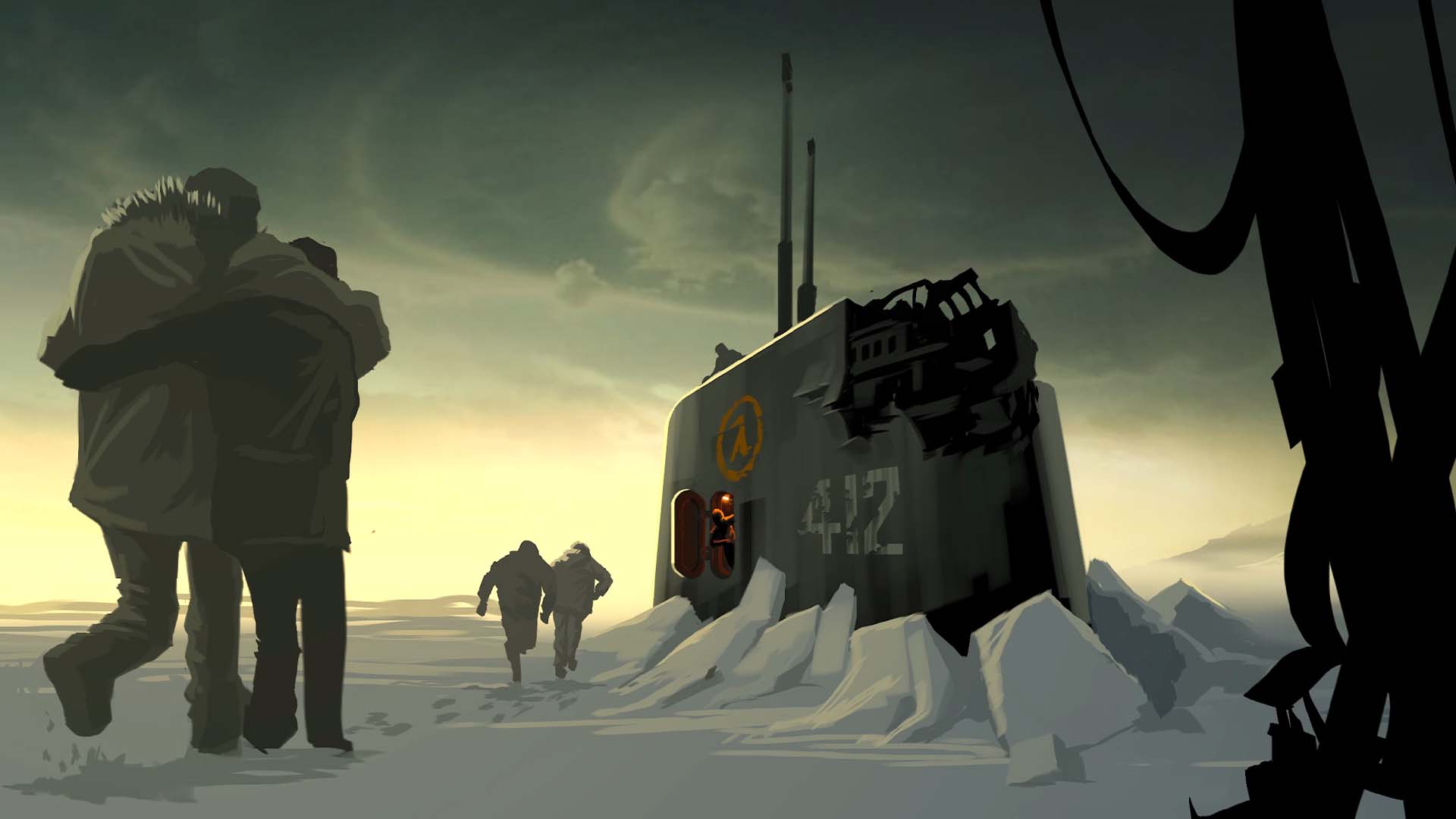
According to Speyrer, Episode 3 was set in the Arctic—something that previously released concept art had confirmed—and he explained that the episode would focus on the missing Borealis ship referenced in both the Portal and Half-Life franchises.
Episode 3 was stopped after six months of development
After six months of development, Speyrer says that Episode 3 was still a “collection of playable levels in no particular order” and some story beats. He theorized that after another six months, they would have reached a “critical mass of mechanics” and at that point they could start really putting the game together for release in about a year or two, depending on “how ambitious” the team got.
Of course, that didn’t happen. In the documentary, Half-Life 2 devs explain that they had started to run out of things to do with the tools and features they had developed. At one point, they reference Arkane’s canceled Ravenholm episode, and how the team was struggling to do new and fun stuff with the Half-Life 2 toolbox and engine.
“Arkane was building the Ravenholm game and even they were having trouble doing cool new stuff with this toolset, and if those guys can’t figure out a bunch of cool stuff to do with this, I think we’re running out of fuel,” said Laidlaw.
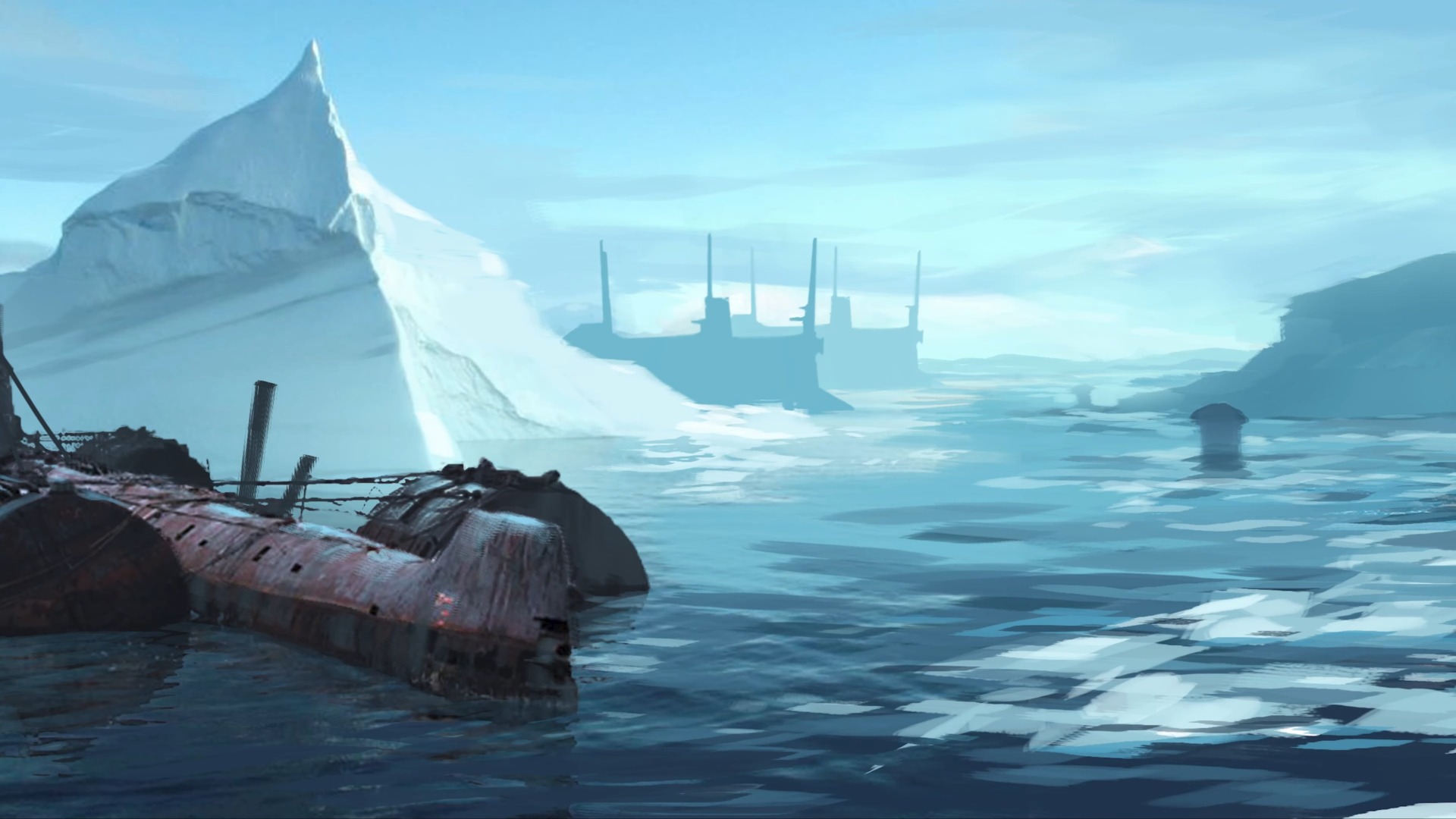
So everyone at Valve focused on finishing up Left 4 Dead and put Half-Life Episode 3 on the back burner. And then, they felt like they had waited too long to come back and finish it.
“Left 4 Dead came out great,” said Speyrer. “But it took long enough—and this is the tragic and almost comical thing about it—was it took long enough that then, by the time we considered going back to Episode 3, the argument was made like, ‘Well, we missed it. It’s too late now, you know,’ and ‘We really need to make a new engine to continue the Half-Life series’ and all that.”
Now, Valve feels like that was a mistake, with Speyrer adding: “In hindsight [it was] wrong. You know, we could have definitely gone back and spent 2 years to make Episode 3.”
Toward the end of the documentary, Valve boss Gabe Newell says that Half-Life Alyx’s ending was a somewhat “self-critical realization” that they needed to move forward with the story.
“I think that Half-Life represents a tool we have and promises made to customers to capitalize on innovation and opportunities to build game experiences that haven’t been [seen] previously, and I think that there are no shortage of those opportunities facing us as an industry right now,” is the final message in the doc from Newell.
.