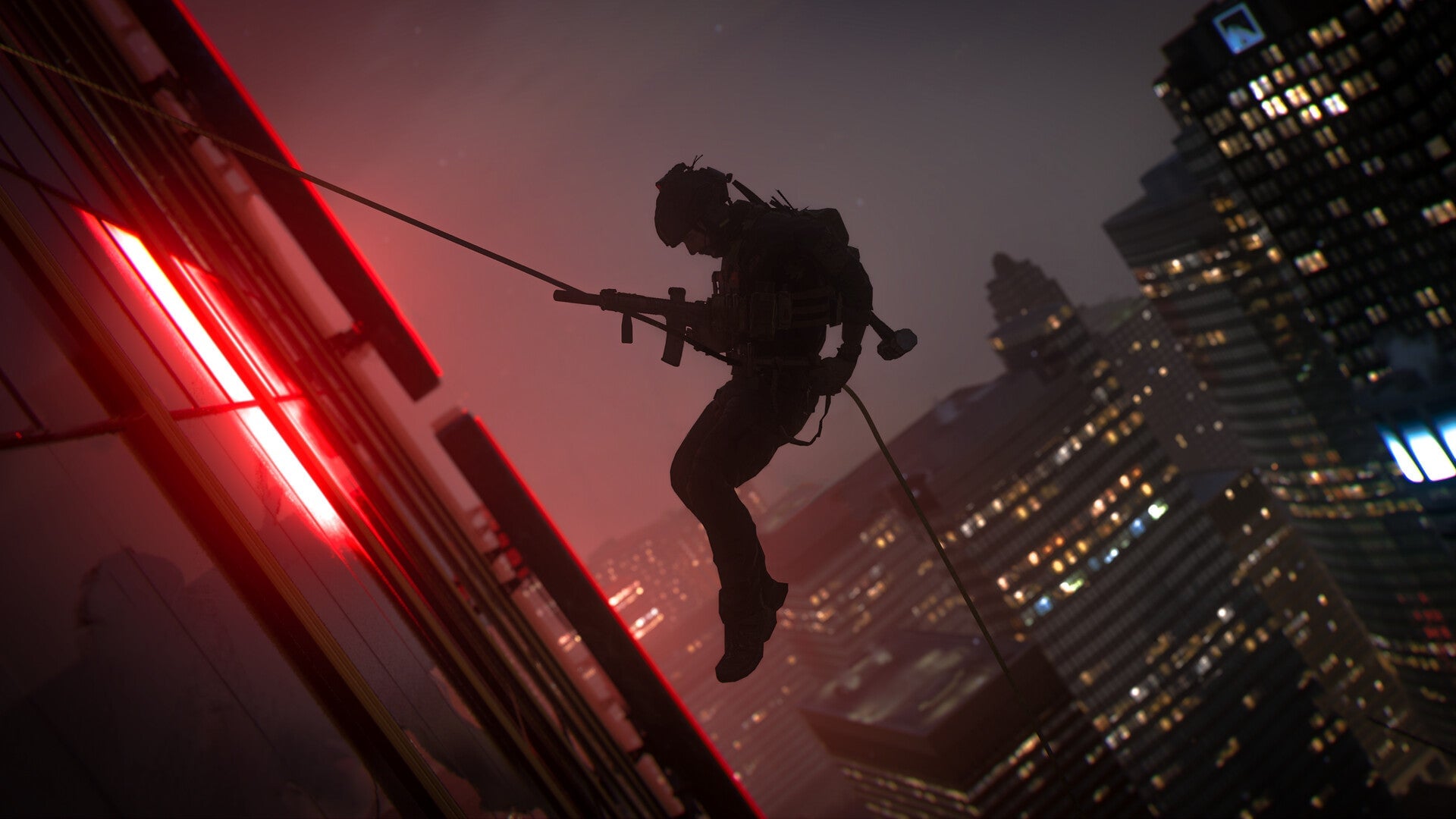

One of the world’s largest and most respected humanitarian groups in the world is investigating whether the Geneva and Hague conventions should be applied to the fictional recreation of war in video games.
If they agree those standards should be applied, the International Committee of the Red Cross says they may ask developers to adhere to the rules themselves or “encourage” governments to adopt laws to regulate the video game industry.
The International Committee of the Red Cross is mandated under the Geneva Conventions to protect the victims of international and internal armed conflicts. That includes war wounded, prisoners, refugees, civilians, and other non-combatants. The question they debated this week is whether their mandate should be extended to the virtual victims of video game wars.
During this week’s 31st International Conference of the Red Cross and Red Crescent in Geneva, Switzerland, members of the committee held a side event to discuss the influence video games have on public perception and action.
“While the Movement works vigorously to promote international humanitarian law worldwide, there is also an audience of approximately 600 million gamers who may be virtually violating IHL,” according to the event’s description. “Exactly how video games influence individuals is a hotly debated topic, but for the first time, Movement partners discussed our role and responsibility to take action against violations of IHL in video games. In a side event, participants were asked: ‘What should we do, and what is the most effective method?’
“While National Societies shared their experiences and opinions, there is clearly no simple answer. There is, however, an overall consensus and motivation to take action.”
https://www.youtube.com/watch?v=-060xh9DaFA
Reached for comment earlier this week, Alexandra Boivin, head of the Civil Society Relations Unit’s Department of International Law and Cooperation for the committee, declined to discuss their findings yet.
“Unfortunately, it is too early in the discussion to share our views publicly,” Boivin told Kotaku. “We will be posting some information on the ICRC’s website in the weeks to come, with a view to stating and explaining our interest in the topic.”
The International Committee of the Red Cross, which was formed in 1863 as the oldest organization of the International Red Cross and Red Crescent Movement and has since been awarded three Nobel Peace Prizes, isn’t the first organization to look into whether video and computer games should operate free of international humanitarian law.
The idea to analyze whether video and computer games operate in a free legal zone, was initially an idea of TRIAL, a Geneva-based organization that helps with international crimes such as genocide, crimes against humanity and war crimes.
In 2007, TRIAL published a report examining whether and to what extent international humanitarian law is respected in computer and video games. The Playing By The Rules project won a prize in 2007 from the Forum for Human Rights in Lucern.
The project looked at the actions of players and non-players in 19 games, including top shooter franchises like Call of Duty, Battlefield and Rainbow 6 titles., examining whether the developers established or followed the international humanitarian laws set forth in the Geneva and Hague conventions.
“In computer and video games, violence is often shown and the players become ‘virtually violent,'” according to the study. “However, such games are not zones free of rules and ethics. It would be highly appreciated if games reproducing armed conflicts were to include the rules which apply to real armed conflicts. These rules and values are given by international humanitarian law and human rights law. They limit excessive violence and protect the human dignity of members of particularly vulnerable groups.”
The study found that those rules are often not taken into consideration within game development. Violations they found in games included shooting unarmed combatants (technically prisoners of war), torturing and using weapons that inflict unnecessary injury. While the group said they weren’t surprised by their findings, since games are meant to be entertainment, they said they were surprised by how absent the rules were in games.
“The practically complete absence of rules or sanctions is nevertheless astonishing: civilians or protected objects such as churches or mosques can be attacked with impunity, in scenes portraying interrogations it is possible to torture, degrade or treat the prisoner inhumanely without being sanctioned for it and extrajudicial executions are simulated,” they wrote.
They also pointed out that since a few games do punish the killing of civilians or reward strategies that aim to prevent excessive damage, that including such rules is possible.
“One possible course of action… could be to encourage governments to adopt laws and regulations to regulate this ever-growing industry.”
Their recommendations?
“It is regrettable that game producers hardly ever use this possibility to creatively incorporate the rules of international law or even representatives of such rules (such as the ICRC or the international criminal courts etc.) as specific elements in the course of the game,” they wrote. “Pro Juventute and TRIAL call upon the producers of computer and video games to use their strong creativity and innovation for this purpose. It would mean a wasted opportunity if the virtual space transmitted the illusion of impunity for unlimited violence in armed conflicts.”
The purpose of this week’s examination of the topic by the International Committee of the Red Cross was to present the committee’s position on the trivialization of international humanitarian law violations in video games and discussing it with their wider members.
“In line with the Conference’s aim of strengthening IHL, the event aims at achieving a common understanding of the problem and outlining a course of action whereby the Movement could help reduce these ‘virtual’ — yet very realistic — violations of IHL,” according to the group. “One possible course of action could be to encourage game designers/producers to incorporate IHL in the development and design of video games, while another could be to encourage governments to adopt laws and regulations to regulate this ever-growing industry.”
While the International Committee of the Red Cross is a private humanitarian institution, the Geneva Conventions have given the committee the authority and mandate to oversee international humanitarian law.
Historically, the committee works quietly and behind the scenes to influence policy makers and push for change, often to great effect.
Reached for comment today, the Entertainment Software Association said they hadn’t yet seen the details of the committee’s findings, though they were aware of the meeting.
“We cannot comment on the merits or specifics of the International Committee of the Red Cross proposal because we have not discussed this with them directly or seen any specifics of their meeting,” said Rich Taylor, Sr. VP for Communications and Industry Affairs, Entertainment Software Association. “However, we are immovably committed to developers’ rights for creative freedom and in achieving their artistic vision.”
It’s Time for a War Game that Respects the Geneva Conventions
Despite its inherent brutality, war has rules. Laws of war have been around in one form or another since Biblical times. They govern the treatment of prisoners of war, the expediency of death on a battlefield. More »
https://lastchance.cc/red-cross-wont-go-after-you-for-playing-war-games-5866359%3C/a%3E%3C/p%3E
Red Cross Won’t Go After You For Playing War Games
Virtual war crimes won’t lead to real world prosecution, the International Committee of the Red Cross clarified today.
While the international humanitarian group has discussed whether the Geneva and Hague conventions should be applied to the fictional recreation of war in video games it isn’t… More »