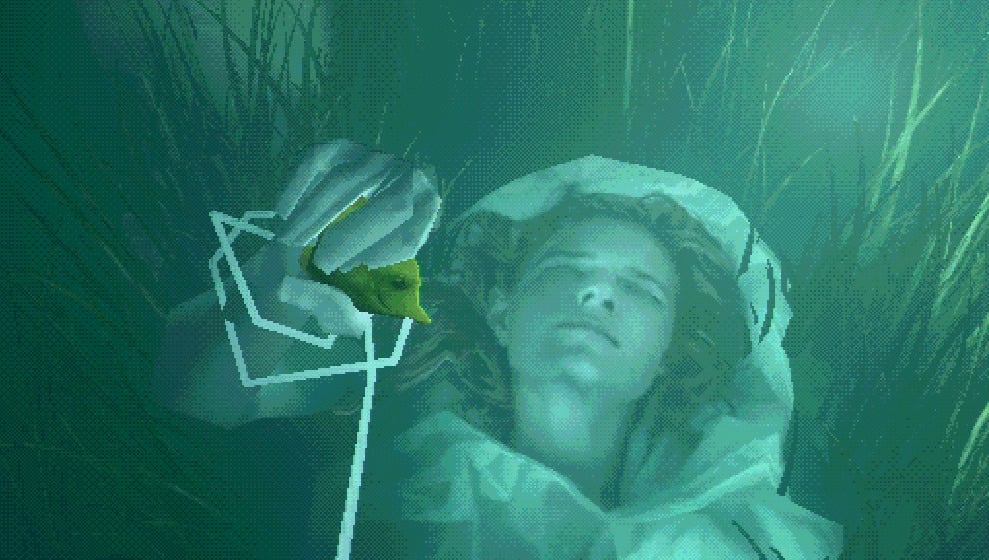
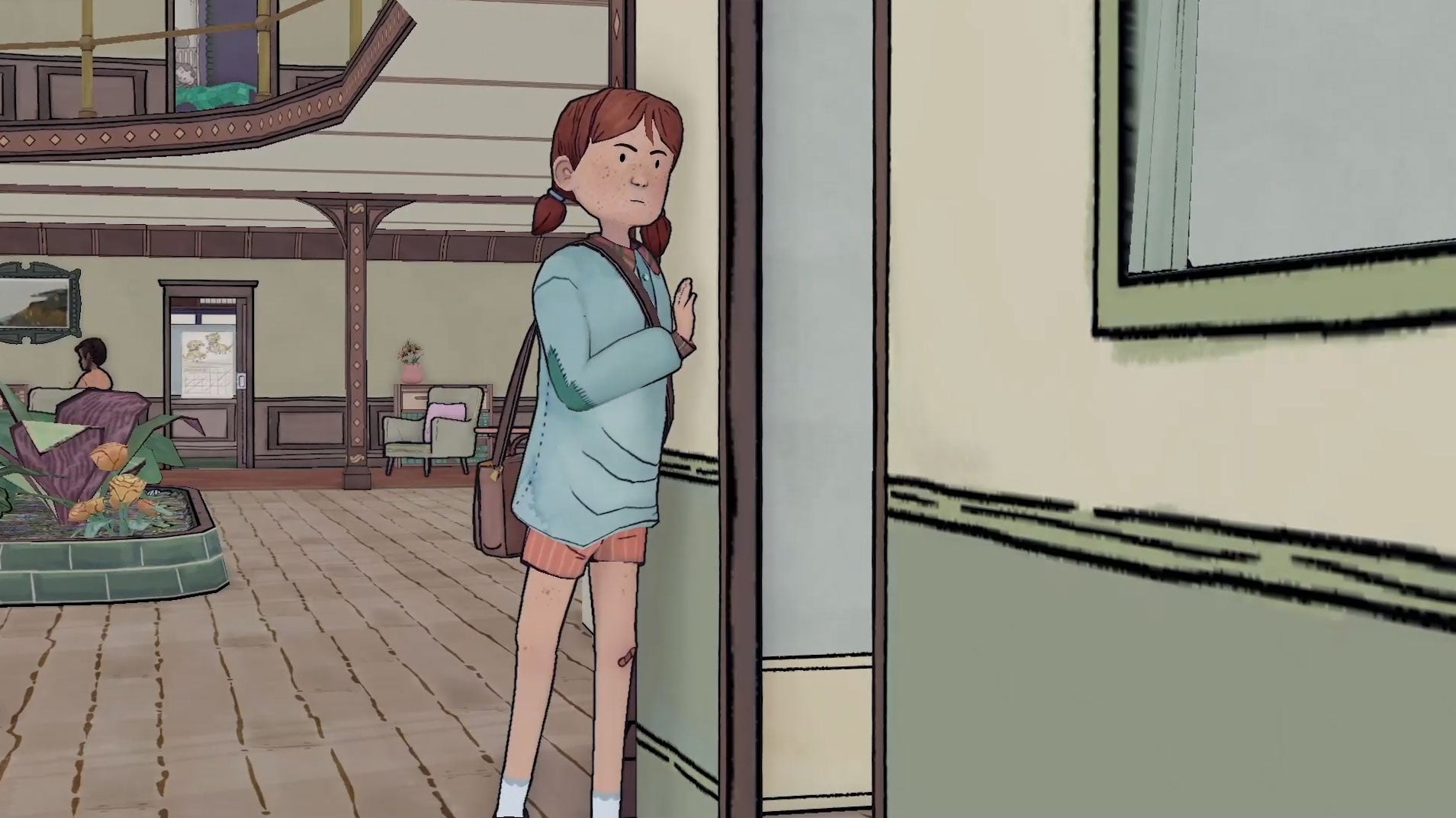
In Wayward Strand, out today on PC, Switch, PlayStation and Xbox, you play the role of a teenage girl, stuck visiting the place her mother works. Which happens to be a giant, floating airship moored off the coast of Australia, and having been decommissioned as a luxury vessel, is now serving as a retirement home.
In some ways, it’s very much a game about being a teenager taking their first tentative steps into an adult space. Your character, Casey, is writing an article about her time on the airship, and at the insistence of her mother—a nurse—spends three days visiting the otherwise lonely residents of the airship, chatting with them about both their past and present.
Casey is nervous, and unsure about herself. We’ve all been there; a work experience placement, maybe, or just a first day on our first job, that awkward point where your childhood’s rubber meets the adult workforce’s road. And so Wayward Strand is in many ways a game about that crucible, as over the course of three days Casey grows in confidence, comes out of her shell, and starts to let her talents and personality shine.
Yet it’s also a game about the other end of the age spectrum. The point of the game is to wander the airship’s hallways, stopping in at each of the resident’s rooms to pay them a visit. At first, it’s almost unbearably routine; hi, my name’s Casey, what’s yours, that’s a lovely picture, just the most mundane small talk. But that’s how most relationships start, and as the days pass, the residents stop being objectives and start becoming, if not friends, then at least people.
It’s perhaps the game’s greatest achievement that at multiple times it made me feel like complete shit for not visiting my Nan more often. On your first day on the airship its elderly inhabitants are presented much the way the old often are in our media; kind, sweet, but also infirm, weak, forgetful. Characters defined by their age and physical stature, and little else. The more you interact with them, though, and the more you explore their rooms—each helpfully over-decorated like an octogenarian teenager’s bedroom—the more their stories, and lives, are uncovered.
These aren’t old people. They’re people who have grown old. They had exciting lives, loved and lost, been through dramatic exploits. What they are now isn’t all they’ve ever been, and it’s an absolute joy getting to know each and every one of them over the game’s three days.
How you get to know them is another of Wayward Strand’s achievements. This game isn’t telling you a single story, it’s leaving a dozen (or more!) of them lying around, each unfolding in real-time, and leaving it up to the player to pop in on each one of them and see how things are going.
If you’re familiar with the play Sleep No More—which I was lucky enough to catch along with the rest of the staff on a NYC work trip one year—Wayward Strand unfolds in a very similar manner. If you’re not familiar, think Jordan Mechner’s classic, non-linear adventure game The Last Express. If you’re not familiar with that, imagine instead that this game’s inhabitants are NPCs in a Bethesda game, each with their own little clockwork lives and schedules, each of them playing out whether you’re there to see them or not.
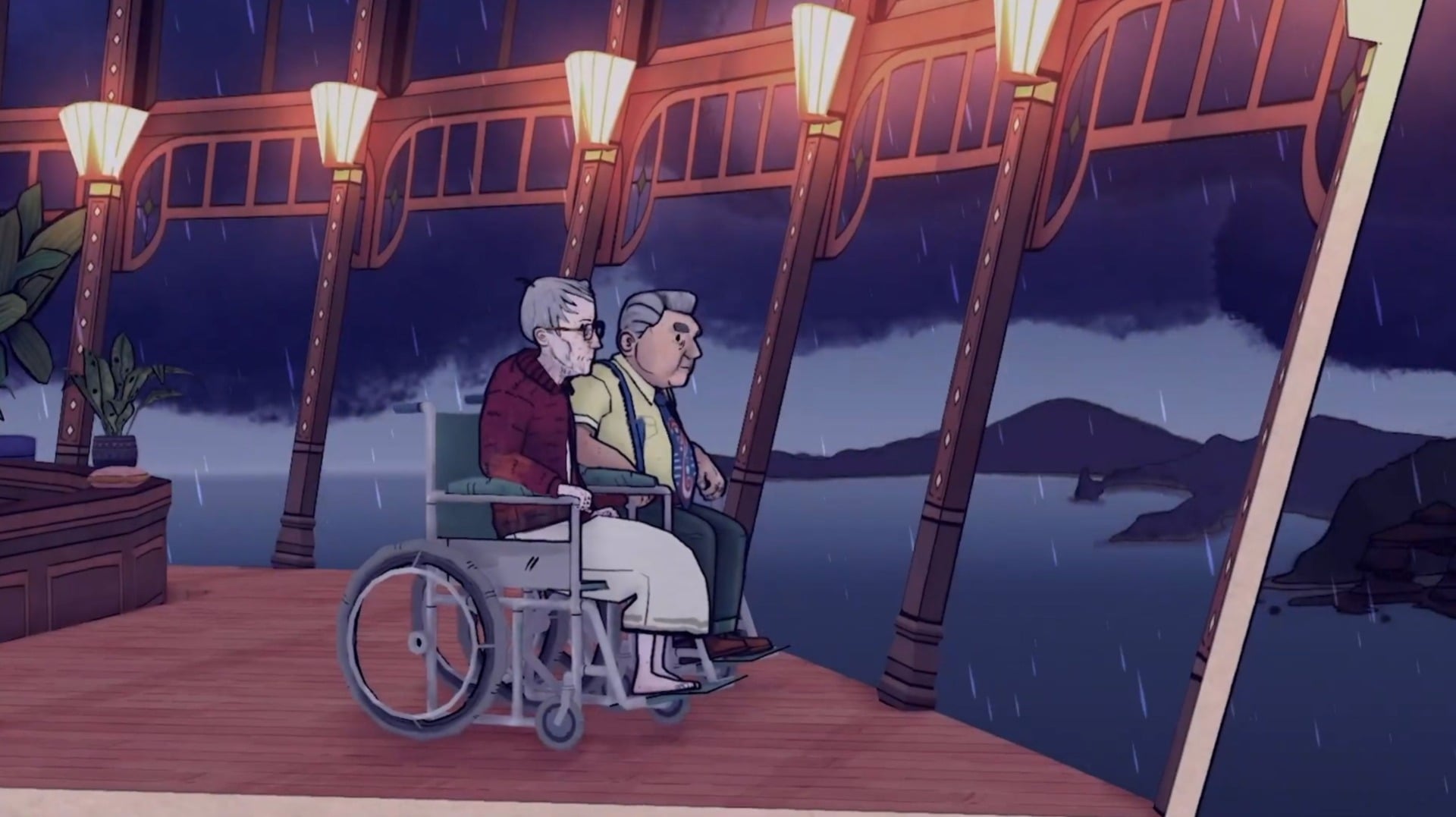
Your role in Wayward Strand—your only real gameplay task at all, really—is to intercept these stories and make sense of them, whether it’s in the service of solving a mystery or just getting to know someone’s life story. You don’t really notice this going on around you at first, but once you’ve got to meet everyone onboard, and gotten a feel for their relationships and habits, the whole place really does come alive.
I’ve really enjoyed Wayward Strand. Aside from the beautiful, intertwined storyline, I also appreciate how Australian this game is, from some of the wardrobe decisions to the brilliant casting choices. We don’t get to see ourselves in video games like this very often, so it was great to kick back with something so at home, and at peace, with its origins.
A final warning, though: I had a lot of trouble playing through this because the game has no manual saves, and its autosaves are pretty sparse. If you’re planning on smashing through it you’ll be fine, but if like me you can’t always devote hours at a time to a single session, you might want to leave it running or you could lose a fair chunk of progress.