We celebrated Pride this week at Kotaku with stories from queer staffers about Street Fighter ships, queer fandoms in Overwatch and in K-Pop, and our desire to see queer characters survive and thrive in the games we play. Before we take down the beautiful rainbow logos that festooned the site this week in celebration, we wanted to discuss all those big gay smooches at E3 this year, and the state of queer gaming in 2018.
Maddy Myers: Hi, Riley and Heather and sadly not Gita since she’s busy. Thanks for coming along with me on Kotaku’s very first Pride Week. To wrap things up, I wanted us to get more big picture about the triple-A games that we saw coming out (ha) at E3 this year. The Last of Us Part II’s heroine smooching a lady, and Assassin’s Creed: Odyssey’s inclusion of queer romance options, have been the talk of the town. For me, while watching footage of the long-awaited Kingdom Hearts 3, I kept thinking about playing through the first two Kingdom Hearts games with my first serious girlfriend and how much we longed for the games to confirm that Riku and Sora were in love (canonically, they’re not).
I have so many conflicting feelings about these massive, big-budget projects that require huge teams to make finally taking the “risk” on including canonical queerness … even if those stories end in death. But I’ll open it up to the two of you. How did you feel about these announcements? Anyone else on an emotional roller coaster about what we even want from these games, and what we get?
Heather Alexandra: I think it’s always fair to say that I’m cautious—I wrote an entire piece this week on how games tend to use some well-worn cliches when tackling LGBTQA+ characters—but I’ll also say that I’m glad to see mainstream steps towards inclusion even as I brace myself for the potential stumbles. We’re here and games can’t really ignore that anymore!
Riley MacLeod: I’ll start here with the Take I didn’t manage to pull off for Pride Week, because I am a very busy editor: I feel sad that these queer inclusions are both romances. I hate romance options. Partially because I am bitter and loveless, but also because I think most queer characters in games are shown through romance, when our social lives are so much more rich and varied than that. I was thinking this week about the very weird way in which I came to be the trans man I am today, in part because I was sort of raised by a bunch of ACT-UP era queer men, and how much I’d like to see those sorts of friendships in a game, instead of just ‘here’s another queer, do you want to smooch them?’
Maddy: Where is the My Lesbian Experience Of Loneliness of games? That sounds like a joke, but I’m serious. Not just because I’m currently a single gal and could totally relate to that. I like the idea of flirting with ladies (while being one) in Assassin’s Creed: Odyssey, much as I’ve done in BioWare games past, but it definitely presents a fantasy that doesn’t represent my real-life queer experiences, which tend to revolve around elaborately trying to figure out if women that I meet are interested in dating girls or not and, then, trying to date them and failing. Shit, I didn’t want this discussion to be sad! Shit!
Riley: I’m mostly really happy being single, for what it’s worth. Anyway this is Kotaku, not Tinder. Moving on.
Maddy: I’ll make sure to code my new hit game Is She Into Girls? in Twine right after this.
Heather: That’s the difficult thing, isn’t it? Part of the Struggle is trying to not be defined by the Struggle, which usually reminds us how limited the scope of current media is. So we measure victories by degrees, and those come side by side with complications. Tracer is gay! She’s on the box of Overwatch. But her gayness is as token as Pharah’s retroactive First Nation status or whatever. And talking about that can be rough. A reminder of the work that needs to happen.
Maddy: I think part of the work that we’ve seen happen, which is some very by-the-books queer romance between thin white people, doesn’t feel just tokenizing but… safe? The least “objectionable” queer content. And it is also something we are supposed to feel “thankful” for, so there is always a part of me that feels some guilt for wanting more or different things.
I think a couple of things have helped push that line forward in games: queer indie games that take more risks, and also queer fans who keep making their own art and ships (Gita has covered two different fandoms that have done that this week, and I covered my own non-canonical Street Fighter ships). The State Of Gay Games still currently includes a lot of work on the part of fans to fill in the gaps.
That’s two separate thoughts, maybe. But they are interconnected. Like, the Overwatch fandom has definitely made Overwatch seem a hell of a lot gayer than it really is, you know?
Heather: I think there’s a growing realization that offsetting this to your fandom is no longer sustainable, which is why you see a franchise like Assassin’s Creed take steps to accommodate queer players.
Riley: Yeah, it does in a way seem like developers are realizing queer people play their games and want to see themselves in them, or at least growing more unable to ignore it. And that’s a net positive, even if it isn’t everything I wanted. I kind of freaked out at The Last of Us II kiss, for instance. With everything going on in the world (a phrase I think everyone in the world is saying too much these days, haha) it felt really wild to me to see this big company start their briefing with two women kissing. I screamed out loud, I think—and then my radical queer cynicism immediately set in and I crossed my arms and “bah humbug”ed.
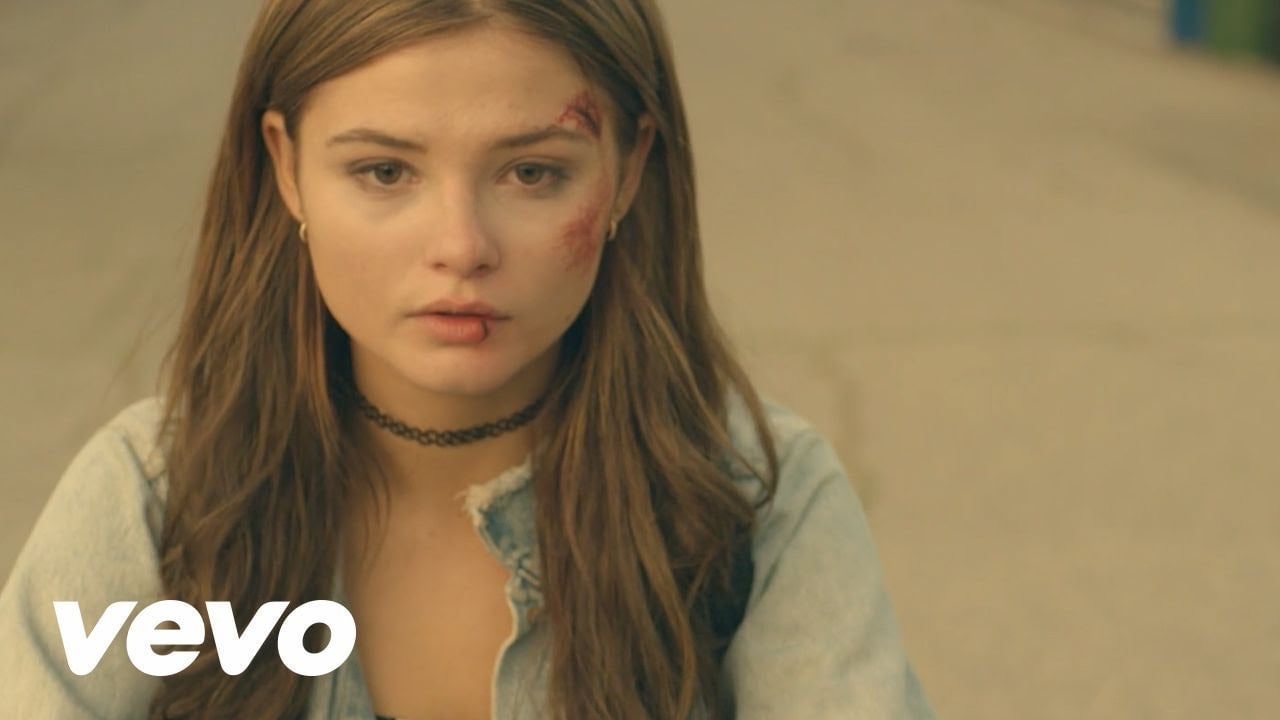
Maddy: I got my “bah humbug” out as well, but I did like the narrative structure of the kiss in the trailer, which seems to have been lost on a lot of people. Ellie’s line, “I’m just a girl, not a threat” is a reference to her assumption that men will angle for Dina’s affection, and she won’t be able to “compete” with them, since presumably Dina is straight. It’s a sentiment that’s grounded in heteronormative gendered assumptions (women can’t ever be a sexual “threat”… a lot to unpack, there). To juxtapose that with Ellie proving she can also be a “threat” in a very different sense (killin’ some baddies) serves to underscore her methods of survival across multiple fronts. There are, perhaps, some interesting ideas in there about the queer experience, but maybe I’m just saying that because I’ve watched Hayley Kiyoko’s “Girls Like Girls” video too many times. It also has a narrative of queer smooches and protecting yourself from violence (in that video, it’s explicitly about a hate crime).
Heather: I think part of what makes talking about this difficult is a prevailing notion that drama demands sacrifice. In many ways that’s true, but sacrifice comes in different forms. The competitive structure of games—oh no, I ran out of lives—obfuscates that. The Last Of Us Part II can have all kinds of drama and I hope it does. Joel’s lies can be exposed, Ellie can be injured, ideologies can drive apart communities. It can be bloody and moody as the post-apocalyptic genre demands. But maybe you don’t have to do the thing we’re all expecting, just this once.
Maddy: Yeah. And part of why I like the video for “Girls Like Girls” so much is that it ends triumphantly. Maybe that’s a fantasy — especially in, uh, the world in which we live (sorry, Riley, I hate saying it too). So, we want the tragedies and the loneliness to be more complex (something other than “two queer people fell in love and then one of them died”), but we also want the happy moments, too. Seeing a new girlfriend not die in a post-apocalyptic game would be subversive and unexpected.
Heather: I played Secret Little Haven earlier this year and that’s a good example of a game that manages to do both. We have the requisite confrontation with the disapproving dad and all the angst but that’s juxtaposed with moments of friendship and straight-out fandom nerd stuff. Rounding out the experiences we see goes a long way.
Riley: I can’t remember if I’ve told this story before, but when I used to run writing workshops for trans writers, we’d do this exercise where we’d list all the things a character could want on the board. And then I’d ask the group, “What do trans characters want?” and the writers—trans themselves!—would say “The surgery, a name change,” all that usual stuff. And then I would get to have my cool teacher moment and be like, “No, trans characters want all that other stuff that people want, because they’re people!” So, like, while yeah it’s cool to see different experiences and lots of smooching, I still really want to see queer characters doing stuff besides just walking around smooching.
Heather: Within that dynamic, it’s also key that their queerness doesn’t fade to the background. A refrain marginalized people hear time and time again is “We don’t care if you’re gay/black/whatever because it shouldn’t matter!” and that ignores the fact that it matters a lot. There’s history, economic and cultural, that helps shape who you are, and while the sentiment is arguably nice, it’s misguided. E3, even with our misgivings, shows that the visibility of LGBTQA+ characters is increasing. But visibility is not enough, especially in an industry where marginalized folks are often not involved in the writing and creation of marginalized characters.
The steps I want to see are twofold: incorporate gayness/transness/et cetera into your characters without losing it or defining them entirely by it. It’s not a numbers count or a matter of just having a gay character, which is something I feel many developers don’t understand. The creation of well-rounded characters who experience a range of emotions and social statuses is key to equitable representation in art. Video games are bad at this; it’s a medium I love but one mired in tropes. It’s essential those tropes become less prevalent. I would challenge people to find ways to break that paradigm, either through hiring minorities or looking for ways to tell new stories that don’t adhere to worn-out models.
Maddy: Yeah… it’s like, queerness both matters more than anything and also is something that I desperately want to see as mundane and un-special. It’s hard to explain what it’s like to have those two sentiments dueling in my head at all times, so just imagine Ken and Ryu really going at it.
Anyway, I just want to say thanks again to both of you and to Gita for participating in our own little Pride Week. Whether we’re writing silly posts about characters that we ship, or serious ones about characters that we just want to see live, or any sort of coverage about the queer people who work in games or play them … we’re doing those things while also being queer. And that informs who I am, even when it’s not in a footer at the bottom of a post. It both doesn’t matter and does matter to me, all the time. That’s why I wanted to do this thing. Anyway, thanks.
Riley: I wish I’d written something! Ah well. I like that when we were first brainstorming about this I got to say in a meeting “The best part of Kotaku is how many queers there are!” There are lots of good things about Kotaku, including how many queers there are.
Maddy: Hellllll yeah. I’m gonna miss the rainbow logos. But maybe they’ll be back again… next year!
Heather: Can’t stop, won’t stop.

It’s Kotaku Pride Week, a celebration of all things queer and nerdy.