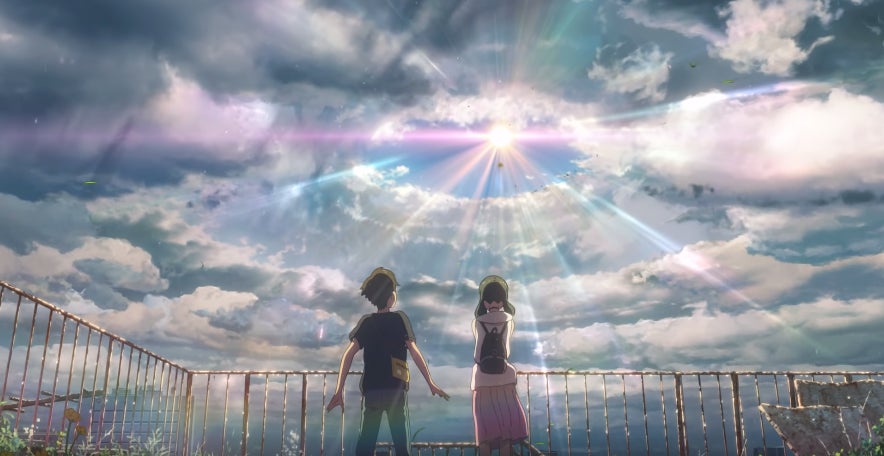
When originally released in 2016, the acclaimed Your Name became the highest-grossing anime in Japan ever. Today, its follow-up, Weathering With You, was released in Japan. The movie shares many thematic and stylistic themes with Your Name. The result is good but flawed.
Warning: This review includes some light spoilers.
Weathering With You tells the story of a Japanese high school student named Hodaka who flees the tiny island he calls home for Tokyo, where it never seems to stop raining. There, he struggles to find work and ultimately ends up getting a gig at an occult magazine, where he’s tasked with tracking down a rumored hare-onna (晴れ女) or “clear-weather woman,” who is said to be able to control the skies. Hodaka befriends a girl named Hina, whom he learns is this rumored hare-onna
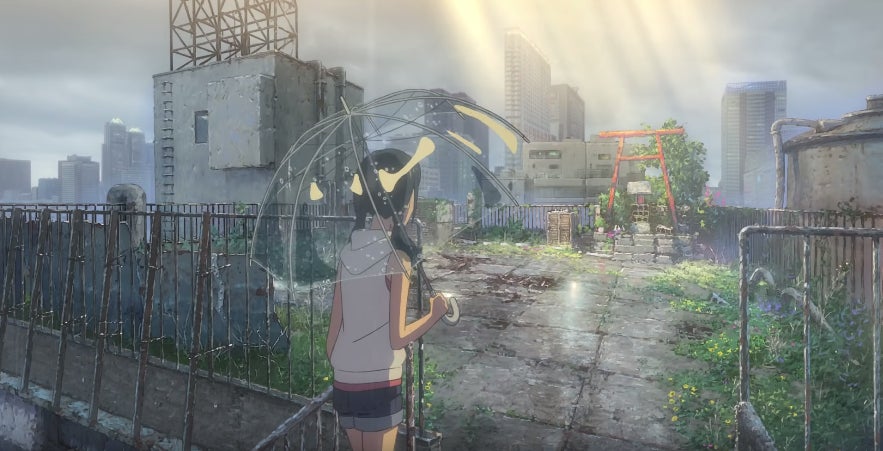 (In Japanese, there is a term called ame-otoko (雨男) or “rain man,” and it means that wherever an ame-otoko goes, rain follows. While the movie doesn’t explicitly state this, Hodaka is an ame-otoko. Thematically, the character serves as a contrast with Hina. This isn’t really explored fully, but makes for a fascinating subtext.)
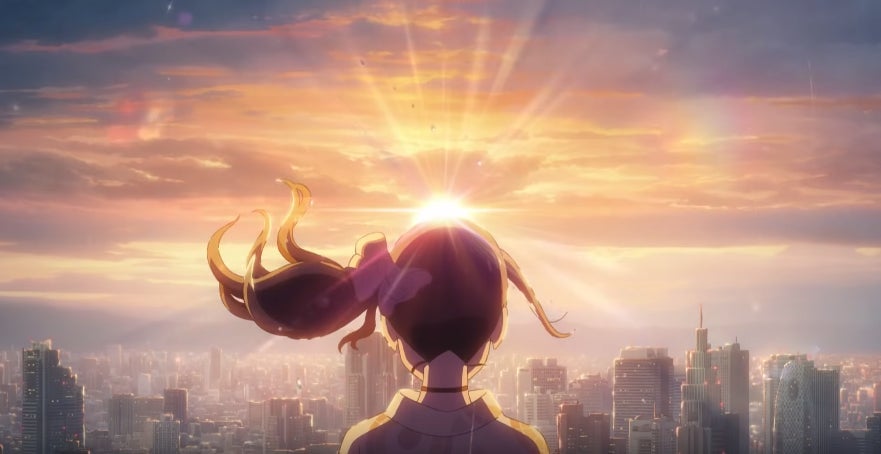
The Your Name comparisons are inevitable. This movie isn’t shying away from them. Stylistically, Weathering With You is filled with the director Makoto Shinkai’s signature shots of the Tokyo cityscape. The rock group Radwimps return to once again to do the score.
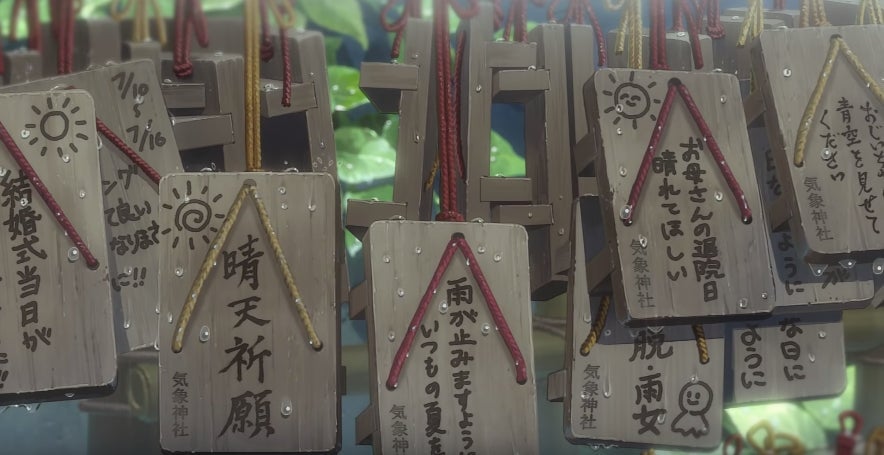
 As with the previous film, Weathering With You interweaves Shinto beliefs with contemporary Japanese life. In Shintoism, there is a tradition of praying for good weather, and Weathering with You explains how in the past, those with a direct connection to the weather would perform prayers and rituals for clear weather. Of course, Japan has a long-standing spiritual connection to the sun.
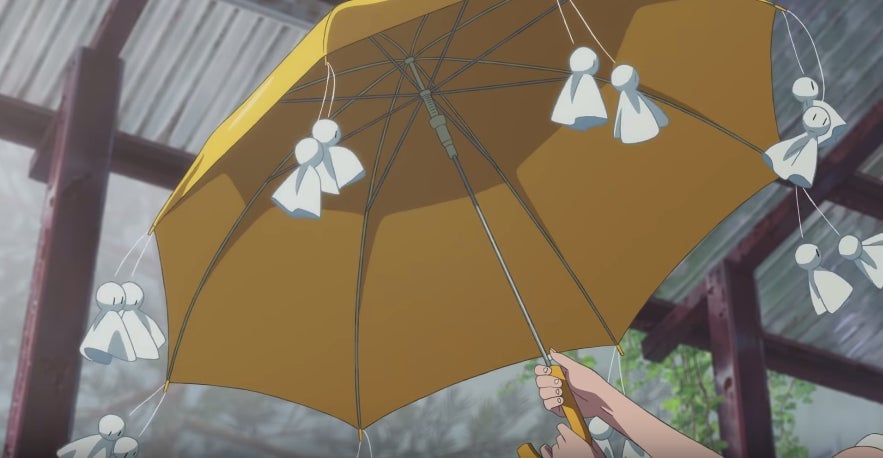
Also as in Your Name, Shinkai once again makes striking contrasts between these elements of traditional Japanese culture and modern life. For example, teru teru bozu, which look like little ghosts, appear throughout the film. Teru teru bozu literally means “shrine shrine Buddhist priest,” and these little talisman are still made today out of tissue paper, typically by children praying for clear skies. Just like in Japanese society, Buddhist and Shinto beliefs exist side by side in Weathering With You.
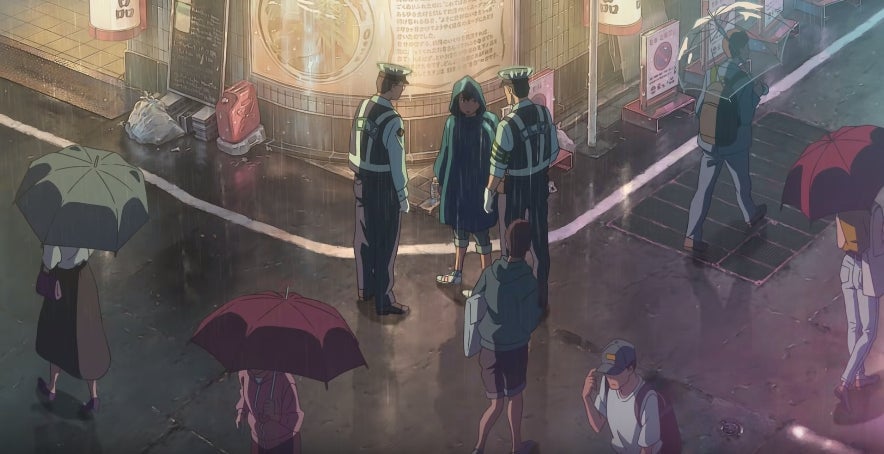 But unlike Your Name, in which Tokyo was a chic city with fashionable streets and delicious food, the Tokyo of Weathering With You is filled dingy streets, rusted staircases, old love hotels and shady characters. It’s an unforgiving place, wet and cold, where people must do anything to survive.
During an early Tokyo montage, a “Vanilla” truck recruiting women for the sex industry rolls by, playing the recruitment jingle offering “high-paying work” to women. You’re bound to hear that on the actual streets of Tokyo, but this is the first time I’ve heard it in an anime. It was jarring and unexpected, and that was probably the point.
Hodaka starts applies for some part-time work, but the replies he gets are for jobs in fuzoku (the sex industry). He goes to a series of interviews, probably to manage one of those types of places, and gets rebuffed by yakuza types for being too young. With no options for work, he ends up on the street, tired and hungry. It’s a stark view of Tokyo and one that isn’t typically shown in mainstream anime or Japanese movies. This isn’t the Tokyo of Your Name, and in that regard, it makes for a fascinating contrast.
But that’s the problem. When Weathering With You is compared to Your Name, it reveals more of the latest film’s weaknesses. Parts of Your Name are silly and dumb, but the emotional high points are pulled off with deep, emotional meanings on multiple levels. For example, Your Name makes several indirect references to the 2011 Japan Earthquake and Tsunami. For audiences in Japan, the imagery evokes incredibly powerful memories.
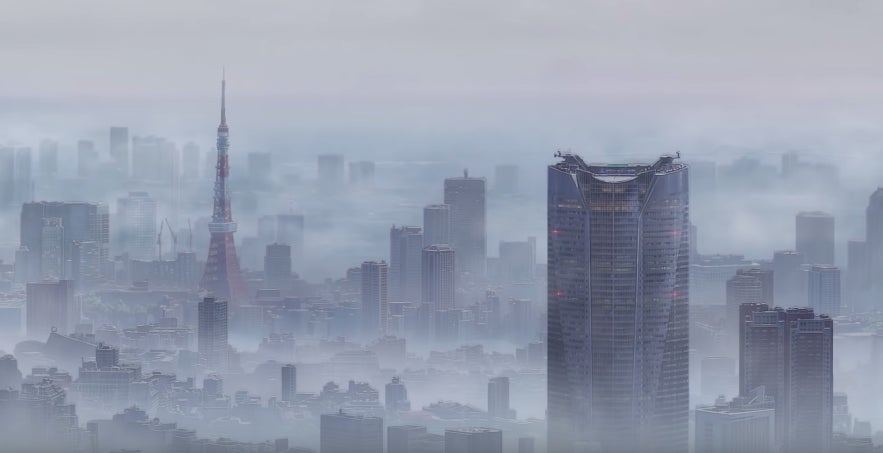 However, in Weathering With You, the connection to real-world weather seems muted and like a missed opportunity. Weather in Japan has long been predictable. But in the past few years, Japanese weather, like weather all over the world, has gotten increasingly strange, relentless and dangerous. In the movie, it’s mentioned how the weather has been changing, but it’s in relation to how spring and summer have become less enjoyable for kids in Japan. There’s nothing about how dangerous this weather has become. And even with the movie shows the power of weather, the impact is underplayed.
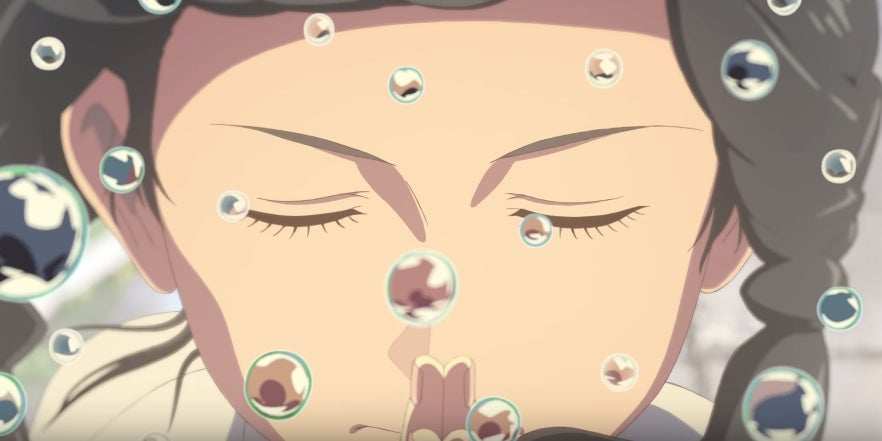 While the supernatural elements in Your Name feel organic, the supernatural elements in Weathering With You, especially later in the film, do not. Much of Weathering With You’s plot feels like plot, designed to shuffle audiences along to specific scenes, and certain story elements were clumsily executed and seem more at home in your typical Hollywood movie. While the characters are sympathetic, some of the decisions made later in the movie are downright selfish, with little thought given to the larger ramifications of their actions. They’re teenagers, so I guess that makes sense, but once they’re confronted with the results of those decisions, there doesn’t seem to be much reflection or thought given to them.
 That doesn’t mean Weathering With You is a bad movie. It’s not. It’s good. Go see it. Parts of the movie are incredibly moving. Shinkai’s ability to contrast traditional Japanese religion and beliefs with modern society continues to be interesting. He’s an exciting filmmaker, and I look forward to seeing what he does in his next film.
But ultimately, the biggest problem that Weathering With You has is this: it’s the follow up to Your Name. Thankfully, the next film won’t have that issue.
 This review was originally published on July 19, 2019.