For this week’s Burning Questions, Kirk and Jason talk about one of the oldest traditions in video games: boss fights. Why do they exist? How do they reflect real life? Are they relics of a bygone era? What games shouldn’t have had them at all?
My goodness! Those sure are some… Burning Questions
Kirk: Why hello, Sir! Today we’re going to talk about boss fights. And I don’t mean arguments with Totilo.
Jason: Do you mean boss like the 50s slang? Really awesome fights?
Kirk: Yes. Actually, I just want to talk about that one fight scene in West Side Story. That was so boss.
Wait, no… I mean video game boss battles, Jason.
Jason: Oh. Boffo!
Kirk: Keen!
Jason: So: do you like video game boss battles?
Kirk: Well… I’d say that I, like many gamers, have complicated feelings about them. My relationship to video game bosses has changed over the years. As, I would imagine, has yours.
Jason: Oh, definitely. But, then again, games have changed the nature of boss battles over the years, too. For the most part, games used to treat boss battles like a reward for slogging through endless dungeons and levels. They’d be different, unique experiences that were fun and challenging to take down, in contrast to the rest of the game.
Kirk: It’s funny you mention that they were different experiences—in an older JRPG, for example, the bosses weren’t the same as the enemies you’d been fighting leading up to them. You view that as a strength, but in many modern games, the exact same thing feels like a weakness. Take, for example, the now-infamous bosses in Deus Ex: Human Revolution. The whole problem with them was that they didn’t feel in tune with the rest of the gameplay; you couldn’t beat them with stealth, for example.
Jason: Which I guess was kind of disorienting for most players. Probably because the bulk gameplay of Human Revolution is so smooth and satisfying that nobody wanted it to change that formula for boss fights and start acting like just another first-person shooter.
Kind of the opposite of the whole “boss fights as reward” idea. In Deus Ex, boss fights were punishment.
Kirk: And that’s been true in so many recent games. Human Revolution, The Witcher 2, Uncharted 2, the final boss in Mass Effect 2… all of those games threw in a boss that changed the formula in a bad way.
Rather than feeling like it was a refreshing change of pace, I resented the game for it.
Jason: Do you think all of those games would have been better experiences without boss fights at all?
Movies have climaxes. Games have boss fights.
Kirk: In the case of Mass Effect 2 and Uncharted 2, yeah. Or at the very least, if they’d managed to craft final encounters that were more in line with the rest of the game. Mass Effect 3‘s climactic combat encounter was much more harrowing and enjoyable than its predecessor because it was just a really dialed-up version of the combat that had come before it. If Uncharted 2 had done something that involved platforming and shooting in an exciting and difficult way, it would’ve been much better than that stupid fight against whatsisname the war criminal.
These games stuck to a convention that didn’t fit their gameplay. I’m curious about how that came to be. Why do you think we have boss battles in the first place? Why is this a tradition in games at all?
Jason: I think the idea of multiple staggering obstacles culminating in some massive climax is as integral to gaming as it is to any other media. In movies, it’s that one big scene—you know the one, the part where the bad guy is about to marry the girl and the pastor asks “does anybody object?” just before our hero runs in and says “I do,” then delivers an impassioned speech that steals all of our hearts.
Movies have climaxes. Games have boss fights.
Kirk: It’s kind of a reflection of life too, isn’t it? Life is a series of waypoints like that, of climactic encounters spaced out by more routine challenges.
Jason: Deep.
Kirk: Pardon me, I’m going to strum some chords in this dorm room.
[Plays the opening of “Blackbird,” forgets the bridge.]
But when I look back at older boss battles, I see two different things. Many JRPGs use boss battles simply as a really stiff challenge that you have to overcome, but they’re not directly tied to the gameplay leading up to it. The boss is just… really hard. JRPGs I’ve recently played like Chrono Trigger, or Final Fantasy VII or Persona 3 all have bosses whose powers are fairly arbitrary—they’re just really difficult, and as long as you’re at a certain level, you can proceed.
But other games use boss battles more like a final exam. Zelda is the best example of this—you learn a skill in the dungeon, and then you use that skill to beat the boss. Each one feels specifically designed to test you on what you’ve learned. Pencils down, students!
Jason: I guess that sort of plays into the difference between turn-based and action-centric RPGs. (And, yes, Zelda is an action-RPG. Deal with it.)
Kirk: Consider it dealt with.
Jason: When you think about bosses in a turn-based RPG, you think about enemies that are harder than average, maybe requiring you to level up or use a special elemental spell to take them down. But when you think about bosses in an action-RPG, you usually think of these massive, hulking creatures that have specific patterns and weaknesses that you have to really think about before taking them down. They’re puzzles.
In current action-RPGs, the best boss fights are the ones that stick with that formula. Like, I remember specifically enjoying one fight in Deus Ex: Human Revolution because I found out that I could take him down in one shot by hanging out in a certain area behind a glass wall and waiting for him to leap over. That was a cool little puzzle, and it was satisfying to solve.
Kirk: Ha, even though that sounds more like an exploit than a puzzle solution.
Jason: Pft, it’s only an exploit if the developer didn’t intend to put it there!
Kirk: Ha no, of course – and I’ve done the same thing many times. I just fought the dragon Alduin for the first time in Skyrim and my horse got involved (as they do), which caused the dragon to bug out and get lodged on a rock at the top of the mountain. So, I spammed him with arrows until he went down. Seemed like fair play to me!
But as for what you’re saying about bosses being puzzles: Really, a good boss encounter is a puzzle whether or not it’s organically tied to the section of the game that’s led up to it. Take “Natural Dancer,” a super-difficult boss that I faced in Persona 3. The only way to beat it is to figure out its attack patterns, to pick the right party, and to combine your buffs and power-ups in a specific way to counteract its attacks. I died a lot of times, and it really did feel like a puzzle. That said, it didn’t feel like an exam in the way that a Zelda boss does. I’m not really sure that one is better than the other; but they feel different.
But here’s a question: does a “climactic encounter” necessarily have to be a “boss battle” as we’ve come to understand it?
Jason: Of course not. Look at Planescape: Torment, an experience generally regarded as one of the best stories in video game history. You can finish its final sequence in several ways, one of which is talking your enemy into killing himself. For all of the choices touted and promised by Bethesda and BioWare games, few have compared to the ones in Planescape. And that game was hella climactic.
Kirk: Yes! That is a fabulous example. And honestly, the conversational boss encounters in Human Revolution are other good examples of this. And, if we’re looking at “other types” of boss battles, one could say that the exams in Persona 3 are boss battles of a sort. They quiz you on the things you learned in class, after all.
The idea that a game needs to drop a huge hitpoint-sponge into the game every so often feels lazy. That said, when I finally do beat a very difficult boss in Bayonetta or God of War, I feel a real catharsis. I look at the smoking wreckage of the boss and I think “Yes, I have made progress.” It’s a good feeling, even if the battle itself was maddening.
Jason: Well, some of the exams in Persona 3 aren’t actually based on things you learned in class, if I remember correctly. I recall one test that asked me some nonsense about a tomb that I definitely had never learned before. Talk about a terrible boss fight.
Kirk: Ha! The exam equivalent of a cheap, brand-new type of attack.
Jason: Good thing I had Google.
Kirk: You googled the answers on a Persona exam? Jason, I am appalled.
Jason: Oh, so sorry. Remind me again where the Kitora Tomb is located?
Kirk: Uh… actually… I totally googled stuff in that game too.
Jason: See? Cheating feels good. So on the flip side, what about Shadow of the Colossus? I’m probably one of the few people on earth who didn’t really care for that game, likely because it’s all boss fights. Too many climaxes. Not enough to keep me engaged or interested in the world. Not enough people!
Kirk: That game really does have a completely different flow to it than most games. I think that’s part of why people see it as a paradigm-shifting work. It shrugs off a lot of video game conventions; the action between boss encounters is one of them.
But look at a game like Journey, say—that game doesn’t have any boss encounters either, but it does have a natural ebb and flow with a couple of incredibly cathartic climaxes. There are shades to this whole thing, it’d seem. It’s those gaudy spikes—the Draugr in The Witcher 2, the invisible chick in Deus Ex—that feel out-of-place and weird.
Jason: There are Draugr in The Witcher 2? I thought you said it wasn’t Skyrim
Kirk: Well there’s just the one. But it’s more annoying than all of Skyrim‘s Draugrs combined.
Jason: So here’s another question: Does a game feel incomplete when it ends without any sort of boss battle or significant hurdle?
Kirk: Sometimes, yeah. Take Brutal Legend, for example. It did have a boss battle of sorts, but it still felt weird and incomplete. But I do think there’s a way to reach a climax without necessarily making us “swallow a Sephiroth,” as it were.
(Wow, that sounded dirty! What is it about Sephiroth…)
Jason: I’ve had to swallow a few Sephiroths in my day.
Kirk: Haven’t we all, Jason. Haven’t. We. All.
Speaking of that: What would you say is the most memorable boss battle you’ve ever completed? And is that the same as the “best” boss battle?
Jason: Well, boss battles aren’t only a good way to add climaxes to a game; they’re also a good way to let you unleash your anger on somebody you hate.
A villain. Somebody who’s been haunting you for ages, maybe even running around the world, just one step ahead of you for a solid 99% of the game.
Kirk: God of War style—just punch their eyeballs out and rip their head off.
Jason: Right. So the most memorable boss battle I’ve ever beaten is Suikoden II‘s Luca Blight. Luca is this nasty, 100% pure evil piece of work who has a penchant for forcing civilians to squeal like pigs before he takes off their heads. And when you finally find a way to beat him, you can barely even do it yourself. It takes you three—count’em—three entire battles with different six-person parties just to get him wounded. When you finally finish him off, he has some chilling words about how much it took you to bring him down. But when he’s finally dead, it all feels worthwhile. It feels like you’ve just brought down a near-insurmountable force of evil.
From an emotional, narrative-centric perspective, that sort of experience is hard to beat.
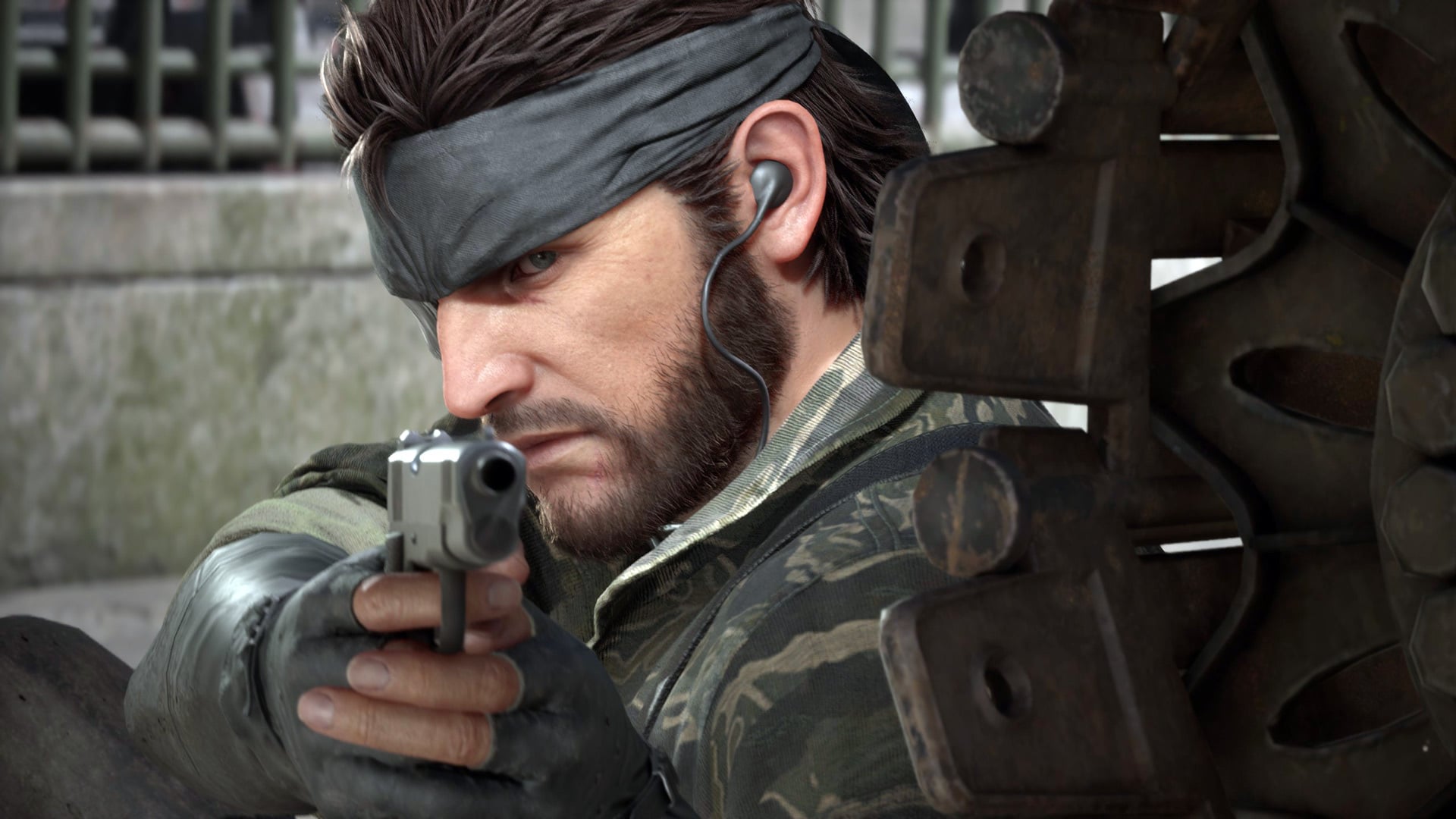
Kirk: I’ve felt that way about the bosses in the Metal Gear games, too. In Metal Gear Solid 4, the members of the Beauty and Beast unit—none of the encounters were all that hard per se, but they were thematically fascinating in their variety, and haunting in how they each concluded. Particularly that snowy battle against Crying Wolf.
I didn’t hate those women; rather, I felt empathy for them,, particularly after I defeated them and learned their story. Even as I was forced to put them out of their misery.
Jason: Yeah, all the Metal Gear Solid games had pretty neat boss fights. They all followed different patterns, too. Remember sniping down that old man in the wheelchair from Metal Gear Solid 3? I think his name was The End.
Kirk: Believe it or not, despite all the HD re-releases I have, I still haven’t faced The End. But I know that’s one of the Ultimate! Metal Gear! Boss Battles! of all time.
Jason: You had to use a sniper rifle to hunt him down in a gloomy forest. It was slow, excruciating, and awesome.
Kirk: Sounds very Metal Gear. That was what I liked about Crying Wolf in the fourth game—it was this slow, almost meditative process. And you spent most of the time snowblind, unable to see anything!
But here we are talking about good boss battles. What fun is that? What are some of the worst boss battles you’ve ever played?
Jason: That Metal Gear Solid 4 end fight against Liquid was pretty awful. But not the worst.
Kirk: Yeah, the MGS 4 fight against Vamp was also excruciating. In a bad way, not in a good The End way.
All games are about the journey over the destination.
Jason: Hmmmmmmm… What about Bowser?
Kirk: Ha, which Bowser fight?
Jason: Super Mario Bros. All that work to get to him, and all you have to do is jump behind his tail.
Kirk: You don’t think that the Mario games are all about the journey over the destination, though? I think that the way you describe the Bowser battle is kind of appropriate! “The princess is in another castle,” and all that.
Jason: All games are about the journey over the destination.
Kirk: That, I believe, qualifies as a… Bold Statement.
Jason: If they’re not, they’re probably bad games, no?
Kirk: The truth within that generalization feels really appropriate to this topic, actually. The way they’re usually designed, boss battles sort of ARE the destination. That’s precisely why so many of them can feel awkward and out-of-place. They lie outside of the “journey” that makes up most of the rest of the game.
Jason: When they’re incongruous, definitely. I think most boss fights can be defined by the categories we discussed, right?
You have your puzzles, your exams, and then your weird outliers. Puzzles and exams are great. Challenging, satisfying, structurally coherent. But the outliers just feel awkward.
Kirk: Sounds about right to me. Stupid outliers! Malcolm Gladwell should write his next book about boss fights.
Jason: Bosses that spend 10,000 hours just being boss.
Kirk: I’d read it. It’d be super boss.