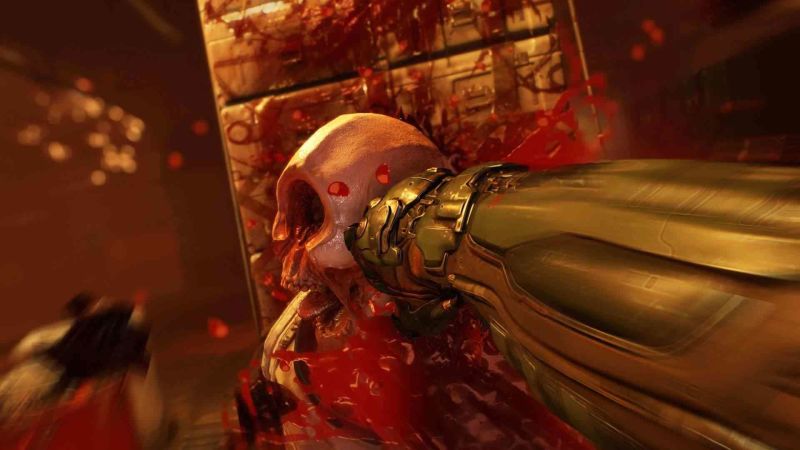
Age gates on trailers are a delay, not a barrier, a figleaf that does no more to stop kids from seeing violent content than the third-base line stops a foul ball. How many have claimed birthdays of Jan. 1, 1902?
But you may have noticed that we’ve added them to our hosted trailers for M-rated games. Increasingly, the industry and its marketing operations expect that third-party hosts of this content respect the gate. And on some level, it helps send a unified message that everyone’s serious about keeping inappropriate content away from minors.
Anyway, Ars Technica took a look at how and why trailers get the birthday-check. There’s no required rating of trailers like there is for games, so the relevant acronym is not the ESRB as much as it is the ARC. That’s the Advertising Review Council (which is also part of the Entertainment Software Rating Board).
For five years the ARC guidelines have held that marketing for M-rated games (or those expected to be M) go behind the age gate. But it doesn’t stop there. “If a third-party site wants to display a trailer for an M-rated game without placing it behind an age gate, our guidelines require that the publisher request that the trailer be removed and/or that they provide an edited version more suitable for a general audience to be used in its place,” the ESRB’s Eliot Mizrachi told Ars.
He acknowledges that these third parties are not accountable to the publishers, so the ESRB can’t hold publishers accountable for what they do. So it sort of gets back to my original point: That the age-gate isn’t about controlling minors’ access as much as making the statement that minors’ access should be controlled.
M-rated Video: The ESRB and Video Game Trailers [Ars Technica]