I remember the first time I went shoplifting. The sun was shining, Marin was singing, and I needed a shovel.
This post originally appeared on Kotaku UK, on May 11, 2015 and on Kotaku on November 26, 2015.
Two hundred Rupees was well outside my price range, but as I slipped into the village store I clocked my prize: back shelf, far left. The elderly shopkeeper rubbed his hands together at the thought of a sale, but I shamefully used his frailty against him as I snatched, grabbed, and ran behind his till. The clerk turned, but I turned quicker as I darted towards the door. He’d asked kindly that I pay, but the allure of acquiring something outside my means proved too much to resist. “Guess what?” read the caption above my head as I stepped outside. “You got it for free. Are you proud of yourself?”
The question hung in the air like a bad smell. Was I proud of myself? I’d gotten used to being ushered around linear landscapes, being channelled towards foregone conclusions. Now, I was faced with a query that not only questioned my actions, but also my morals. I don’t think I quite appreciated how significant this little segment of Zelda: Link’s Awakening was when I first played it back in 1994.
But it didn’t stop there.
Thief. Hitman. The Elder Scrolls. Fallout. Assassin’s Creed. Dishonored. Dragon Age. The Clue. The Sting. Broken Sword. Final Fantasy. Suikoden. Mafia. Saint’s Row. Grand Theft Auto. Mercenaries. Fable. The list of games wherein stealing became a fun distraction would grow and grow and grow. Why was I doing this? I wasn’t stealing in real life and have never felt the urge, so I was intrigued to explore the psychology behind why people steal in reality, in an attempt to understand the draw of virtual theft.
Professor Graham Scott of the University of the West of Scotland suggests that internal reasons, such as personality and lack of empathy, as well as external reasons, such as physically needing something or socio-economic factors, are the basis upon which people steal. The anonymity, or at least perceived anonymity, of the online spectrum drives this desire further still.
“There is a higher propensity of people who commit fraud and identity theft online as opposed to offline,” explains Scott. “One of the reasons for this is that within the online world you feel sort of isolated, and the consequences of your actions are much less apparent. If you steal from someone in the street, the risks of getting caught—the physical consequences—are greater. If you do something like that to someone online, they’re not likely to come after you, therefore you’re not going to see the damage it causes. You may be abstractly aware, but it probably won’t have the same impact.”
In the case of video games, Scott suggests that players might not actually be particularly bothered by how the act of theft directly affects others, but that they are scared of the consequences in reality. Games present an outlet. Another possibility, of course, is that certain games require the player commit theft in order to progress levels or storylines.
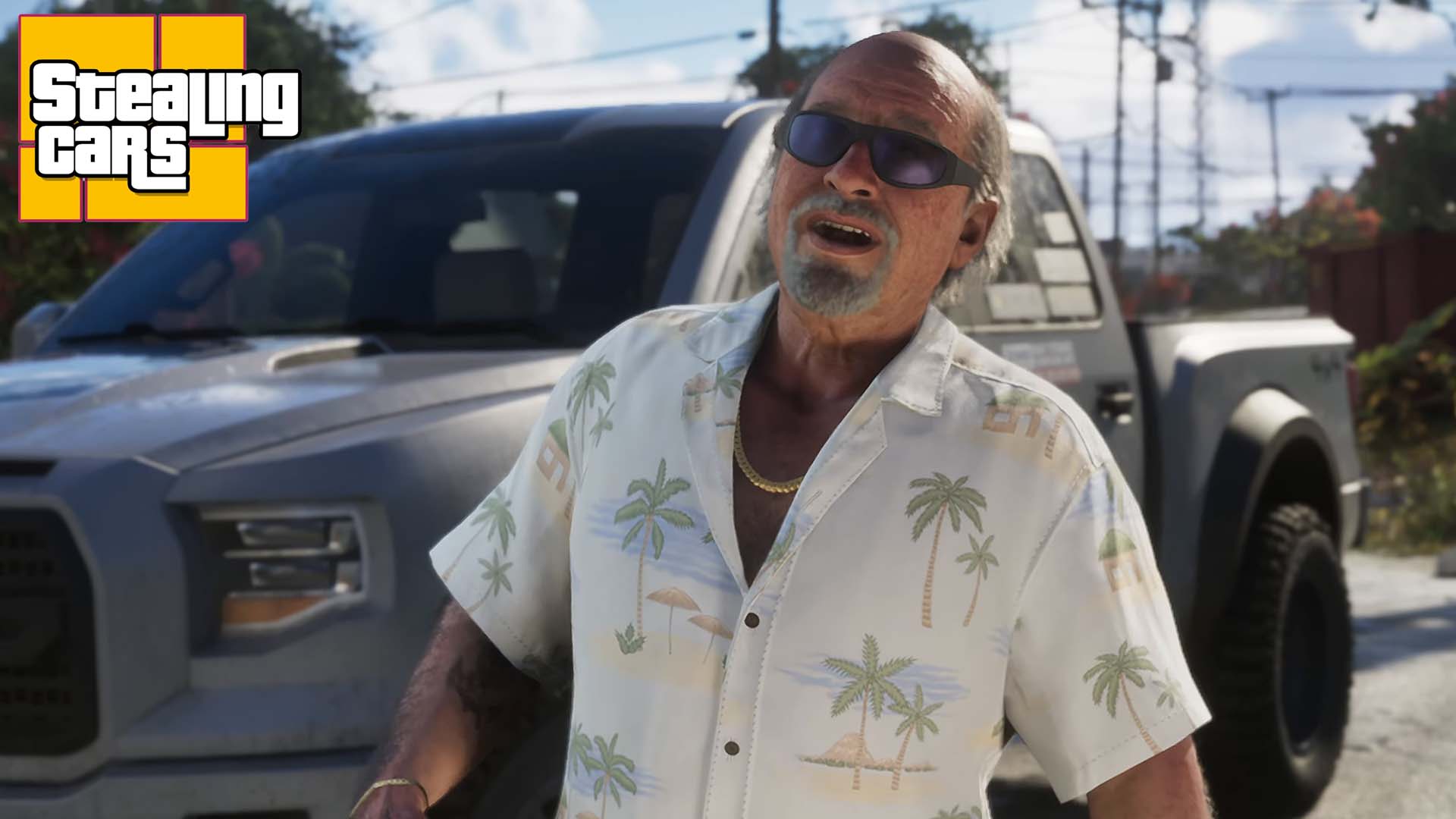
“Take Grand Theft Auto, for example,” says Scott. “The appeal of playing something like that wouldn’t be the actual act of stealing the car, it’d be driving the car and completing the mission. In that situation, you’re given a character with a personality and you’re given a script that you must follow.”
“The player wouldn’t see stealing as being something bad—most adults in real life can tell the difference between fantasy and reality—they would just see it as following the script and completing it. The danger is that, even though it’s a game, repeated exposure to these types of behaviours could desensitise you to it and normalise it so that you’re more likely to do it in real life.”
Although I don’t necessarily agree with Scott’s concern about the transference of learned in-game behaviours to real life, I think considering the process in reverse perhaps best illustrates his points. As outlined in the Zelda shovel-thievery above, stealing in times of need within video games tends to be the most necessary and/or fulfilling time to do so.
https://www.youtube.com/watch?v=55y4Ubfjtx0
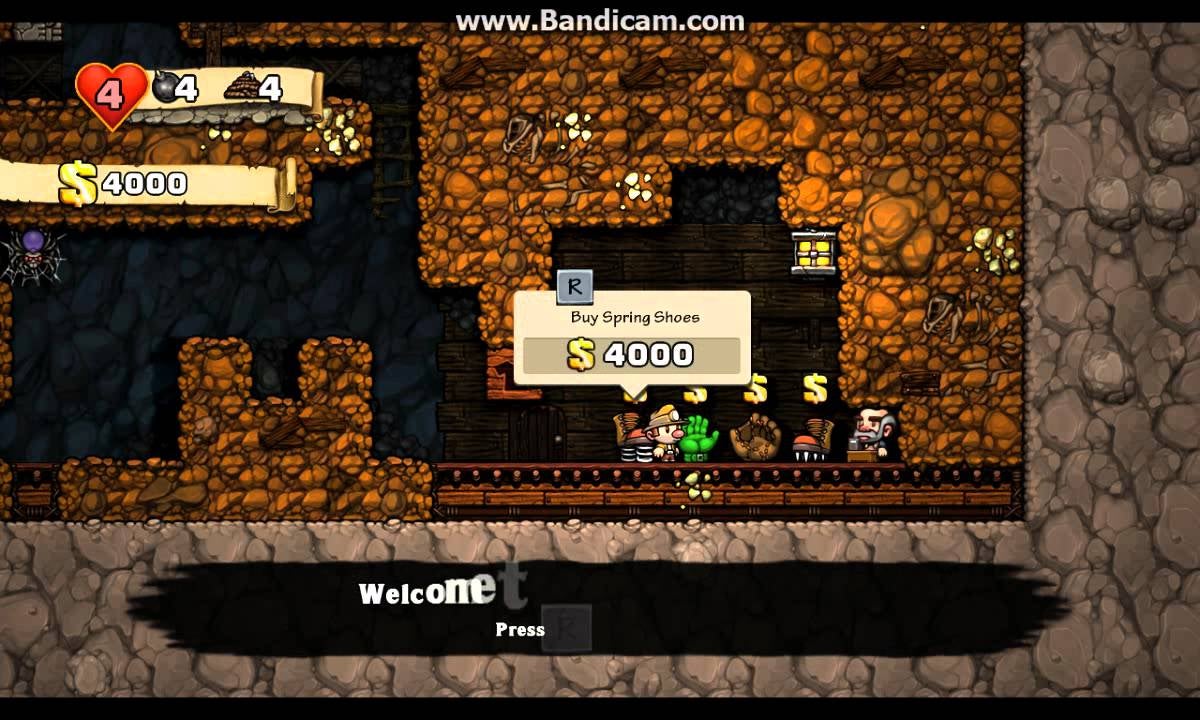
If you bankrupt your bomb and rope stockpiles in the opening levels of Spelunky, for instance, you can always rob the shop—though you’d best be quick enough to escape the ricochet of the aggrieved shopkeeper’s shotgun blast as you scramble back into the depths of the caves. Hey, you’ve only got to worry about him and his relentless, bloodthirsty revenge-quest for the rest of your game, popping up in every single level thereafter—to the point where ‘wanted’ posters adorn his walls with your face.
But the rush of swiping a shotgun or teleporter of bomb box from the old-timer’s stash is pretty damn amazing, isn’t it?
“Most people will tell you that they fell in with the wrong crowd, but I never believe anyone who says that,” David tells me. David, a pseudonym decided upon before our conversation, is from Glasgow and served an eight-year prison sentence for armed robbery in the 1970s.
He asks me if I’ve ever stolen anything before. I tell him no, because I’m fairly certain swiping a shovel in Zelda doesn’t count. “Well, let me tell you, the buzz you get is second to none—no matter if your friends are idiots or otherwise. Even if you’re in a group, you’re not doing it for them, you’re doing it squarely for yourself.”
David begun stealing from a relatively young age, taking shoplifting on as his full-time job, before graduating to more aggressive acts of theft. When he was eventually sentenced to prison, he and a few others had been caught holding up a city centre bookmakers at knifepoint.
“I started shoplifting when I was younger, around my early twenties or so,” he continues. “Mostly clothes, sometimes aftershaves, perfumes, things you could always sell on at pubs or at the pawnie (pawn shop) or the football, really. This was long before the internet so you had to be creative with your audience. I’ve been in and out of employment all of my life, you see, so most of the time shoplifting was easier than holding down a shitey, boring job.
“I knew a lot of folk who could get me things too and I was really good at it on my [own], so I was making far more money than working for someone else would’ve given me. When we robbed the bookies it was like taking that buzz further. There was risk, sure—fuck I know that, and some, now—but the reward trumped the risk. Thinking back, it’s hard to put yourself in that mindset, I thought I was fucking invincible. I obviously wasn’t.”
David goes on to explain how his sentence was the maximum he could’ve received, due to his previous convictions. I ask David why I, as a player of games, might find stealing enjoyable if the act takes place in virtual reality, even though I have no desire, consciously at least, to steal in the real world.
“Well I know next to nothing about computer games,” he admits. “But my grandson is mad for that one that looks like it’s from the 80s. Minecraft, is it? Let me put it this way—you said before that you’d never stolen before, but you said there just now about games that allow you to steal?”
I nod.
“So you have stolen—at least in these games. Let me ask you then, why did you do it in one of your games? Because the game asked you to? Because it felt good? It’s the same thing, as far as I’m concerned. The only difference is the real police have more concern catching up with people like me [laughs].”
“What I’m trying to say is that everyone would steal if they thought they could get away with it—just look at the rich and famous [people] who blag things. They’ve got enough money to buy things twice. As I say, I don’t really get computers, my phone is hard enough to work, but I suppose I could see how you could enjoy acting out crimes knowing there’s no real police to face up to.”
When I consider the amount of things I’ve swiped in digital spaces, I wonder if there’s any truth in what David suggests. Again, consciously, I have no desire to steal anything in the real world, but is that to do with social convention and rules and empathy? If I thought there were no repercussions, would I snatch a shovel from my local store? Am I a digital kleptomaniac?
David rightly points out that there are no real police officers chasing us down in our virtual playgrounds—but there are definitely angry shopkeepers. Lots and lots of angry shopkeepers.
“I wasn’t kidding when I said pay!” harked the elderly clerk as I returned to the Mabe Village store on Koholint Island. Finished with the shovel, I now needed a bow and arrow.
“Now, you’ll pay the ultimate price!!” he said, before unsheathing some sort of lightning wielding weapon and pulling the trigger.
Oh, bollocks.
This post originally appeared on Kotaku UK, bringing you original reporting, game culture and humour with a U from the British isles. Follow them on @Kotaku_UK