I don’t remember how long I’ve been here. Has it been minutes, hours, months? I’ve lost all track of time. Oh gosh, have I forgotten to feed my cat? Do I have a cat?
I’ve been laying in bed procrastinating contributing to society in any meaningful way for hours. Actual hours. The culprit? Those insidious, kiddie-pool-shallow Buzzfeed personality quizzes that won’t stop popping up in your Facebook feed.
I’ve just discovered that I’m Xander from Buffy The Vampire Slayer (duh, I already knew that) when it hits me: there must be something about these dumb probes into my psyche that keeps me coming back. Something structural. Something intrinsic. Something diabolical. A simpering evil that should probably be banned from schools, public spaces, and store shelves.
Then I think a little more: video games!
Seriously though, Buzzfeed quizzes (and others of that ilk) draw their appeal from some particularly potent game design techniques. For example:
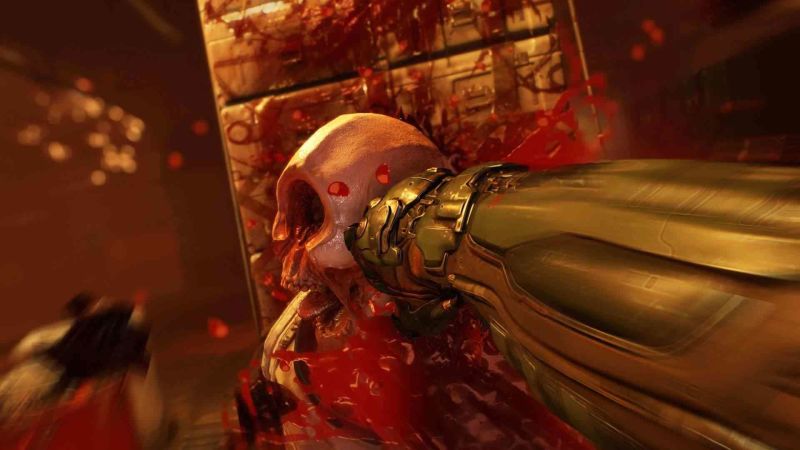
Player Expression—This one’s obvious, but it’s also the core of the whole enterprise. The best video games put player agency and expression—that is, the ability to do your thing and see the game world meaningfully change to reflect that—front-and-center. In effect, they end up telling us a bit about ourselves. Do you prefer to play shooters like a devil-may-care blender mutant of ceaseless violence, or are you more methodical in your approach? Are you a sharp-tongued charmer in RPGs, or do you prefer swinging swords to slinging words? What does that say about you, if anything?
Rapid-fire personality quizzes are player expression distilled down to its most basic form. You put in information, and you receive a simple, pop-culture-relevant evaluation of your characteristics. Quick and easy. No muss, no fuss, no other pesky game mechanics getting in the way or making things roundabout. You’re mainlining that aspect of player expression, basically. Speaking of…
Immediately Satisfying Cause-and-Effect—It’s the foundation of nearly every video game genre – from pulling the trigger in an FPS to making a hyper-roundabout play in a turn-based strategy like Civilization – but these stupid quizzes make it so fast. It’s like the character development portion of an RPG, only you get the full effect of all those branching conversations in under a minute (or maybe a bit more if you reeeeeally need to think about which sandwich condiment depicted in a Ryan Gosling movie is your favorite). It’s just a few actions off from playing a slot machine, and that’s the brilliance of it. Push some buttons, pull a lever, get a prize. But there’s also more to it than that…
Massively Multiplayer—The stupid, dumb, terrible (HELP ME STOP) quiz game doesn’t truly begin until after you’ve gotten your result. At that point, it’s about imagination and speculation. Which answer led to which result? Was the quiz spot-on or so wide of the mark that it looped back around—boomerang-style—and hit its creator in the face? Regardless, it’s a jump-off point for thought and self-reflection. These terrible quizzes give direction to something we’re often very bad at: considering ourselves from multiple angles.
Discussions, of course, spawn from that. The inevitable multiplayer mode occurs in quizzes’ aftermath. Sharing with people in your inner circle, especially, is utterly compulsive given that there’s an inherent appeal to finding out what other people think of you. Humans are social creatures, and exceedingly curious ones at that. We want to understand everything, especially ourselves. The latter is something we simply can’t do alone. Our perceptions are too limited. These quizzes—silly and even trashy as they sometimes are—push our buttons with surgical precision.
45 Seconds of Fun—There’s a school of thought in the world of game design that says most massively successful games center around a core loop of anywhere from 15-45 seconds. Just a few extremely satisfying actions, repeated endlessly. Often, the loop manifests as that aspect of a game you “crave” when you’re hopelessly addicted to it. That ache in your bones you feel for, say, the ballet-like grace of Titanfall‘s brutality. Movement, running, climbing, shooting. All simple actions that play out over and over and over in every match. And yet, they don’t get boring because of the way they come together to form a far more elaborate whole.
Quizzes leverage a similar structure, but it unfolds in a far simpler fashion. You can knock out a single quiz in no time flat and then leap right into another. Which leads to my last point…
Just Five More Minutes—It’s the classic refrain of so-called “addictive” video games. “Oh, I’ll only play for another five minutes. Just five more. Yep, five. After that, I’ll totally pay my taxes and walk the dog and do the dishes and tell those debt collectors to stop repossessing my house and negotiate with the pack of wolves that’s taken up residence in my bathroom.”
But it’s so easy to put in another five minutes, so inevitably you do. And then five more after that. And then five after that, and so on until you are bearded, homeless, and breaking into wolves’ homes to sleep in their bathrooms.
Quizzes offer an immediate, gratifying action (considering/answering questions about yourself) that produces an immediate, gratifying result (“You are… this thing! Here is what that says about you”) with an immediate, gratifying chance to do it all again in seconds. More quizzes! They’re right there. Just a single click away.
Buzzfeed-style personality quizzes are dumb, yes, but the systems surrounding them aren’t. It’s a feast of instant gratification, a dinner plate piled high with food that’s absolutely awful for you, but goodness does it ever taste good. So you gorge yourself, because you’re only human.