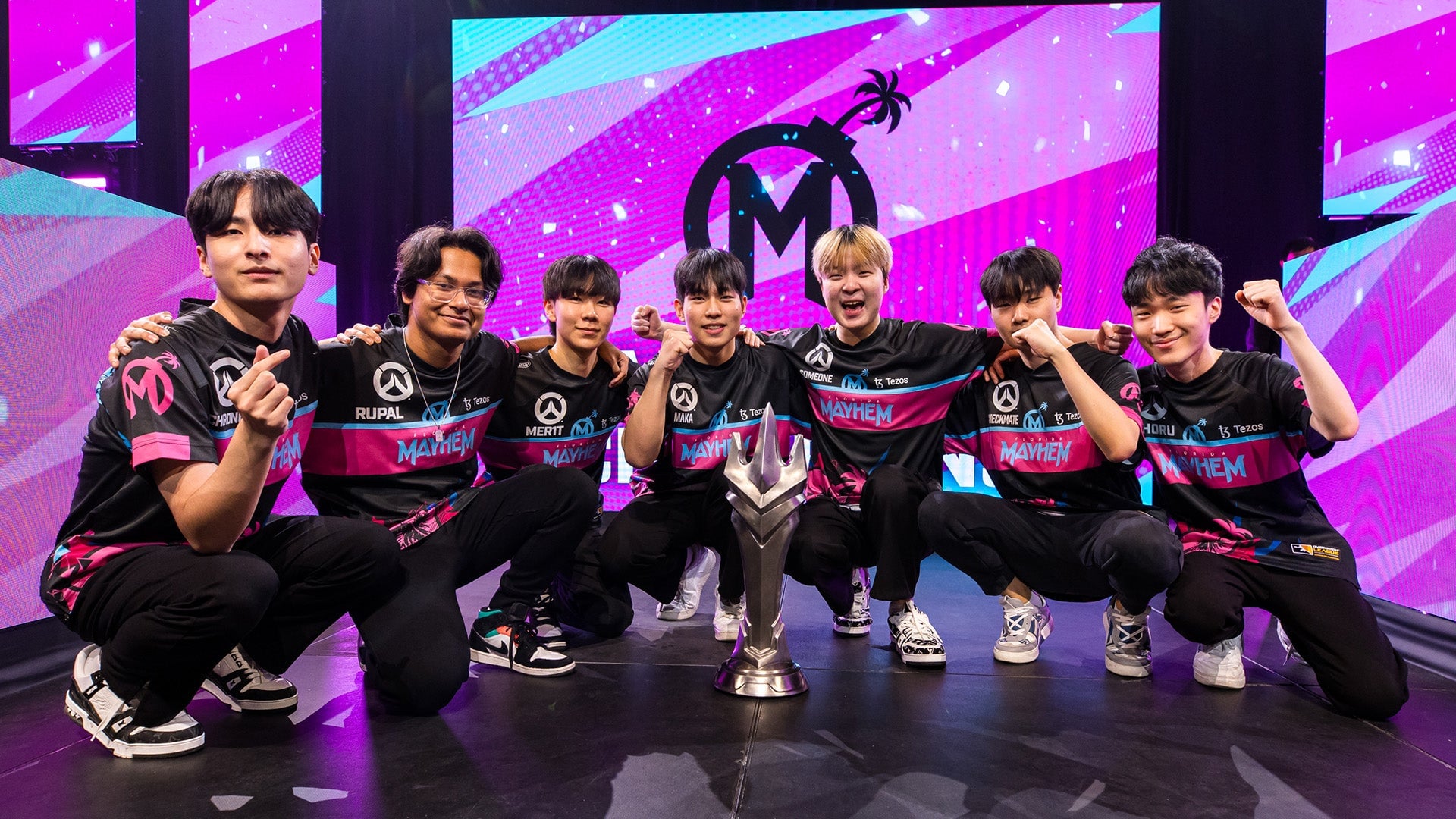
Tune in every weeknight to the University of Utah Esports Twitch stream and you can catch players from universities across the Pacific-12 conference competing in League of Legends, Hearthstone and Rocket League. It is the first league of its kind, an organization bringing together schools from a major conference for esports competitions. The Pacific Alliance of Collegiate Gamers, or PACG, a unique student-operated organization, has been in the midst of its first season since the spring semester opened and will culminate in a conference tournament this April.
PACG, though, was never supposed to exist. In 2016, the Pacific-12 conference committed to the creation of an esports league. It was something Pac-12 commissioner Larry Scott and others trumpeted with great enthusiasm as the next big thing for their brand. That is, until the end of 2017 rolled around and, with hardly a whisper, the would-be Pac-12 Esports League (or whatever they would have called it) disappeared without a trace.
I reported on that story last year for Compete. Pac-12 officials offered little justification for their decision to back out from their plans to either the public or the student organizations hoping to head the Pac-12’s new endeavor. An idea that was once “a natural fit for many of our universities located in the technology and media hubs of the country,” as league commissioner Larry Scott put it, was gone in an instant.
What sunk it? A December 2016 e-mail from University of Arizona president Ann Weaver Hart—from the week the conference voted on the proposed 2017 esports league, obtained by Compete—put the concerns of some in the conference starkly:
“…There are legal and compliance issues that have not been fully vetted and that warrant consideration before moving forward. Although this proposal is not for an athletics activity, I understand that Title IX still applies and may be cause for concern because e-Sports is currently heavily male-dominated (the Pac-12 previously estimated approximately 85-90% of participants are male); the women who do participate are increasingly reporting sexism, harassment and abuse within the gaming community; and many games contain sexualized content. There also potential Americans with Disabilities Act concerns which had not even been considered by the Pac-12 prior to this past Monday’s meeting in San Francisco. We have not yet explored whether and to what extent these games are accessible and adaptable under the ADA. Additionally, the Pac-12 has told us they are modeling the e-Sports proposal on the amateurism rules of the NCAA, and creating similar participation requirements. If the Pac-12 becomes a sort of “mini-NCAA” for the e-Sports leagues and tournaments, this could potentially trigger the same anti-trust and other hurdles that the NCAA deals with now but without some of the justifications that the NCAA uses in those cases (e.g., the long-standing tradition of amateurism in college sports).”
Hart later proposed a vote to table the proposal to create a Pac-12 esports league and stated she would vote no if a motion to proceed hit the table.
“That is not new,” Dimick said when I mentioned administrator worries over amateurism and Title IX. “When you talk to school admins about their concerns about esports, yeah, there’s always replete concern about how Title IX fits into this and about amateurism and about how some of these kids stream and make money. Also, there are other more basic and broad concerns that some school administrators don’t know if video gaming is a good look for them.”
That decision left students at every Pac-12 university with the rug pulled out from underneath their feet. Of those 12 student groups, 11 came together to form PACG in the wake of that shock.
PACG, then, is a push for legitimacy without the conference office behind it. It exists to attempt to prove to Pac-12 administrators that esports are worth the headaches — navigating the athletic department boosters who will inevitably wonder why their money is going towards gaming; fighting the stigma of gamers as antisocial or, worse, violent; figuring out how to define and enforce amateurism in a world where many esports tournaments pay cash and players can earn money streaming on Twitch.
“Student esports groups all across the country are in great need of support from universities that may not understand what they are trying to accomplish,” said Jack Callahan, a University of Colorado Boulder student-leader, and PACG Co-Commissioner. “PACG hopes to push those organizations towards supporting their local esports clubs and maybe move towards varsity programs.”
PACG is not supposed to be a permanent solution. “It’s a political movement for students to say they are not getting what they need,” Dimick says. “We hope in five years that esports has a role in mainstream athletics and it’s one of the sports college campuses invest into and have live events for and have huge audiences for. We hope to elevate college esports to a mainstream part of college campus life.”
What remains to be seen is if esports has enough to offer the NCAA to make the headaches worth it. Professional esports organizations can offer sports franchises like the Yankees a new way to interact with a young fanbase they are desperately looking to reach. How, though, will amateur esports reach people? Without the prospect of pay and the possibility of restrictive eligibility requirements, college esports may lose access to the highest level esports players, the players who typically capture the most eyeballs.
Dimick acknowledged the issues that come with enacting NCAA-style amateurism. “You want to make sure that people aren’t engaging in entrepreneurial things and using college esports as a platform to do those things,” he says of amateurism. “But at the same time, you don’t want to punish kids for having tried to be a professional player and having some success and then wanting to go to college.” There other amateur situations in the NCAA other than sports like football and basketball, though. In some sports (like, tennis), the best teenagers in the world bypass the NCAA, and the athletes competing there are a level below. In others (like, swimming and wrestling), the best athletes can take payments for international performance from their national federations while staying eligible. Tennis is a more likely template than swimming—esports doesn’t seem headed for the Olympics any time soon. But the basketball/football model is not monolithic within in the NCAA. And, of course, the whole amateurism model could come tumbling down sooner rather than later. (Here’s a handy guide for how to pay college students when that happens.)
https://deadspin.com/this-is-how-to-pay-college-athletes-1823353456
What remains to be seen is if this approach can actually resolve the conflicts a major conference like the Pacific-12 currently have with esports. If a major conference esports league enacts restrictive amateurism standards, will the product stand up? Sure, tradition and atmosphere are vital to the success of major college sports. But the real draw, the reason people pay for seats and television packages, is the talent on the field or court. If amateur esports talent like PACG’s players don’t prove to be a draw worthy of the investment and resources Dimick and the rest of the PACG are working towards, though, don’t expect the NCAA to put its extremely lucrative cartel at risk for a few elite gamers.
Esports and universities seem like an undeniable match, but the push to integrate with athletics may prove to be misguided. After the sacrifices the NCAA will inevitably require to gain entrance into its kingdom, can esports retain its soul? Dimick expressed a desire to keep governance with the students and to ensure the league enacts rules that make sense for the entire student body, but that may be anathema for the NCAA.
The other side of the equation is important, too: What does college athletics have to offer competitive gaming? Money is the obvious answer, but it was clear from our conversation that PACG is at least as concerned with gaming’s cultural cachet on campus. “Everybody wants investment and resources,” Dimick says, referring to the conference-wide push for varsity status and a place in athletics. But, he says, “Most importantly, they want acceptance by their campus to make esports part of the culture.” It echoes the attitude Echo Fox general managing partner Stratton Sclavos expressed in our conversation about how his team’s new partnership with the Yankees could elevate the position of esports in popular culture when he said with excitement, “Parents aren’t going to be embarrassed that their kids are playing video games!”
The future is uncertain, but for now, PACG is pushing towards a conference final this April. They are trying to secure a venue for a live final, but plans for championship weekend are still a work in progress. That is, except for one very important detail: Whoever makes it there will be playing for the first edition of the Bob Bowlsby Esports Trophy, named after the Big XII commissioner who trashed the idea of integrating esports into college athletics in 2017. “First of all,” Bowlsby crowed, “It’s a misnomer. It isn’t sports.”
“Comments like his,” Dimick says, “Are things that we hope we can try to prove wrong about esports.” To do that, PACG will have to build from double-digit viewership Twitch streams to filling 20,000-seat college stadiums. The Pac-12 may not believe in them, but they sure believe in themselves.