If you’re three or older, you might remember a brief window of happiness in the annus horribilis that was 2021: Wordle. It was such a lovely time, not just because of Josh Wardle’s splendid little daily puzzle game that provided light in an era of lockdowns, but also because of the multiple variants that sprang up every day. Now, though, that innocent era has come to an end, and the New York Times is taking legal action against one such game with a very similar name to its popular puzzler.
For a few months after Wordle’s breakthrough, Kotaku was gleefully discovering game after game that either iterated on the core concept, or took the general themes and applied them to other topics. So we had the spectacular Octordle, that had you simultaneously solving eight Wordles at once (not forgetting Duotrigordle with 32), and Nerdle that required you to solve math-based puzzles, or a Kotaku favorite, the screenshot-based GuessThe.Game. And then there is Worldle.
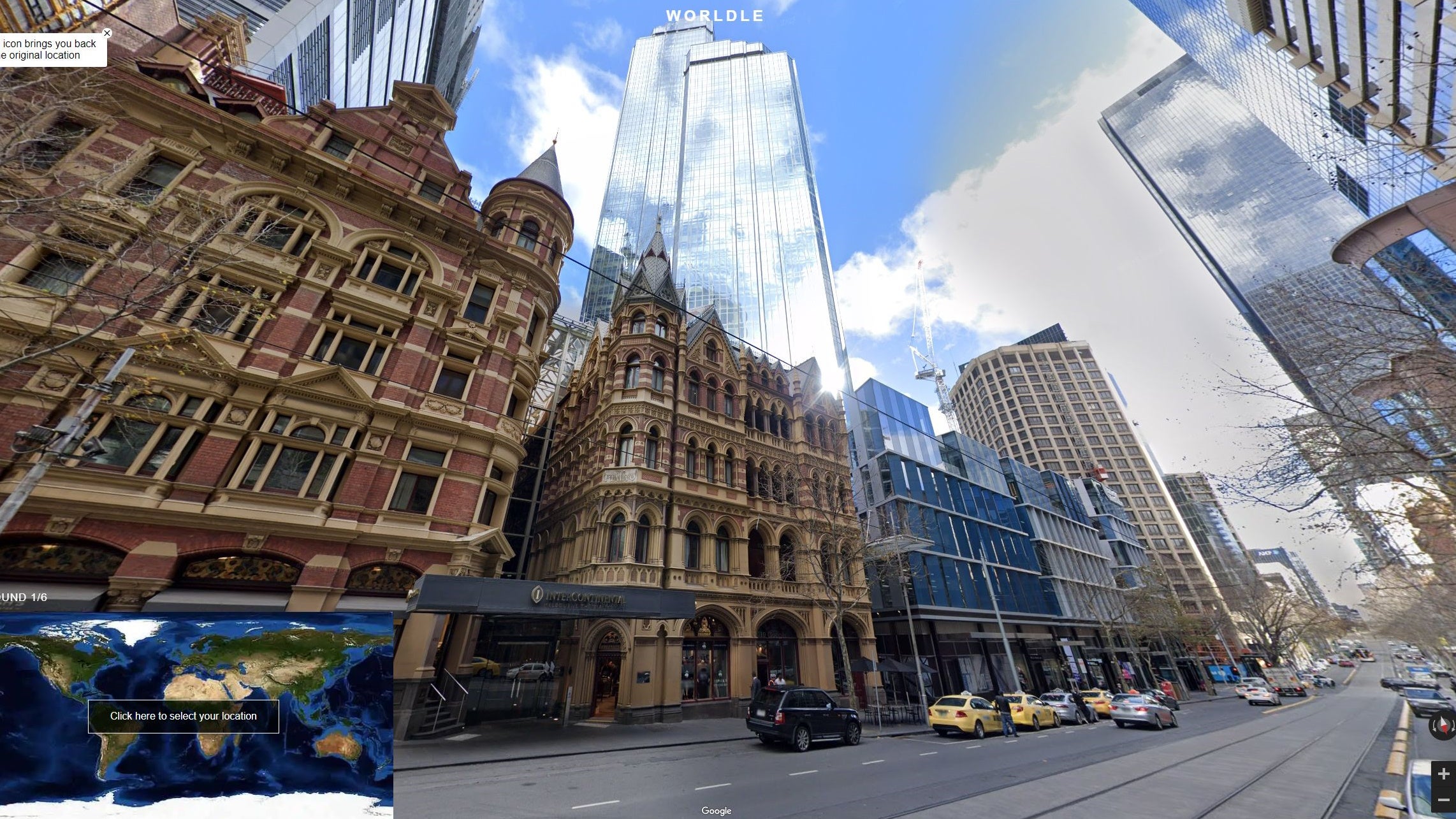
Worldle is essentially a free GeoGuessr. You are put into a Google Street View location, and have six guesses to pinpoint your exact location on a map of the world. So you look around, identify buildings or landmarks or street names, and start narrowing things down. On today’s, for instance, I figured out it must be in Australia after seeing a “.au” web address on a store front. You get six guesses, and with each it will narrow down a circle in which you’ll find your target.
Anyway, you’ve likely guessed where this is going. Yup, as the BBC reports, the NYT has now decided to take Worldle to court.
The game, which has a similar name to Wordle but almost no shared characteristics, is according to the Times, “creating confusion” and attempting to ride on the “enormous goodwill” of the Wordle brand.
Read More: 14 Games Like Wordle That Will Keep The Serotonin Flowing
Thankfully, Worldle’s creator, Kory McDonald, has told BBC News that he doesn’t intend to roll over. He said to the Beeb, “There’s a whole industry of [dot]LE games. Wordle is about words, Worldle is about the world, Flaggle is about flags.” As such, he doesn’t believe he’s infringing on anything, despite his game offering a paid version to remove ads. McDonald—the soul person behind the game—claims that “most” of the money made goes to paying Google for the Street View API, and he says he’s “undaunted.”
This whole thing only gets sillier when you find out there’s a whole other game also called Worldle, one my friends and I have been playing since its launch in January 2022, before the NYT even bought Wordle. (I am spectacularly terrible at that Worldle, because I have the geographic knowledge of a toaster.) And the paper refuses to say if it’s going after that one too. Although don’t forget, earlier this year it mindlessly destroyed an incredibly tiny variant called Wirdle, that was focused on the dialect of the minuscule Shetland Islands off the coast of Scotland.
Now, it’s true that to possess a trademark, you have to defend a trademark, because otherwise you risk its name going into the public domain. Ask Tarmac or Kleenex how they feel about that. But it’s also true that you don’t need to be a giant dick about it, and as McDonald says, “Worst-case scenario, we’ll change the name,” before adding, “but I think we’ll be okay.” And crucially, it’s clearly not an attempt at taking advantage of confusion. Hell, it’s almost physically impossible to type “Worldle.” Try it, your fingers will tie themselves in a knot. After writing this article, I look like I have the world’s worst arthritis.