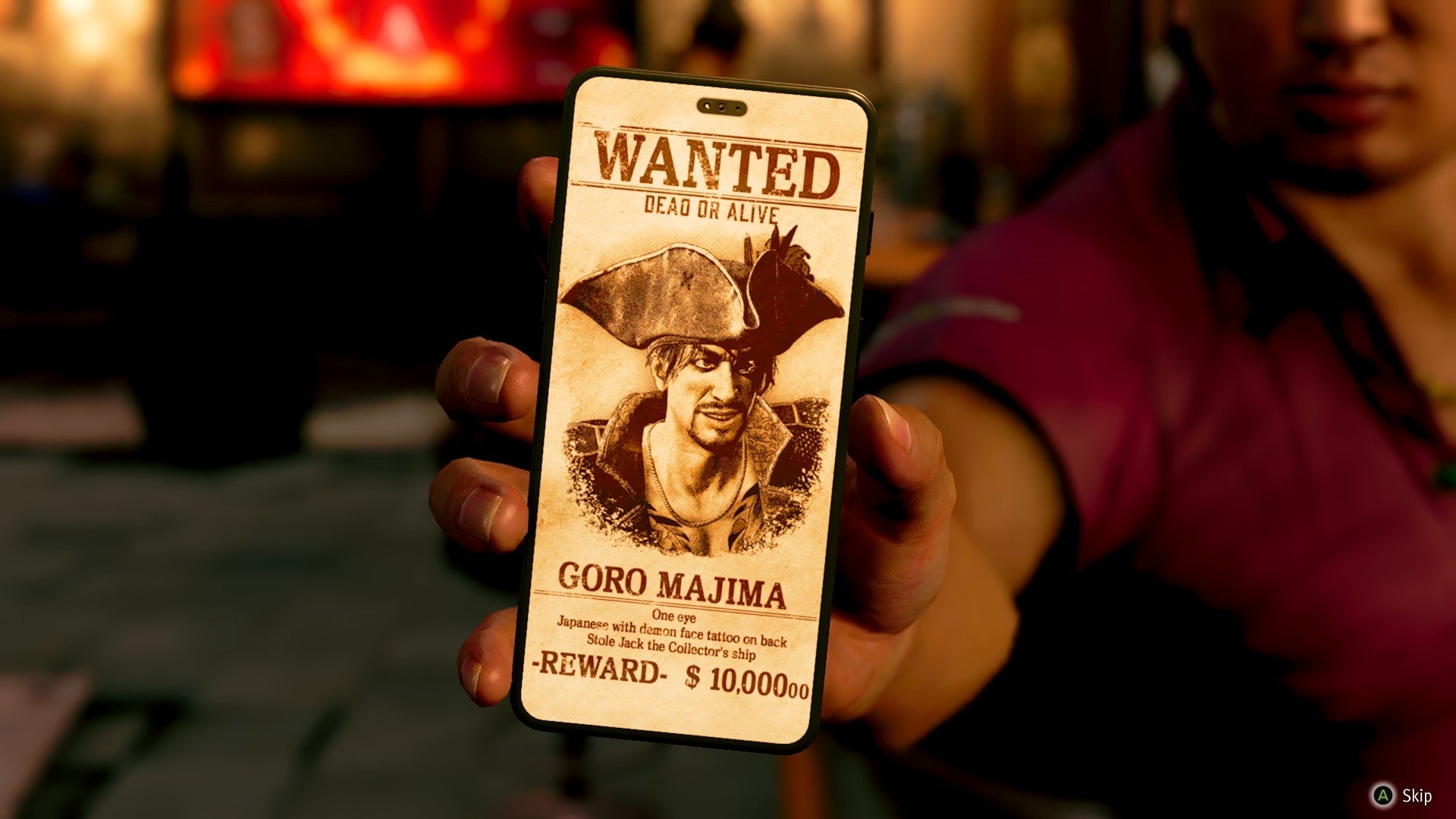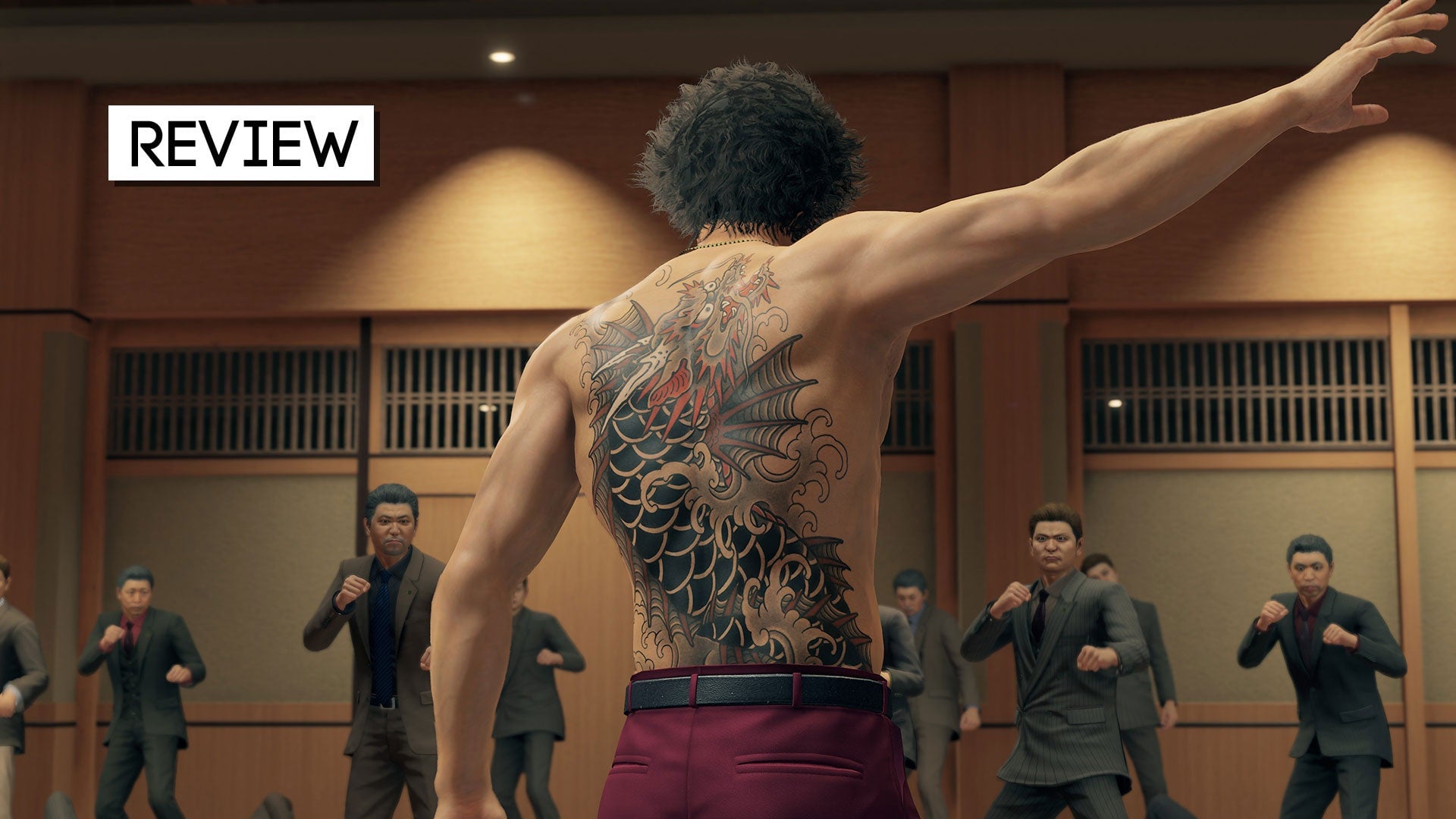
After an exhausting run of seven main games, some spinoffs and the sandwiched-but-excellent Judgment, the Yakuza series entered a new era in 2020 with the release of Like a Dragon, which is trying to be something completely new, only it’s also not.
Uh, isn’t this review a little late?
It is! Thanks to a ridiculous embargo, then being locked out of my review copy which caused my 70-hour save game to stop working, I wasn’t able to finish the game in time for release. After some back-and-forth during November, including Sega Japan manually recoding my save game, I got back in, so here we go!
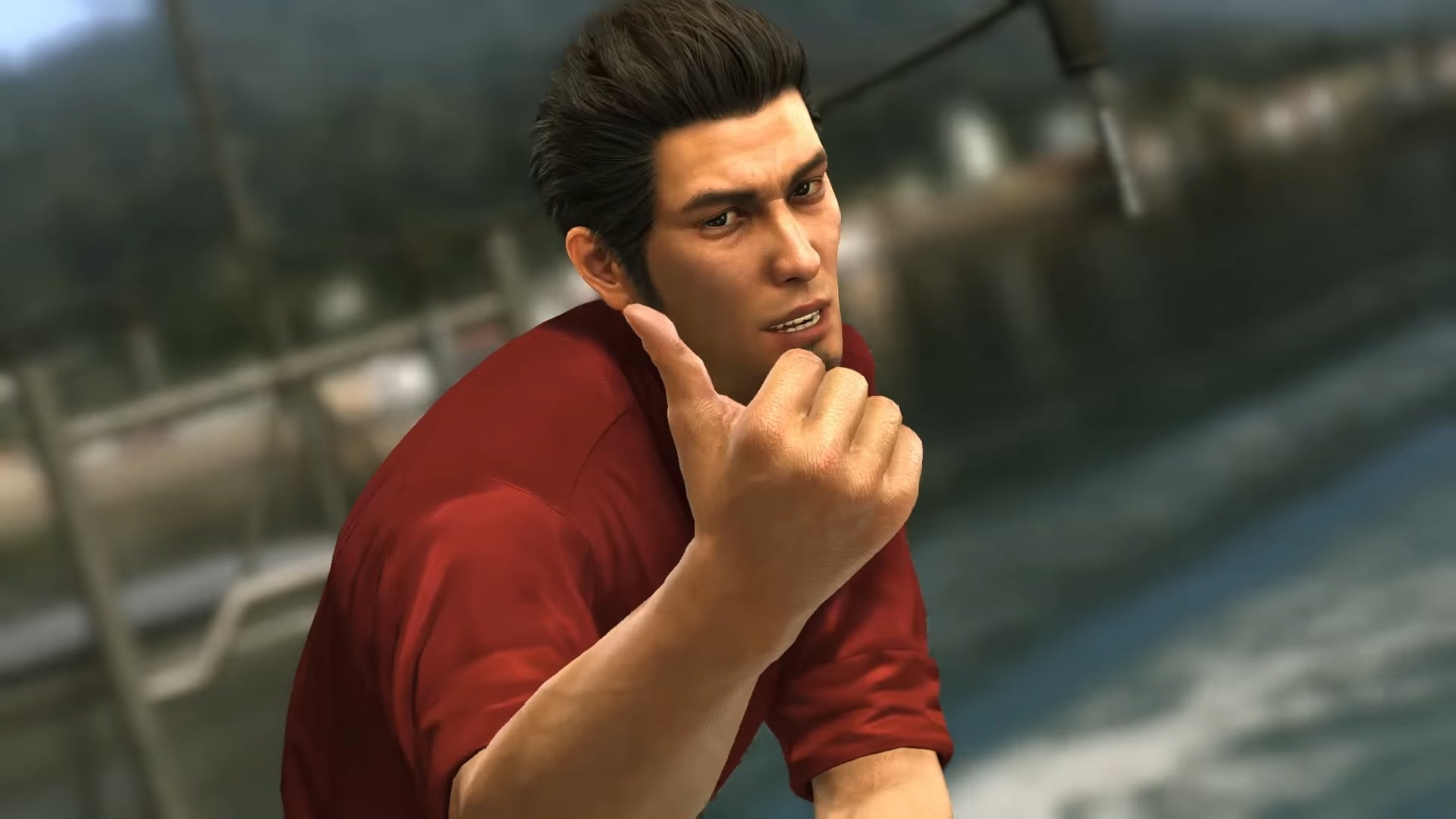
It sure seems new. The star of Yakuzas 0-6, Kazuma Kiryu, snuck off into the sunset in 2018’s game, and now makes way for a new gangster, with a new face, a new haircut, a new backstory and a new personality. Also new is the game’s setting, which briefly takes in Kamurocho before setting off for Isezaki Ijincho, based on Yokohama.
Also new is the game’s combat. Since its inception Yakuza has been a brutal action series, with its teeth-rattling physicality one of its main draws. That’s now gone, replaced with turn-based JRPG combat and a very thin—if enjoyable—narrative cover explaining the shift.
I’ve got a lot of thoughts about all of this new stuff, and Like a Dragon’s more traditional Yakuza content, so let’s not make this intro as long-winded as one of the game’s cutscenes and just get straight into it.
HELLO ICHIBAN KASUGA
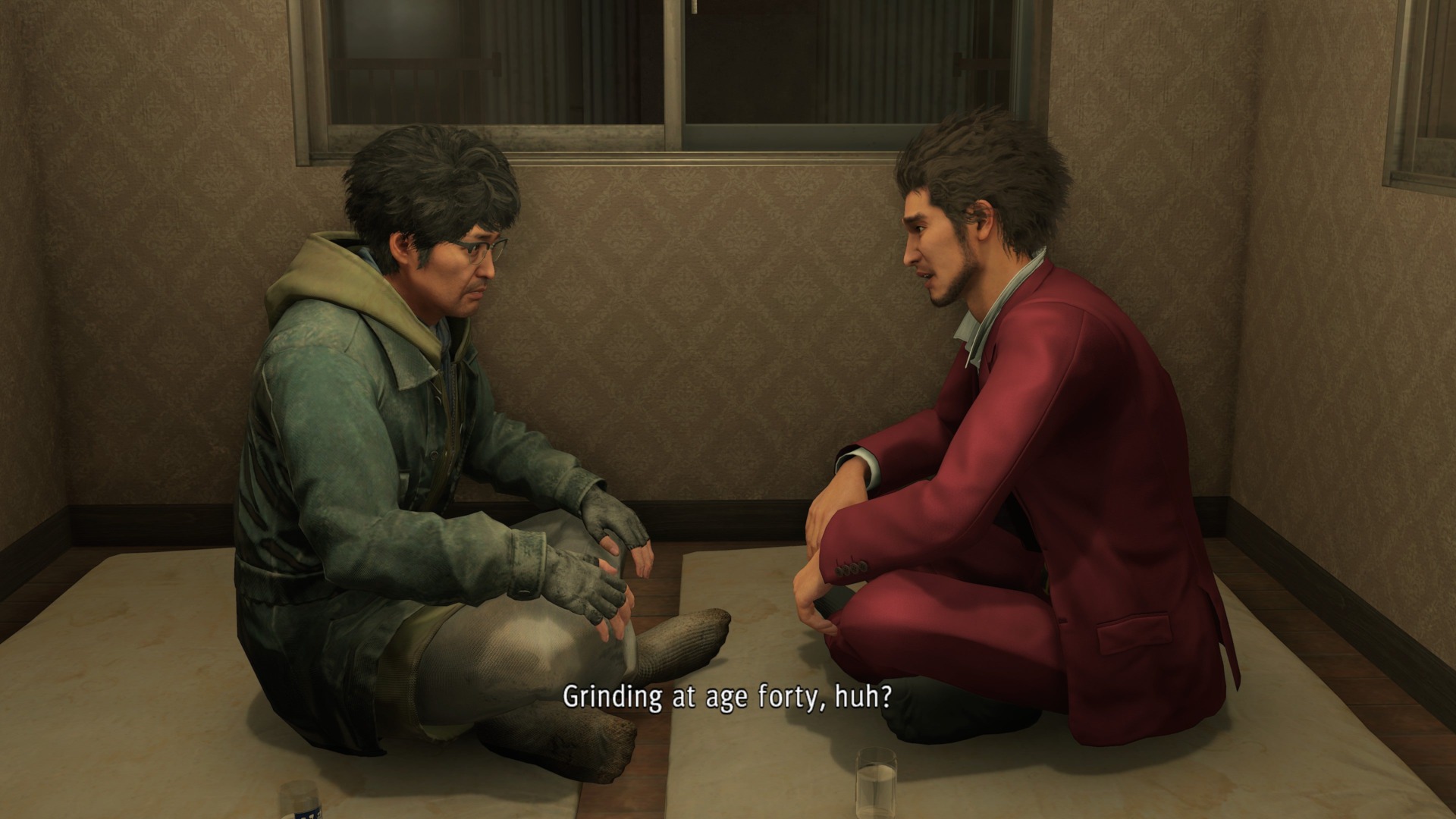
For the first time in a mainline Yakuza game, Like a Dragon doesn’t star Kazuma Kiryu. Who I love, don’t get me wrong, but he was also a man who in his old age was starting to feel pretty stiff, a walking caricature of Yakuza righteousness burdened by carrying his own backstory around with him 120 hours a year. Ichiban might wear a similar suit, but that’s where the similarities end.
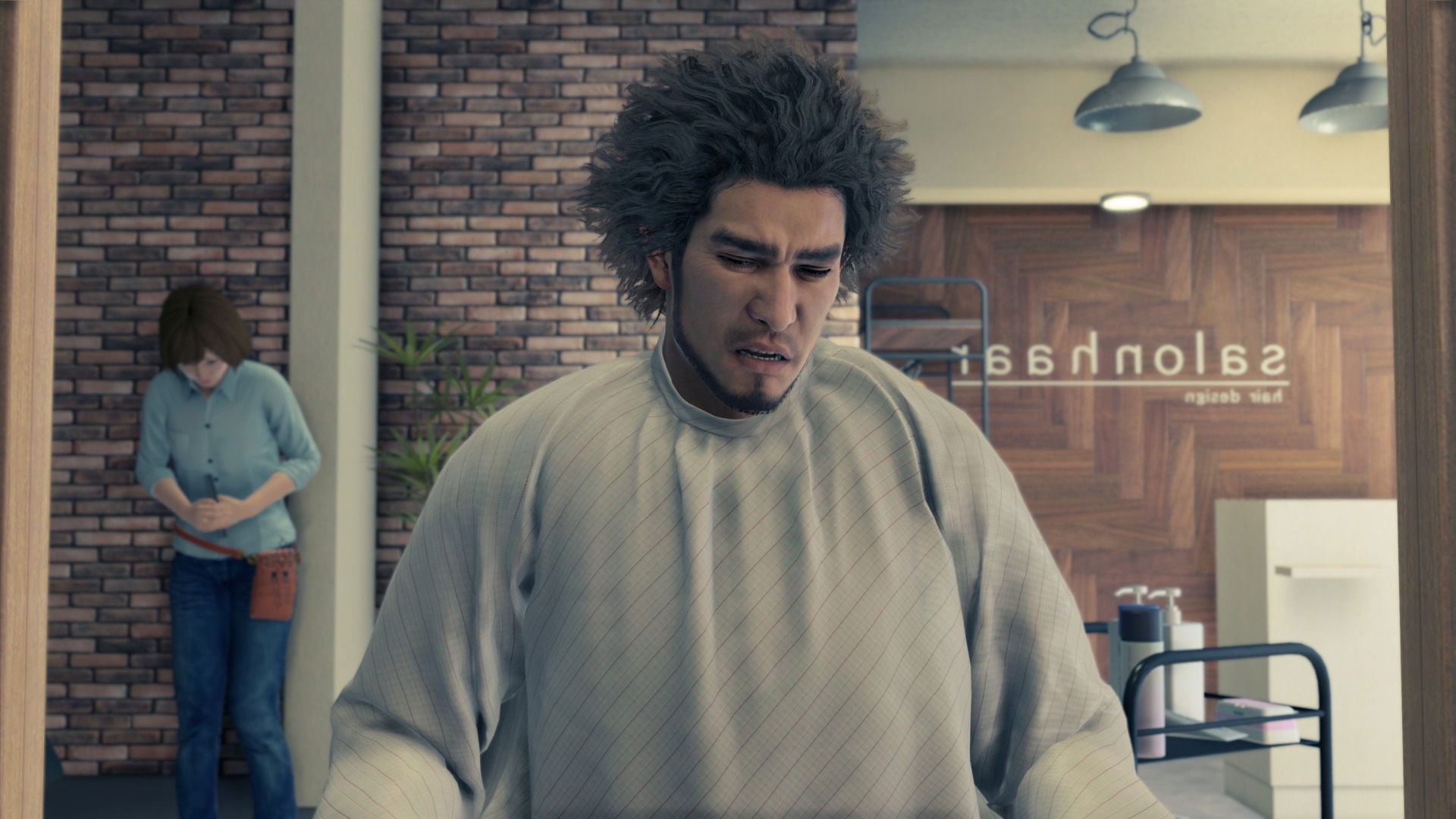
He’s a breath of fresh air, a wild and unprofessional doofus who is as happy punching first as he is getting himself into trouble. His hair is goofy as hell and I don’t know if I’ll ever get used to it (even if the story has an excuse), and at times he drifts a little too far from “earnest himbo” towards “reckless fool”, but I can let those momentary lapses slide. Ichiban is a more more approachable and flawed character than Kiryu, and I like him a lot.
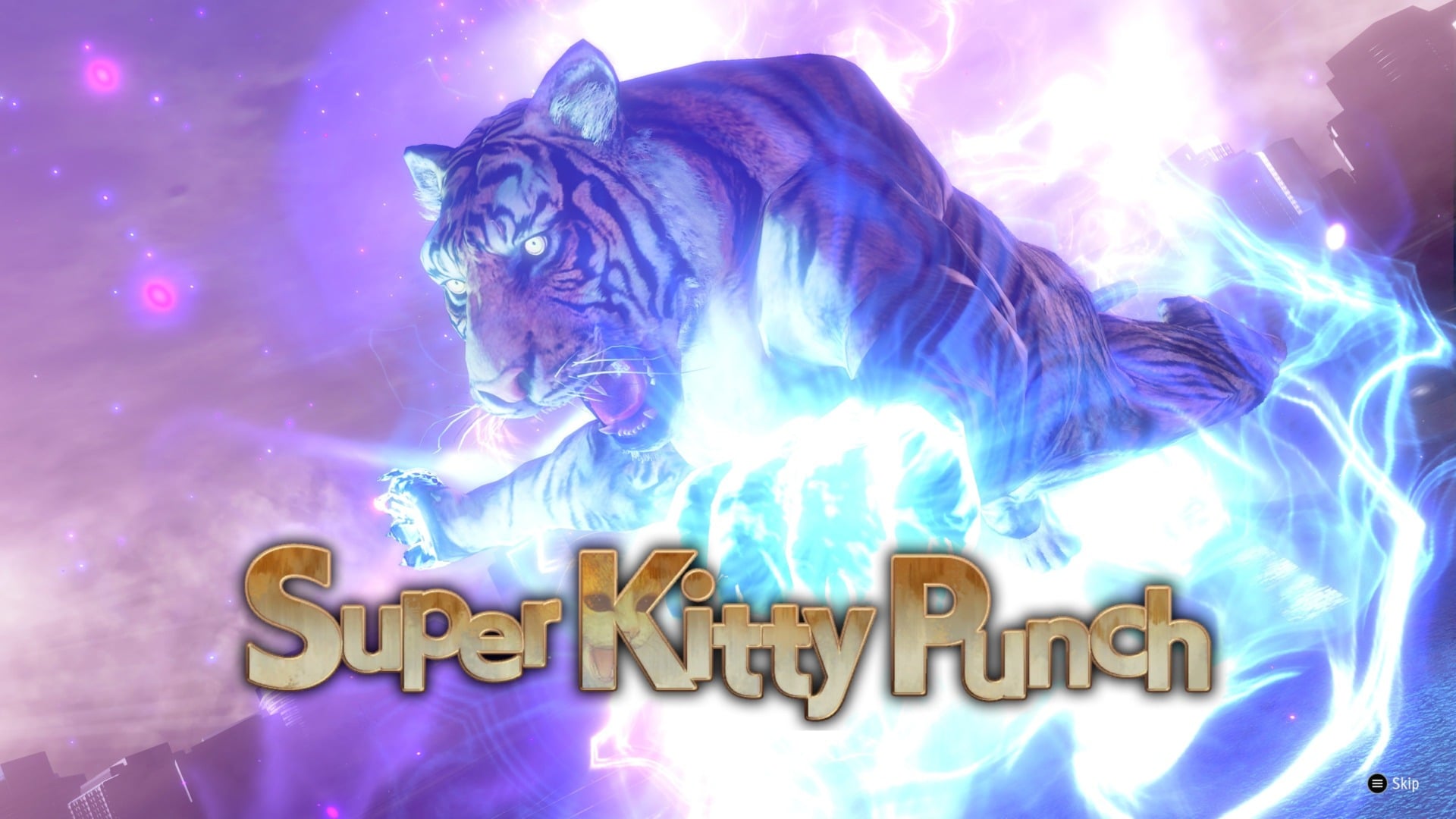
Ichiban is also the cover story for the game’s shift to JRPG battles, building his character’s heroic impulses around a lifelong love of Dragon Quest, to the point where every time he enters street combat, he imagines that he’s fighting monsters and evil creatures. So just to be clear before we go any further here, the game’s entire combat system, where street thugs and rival gangsters transform into terrorists and deep sea creatures, exists only in this guy’s head.
THE STREETS OF ISEZAKI IJINCHO
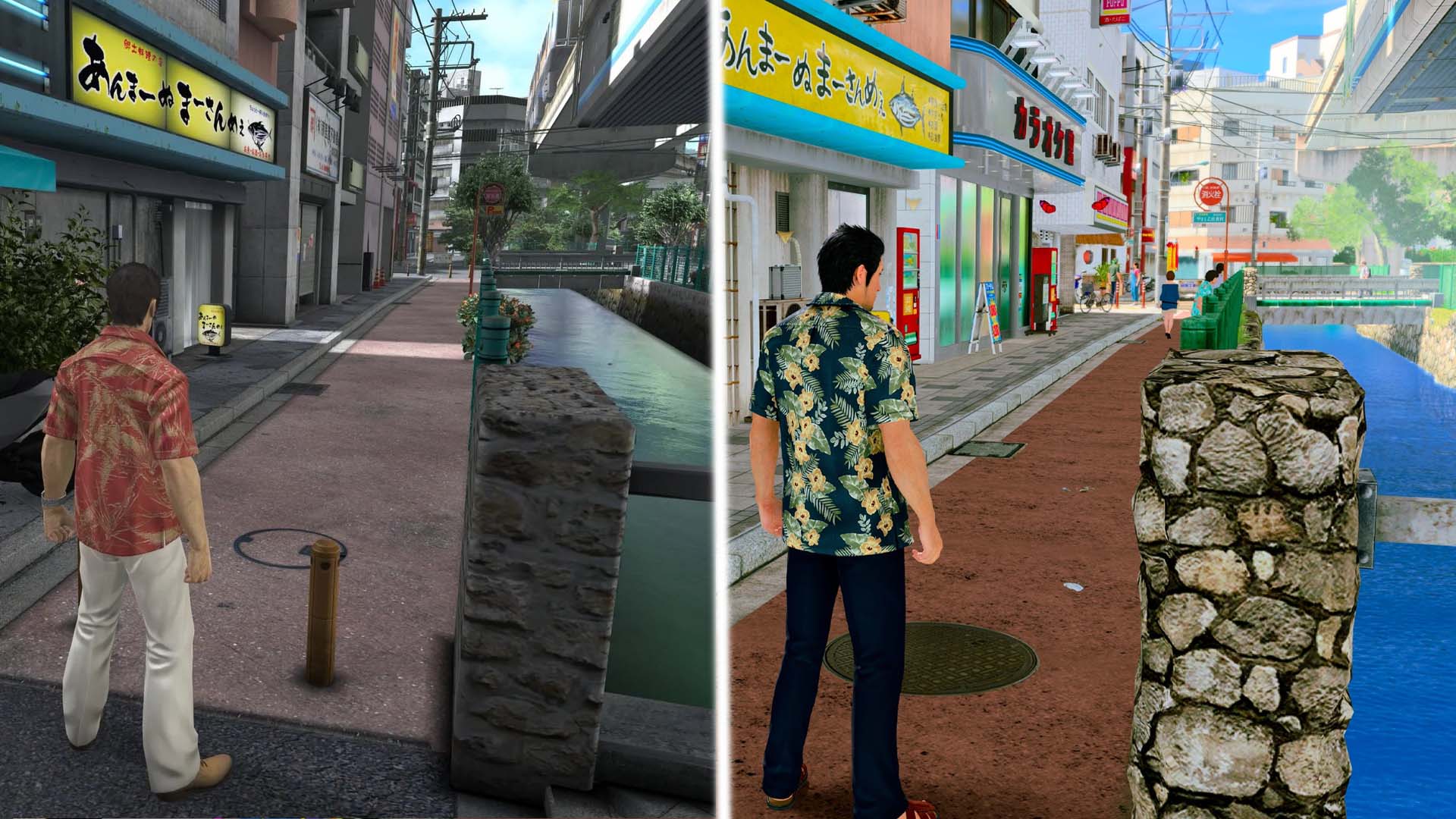
Like a Dragon begins in Kamurocho, home to most previous games, and stops for a little while in one other place, but the vast majority of your time will be spent in Isezaki Ijincho, Sega’s in-universe simulation of Yokohama’s Isezakichō district.
This is an all-new location for a Yakuza game, and it’s great. It’s really big, and open, and feels so much more like a genuine open world that the cramped streets of Kamurocho. It’s big enough to have a number of distinct areas defined by their demographics, architecture and density, along with new stuff like varied terrain levels and even huge crowds, which helps make the place feel so much more alive, and gives it a definite character that’s so important to the setting of these games.
After all, the place a Yakuza game is set isn’t just a collectionof textures, it’s the very heart of the series. Kamurocho was an unflinching bedrock for 15 years, regardless of the game or the star, and if Isezaki Ijincho is going to be carrying the load from here on, then that’s awesome, because there’s so much of it to explore and get to know that is barely touched in the course of Like a Dragon
https://lastchance.cc/how-yakuzas-city-changes-from-game-to-game-1821884988%3C/a%3E%3C/p%3E
HOPE YOU LIKE DRAGON QUEST
OK, I’ve briefly mentioned it already, but let’s talk about this game’s pivot into RPG territory. Every other Yakuza game has been a brawler, and would endlessly subject you to the most brutal streetfights imaginable, as you’d smash bikes over people’s heads and ram knives deep into their guts.
Like a Dragon completely does away with that. There’s now zero action-based gameplay (outside of minigames, anyway), and the game’s combat, which is still the cornerstone of everything that means something here, has been replaced with JRPG-style turn-based tactics.
Can we just take a moment to appreciate this? I can’t think of a single other video game series to have ever decided to overhaul its primary gameplay design and just replace it with something else. It’s like Halo becoming a rhythm action game, or Final Fantasy a first-person shooter. It’s unprecedented, and must have taken a hell of a lot of work to veer a veteran development studio away from one type of game—that they’d been doing for over 15 years—and just try something else entirely.
The results are hilarious, and given the context, initially impressive. It works on a basic level, with your crew of friends each taking up fairly traditional RPG classes, able to attack both physically and with elements, targeting enemies who are strong against some attacks and weak against others.
The way Ichiban’s vivid imagination turns street battles into epic fantasy encounters never gets old, and in some ways taking away the frenzied real-time battles helps lower the temperature of the whole Like a Dragon experience, making it a more relaxing and less physically demanding game.
Of course it’s not an entirely new system; Yakuza games have always leaned on RPGs with their skill trees and gear systems, only now the commitment is 100% as battles become turn-based and you become the leader of a party of adventurers, which completely changes the relationship dynamics of the game’s core cast.
Yakuza games tend to either rotate characters in and out of the story, or in some cases (those games with multiple protagonists) have you spend clearly-defined chunks of time in each person’s shoes. Here, a small handful of core cast members are with you for the whole game, following you around in the overworld and fighting alongside you in every encounter. It makes you feel like part of a team, instead of a lone wolf kicking Tokyo’s ass, and that made for a welcome change.
The theme running through Like a Dragon is one of putting down roots, of loners and outcasts coming together to form a community, so it was great to spend the whole game doing just that as I got to know Ichiban’s expanding cast of friends and fightin’ sidekicks.
It’s certainly different, then, but do I prefer it to old Yakuza? Not yet I don’t.
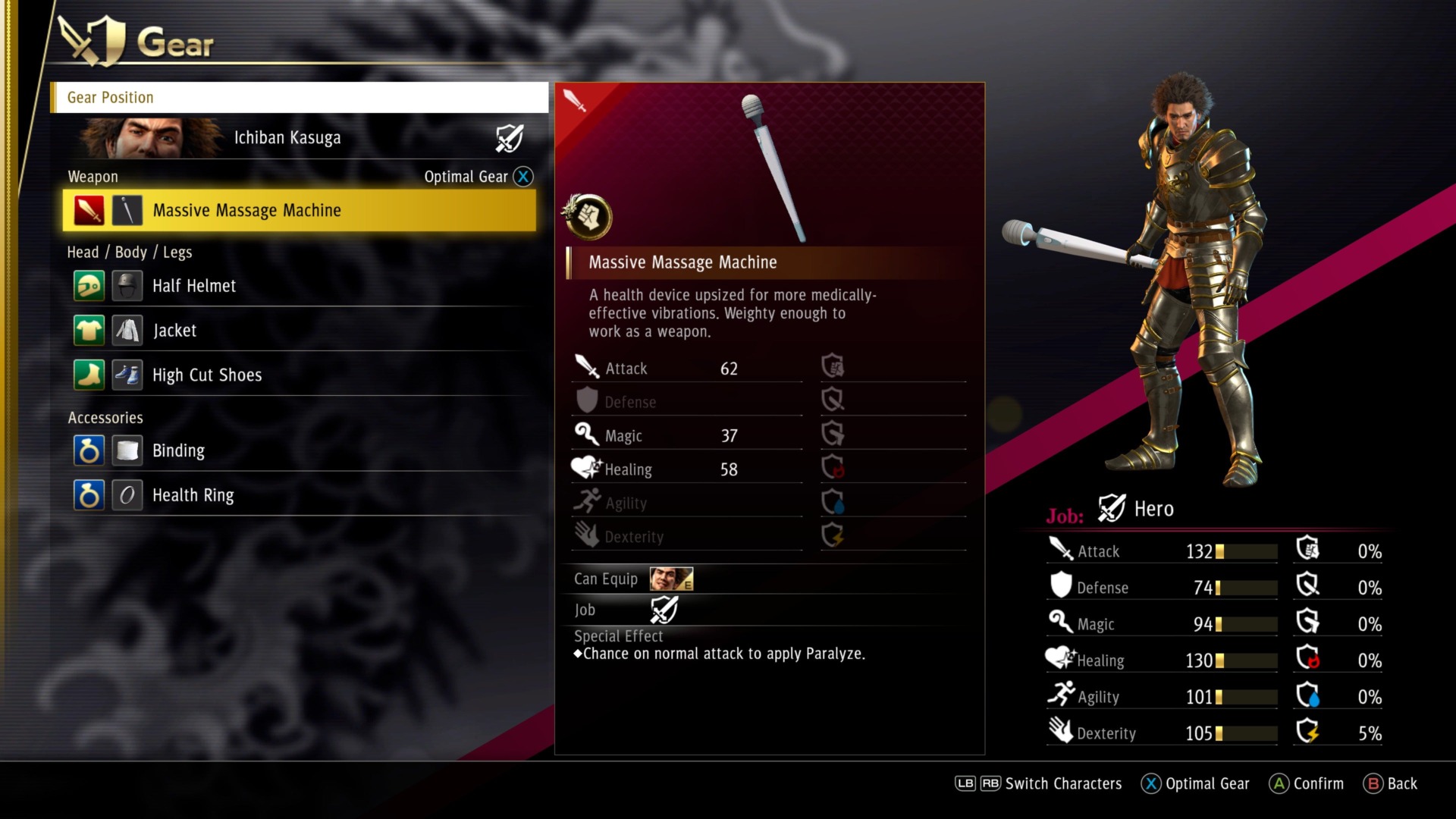
There’s certainly promise to be found in the game’s about-face, but it’s also evident in so much of Like a Dragon that the developers were either wildly inexperienced at the little things that can make of break a good role-playing game, or so intent on paying homage to old-school Dragon Quest games that they purposefully overlooked 30 years of RPG advances.
Most egregiously, the pacing is all over the place. The game flies through its opening and closing while leaving an enormous slog in the middle, while party relationships that should have blossomed throughout the game (see: Persona) are instead relegated to boring chats over a beer at the game’s central hideout.
Like a Dragon utterly fails to communicate some core concepts, which if you miss them can leave you dangerously under-cooked later on, and does a poor job of highlighting basic things like how its gear and job systems—the game’s name for its RPG classes—work.
There are some incredible difficulty spikes in Chapters 12 and 14, way too many random encounters in the streets that are unavoidable, nowhere near enough save points in hours-long dungeons and whole areas and events—like a battle arena and night school—feel like they’re been parachuted in just to let the player game their stats and keep the whole rickety system from falling over.
-
BACK OF THE BOX QUOTE
"It's Yakuza cosplaying as Dragon Quest"
-
TYPE OF GAME
JRPG
-
LIKED
Despite the change in battle system, this is still very much a Yakuza game, with all the drama and heart that implies.
-
DISLIKED
That new battle system, and most of the stuff associated with it, could do with some work.
-
DEVELOPER
Ryu Ga Gotoku Studio
-
RELEASE DATE
November 10, 2020
-
PLATFORMS
PC (version played), PS4, Xbox One, PS5 & Xbox Series S | X
-
PLAYED
Around 120 hours, which saw me through the main story and loads of sidequests/diversions.
And the grind. Oh, the grind. The game’s money and level requirements take an enormous amount of work to get on top of once you’re past the opening section, and you can expect to be spending hours building up your stats enough to take on the game’s tougher bosses and levels. Oh, and if you ever die during a boss battle? You can try again…by spending half your cash reserves, which is rarely worth it until the endgame considering how hard money is to come by.
So yeah, despite the charm and humour in the series’ swing to an RPG, a lot of its implementation just ended up tiring me out the longer I got through the game. I normally gorge myself on Yakuza games when I’m playing them, sometimes smashing through 6-8 hours in a day, but here there was so much bloat for so much of the game that it was sometimes a real struggle pushing myself on through its weaker sections (basically the entire middle third of the game).
Plus I just…miss the old combat. It wasn’t technically the best, but it was so immensely satisfying, even to me, someone who doesn’t normally enjoy brawlers. The combination of animation, sound, camera angles and absurdity in Yakuza’s old violence could make you wince and laugh out loud at the same time, and that raw engagement with combat just isn’t present in a turn-based encounter. Sure this new RPG stuff can be funnier, but putting the fate of a battle in the hands of a calculator instead of your own timing robs the game of so much of its appeal.
HRMM
As a series, Yakuza has often been seen as a reflection of its director Toshihiro Nagoshi, both for better and worse. It has always worn its heart on its sleeve, making it one of the most eclectic and unpredictable major video games series on the planet, and I think that’s what really gets its hooks into people, the fact it can stand in such stark contrast to so many other watered-down blockbusters by going wherever the hell it wants and doing whatever it wants once it gets there.
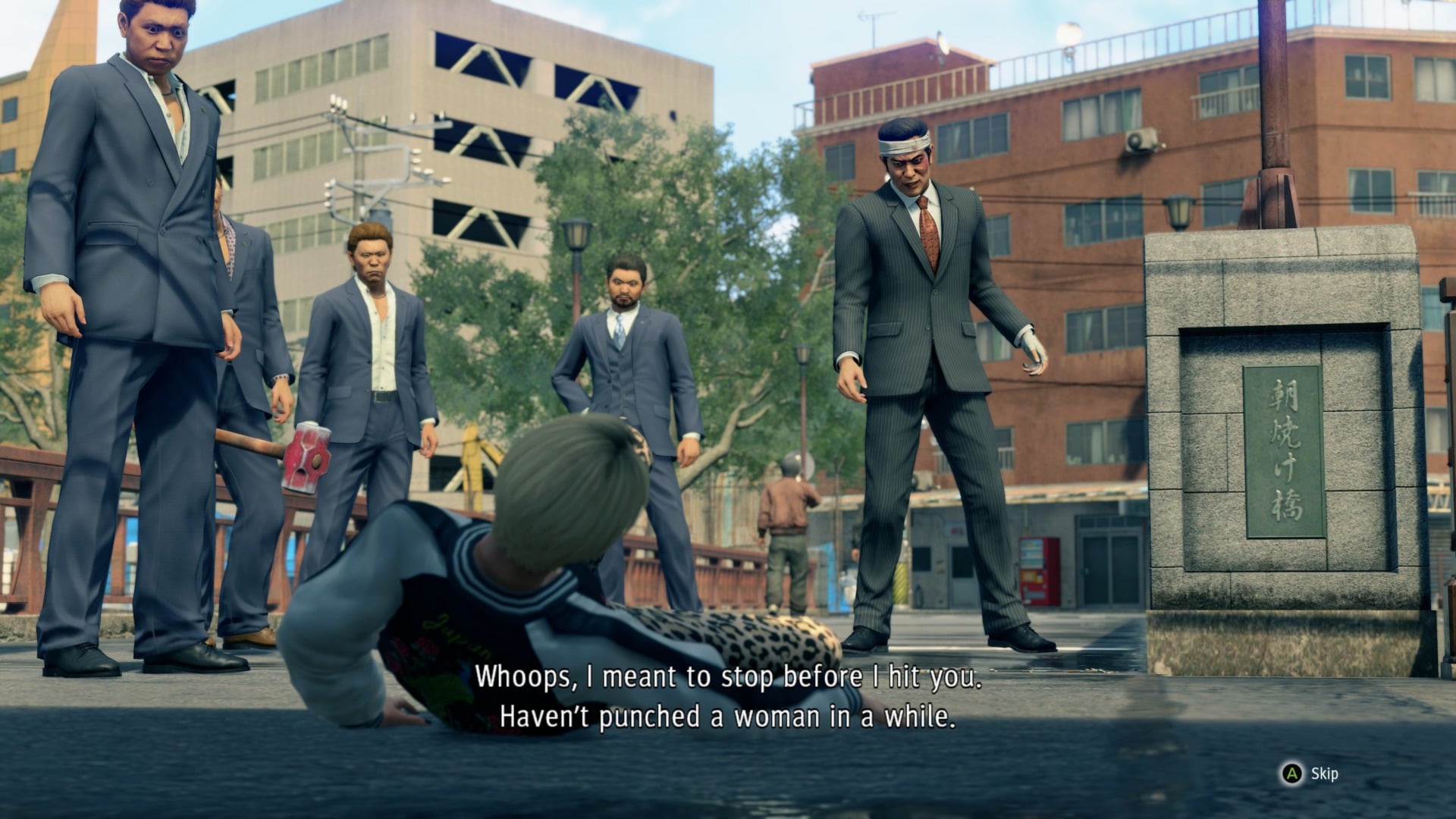
When this works, it’s great! It’s rare to see a video game with the nuance to treat the homeless with such respect, and Like a Dragon’s Chinese and Korean stars, previously represented in the series as largely racist caricatures, are now portrayed with largely the same respect (and given the same bombastic personality treatment) as its Japanese gangsters.
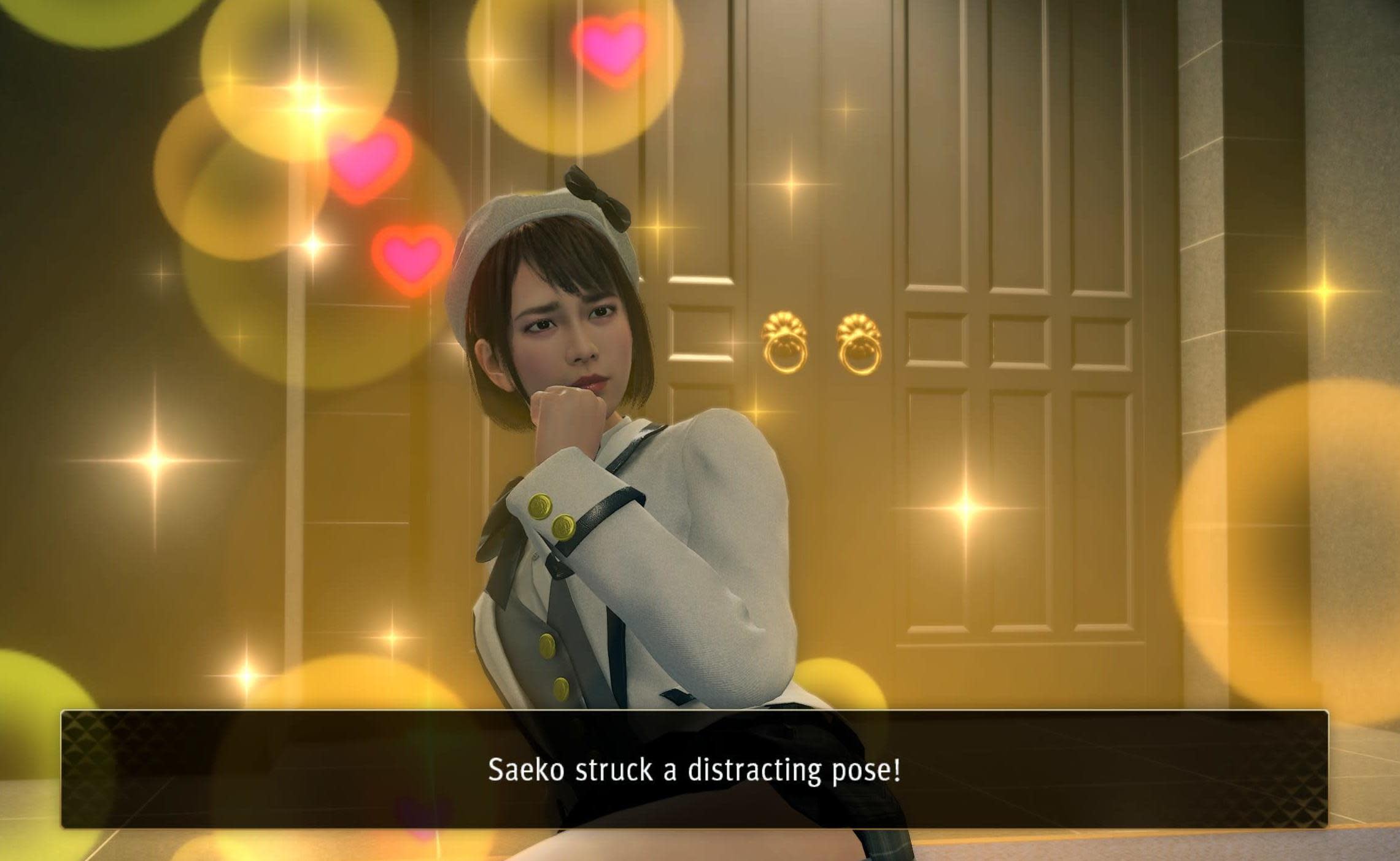
Sadly there is, all these years later, still some questionable shit in here. Women remain very peripheral to the game’s story, and those few who are able to stand in the spotlight are often very one-dimensional. They’re also given short shrift when it comes to job assignments: male characters get loads of cool classes to choose from, including “hero”, “hitman” and “devil rocker”, but Saeko—a core party member and maybe the second-most important in battle (she’s your healing mage)—can be stuff like an “idol” or “hostess”, and some of her battle attacks are, well, see below.
I could wax and wane on this all day, but for more (and a better take than I could ever manage), check out Sisi Jiang’s piece on Vice
BUT WAIT THERE’S MORE
I know, I just said long parts of the game drag on too long (the final fight is also excruciating!), but that’s just the game’s main storyline. And as anyone who has played a previous Yakuza game will tell you, that’s only half—or even sometimes less than half!—of the fun. The rest comes from Like a Dragon’s seemingly endless selection of sidequests and diversionary activities.
That means Sega arcades that you can walk into and play actual Sega arcade games in. It means loads of fetch quests and streetfights with interesting (and usually hilarious) little stories, most of which are optional with the caveat that you should check them all out because some, like one involving a pawn shop early on, are basically essential to getting the most out of the game.
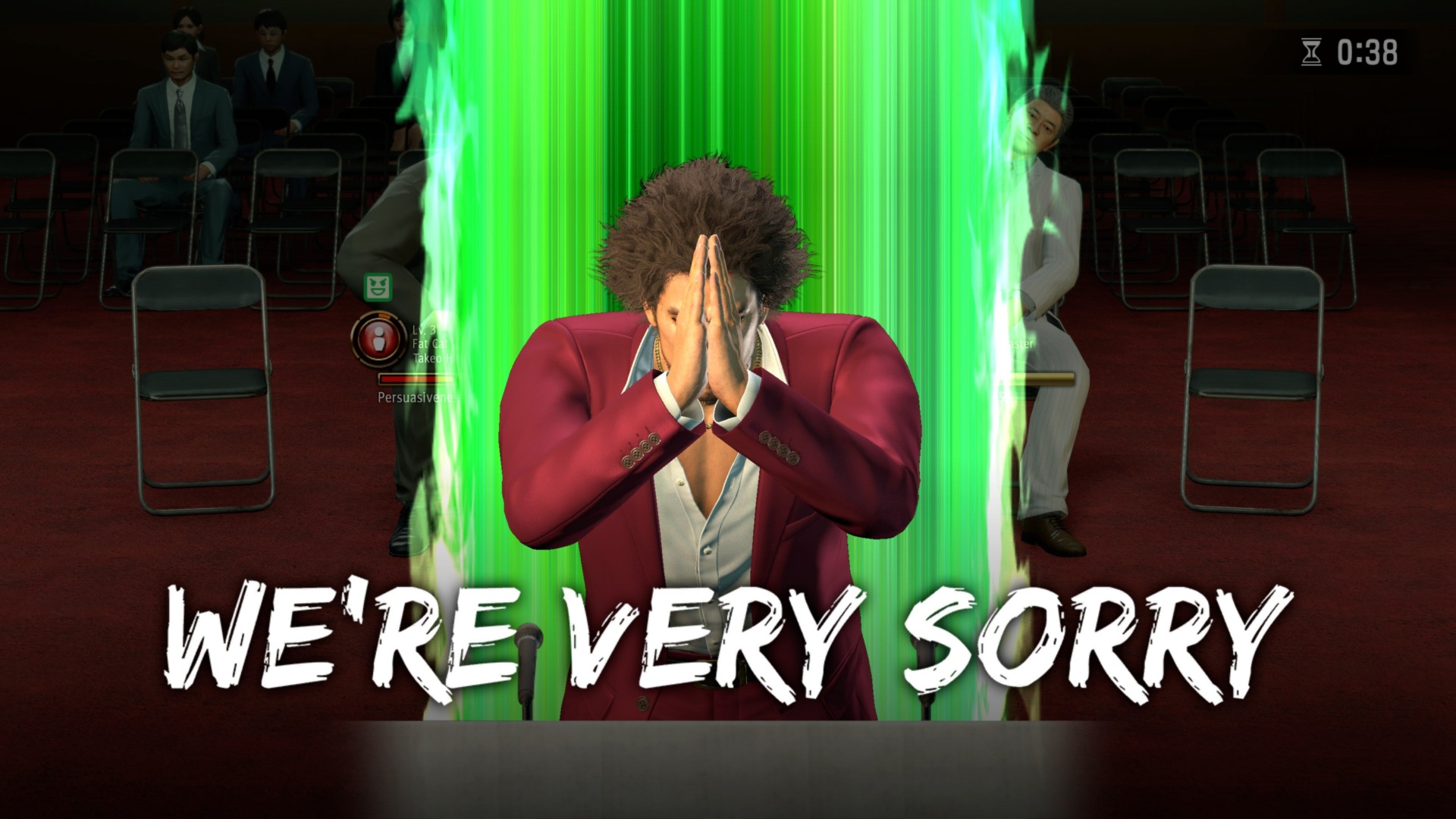
An all-new addition to Like a Dragon is a Mario Kart-style street racing circuit, which can be both fun and lucrative, but there are also multiple “find loads of hidden shit” quests as well. These might sound tedious, but again, can be almost compulsory since they’re a great way to make they money that you’ll need at certain story checkpoints.
Towering over all of Like a Dragon’s sidequests, though, is a full-blown management simulator, which casts you as the executive in charge of a fledgling confectionary store, with the brief of turning it into an economic powerhouse as you buy more properties and train more staff.
It’s…fun, I guess? For a little while at least. In keeping with other parts of Like a Dragon, it soon wears out its welcome, despite the fact it’s almost compulsory to persist with it for hours on end, since it’s one of the only sources of decent income in the earlier half of the game, and that one of your precious party members—I can’t stress how important this is!—can only be unlocked by reaching a certain level in this minigame.
LET’S GET OUT OF HERE
I love the idea of turning this action series into an RPG, not just for the absurdity of the whole thing, but for the smart way it actually already tied into so many of Yakuza’s existing systems, so that the change maybe isn’t as drastic as it first seems.
Older Yakuza games were already halfway to being JRPGs anyway, with their lengthy cutscenes, endless dialogue, sidequests, skill trees, gear and dungeon sections. So while the gameplay itself has changed, the bones Like a Dragon are hanging from are remarkably similar, and so the pivot isnt as drastic as you might think.
It’s a shame that the transition didn’t go as smoothly as those similarities had me hoping. There are a lot of rough edges here that made a few sections of Like a Dragon downright unpleasant, which is a new and disappointing feeling for me and a Yakuza game.
Despite those missteps, though, I still absolutely loved my time with Like a Dragon. Ichiban was just too charming, Isezaki Ijincho too interesting and its story too irresistible (in its own pulpy way), proving once again that the strength of Yakuza’s heart can easily overcome any of its gameplay shortcomings. Every time I got mad at its RPG failings, I couldn’t stay mad, because every time I got frustrated at the grind Ichiban would do something beautiful, or I’d fight a man holding a giant smoked turkey leg.
I won’t spoil the specifics, but rather than begin from an entirely clean slate, the game’s plot is more about tying up loose ends from the last Yakuza series before quickly setting the stage for new adventures right at the end. If that’s what Like a Dragon was—a transitional exercise, warts and all—then I can’t wait to see what comes next when Sega have, like Ichiban, levelled up with the experience they’ve gained.
OTHER YAKUZA REVIEWS:
https://lastchance.cc/yakuza-6-the-kotaku-review-1825260414%3C/a%3E%3C/p%3E
https://lastchance.cc/judgment-the-kotaku-review-1835790070%3C/a%3E%3C/p%3E
https://lastchance.cc/yakuza-0-the-kotaku-review-1791493186%3C/a%3E%3C/p%3E