Yoshi, upon its debut, was a bright green agent of change in the Mario franchise. In its first appearance, it bursts from an egg, growing from newborn to adult in the blink of an eye. Yet for a character so tied to the concept of change and evolution, Yoshi has found itself creatively and conceptually frozen in time for over two decades. It’s maybe time he evolved.
Super Mario’s World is a look at the characters that turned the Mario franchise into a household name for 35 years.
But let’s back up a second. Why is Yoshi a dinosaur, of all things?
As thestory goes, Shigeru Miyamoto drew a picture of Mario riding a horse and hung it near his work station while developing Super Mario Bros. 3. His co-workers, designer Takashi Tezuka and graphic designer Shigefumi Hino, took this as a hint from the creator of Super Mario: their hero needed to be riding something in his next title.
Knowing that their next game would take place in a new setting, Dinosaur Land, Hino decided Mario would ride something dino-adjacent. The first draft of Yoshi looked like a cross between an ostrich and a pterodactyl, and after Tezuka took another run at the character, they landed on Yoshi, the co-star of Super Mario World
Super Mario World was the first video game I ever played. As long as I’ve loved games, I’ve loved Yoshi. It’s personal. As I’ve grown up, Nintendo games and characters have grown with me, while appealing to fans of any age. (You don’t get a series of international theme parks by chasing a niche audience.) But while the Yoshis have certainly changed from a visual standpoint since I first encountered them, they’ve failed to evolve.
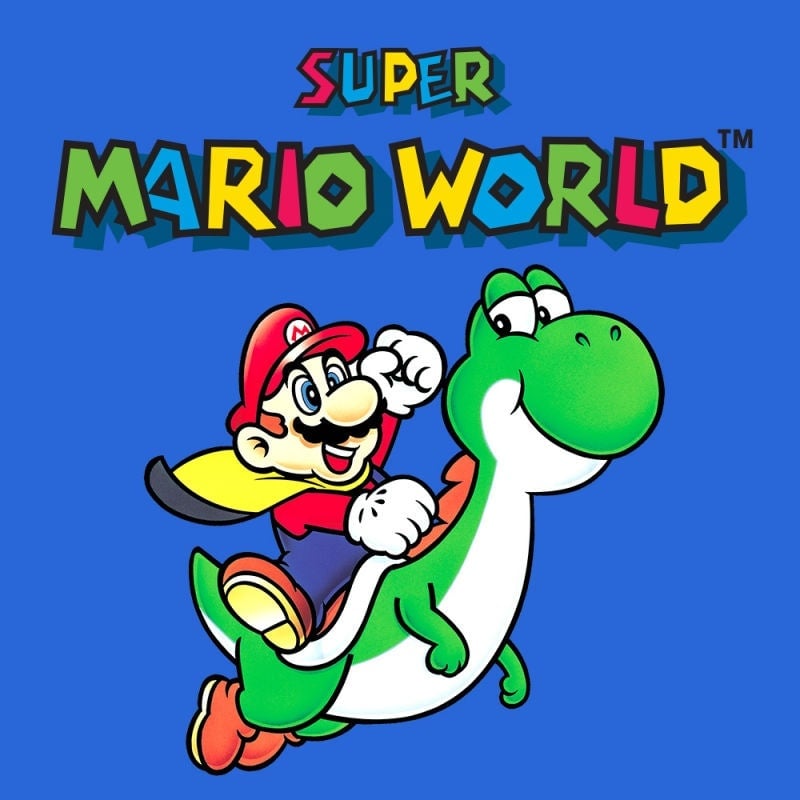
Like a horse, the OG Yoshi was a beast of burden. Mario would punch the top of its head to make it eat things. High-level players have thrown countless Yoshis into bottomless pits so we could snag another fistful of coins. But even in their first appearance, the Yoshis always had a deeper history about them.
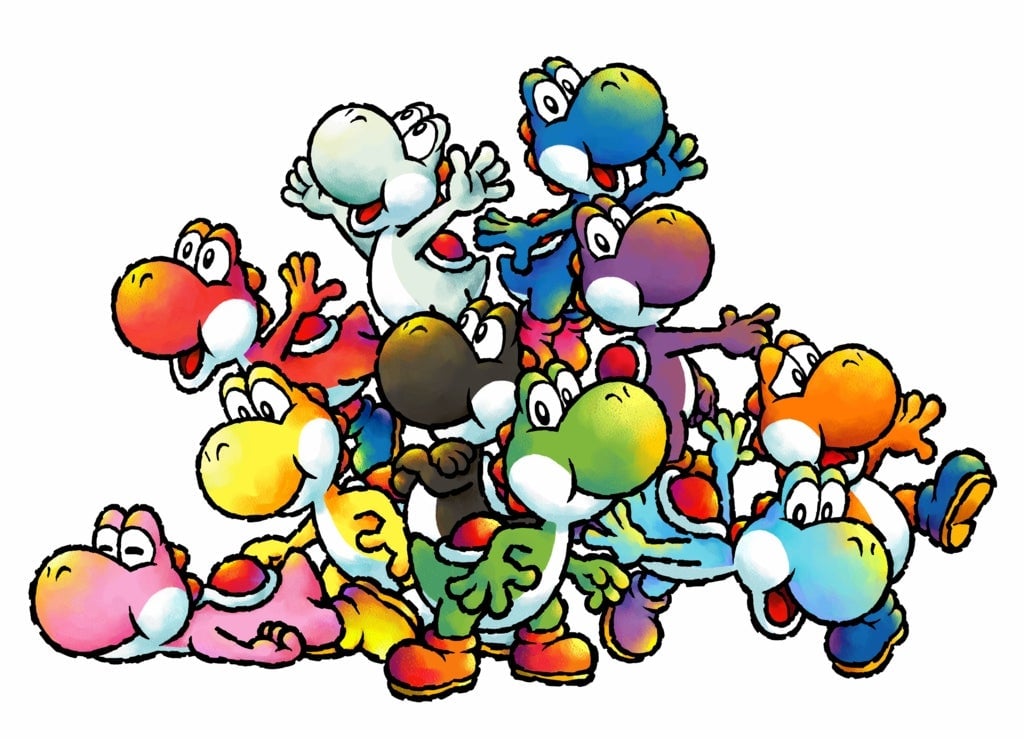
The Yoshis were just one of many dinosaur races spread across the Land—but Yoshis could transform. Their babies become adults by eating berries (or other living creatures) whole. Depending on its type and/or diet, a Yoshi could control the elements by spitting fire, flying through the sky, or shaking the Earth beneath its feet. Even after helping the Mario Bros. stop another Bowser plot (and save their own stolen eggs), the Yoshis had their own island and issues to take care of. They had a society.
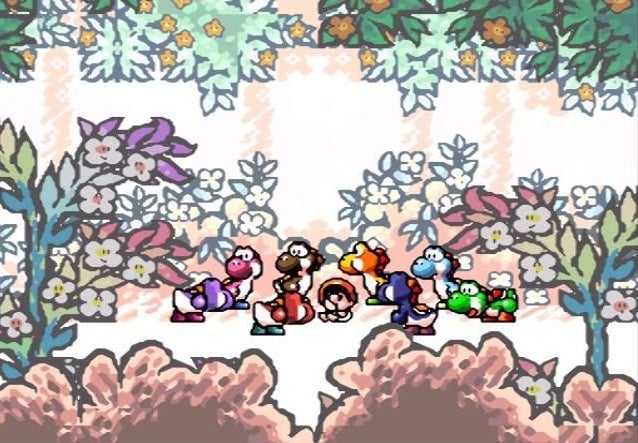
My proto-fanfic concept of The Noble Yoshi was all but confirmed in Super Mario World 2: Yoshi’s Island. Like a 16-bit take on The Godfather: Part II, the game starred an entire tribe of Yoshis in the past, working together to save and reunite the lost, infant versions of Mario and Luigi. They teamed up to help a baby because it’s the right thing to do, and the result is one of my favorite games of all time. The game’s storybook art, its music box soundtrack, and the overwhelming teamwork of the Yoshis combined to create a version of the character that was a hero, if not an icon, in its own right.
The next platformer starring Yoshi, Yoshi’s Story, was released on the Nintendo 64 in March of 1998. If you haven’t played it, that’s understandable. It doesn’t have the masterpiece acclaim of Yoshi’s Island, or the chill-ass soundtrack of Yoshi’s Cookie. Instead, it sealed the Yoshis’ fate forever by giving them a voice.
Yoshi’s Story doubles down on themes introduced in Yoshi’s Island; the storybook framing device of the original game becomes a literal six-chapter book that contains the entire game. Hand-drawn scribbles become real-world materials, blue skies are made of repurposed denim, and every character looks like they’re made of shiny, BPA-free rubber. The Yoshis themselves have traded in their DJ-cut voices for one, high-pitched word: “Yoshi!”
Yoshi’s Island evokes powerful, universal feelings of family (the picture book joy of a child; a parent’s duty to protect and support) because of its central gameplay concept: protecting a baby and bringing them home. It’s The Mandalorian, with eggs instead of blasters. Even the art style, with its hand-drawn imperfections, embodied the idea of “the past.” In comparison, Yoshi’s Story portrays Yoshi as a baby. The titular dinosaurs toddle upright, their necks shrunken into their bodies and their heads rounded to Sanrio-esque orbs. Yoshi was now an anime-style mascot character: it had gone from partner to pet.
Everything about modern Yoshi can be traced from Yoshi’s Story. The main level theme has essentially become the franchise’s leitmotif as a whole, and the helium-baby voice has become ubiquitous. The occasional solo Yoshi games (Woolly World and Crafted World) play more like Island than Story, but they stick to the arts and crafts vibes established all the way back in the mid ‘90s.
That being said, it’s not like cutesy characters can’t become conduits for growth. Kirby, another Nintendo franchise starring an adorable orb with a limited vocabulary, often serves as the foundation for many of the company’s more experimental and daring games. I would love to see the Yoshi equivalent of Kirby’s Air Ride or Kirby’s Canvas Curse—weird, scrappy challenges to existing genres and gameplay styles that celebrated their title character instead of restricting him.
Yoshi almost stands alone as a popular Nintendo character (sorry, Captain Falcon) who hasn’t been allowed a reinvention or exploration into a new vibe or type of game. Every Yoshi game since Story has been a cutesy platformer aimed at a younger audience using an arts-and-crafts visual style. Even the Yoshi’s Woolly World and Crafted World games, while taking that aesthetic to an impressively literal end point, only embraced the concept after Kirby’s Epic Yarn did it first. Somehow, over the years, a horse-sized dinosaur with a frog’s tongue and a chicken’s cloaca has become predictable.
I still adore Yoshi. That’s where this is coming from; a desire to see something I love grow alongside me. Fans are so starved for any growth in the story and character of the Yoshis that they’ll embrace weird, wonderful fan inventions like Yoshi committing tax fraud. Even that baby voice, when utilized with the right amount of heart and craft, can lead to genuine emotional moments. Any video featuring the end credits scene or music from Yoshi’s Story will bring you to the same sentiment, over and over: commenters saying how it makes them want to cry.
https://www.youtube.com/watch?v=ZhjNEMH3qyo
Yoshi’s infant status is rare for Nintendo, but in a way, it makes sense. They usually keep a steady eye on all of their franchises and adjust (or litigate) accordingly. Somewhere along the way, they must have done the franchise-merchandise math calculations and decided that Yoshi was most effective as their Elmo; frozen in time, a perpetual baby just emerged from an egg.
Nintendo is, as of last year, the wealthiest company in Japan. When you get that big, every creative choice or character tweak comes with a laundry list of considerations. Some changes—Bowser as a father, Luigi as a cowardly ghostbuster, Wario as a grifting game publisher—served the gameplay or story of the titles in which they were featured. Other characters, like Mario himself, are seemingly too big to change at all, anymore.
But Yoshi was created to be something new. In their initial appearances, the Yoshis were defined by rapid growth and evolution. It would be a treat, and a testament to the spirit of the character, to see what those candy-colored dinosaurs could evolve into next.
Even the most beloved stories lose their magic after too many retellings. And we’ve been hearing Yoshi’s Story for almost 23 years.
Mike Sholars is a freelance pop-culture writer who believes that the best way to celebrate the things you love is to roast them relentlessly. He loves video games and anime. Follow him on Twitter @Sholarsenic