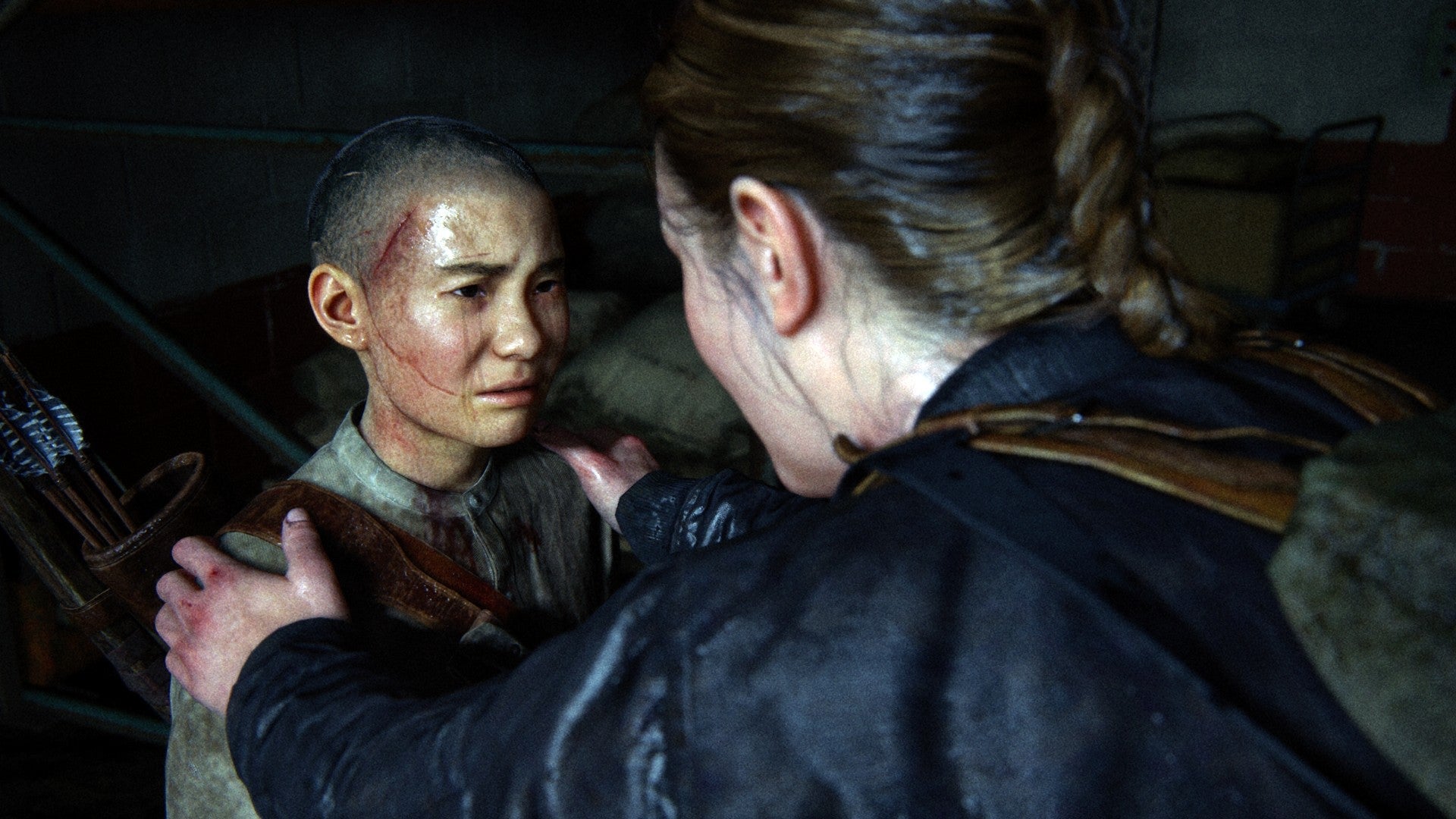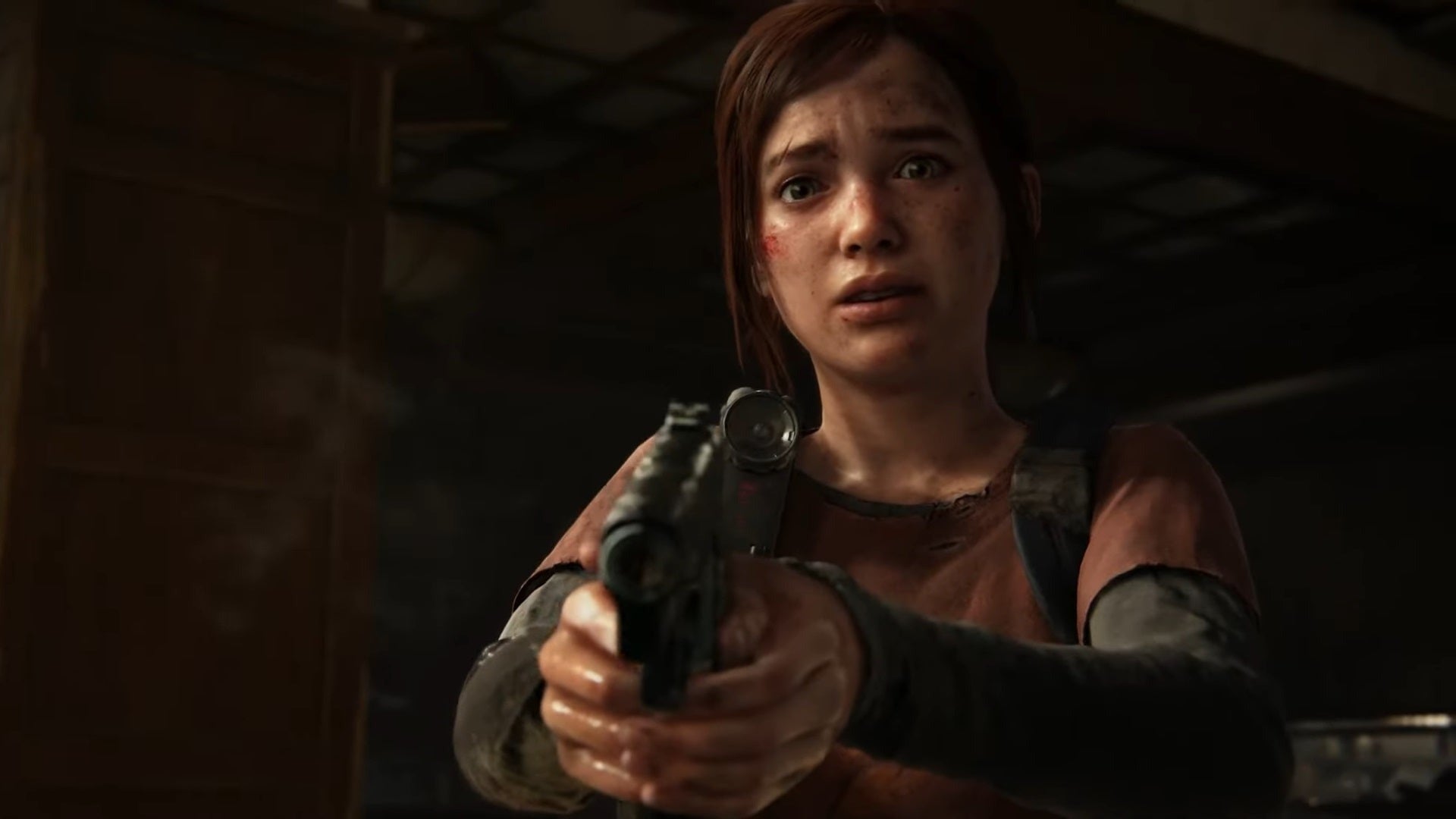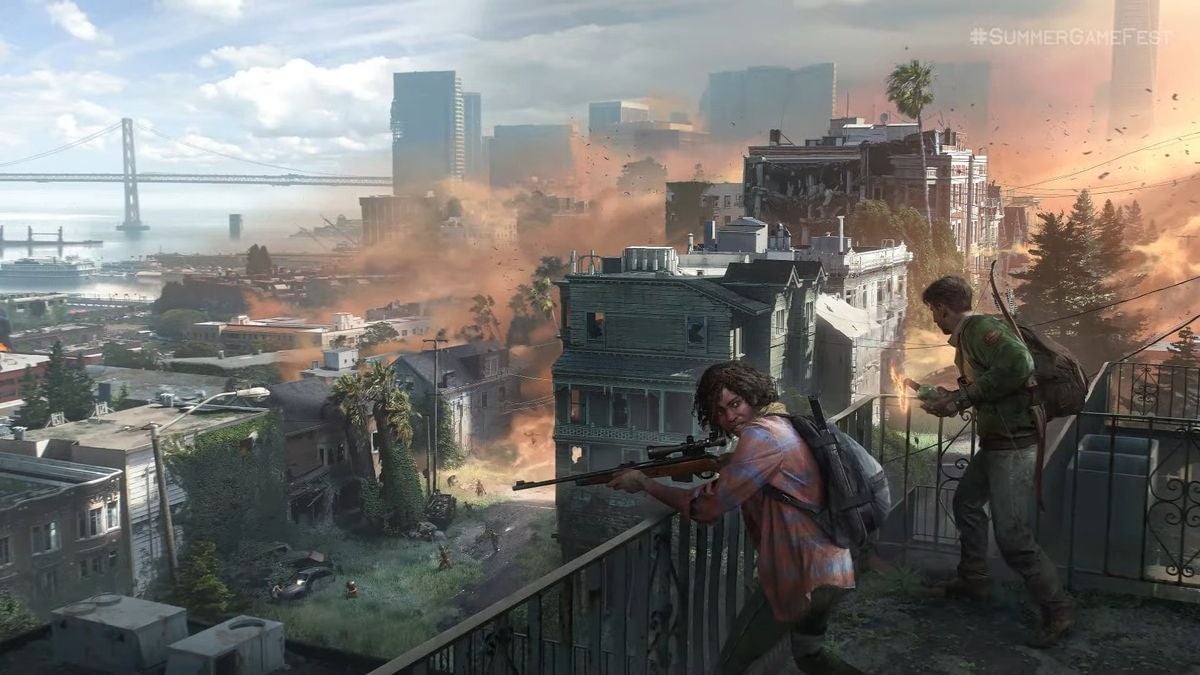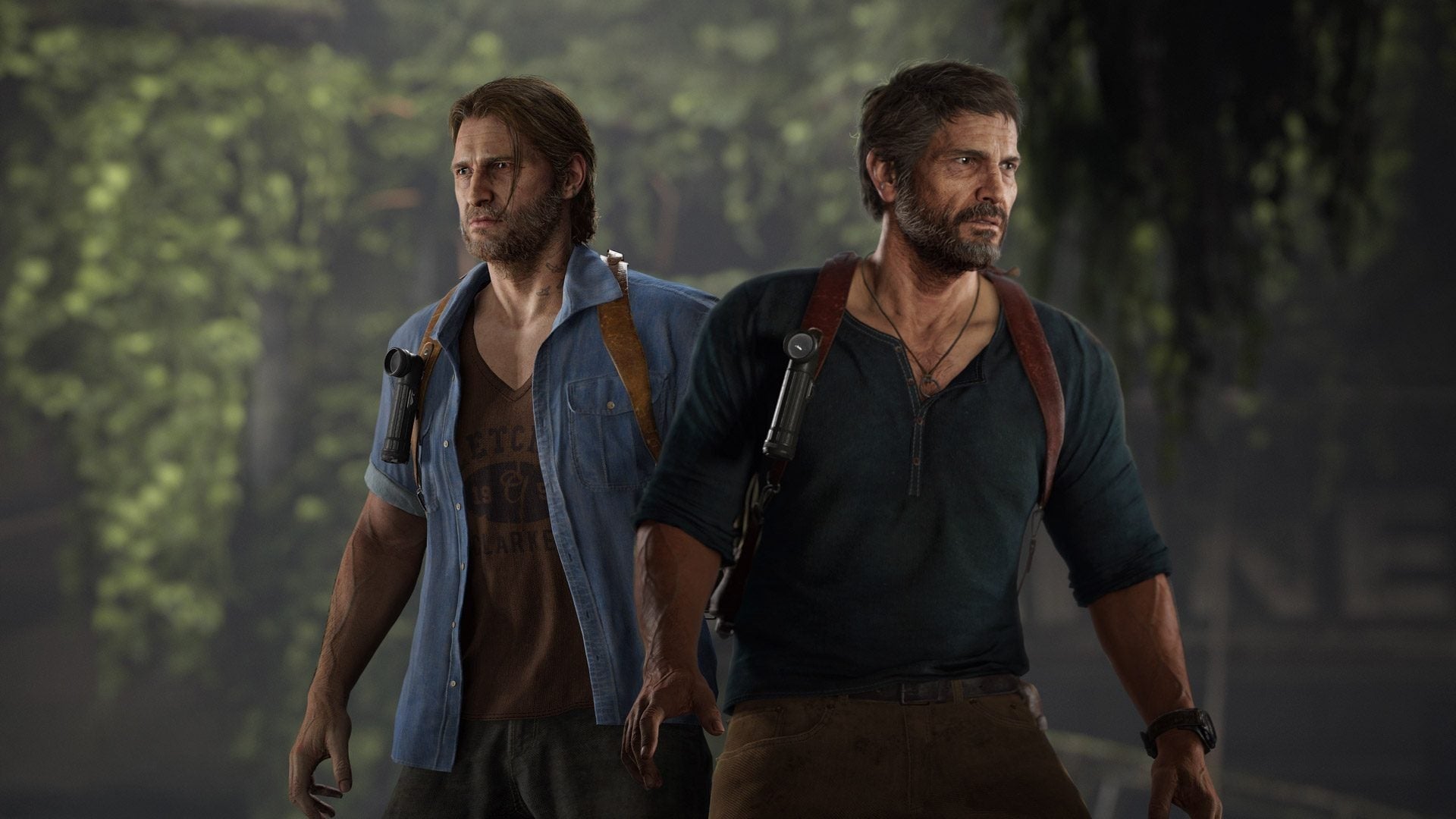
The Last of Us is one of the most critically acclaimed big-budget games of the last year. All the same, it’s gotten its fair share of criticism. Is it too difficult? Too much like a movie? Are female characters relegated to the sidelines? And why the heck aren’t they just called zombies? I took these common complaints to the game’s creators.
SPOILERS FOLLOW FOR THE LAST OF US. YOU KNOW THE DRILL BY NOW.
Last week I got on the phone with The Last of Us creative director Neil Druckmann and game director Bruce Straley to talk in-depth about the process of making the game.
We’ve already covered several of the things the three of us talked about: We covered the many ways the game’s climactic sequences could have been different, from the final lie to the operating room shootout to those awesome giraffes. We also talked about the DLC plans (vaguely) and which characters might feature in a sequel (even more vaguely). And of course, we talked about those cursed phone-sex numbers that made their way into the game.
Why Not Just Call Them Zombies?
Zombies are everywhere. Zombie movies, zombie games, zombie TV shows. And yet they’re almost never called zombies. They’re called “runners” or “walkers” or “infected” or some other term that means zombies without actually being “zombies.”
I (half-jokingly) asked Druckmann and Straley, why not just call them zombies?
“I guess it’s the baggage that comes with that.” Druckmann said. “I mean look, when we talk about our inspiration and the kind of stories we’re into, we don’t hide that we were inspired by 28 Days Later and 28 Weeks Later and Walking Dead. When we talk about that BBC video, we refer to them as zombie-ants. But I think as soon as, in the narrative, in the fiction of the world, if you call them zombies, at least for us, it conjures walking, dead people, coming back to life. And [The Last of Us] is more about this disease, this infection that’s grounded in reality.”
“I think it separates it from the stereotype,” Straley said. “When you say zombie, you’re suddenly thrown into B-movie, jokey, shooter domain. And we’re not making another zombie film, another zombie game. We’re not making another zombie trope-thing, we wanted these characters, a story and a world.”
“Honestly it’s one of those things where sometimes we say ‘post-pandemic’ to not say post-apocalyptic, but it doesn’t matter,” Druckmann said. “Ultimately it’s the story of Joel and Ellie, and that stuff doesn’t matter.”
“As long as that stuff resonates and people,” Straley said, “they get the message that it is a story about these two characters and this world and humans, then…”
“They can call it whatever they want,” Druckmann finished.
How Hardcore Is Too Hardcore?
One of the unusual things about The Last of Us is how difficult it is, particularly for a big-budget “tentpole” game. It’s terrifying and tense, and at times will stop even seasoned players in their tracks.
No single aspect embodies The Last of Us‘ difficulty as fully as the clicker. Easily the most terrifying enemy in the game, the clicker is a blind, powerful monster that hunts by sound. If it touches Joel, it tears his throat out. Game over.
Straley said that they had been iterating on the clicker constantly, and that while they knew their goals, for a long time they hadn’t quite nailed the formula. The game wasn’t working how they wanted it to. In fact, they were still trying to work it out just before time they let the press go hands-on with the game.
“We’re doing basically a big public playtest with the most critical motherfuckers in the industry,” Straley said, “and it really came down to the final hours.
“It really just wasn’t fun,” he said, “and we weren’t getting the tension that we wanted. Without the one-hit kill, we just weren’t getting the tension, the stakes weren’t high enough for people. We were debating it back and forth,” He laughed. “It was controversial!”
Straley: “We needed a Chainsaw Guy from Resident Evil 4.”
“There were two things,” Druckmann said. “We didn’t have an enemy like the clicker, and we had a push-off mechanic, where as you were wrestling with infected you could push them off. And by removing the mechanic and making the clicker one-hit, all of a sudden you had all this tension. And people were now using all the stealth mechanics that initially they were just not using.”
“We needed a Chainsaw Guy from Resident Evil 4,” said Straley. “We needed somebody that was just gonna destroy you when you touch him. That’s where we were equating it to.”
The first prolonged infected encounter in the game (as outlined in my helpful tips post) is jarring and savage: Joel is dropped into a room full of runners, as well as a single clicker. He’s got minimal ammo, and the player hasn’t yet been required to take on a clicker head-to-head.
https://lastchance.cc/tips-for-playing-the-last-of-us-513462640%3C/a%3E%3C/p%3E
“I saw Bruce stressed out many nights over how you train people for this game,” Druckmann said, “and whether we’re making it too hard, and how do you appeal to the hardcore gamer while still [letting in] all these people who are somewhat casual gamers that play Uncharted.
“Can you appeal to both?” he asked. “Is it possible?”
As with most aspects of The Last of Us, the key was iteration. “We have a Naughty Dog audience,” Straley said, “a fanbase that wants to play the game and just chill out on the weekend. And the story and the world definitely had to have a sense of tension, [to have] survival aspects to it. And we [at Naughty Dog], as players, we want to play something that’s challenging. We want to hit the wall sometimes and have to re-think. That’s what’s fun about games. [It was a challenge], the balance of this game, and trying to find that tone between the survival-horror hardcore niche and trying to make it as accessible as possible.”
Just Another ‘Cinematic Game’
Chief among the criticisms leveled at Naughty Dog games is this one: They’re more movies than games, and you could just watch them and get the same experience. I asked Druckmann and Straley, do they think that’s a fair complaint? And are cinematic experiences like The Last of Us and Uncharted limiting what games can accomplish?
“No,” Druckmann laughed. “We pride ourselves that we use every tool that we have. We see being cinematic as being like film, but using the visual language that cinema has established that is well-known to people to tell better stories. And that means subtlety. That means show instead of tell. A lot of games suffer from very heavy-handed expositional dialogue, which, to us… that dialogue is very un-cinematic.”
Straley chimed in: “I think people get caught up in… I don’t really know how to say this. I think it’s easier to say things like that than it is to do them. How many games are there that truly tell the sorts of emotional stories that Naughty Dog is known for, inside of a completely open-ended world? I don’t know. I’m trying to think of a game where [that happens].
“You can create your own narrative, and that’s the argument, right? And the beautiful thing about this medium is that you can create a little puzzle game using colorful blocks, or you can create a character-driven game, or you can try to create an open-world game where you create your own narrative as a player and get more investment by interacting with something in the environment. Suddenly I have an attachment with that thing in the environment. But why not try to do all of those things? And that’s kind of like what we do.”
Druckmann: “Sometimes the implication with that criticism is, ‘This would work better as a film.’ And for us, we feel strongly that’s not the case.”
Straley compared the arc of progression in their games—growing a tool-set, increasing skills, overcoming more difficult enemies—to the narrative arc of the story, saying that, “These are gameplay concepts, but at the same time, this is Joseph Campbell’s breakdown of story. So when you look at the similarities between these two, a narrative in a novel or a movie and a narrative and interactivity in a game, and you see the parallels between them. We’re just trying to exploit what we’re discovering. Our medium is still so young, man, I think we’re all poking and prodding to try to figure out how to really juice it.”
“To expand on what Bruce is saying,” Druckmann added, “sometimes the implication with that criticism is, ‘This would work better as a film.’ And for us, we feel strongly that’s not the case. You talk about that giraffe sequence, I don’t think that would be as effective in a passive medium. I really don’t. I think there’s something about you playing through that, you experiencing that, you having played alongside Ellie and Ellie having saved you in combat multiple times, you form a bond that’s not the same as if you were to just watch it on the screen.”
A Game ‘By Men, For Men And About Men’
Of other criticisms leveled at the game, one of the most resounding came from The New York Times‘ Chris Suellentrop, who in his review lamented the ways that, for all its strong storytelling, The Last of Us still relegates female characters to the periphery.
“It does some things better than any other game I’ve played,” Suellentrop wrote, “but I found it hard to get past what it embraces with a depressing sameness, particularly its handling of its female characters.” To his eye, despite the initial appearance of a mixed-company narrative, “Almost throughout … it is actually the story of Joel, the older man. This is another video game by men, for men and about men.”
That last line is particularly punchy: Just one more game by men, for men, and about men. I asked Druckmann and Straley if they thought that was a fair assessment.
“That statement was… I think it was unfair to us,” Druckmann said, measuredly. “We have a pretty high percentage of women that work here in the studio, and we all felt that we’re doing a dual-protagonist story. We’re presenting Joel and Ellie as the protagonists, so there’s just that game ‘by Men,’ that’s already not fair.
Druckmann: “You could make the argument that it’s just Joel’s story. But for us, our artistic intent was to create a story both for Joel and Ellie.”
“And then a game ‘about men’…” he continued, “you could make the argument that it’s just Joel’s story. But for us, our artistic intent was to create a story both for Joel and Ellie. They both have pretty significant arcs, they both affect one another, and they both are really changed by the end. And ultimately the final decision is made by Ellie, not Joel, when she says, ‘Okay.’
“And the last part of that statement,” Druckmann said, “which is ‘for men.’ We fought hard to get female focus testers both for gameplay and for marketing. We had to specifically ask for [them]. We reached out to our agency and said, ‘We need both female and male focus testers.'” Druckmann said that they also asked their marketing partners to focus-test the game’s marketing for both men and women. “We felt like we did the opposite of that statement.”
The Daughter In The Refrigerator
Related to that, I asked about the fact that the game begins with another potentially problematic trope: The “woman in a refrigerator,” a trope recently illustrated so well by critic Anita Sarkeesian. At the start of The Last of Us, Joel’s daughter Sarah is killed by a soldier. It’s an event that in many ways provides the dramatic impetus for Joel’s entire inner journey.
As I said in my write-up of the game’s ending, I think that the ending of The Last of Us—and really, the entire journey—didn’t just redeem that opening trope, it depended on it in an honest way that most video games don’t. But I was curious what Druckmann and Straley thought. I asked, had they seen Sarkeesian’s videos, and did they worry about the fact that they were opening The Last of Us with such a shopworn video-game trope?
“But it becomes more complicated when you have a fully three-dimensional character that has different wants and needs and has interesting contradictions. And that’s what we tried doing with Sarah, with the time we had with her. And again, we felt like we used the power of mechanics in the fact that you embody Sarah, and you see how she moves and how she reacts. And you can look at her room and see all the stuff that she’s into.
Druckmann: “At the end of the day, you have to be a slave to the story. … Abstract it enough and you can find these tropes and these conventions everywhere. So all you can do is say, ‘What is honest?'”
“Here’s a girl that has a lot of agency; she went out of her way to somehow get money and buy her dad a watch. They have this relationship where they can banter with one another. As much as we could, we tried to really flesh out her character. So that you know, we’re working toward that moment when she eventually dies, [and] you don’t feel like… I think that scene wouldn’t have worked if she was a very flat character.
“The other thing: Where that trope is usually used in games is to fuel a violent revenge story. That’s almost all of the examples that were used in Anita’s video. Where here it’s like, yes, Joel becomes a violent man, but it wasn’t necessarily because of Sarah’s death. It’s because of what the world has done to him. If anything, Sarah’s death has shut him down. He didn’t go on this [rampage], ‘I’m gonna go kill every soldier, I’m gonna find the guy that ordered the soldier to shoot my daughter!’ No, it’s about this man that has completely shut down and is pretty much dead inside, until he meets Ellie.”
“At the end of the day,” Druckmann said, “you have to be a slave to the story. You can’t worry yourself about these things… abstract it enough and you can find these tropes and these conventions everywhere. So all you can do is say, ‘What is honest?’ What was honest for the prologue was to show a snippet of what this family had to go through, how they were ripped apart, so that you can imagine what happened to the rest of the world. But you’re seeing it from a very personal viewpoint. And then you just try to make those characters as real and as grounded as possible so that you can buy into that drama.”
The ‘Citizen Kane of Games’
One of the more enjoyable things to come up in the critical response to The Last of Us was the hoary old Citizen Kane of Games meme. The comparison is as well-worn as any of the zombie tropes in The Last of Us, and yet whenever a game this good comes out, inevitably some critic or other will compare it to Orson Welles’ groundbreaking 1941 film.
Like clockwork, Empire releasedtheir early review of the game and concluded by saying that in addition to being one of the best games of this console generation, The Last of Us “may also prove to be gaming’s Citizen Kane moment.” Across the Internet, a thousand heads met a thousand desks.
I asked Druckmann and Straley if they thought that was a fair assessment. Is The Last of Us is the Citizen Kane of games? At first, Druckmann laughingly tried to turn it back around on me, asking what I thought the comparison meant. I said I was more interested in what he thought.
“It’s already been attributed to several games, and now it has become almost a joke?” Druckmann said. “Like, I think Metroid Prime was called the Citizen Kane of video games.”
(He’s right, it was.)
“Who knows, right?” he said, more seriously. “You hope you leave some kind of mark and you inspire people. Look, we’re into narrative-driven games. We hope that there’ll be more games like this, games that take story seriously, that really work hard to combine story and gameplay. I hope it leaves some kind of mark, and it inspires more people to make games like this, and to try to push it forward even further.”
Then he laughed. “There’s gotta be a Wayne’s World of games.”