
In case you haven’t heard it yet from literally every other publication on the planet, today marks the start of Prime Day, the annual capitalism ritual wherein Amazon pushes every working class person into a locker and steals their lunch money. While much of the promotion is total bullshit, there’s the occasional diamond in the rough—like, for instance, the rare TV with a variable refresh rate (VRR) feature.
Wait, what the heck does “variable refresh rate” mean?
Ugh, I know. First it was “teraflops.” Then it was “solid-state drives.” This console generation is really turning all of us into tech geniuses!
Put simply, a “refresh rate” refers to the frequency per second at which a screen updates itself, much like a gaming console’s frame rate. Think of it this way: A modern gaming console, like Sony’s PlayStation 5 or Microsoft’s Xbox Series X, typically produces 60 individual images, or frames, per second. You’d need a screen that updates itself 60 times per second to match that.
The math is as simple as math gets, mapping on an even one-to-one; a 60hz display can show 60 frames per second, a 120hz display can show 120 frames per second, and so on (though hopefully not too far on, because a world where 240fps is the standard seems stomach-churning).
If a TV’s refresh rate and a console’s frame rate match, you get a smoothly rendered image. But c’mon, you’ve played a modern game. You know frame rates aren’t always stable. TVs that don’t have a variable refresh rate aren’t entirely fully equipped to handle that.
A display with a static refresh rate—one that stays locked at, say, 60hz or 120hz—is prone to lag, judder, screen-tearing, and other visual quirks. One with a variable rate, however, can automatically match the output of frames from a gaming console. Let’s say you’re playing Marvel’s Avengers or some other buggy game and the frame rate plummets through the floor. A TV with a static refresh rate of 60hz is still updating 60 times per second. A TV with VRR, however, will adjust on the fly to make sure the screen matches the image broadcast by your gaming console. Variable refresh rate doesn’t completely prevent any visual hiccups, but it allows a screen to present a way smoother image than a standard screen.
These days, variable refresh rate is a pretty common feature on high-end PC displays, but it’s way less common in most living room centerpiece TVs. Even worse, many of the TVs that do come with a variable refresh rate cost, I don’t know, almost 10 percent of a single month’s rent for a studio apartment in today’s market.
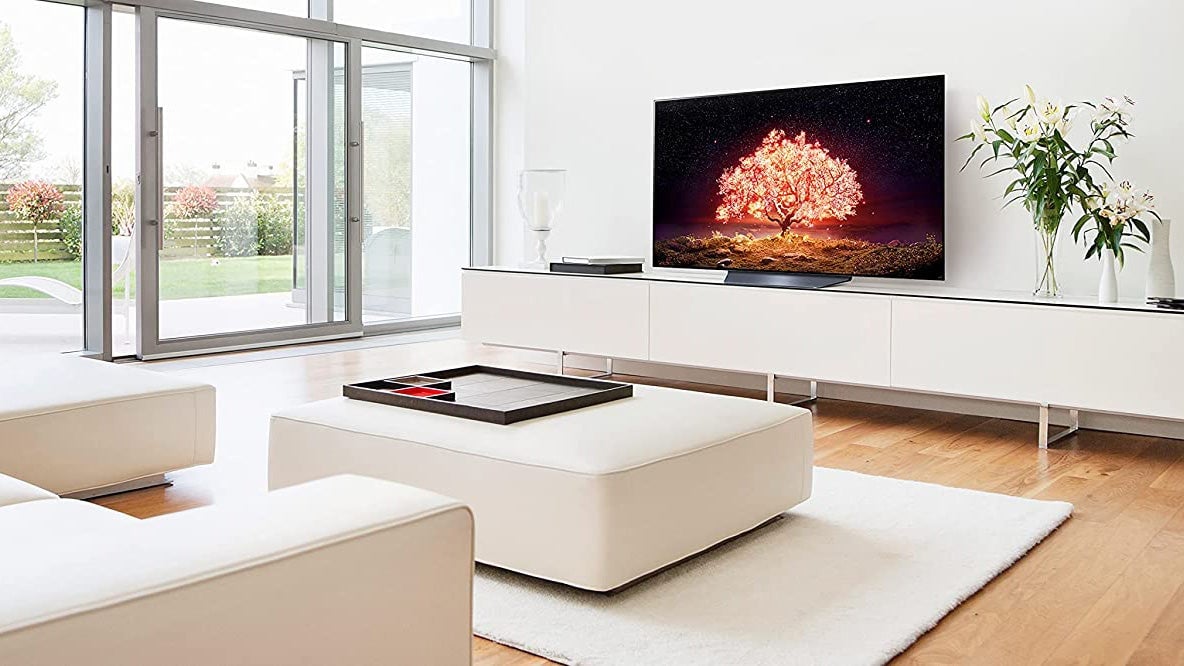
One such TV is the LG OLED B1. Right now, it’s down 37 percent for Prime Day, a promotion organized by a company that’s regularly violated anti-union-busting laws, at least according to filings from the National Labor Relations Board. LG’s OLED screen is universally considered one of the best gaming TVs on the market. It’s also—and this pains me to even type—nearly $2,200 for the 77-inch model.
On the opposite end is the TCL 6-Series QLED. The 65-inch model is currently listed at $700 for Prime Day. It’s not nearly as snazzy as LG’s top-of-the-line display, but it gets the job done. (I have a similar TCL television at home, albeit sans variable refresh rate. It’s…fine.)
At the end of the day, you don’t need a TV with VRR. But it is nice to have.