Crisol: Theater of Idols‘ richly illustrated world is deeply familiar to me. Maybe there’s a certain segment of players who’ll play it and note the same parallels I couldn’t help but draw. Though it bears a lot in common with a number of legendary games, like Resident Evil and Bioshock, this survival-horror title, which takes just as many cues from Spanish culture and folklore as it does from those legendary games, feels most in conversation with something entirely different: it reminds me a lot of the telenovelas I grew up watching on Univision.
Latine households have a few common staples. Adobo seasoning in our pantries. Daily variants of arroz con habichuelas with your protein of choice. A Bible of some sort, a crucifix, or related Christian imagery on the walls. Maybe a sticker that reads, “Dios es amor.” And, of course, a constant rotation of novellas in the evenings.
Novellas are the height of drama and camp. There is a twist around every corner, and you’ll never miss it because these cheaply produced series will reuse the same loud sound effect to denote every dramatic development in the story. Think the Vine “boom,” but every 15 minutes (charitably). Like any good soap opera, they’re often packed with too many characters to count, let alone recall at the drop of a hat. Depending on the genre–novellas can follow teenagers who break into songs, drug lords rising through the ranks, and everything in between–these characters are usually tried-and-true archetypes, like the stumbling nerd or the doggedly loyal cadet/soldier/cop. And if there’s one thing these novella actors are gonna do, it’s ham things up.
These programs, which have often enraptured the elders of my life, promised big performances, and it seemed like every other show my mother watched during these primetime slots featured booming voices, grand gestures, and more lies and betrayals than one should be able to feasibly fit into a half-hour block. These shows and performances often oscillated between scintillating and corny, never anywhere in between.
I need you all to understand this, because I couldn’t shake the feeling while playing Crisol that I was caught in a fever dream of a novella. Crisol is a halfway decent survival horror title with some great creature design, but what it really is underneath all that is a good ol’ Spanish soap. One with plenty of dramatic twists, a few too many characters, and some of the most hammed-up performances a game has ever shipped with. I love its deeply Spanish, deeply flawed heart.
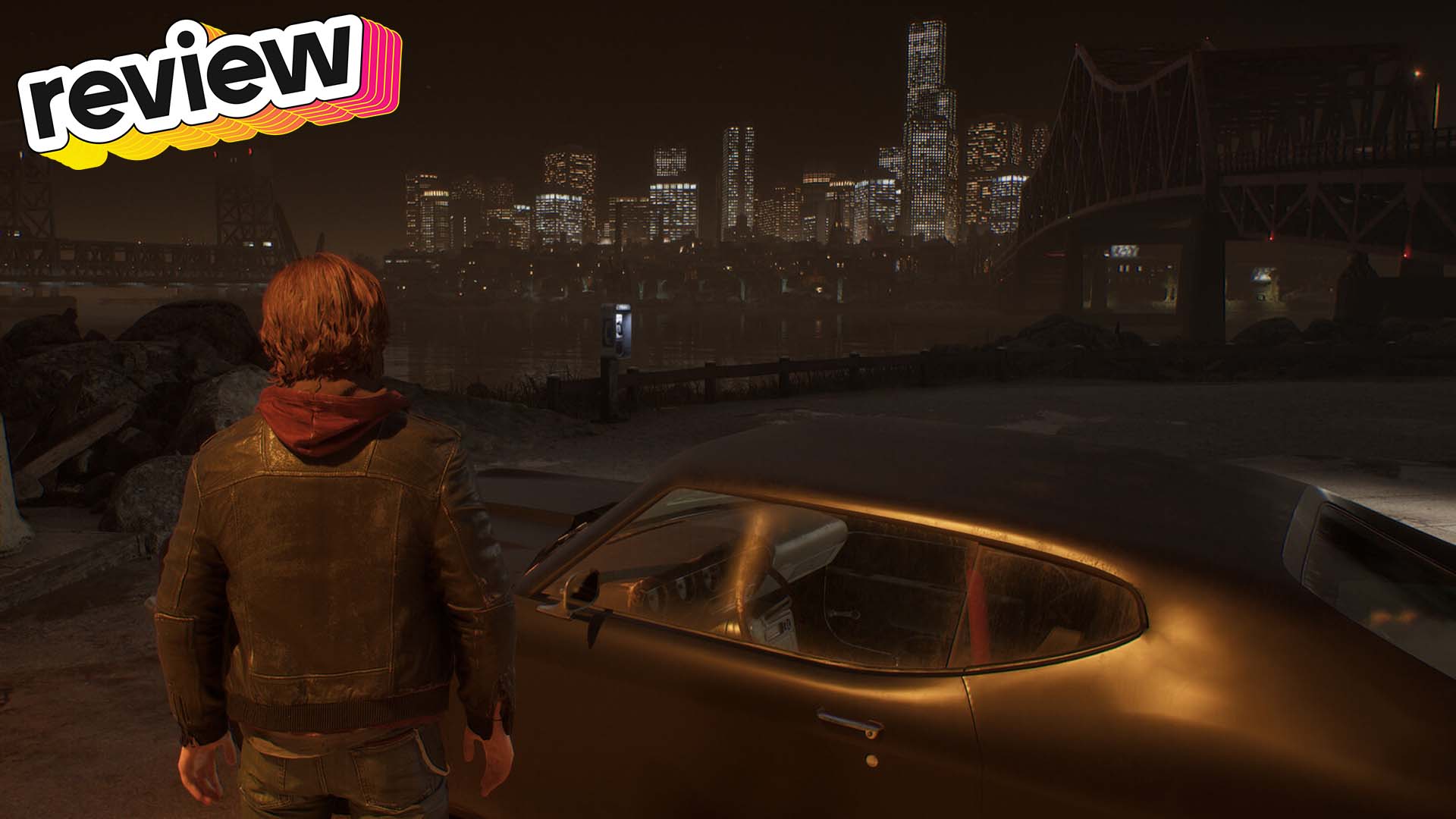
Crisol, from the Madrid-based developer Vermila Studio, is a tragedy told in a handful of chapters. Each of them takes Gabriel, the game’s zealous protagonist and aforementioned loyal soldier archetype, to a corner of Tormentosa, an island and colony caught in a torrential downpour. It is also caught in a religious civil war by the time that Gabriel washes up on its shores. It’s a conflict that calls for Gabriel to battle the forces of the sea god with weapons blessed (maybe even cursed, actually) by the sun god and which use his own blood as ammunition.
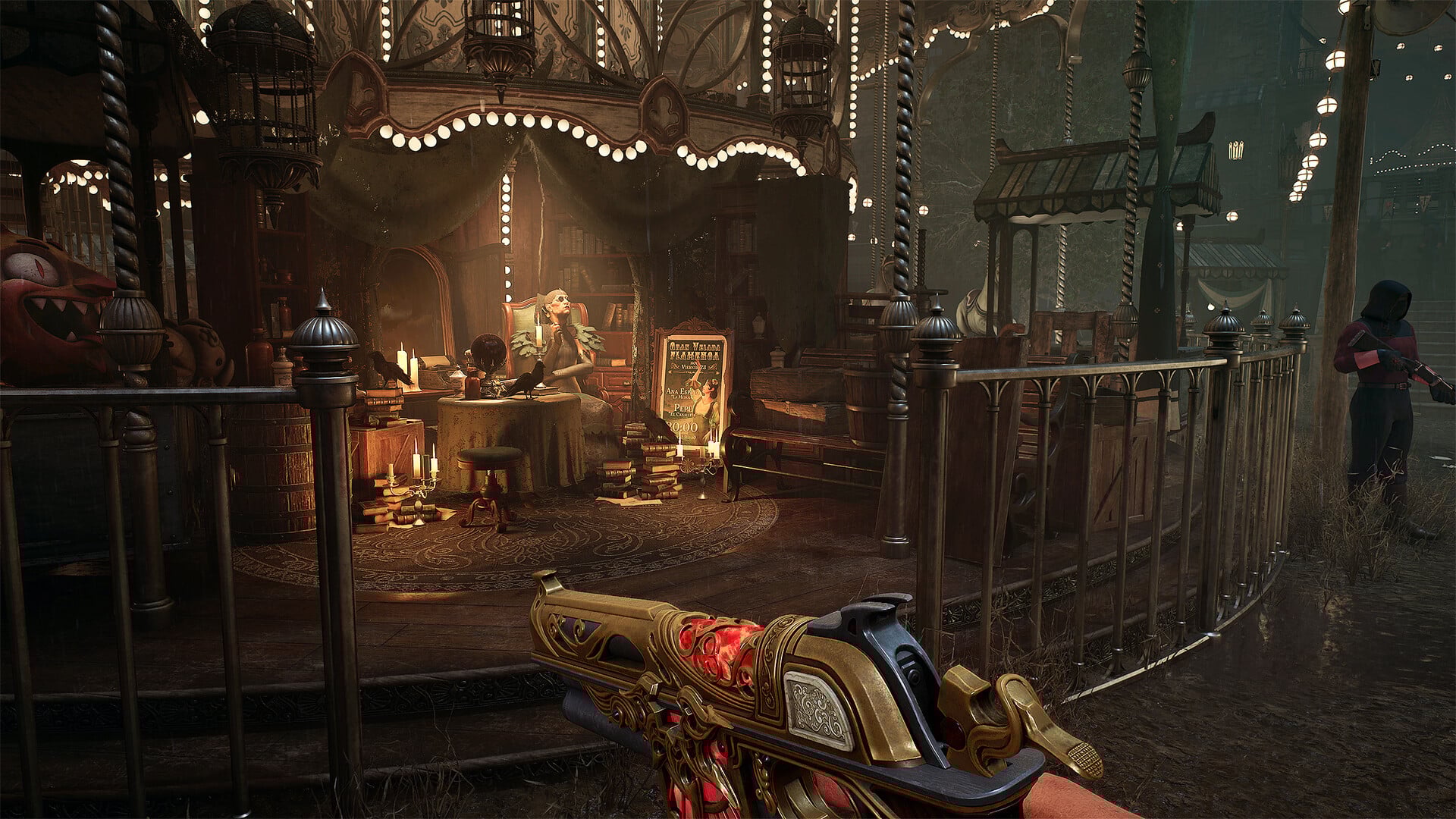
I enjoyed this aspect of Crisol, though I wouldn’t call it my favorite part of the equation. I dig the metaphor, which calls into question the sacrifices that organized religion typically demands, especially of its most ardent followers. How much is Gabriel willing to bleed to see his god back in power? What actions is he willing to take, regardless of his own moral standing, to see his will done? These are questions that are blunted by the kind of game Crisol is–you can’t opt out of combat here–and the answer to both proves to be: a lot.
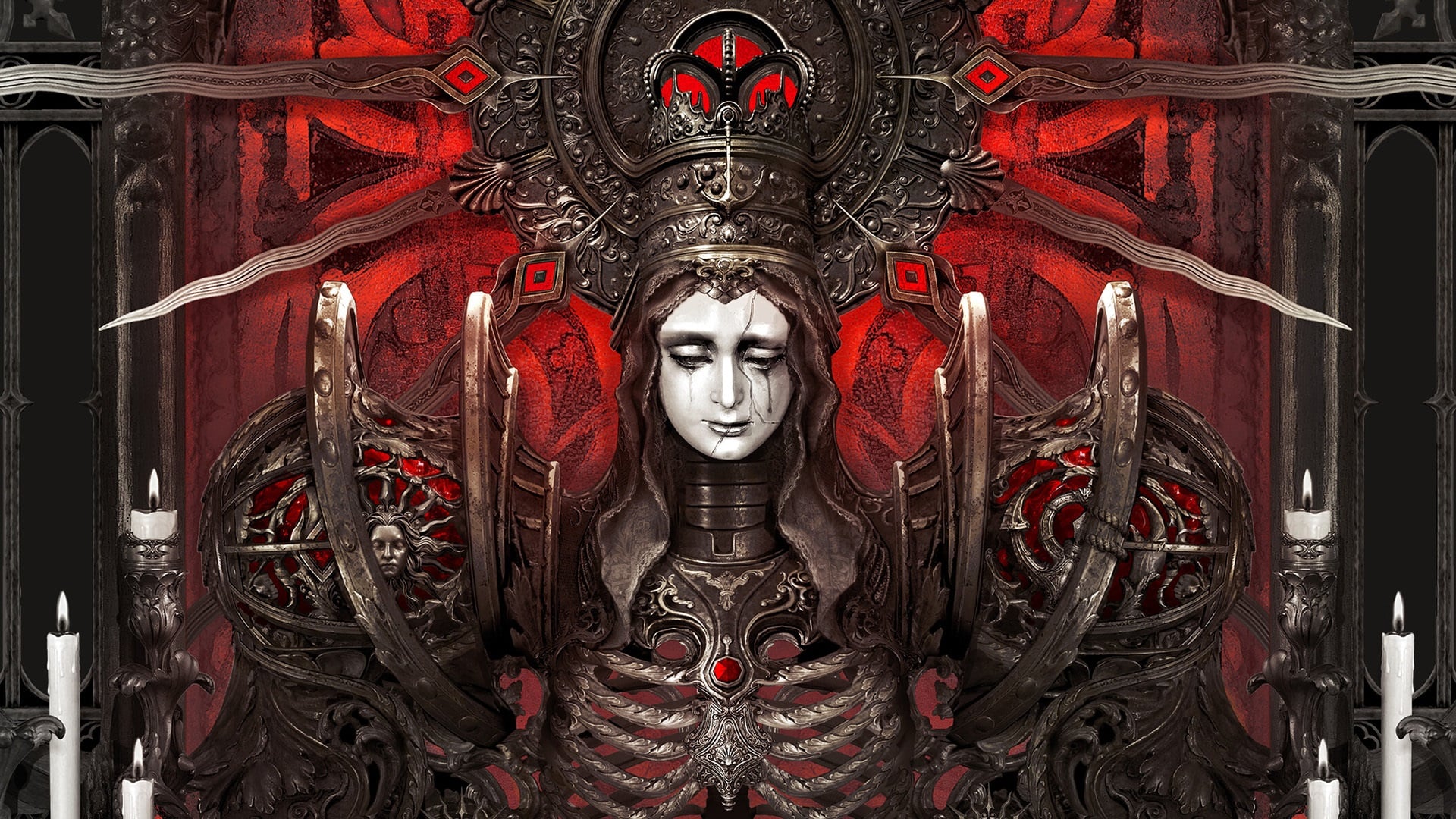
Each of Gabriel’s weapons is, both literally and metaphorically, blood-starved, and he is plenty happy to give them everything for his cause. It is always just a smidge spine-chilling to hear or see the spikes that pierce Gabriel and drain him, as well as literally just see his blood in the cartridge of his weaponry. His opponents are similarly visually arresting. Wooden statues derived from Catholic imagery (the religion is never name-dropped but sure is heavily alluded to) lumber through the streets waiting to be carefully dismembered by precise shots of your pistol or rifle, but I could often fall back on a shotgun to blast these things to splinters and assure they’d stay down. Eventually, these enemies grow to encompass other bits of religious imagery and architecture as you encounter towering golems lined with stone faces and monstrosities born from stained glass.
Regrettably, though, Crisol‘s combat is just fine. Shots land with a satisfying heft and it’s awesome to occasionally take out a leg or a knife-wielding arm and buy yourself a few seconds to consider your next move. Beyond this, though, enemies require very little thought, especially after you’ve netted a few upgrades, and the overwhelming amount of healing afforded to you on a normal playthrough chafes against and neuters the sacrificial effect of the central blood mechanic. I quickly became numb to the notion of refilling my weapons and depleting my HP because I was either flush with syringes, or knew that the game was hiding some form of healing right around the corner.
Here, the game dovetails back into the campy territory of those previously mentioned novellas. Remember that Vine boom I referenced earlier, and the repeated deployment of a dramatic audio cue? Crisol has its own “haunting” series of sounds it will frequently play, only these sounds are triggered by the act of draining dead carcasses, often of animals, for blood/ammo. Tormentosa’s streets are littered with the cadavers of chickens that can be drained of their blood…only Crisol takes this opportunity to then play a hilariously faint cuckoo, which happens every time you drain the blood from the poor birds. A dead pig will squeal. A horse-like beast might bray. Though I can’t speak to the intention, it definitely comes across as a comic beat rather than a dramatic one.
Crisol occasionally blurs this line between corny melodrama and unintentional comedy to mixed results. While Gabriel is straight-laced and bottoned-up, he eventually gains an ally, called Mediodia, who provides exposition and comic relief in equal measure. The performance here (especially in the native Castellano Spanish, which should be the default voice track of the game) and her back-and-forth with Gabriel makes her come across as a goblin-like, torturous little sister. It’s disarming hearing them banter moments after a new development in the story or tense encounter against Crisol‘s enemies, but such is the dramatic range of a typical novella chapter, which might follow up a subplot about infidelity or grief with a recurring sight gag or a detour into a humorous B-plotline. It is about as novel as it is jarring.
Consider, then, how it comes across when these moments of camp and levity, intended or not, smash up against Crisol‘s main plotline, in which one religious sect has violently persecuted another and you are attempting to overthrow a god with a blood-tinged armory, all the while unraveling the conflict that has plagued Tormentosa, recounted through flashbacks–which play out as vignettes with faceless, sanguine red silhouettes– illustrating the island’s violent and dramatic implosion.
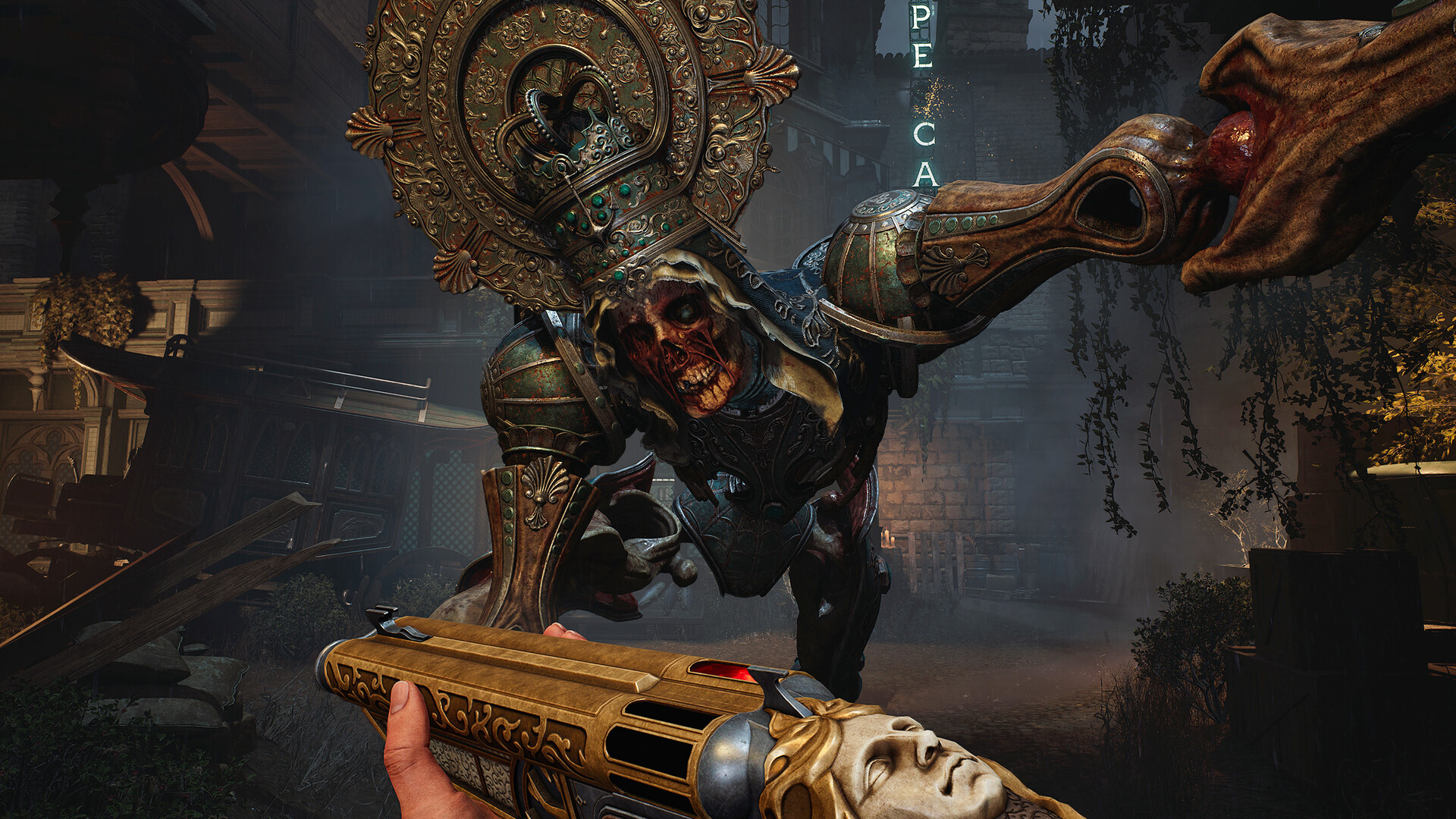
Lest you think I find all of its novella qualities grating or otherwise dubious, I do think that Crisol‘s penchant for drama brings out the best in its performers. It is rare to hear an entire cast of Spanish speakers in a game where that audio track is not just a haphazardly produced dub. Here are performances built upon the strength of our language, given by actors with the ability to properly enrich the words on the page with texture and specificity. It is even more thrilling to have them unreservedly go for it. The voice actress for Dolores, a particularly menacing foe who stalks Gabriel throughout the game, is a standout “big” performance, but many others fare pretty well here too, including the protagonist’s VA. Arroyo, one of the game’s more obvious baddies, and even the sun god have incredible presences, even if they are heard more than they are seen.
Not every performance is as stunning though, and quite a number of them get lost in the shuffle. Crisol‘s acts are dense with their own ensembles, and characters within them are usually working against one another. In the seemingly unending deluge of conflicts on Tormentosa, some more complex than others, it can be a little harder than usual to nail down motivations and characters worth rooting for, or even simply tracking throughout the narrative. I typically felt adrift in Crisol‘s smaller stories, only to be reeled back in when the narrative shined a light on one of its grander performers and more dramatic material.
In a word, Crisol is uneven, and that’s the most novella-ass thing about it. See, the thing about novellas is that though they attempt it all–comedy, melodrama, camp, action, steamy romance, and thrills of all sorts–they also kind of fizzle out by their end. The balancing act is tough to maintain so consistently. Crisol‘s ambitions seem to lie all over the place, but despite that, it still brings out top-notch performances. I was hooked on its drama plenty enough to blast through Tormentosa’s clubs, caverns, and cathedrals. And it is a competent enough survival-horror title to thrill and occasionally provide a good scare along the way, even if it feels at times like its action and horror is pulling its punches. But for all its missteps, I couldn’t help but love Crisol‘s authentically Spanish heart, and I can’t help but desire more of it. From Crisol and from games at large.