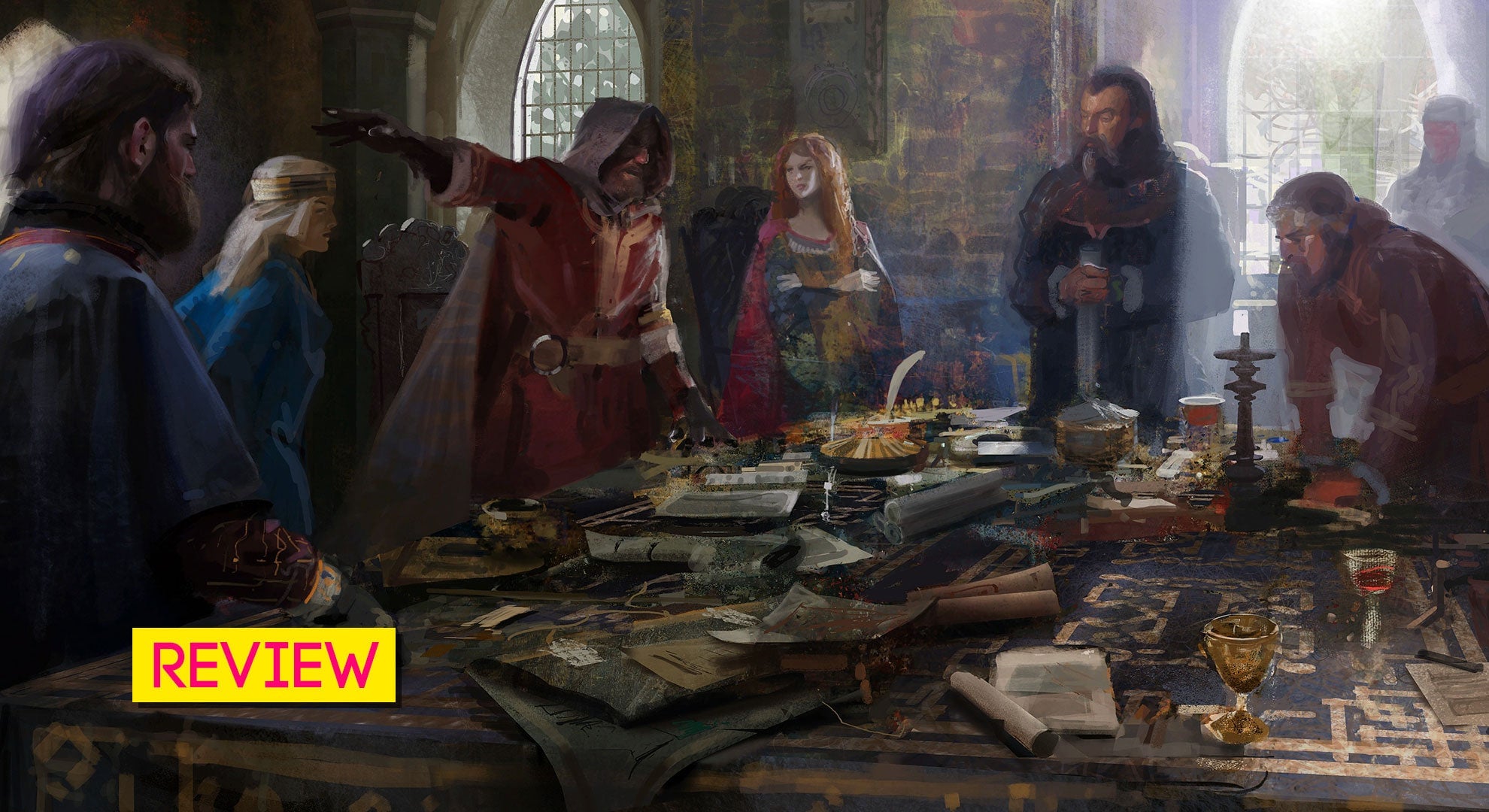
Crusader Kings III is a game that takes in 600 years of human history, from the 9th century through to the 15th, with all the geopolitical conflict, religious turmoil and interpersonal struggles that went along with it. So…where do we even begin with this game, let along this review?
How about with a quick history lesson—of the series, not the actual time period, relax—because what makes Crusader Kings III so special is going to require a quick understanding of what made its predecessor, a revolutionary strategy game, so good in the first place.
Crusader Kings III is the direct sequel to 2012’s Crusader Kings II, which I nominated for Kotaku’s Game of the Year back then, and then for around five years after that as well. At first glance it was just another Paradox Interactive grand strategy game, like Hearts of Ironor Europa Universalis, something terribly niche and with all the buttons and menus and abstract complexity that implied.
https://lastchance.cc/why-crusader-kings-ii-should-be-game-of-the-year-5972744%3C/a%3E%3C/p%3E
It was a military and economic strategy game, sure, in that you could go to war and build stuff. But really, Crusader Kings II was a game about drama, since almost everything you did revolved around people, not states or Kingdoms.
Crusader Kings II was an incredible achievement, but it wasn’t without its flaws. It took a lot of work to be able to understand how the game’s relationship systems—based simply on positive and negative factors, like “we have the same religion, so that’s +10″—and even more work figuring out how to tame the game’s leather-doublet-thick interface.
After releasing it in 2012, Paradox spent the following years endlessly expanding the game in almost every way imaginable. The map got bigger, we got more customisation options, new religions were added, the Vikings got some time in the spotlight, as did Jews, and things probably peaked around the time you could marry a horse. By 2019, Crusader Kings II was positively creaking under the weight of so much content
And so here we are in 2020. Not with another Crusader Kings II expansion, but with a whole new Crusader Kings game, one that dials back a lot of that bloat and has an opportunity to start things over. In doing so, it has a big legacy to live up to. How do you improve on a game that was so perfect in so many ways, but such a disaster in others?
Easy. You just keep the perfect bits and improve everything else.
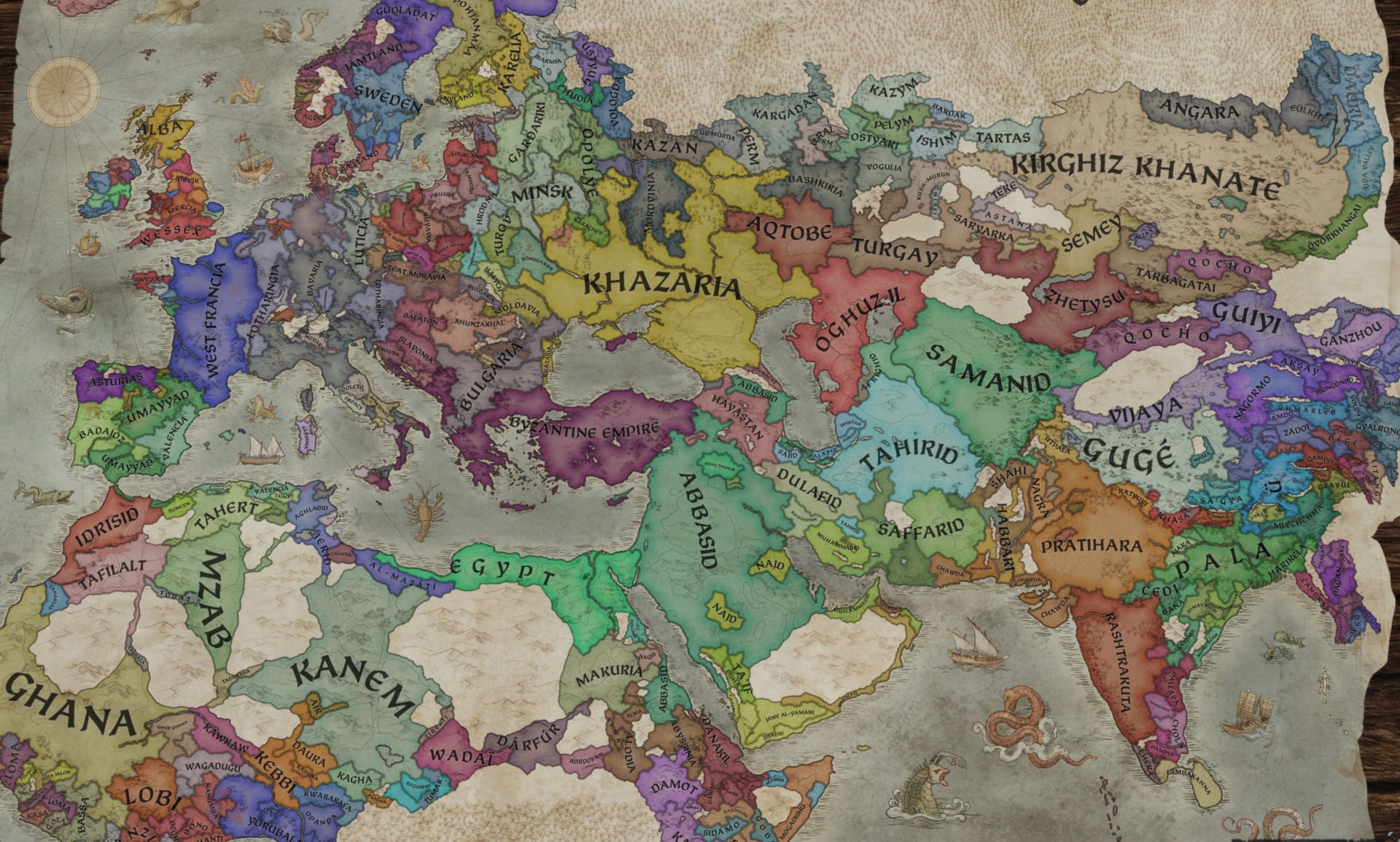
Crusader Kings III is immense. It lets you begin in the 9th century and play right through to the late medieval period in the 15th century. That’s a very European timeframe, one designed to coincide with the titular Crusades, a journey from the ruins of the Roman Empire to the doorsteps of the Renaissance, but it’s important to note that this isn’t a strictly European affair.
While Crusader Kings II took a number of expansions to broaden its scope, Crusader Kings III kicks off with an enormous block of the old world available to play. So sure, you can start as an Irish or German Prince, but you can also take the reigns in places as distant as Ghana, the Middle East, India and even China.
Some of those places, like Byzantium, will begin proceedings incredibly advanced, while others, like much of Scandinavia, will begin as tribes. Whichever you choose, it’s up to you to then guide your people through 600 years of turbulence, and when I say people, I literally mean a bunch of people.
In Crusader Kings III you’re not a persistent, omnipotent ruler who is in charge of a singular “Scotland” or “Spain” for the duration of the game. You’re cast as a member of a dynastic house, and so what you’re able to take over and rule depends on the fortunes of that family and the people it’s comprised of.
Get everything running smoothly and you could rise from the ranks of Earl to Emperor, but there’s nothing stopping the game from putting somebody else on the throne and bringing you right back down again, leaving you destitute and in control of little more than a church and a couple of farms.
Crusader Kings III can operate on a few different levels. You can play it as a standard Paradox strategy game and just “paint the map”, your only goal being to raise armies and take over neighbour after neighbour. If that’s what you want to do, that’s fine, the game will let you and it’ll be fun, but it’s also kind of missing the point of what Crusader Kings is all about.
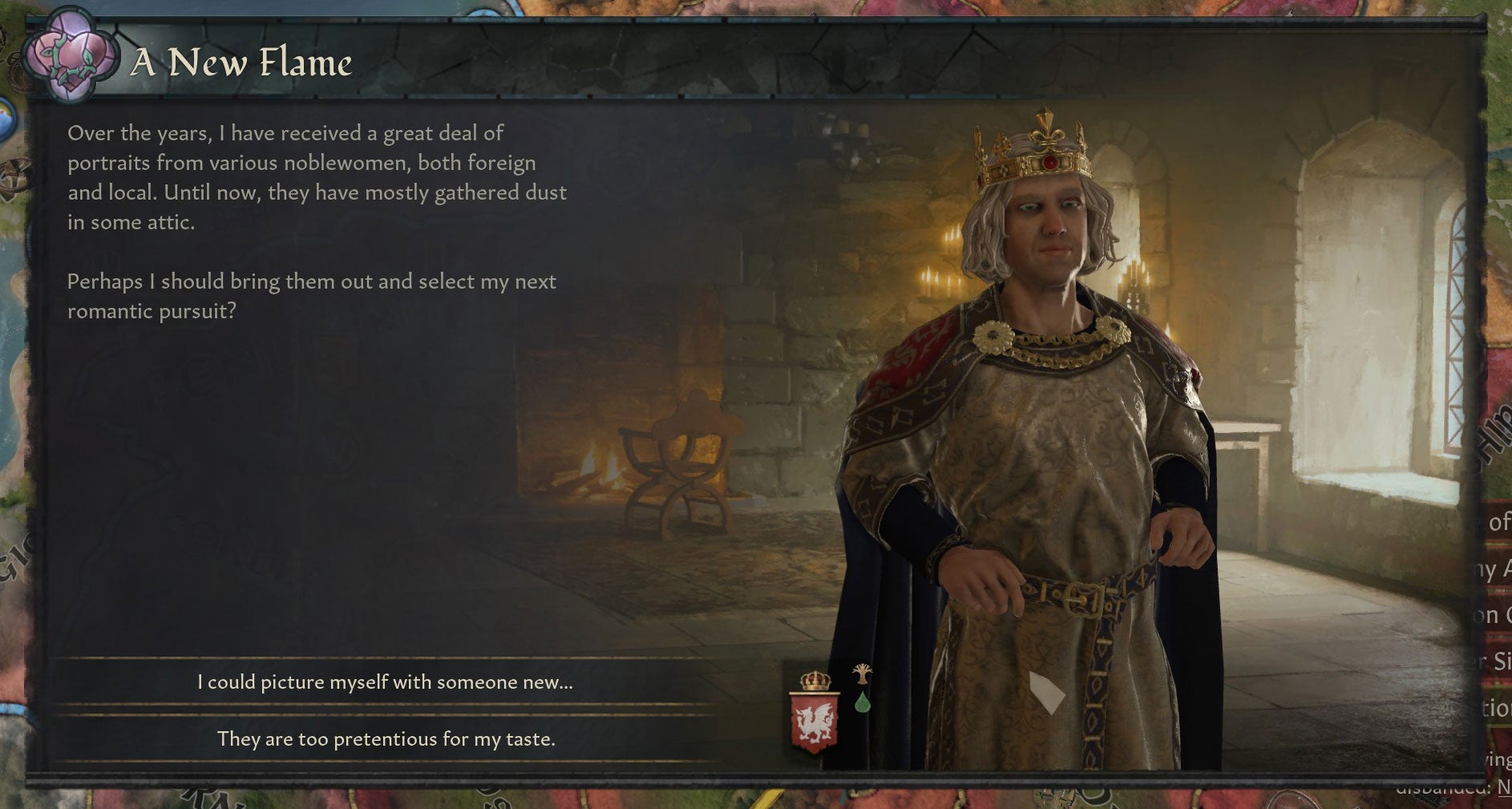
The game is made up of people because that’s where the real action is. A lot of your time in Crusader Kings III is spent not on the battlefield but at court and various events, as you grease wheels, impress guests, terrify vassals, seduce heirs and discipline children. It’s here, in the decisions you make on a personal level, that the world is truly shaped. When England talks to France it’s not some generic diplomatic screen, it’s me talking to Francois or whatever his name is, and maybe we get along because my daughter is married to his uncle, or maybe we don’t because of that one time I asked him to convert to Catharism and he told me I would never find solace in heaven.
The shape of the game’s world is forged by these interactions, and aside from more conventional forms of communication you can also engage in intrigue events as varied as plotting to murder a rival (or an heir), blackmailing your vassals and even kidnapping folks.
Or, if you’re not an asshole, you can befriend people, which includes such wholesome activities as talking a walk in the garden with them, writing them letters and even, if you can handle it, getting completely hammered with them.
Every single one of these actions can have important results, and they’re all completely valid ways to approach your relationships in the game. I’m going to go on and on listing these actions throughout this review, but even when I said you could just “paint the map” and be happy, you can do that with more than just armies. You can become a religious zealot and instigate Holy Wars, fabricate claims in neighbouring lands and even ask the Pope (or relevant religious leader) to call a Crusade and share in the spoils.
There’s just so much freedom here, to the point where Crusader Kings III strains at the very definitions of its genre. To call this a “strategy game” just doesn’t do it justice, since between your armies and economy and kids and spouse and religion and spies and booze and hunting trips and jousting tournaments and failed attempts to write family histories (all of which you can do, or at least attempt), there are times Crusader Kings III feels like playing 3-4 different games all at once.
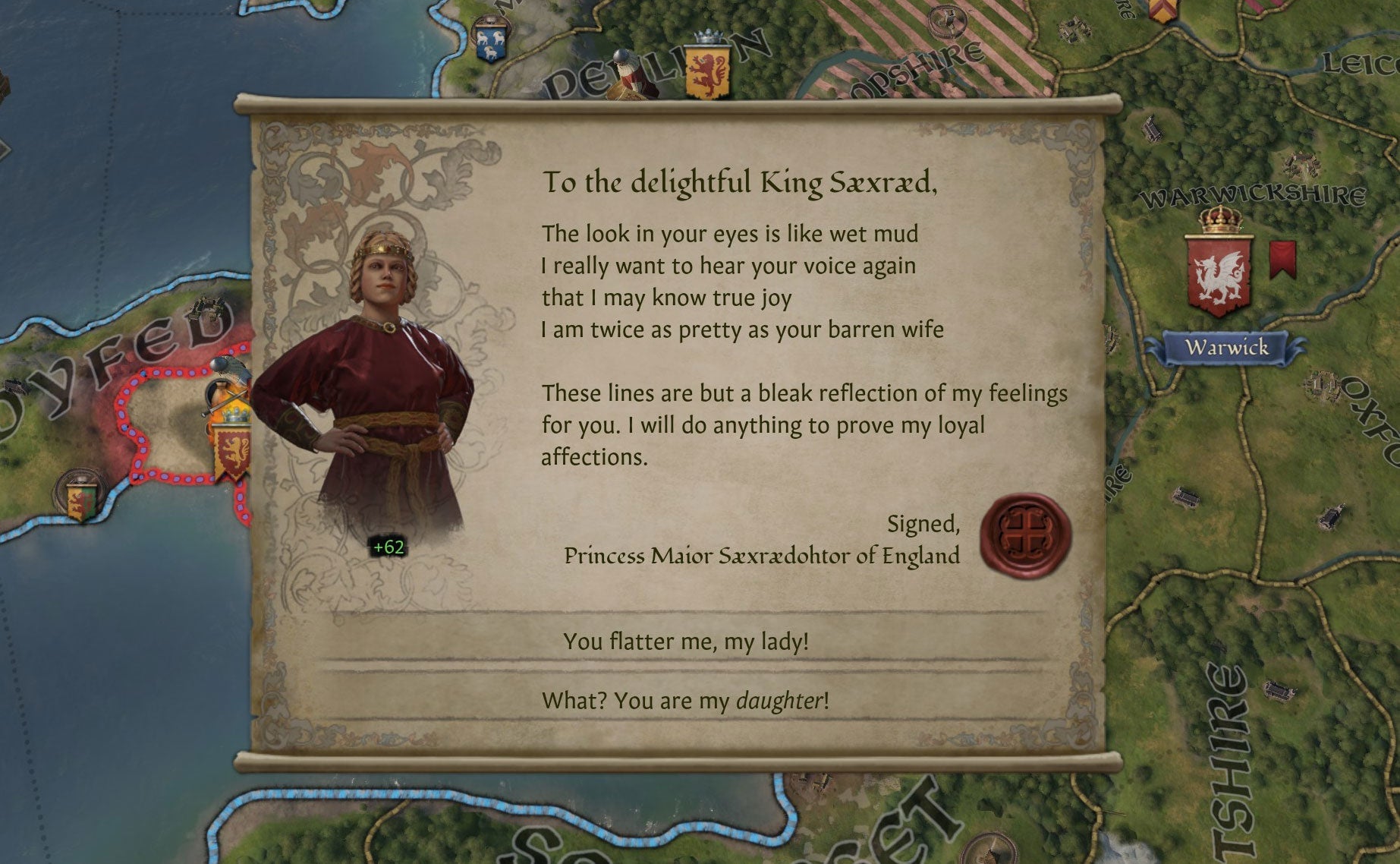
Moment-to-moment, I have loved almost every second I’ve spent with Crusader Kings III, across multiple campaigns, because it lets me play the game however I want, and never tells me what I’m doing is anything less than ideal. If I want to be a distant, hands-off King and ignore loads of stuff to solely concentrate on subjugating foreign lands, I can do that, and if I suffer the consequences, they’re not bad ones.
To be dethroned in Crusader Kings III isn’t to “lose”. The wild and different aspects of this game all come together in each campaign to tell a story, and so whether you’re overseeing a great triumph or a humiliating reverse, everything that happens to you in this game feels like being taken through a grand historical novel that’s never told the same way twice.
Let’s say I don’t want to be hands-off, though. That I want to be very hands-on. When this is the case there are no shortage of things to do, and very few—outside maybe the upgrading of buildings—of them feel like administrative tedium.
As ruler I can (here we go, I’m listing again) raise and then personally lead armies around the map. I can dive into the relationships I’m having with all my vassals, swooning over some, dining with others and imprisoning the real troublemakers. I can create an all-new religion, from its tenets to its iconography, and these can have enormous knock-on effects to my gameplay experience, not to mention affecting whether my (or my family’s) character traits are considered virtues or sins.
I can expand my personal holdings, like castles and cities. I can tend to my succession laws, the state of my heirs and any alliances I might be able to broker by marrying off my kids. I can engage in clandestine schemes, seeking to influence events or even murder people behind the scenes. I can invite everyone I know over to my hall for a lavish feast, or I can take a few months off an visit Jerusalem on a pilgrimage, publicly to display my piousness, but privately because I am sucking up to the Pope and need his help.
I keep discussing these possibilities simply to put the amount of things you can do into context, because no matter how trivial any of it sounds, every single piece of it goes towards making you who you are. It all means something, generating the values that drive the game’s relationship and personality systems, serving both as a constant challenge to my leadership, but also a reflection of it.
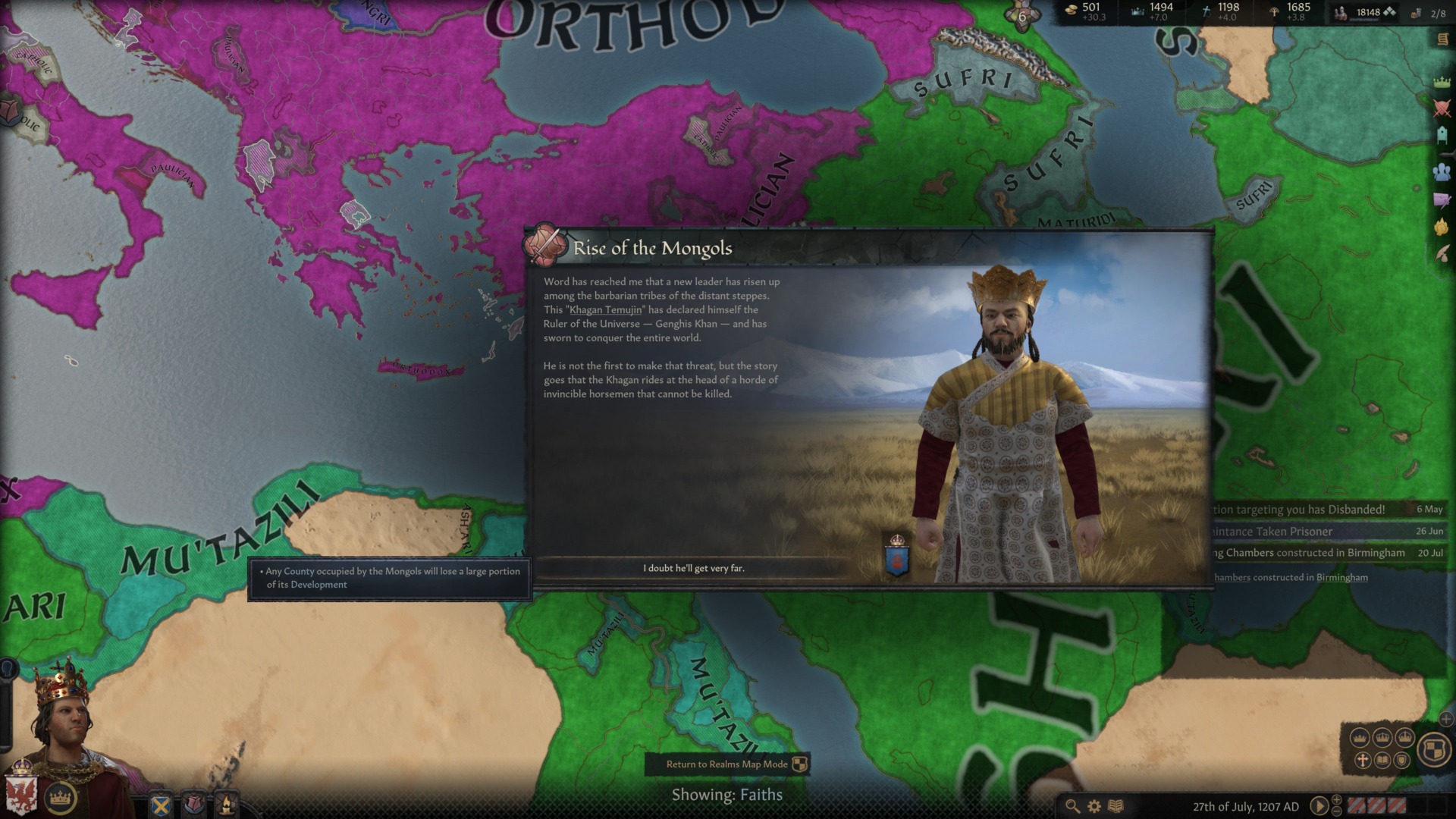
Like with Crusader Kings II, Crusader Kings III’s personalities are constructed of numerical values and traits, each of them affected by the choices you make and how they relate to the values and principles of everyone around you. Previously, though, coupled with static and repetitive character portraits, the game could feel like flicking through an abacus at times, a bit too mechanical for its own good. Here, it feels much more personal.
Gone are those tiny 2D portraits, which often meant important characters would go unremarked and forgotten amongst the crowd. They’ve been replaced with much bigger, fully-realised 3D models of…every single person in the world, and then every single person they’ll raise, and so on and so on.
Built out of a much wider variety of faces, physiques and wardrobe choices, everyone—and that is thousands upon thousands of people—in Crusader Kings III feels alive, and more importantly, they’re distinct and memorable. You can very quickly learn to recognise troublesome vassals or squabbling family members just by getting a quick look at their face, and the way they age, or become wounded after battle, or gaunt when ill or in prison, is just wonderful (in terms of us admiring the the system, I mean, not the fact they’re rotting away in a prison, that sounds terrible).
This sounds like such a minor, superficial thing, but it transforms the Crusader Kings experience. Taking what was previously a very “living tissue over metal endoskeleton” system and fleshing it out to this extent makes dealing with people—this game’s bread and butter—far more relatable, in the same way Civilization’s expressive characters have long helped that series’ stunted diplomacy feel so much more animated than it has any right to be.
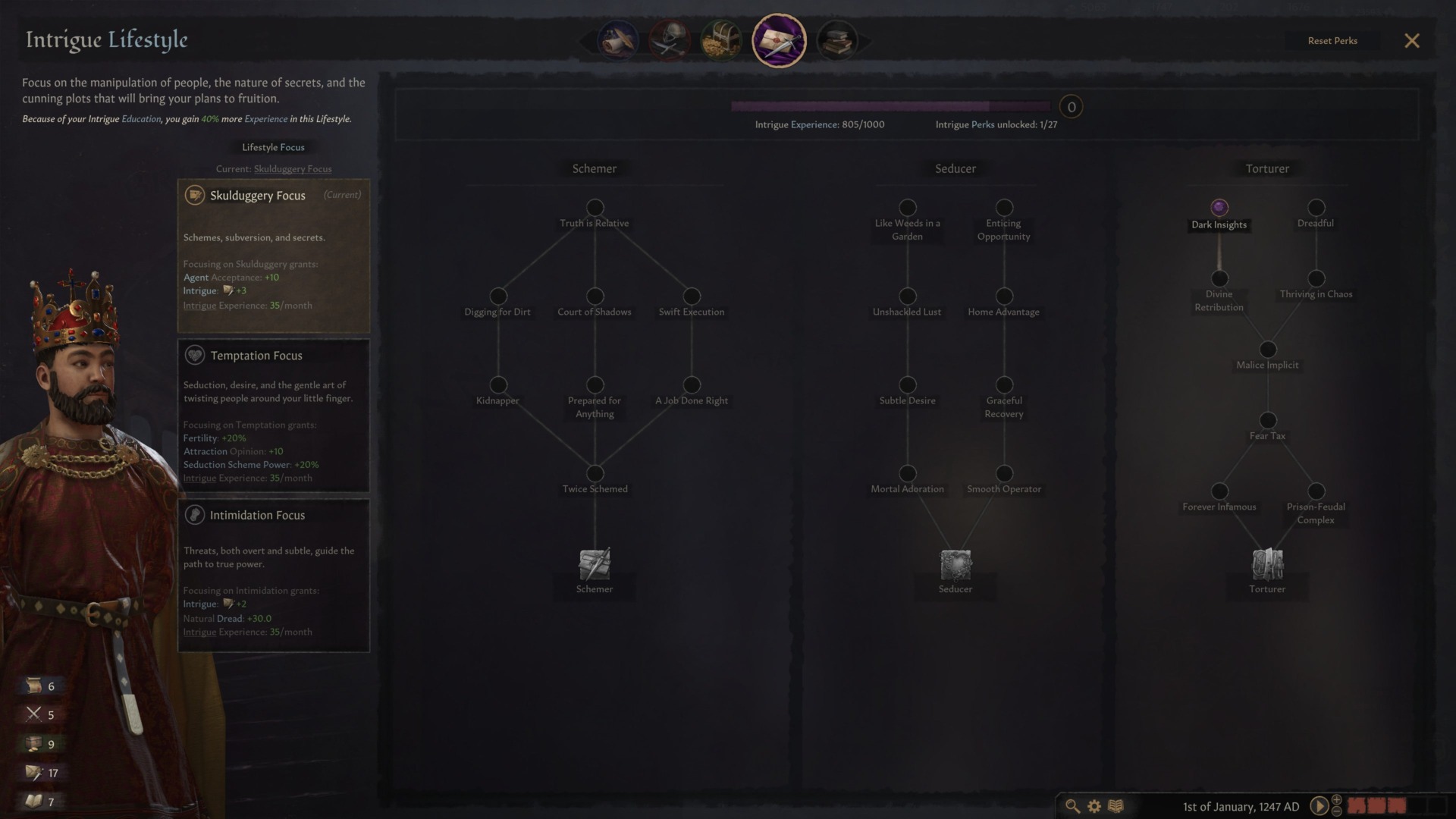
Probably my favourite part of Crusader Kings III’s more personal approach is the expansion of the series’ lifestyle focus. It’s a system where every time you get a new ruler to play as, you’re given a chance to tailor that person’s leadership style to your liking. There are five different lifestyles you can focus on—based on scheming, war, management, diplomacy or education—with the idea being that the longer you keep your ruler alive and keep playing, the more perks they’ll be able to unlock, granting you gameplay bonuses and statistical perks related to that particular field’s part of the game.
This is what I mean when I said this is 3-4 games in one. It’s a strategy game where you’re also playing an RPG, giving your guys and gals a real sense of character to go along with just the faces and stats that are defining them.
It’s just so fucking cool. You can spend decades running the Kingdom like a complete psycho, shaping your ruler into a child-killing lunatic who worships the devil and gets into drunken brawls, but when that guy inevitably dies and you start playing as their heir, you get to start all over again. Maybe their daughter (now you) is a pious nerd, and suddenly the entire game shifts on its axis.
If the last King excelled at intrigue, the in-game events and choices they were given—along with their natural statistical predisposition towards those kind of activities—would mean you spent a lot of the game in the shadows. Play as a diplomatic leader, though, and even though you’re in control of the same Kingdom, you’re doing things they could never have done (literally, it would have been almost impossible) like chatting with bishops, and doing business with your neighbours, and wanting nothing to do with any of that unpleasantness your predecessor was known for.
And when that ruler dies, and their heir is a gifted General (again, this is now you), then everything changes again! You might find yourself leading the charge as a militaristic King, ignoring other options like pursuing goals diplomatically and instead just walking up to every domain you fancy and saying yes, please, I’ll straight up take this, bestowed with aggressive perks that your forebears simply couldn’t take advantage of.
So it’s an RPG as well as a strategy game, where the role you’re playing changes all the time, but then every time the role changes, the strategy game part changes as well. And every time it changes it’s a blast.
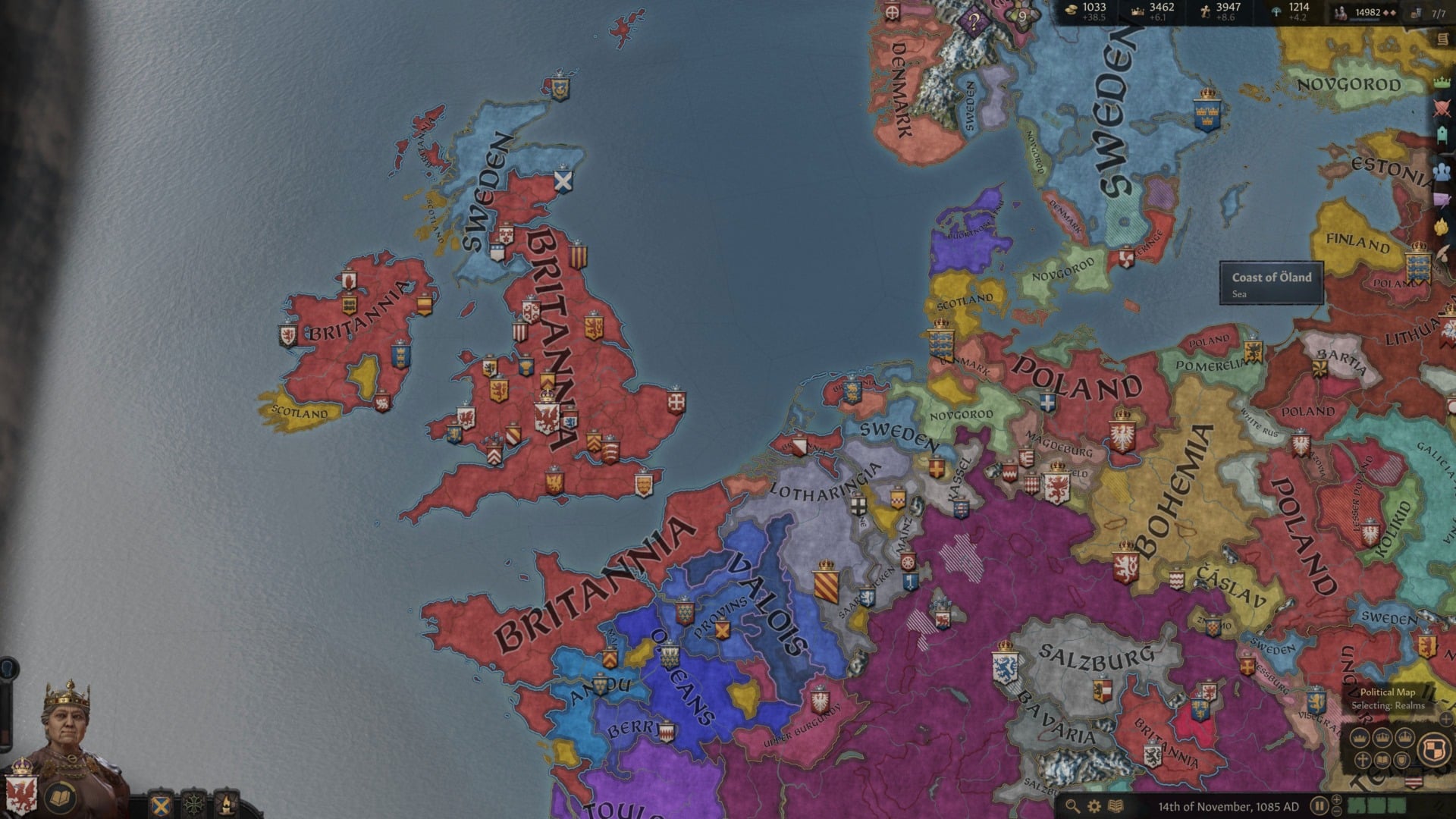
Alright, we’re far enough into this and have covered so much of the fun stuff that it’s time to talk about the interface. Boring, I know, but it’s also something that’s critically important to a heavyweight strategy game, and also something Paradox titles have long struggled with. The challenge with Crusader Kings in particular has always been that it’s a game about emotions and feelings, but which still had to operate within the constraints of an engine that was made for more straight-laced strategy games.
Crusader Kings II had too many buttons, too much clicking, confusing icons, argh, it was not fun to spend a large amount of time with, and that’s coming from someone quite comfortable with this kind of game. It was very intimidating to anyone who wasn’t, and one of my greatest frustrations of the past decade has been recommending Crusader Kings II to folks I know would adore the politics, only for them to tell me, “I would rather die horrifically than learn how to play this.”
Crusader Kings III is a huge improvement in this regard, mostly because it’s taken what’s mostly the same systems (and even buttons) and just organised everything a lot more cleanly and intuitively. The things you need to know right now are displayed accordingly, the buttons you need to go to the most important places are big and coloured, and anything to do with you personally is accessed by…a giant portrait of yourself. It also helps that the menus are now very nice and modern, very Civilization with their blue backgrounds and gold text.
That’s all minor quality-of-life stuff though, and is probably only really interesting to series veterans. What I think will help everybody out, though, even experienced players who might need some help grappling with Crusader Kings III’s changes, are the game’s pop-ups. Continuing the single best trend in modern strategy gaming, after Three Kingdom’s pioneering work last year, Crusader Kings III will explain pretty much anything you need to know just by hovering the mouse over a dialogue window. Sometimes that’ll just be a handy little tip, other times you’ll get an exhaustive rundown of a key feature that saves you from having to google something.
https://lastchance.cc/total-war-three-kingdoms-the-kotaku-review-1834993637%3C/a%3E%3C/p%3E
For a direct example of this, consider the way you raise armies. In Crusader Kings II, this could be an enormous pain in the ass, but has now been streamlined by the inclusion of custom mustering points, where you can either raise local forces (handy if you’ve got a far-flung empire) or your whole damn army on the one spot. Nothing has been taken away from the game in changing this, nor has its tactical flexibility been comprised, it’s just faster to do it now, and better as a result.
-
BACK OF THE BOX QUOTE
"I heard you like to murder your own children."
-
TYPE OF GAME
Dynastic Management
-
LIKED
It's grand strategy at the most personal level.
-
DISLIKED
Your enjoyment can sometimes be a little too dependant on how challenging/enjoyable the world around you evolves to be.
-
DEVELOPER
Paradox Interactive
-
PLATFORM
PC
-
RELEASE DATE
September 1, 2020
-
PLAYED
Played through the entire game twice, then a couple of smaller, dabbling runs as well.
Crusader Kings III is an immense game, but also an immense achievement. There’s really nothing else quite like it. It’s a strategy game, and a good one at that, and like I’ve said if you only want to raise armies and conquer the world, this will let you do that and you’ll have a good time with it.
But it’s so much more than that. It’s a strategy game with the lifeblood of an RPG coursing through its veins, and a character system that lets you truly live in the time rather than just look down on it from above.
It’s a game of endless freedom but also constant moral quandaries. Where you’re challenged as a parent as often as you are on the battlefield. Where you can pay tribute to Popes while torturing the innocent in your dungeons. Where you’re constantly bombarded with choices and decisions, and every single one of them means something.
And you’re judged on none of it. It’s a game about writing your own version of history, with its heroes and villains, and despite the endless possibilities this presents, everything you do (or fail to do) is never right or wrong, it just is
I would recommend Crusader Kings III to Crusader Kings II fans, obviously. But also to Civilization and Total War fans. To people who play The Sims. Or visual novels. Or Bioware RPGS. That’s testament to how wild and untamed this game’s scope it, but also how successful it is in delivering on the promise of wrapping it all up into a single cohesive offering.
Crusader Kings III may begin in what we used to call the Dark Ages, but it’s a Renaissance for strategy gaming in 2020.
MORE PARADOX/CRUSADER KINGS STUFF:
https://lastchance.cc/crusader-kings-ii-the-kotaku-re-review-1783955128%3C/a%3E%3C/p%3E
https://lastchance.cc/hearts-of-iron-iv-the-kotaku-review-1780258434%3C/a%3E%3C/p%3E