Back in August of 2012, our Kickstarter for Steam Bandits: Outpost, a free-to-play steampunk townbuilding game, was funded for $55k. Since then, the studio has run out of money, lost a lot of team members, found new ones, and turned the game into an RPG.
That was almost three years ago, and we had lofty ambitions. We wanted to make a townbuilding game that didn’t have pay-to-win monetization. We wanted to make a series of games spanning different genres and consoles that would all tie into one another. We wanted to form a studio that put the developers first and shared the game’s profits with those on the project, not the publisher. We wanted to make games you could play on any device. We wanted to push back against the tide of horrible games you see on mobile devices and Facebook. We wanted to change the world. Well, you know what they say about how things change.
After funding, the team was ready to get into full development on the project… or so we thought. It turns out finishing a Kickstarter campaign doesn’t mean you can focus completely on development. Nope! We had about half of the team working on backer rewards, while the rest of the team started work on the prototype. I split my time between both (technically, I just doubled my time by working 14-hour days). Nobody else worked as much as I did, and that’s how I wanted it to be. I’ve seen burnout firsthand in this industry, and I wanted to take care of my team, so no one was asked to work crazy hours. I did, but only because I knew my limits and had a lot of fun working.
Every Sunday, the team would meet up at my place for an afternoon barbecue, drinks, and project planning. I’d be manning the grill while everyone else discussed the project. It was an optional gathering for us, but most folks showed up just to hang out. During the week, some of them would come over and work since I converted my dining room into a small office. Things were going smoothly and we were having a blast making the game… until a few months later when we lost most of the team.
A lot of folks on the team had come from Obsidian after they were let go in a large round of layoffs. After the Pillars of Eternity Kickstarter was incredibly successful, Obsidian was in a better position and offered them their jobs back. None of us had wanted to leave in the first place, so a good chunk of the Steam Bandits team went back to Obsidian. It was understandable; that’s a great place to work and it feels like home. I was committed to our backers, though, and I decided to keep the project going no matter what. The loss of key team members really hurt, and for almost a year I was the only designer on the project.
I was eventually able to find people to help me with it, but since the Kickstarter funds mostly went to backer rewards, software, and hardware, there was little left to cover salaries for people. Whenever someone new would join the team, I made it clear that they would not be working for free, no matter how many hours they were able to put in. I would have them track their hours so that when we eventually were making money, they could get paid for their time. I’ve heard of too many studios bringing people on as “interns” and not paying them. That’s not how I wanted to run this studio. If someone was on my team, they were going to get taken care of. That being said, if someone on the team needed to find work elsewhere to pay their bills, I would help them find a home at a new studio. They were my friends first, co-workers second.
Word of the project and my management style spread. People joining the team knew about our financial situation and were able to help out in spite of it. We brought on developers that lived in other states, a lot of whom were unable to get a job in the industry since they had to work from home for various reasons. We constructed a virtual office setup so that we could function with a fully remote team. It was a challenge, and definitely something I had to get used to after working at Blizzard and Obsidian, where you have cubicles and offices to collaborate. Google Hangouts was an invaluable tool that allowed the team to communicate and coordinate.
Sadly, working from home isn’t all it’s cracked up to be. I’ve never been great at self-motivating. In school, I did just enough to get by and often waited until the last minute for everything. Now here I was, in charge of a team, and I needed to get my shit together or let A LOT of people down. Having a consistent schedule was the key. Every morning, the team would have a meeting at 10am in a Google Hangout where we would screen-share our daily progress. Being accountable to a team and needing to show your progress to everyone was a pretty powerful motivator. We’d also chat with our community in our forums often to bounce ideas and keep us focused. If the community wasn’t too crazy about an idea, we either wouldn’t do it, or we’d make it a lower priority. If the community had an idea that people liked, we would find a way to make it happen. It was inspiring to see everyone getting involved, and it helped us feel less alone on this journey.
Once we finished the prototype, we had a big meeting at GDC in March 2013 with a publisher that wanted to see what we were up to. I didn’t sleep the day before since I wanted to polish the prototype as much as possible. Coffee carried me through most of the meeting. We presented the current project and went over our plan for the later games that would tie into this one (the airship co-op game and the fighter jet game). The publisher wasn’t all that impressed with Outpost, since we were showing them a steampunk town-builder that looked a lot like FarmVille. They thanked us for our time and asked us to reach out to them once we were ready to talk about the next project, which really interested them. It was pretty discouraging, but it got me thinking about the future of the project, as well as my own future.
I wasn’t too crazy about making a pure town-building game. I’d always avoided those things on Facebook. Granted, Outpost was going to have elements of city-builders like Tropico and Civ, but was that enough to really make it stand out, and more importantly, was that enough to make it fun? The bulk of the people who really wanted to make a pure town-builder were gone, which made me wonder, “Should I make a game I wouldn’t play?” I sat down with the team and explained that while I could continue leading the project, my heart wouldn’t be in it. Everyone was awesome and encouraged me to explore what it would take to get me passionate about the game. I had an immediate answer for them: I wanted this to be an RPG with a town-building feature. The team was excited about this, but we needed to make sure it would fit with everything else, and that it would be okay with our Kickstarter backers.
I spent a week talking to our programmer, Nick, to see what the technology could do. We already had prototypes where the player could control a character, and their character could visit their friends’ islands, so I asked, “What if the player visited an island with monsters they could fight?” Nick thought about it, sipping his coffee quietly for a few minutes while his brain was crunching the numbers. He looked up and said, “Actually, that would be pretty easy with our architecture. The tricky thing would be designing content. You’ll need more than just yourself designing the game.” He was right. I would be crazy to try that on my own.
I started reaching out to my designer friends from Fallout: New Vegas (which I worked on at Obsidian) who were available. After I told them my idea to add RPG elements to the game, they were excited and wanted to join the team. A pure town-building game wasn’t too appealing to them during our Kickstarter campaign, but an RPG-town-builder hybrid—now that was interesting! Before presenting all of this to the backers, I wanted to flesh out our plans and figure out what we really wanted to make.
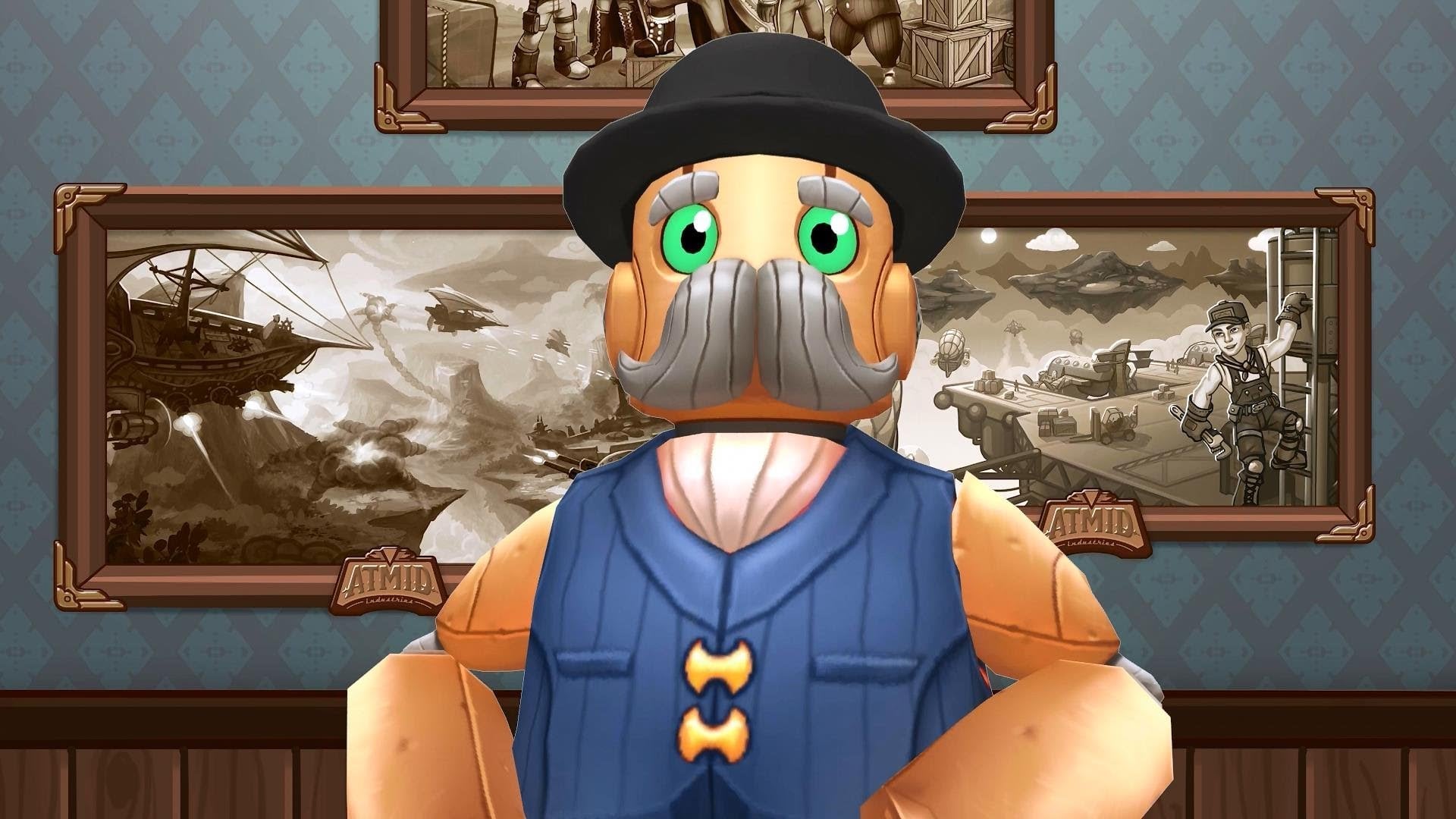
We wanted to start with a steampunk town-builder with vanity-based monetization (like Team Fortress 2 and League of Legends) and shift things around to provide an RPG experience. Clothing would have stats; weapons would give you combat abilities; islands would be made with NPCs giving quests to explore dungeons with monsters and bosses; and NONE of it would be pay-to-win (because fuck that, seriously, fuck pay-to-win). We decided to keep the “cutesy” art style since it would scale well on mobile devices and possibly lure the casual townbuilding players into a story-driven RPG.
With our tech, we decided to make the game feel like a modern JRPG mixed-in with some MMO elements of questing, crafting, dungeon instances, and end-game content. It would all be in a single-player-style experience, but connected so you could still interact with your friends for crafting and trading.
Once we had the plan in place for what we wanted to do, we reached out to our backers and I was honest with them. I explained that my heart just wasn’t in making a pure town-building game since I love RPGs, and I laid out the direction I wanted to take. If the backers objected to the change, we wouldn’t do it. This project was made possible by them and I wanted to remain honorable. Their reaction was overwhelming. Not a single backer objected to the change, and they were actually very supportive of letting me follow my vision.
The next step was figuring out how to actually pull all of this off. We reached out to a few publishers again to see if they’d be interested in helping, but the answer we got back was that it was “too new and different.” Publishers tend to be very risk-averse, and we were venturing into uncharted waters. The next option was to seek out investors, which was pretty far outside of my areas of knowledge. After juggling the project design and managing the team, I set aside some time every week to explore the investor route. The common response from investors was, “Oh, that sounds super neat! How many users do you have and what are your projections?” Well, we didn’t have a lot of users playing since we weren’t even in beta… and projections? My background is in programming and design, so the business side of things is something new I had to pick up. Projections, pitch decks, and various 3-letter acronyms were new territory to me.
Even after I learned how to convey all of those things, we were still unsuccessful in finding investor help. Most investors were looking for Clash of Clans-style numbers, and I like being honest (I hear I shouldn’t be, but meh), so I would state that we were not trying to be another Clash of Clans since they have a pay-to-win model. They would get confused and ask: “Wait, don’t you guys want to make money?”
And, sure, we would like to make money, but I have to believe our game can be made without coercive monetization (running out of energy and needing to pay or nag your friends to continue playing) or pay-to-win monetization. I’d rather make a great game that everyone loves, than a freemium game most people hate. There has to be a way to do that, remain indie, and not sell out. I believe it’s both possible and mandatory if we have any hope of preventing the future of games from turning into a freemium crapfest. Don’t get me wrong; there probably is a way for an indie to get funding without compromising their vision. I’ve just been unsuccessful in finding it.
By November of 2013, folks on the team started running out of their savings and we needed to find a way to bring money in. Steam Early Access was still a pretty new thing, and I wasn’t sure if we would be a good fit for it while we were still in pre-production and working on the core RPG mechanics. After chatting with Valve, though, Early Access seemed like the right way to go. It would help get us some funding and get us more feedback on the game while we were developing the key systems.
We launched on Early Access in January and made about $25k over two months. We didn’t promote the game or make a lot of noise. We were pretty hesitant to even put it on Early Access, since so much of the game was unfinished. Still, the community was amazing and significantly helped us steer the game’s design in a better direction. Combat too slow? We’ll speed things up! Crafting and building takes too long? We’ll shorten the times! Having direct feedback from the players helped us tune and balance the game better than we ever could have on our own. At the end of the day, if the players didn’t like something, we fixed it.
While Early Access sales helped, it only gave us a few months of funding. Most people on the team had to pay rent and student loans, so by May 2014, we had run out of the Early Access money. We all tightened our belts as much as we could, but we needed to find a way to bring more money in to keep people on the project. Since my car was mostly paid off, I was able to refinance it and use that money to continue paying the team. When that ran out, my dad was able to help a little by refinancing his home and loaning me the money. That got us a few more months. Some friends and family were able to help us out by loaning us even more money, which helped carry us into the end of our alpha phase.
Throughout alpha we had lost and gained people on the team. Some folks needed more money than we could give, others wanted more stability, and it was all completely understandable. I kind of got used to hearing, “Hey Jason, sorry to bring this up, but I think I’m going to take a job I was offered at X game company.” It kind of reminded me of when I was running a small raiding guild in World of Warcraft and our raiders would leave to join a bigger raiding guild. There were no hard feelings and I couldn’t blame them.
The cycle of losing and finding people was incredibly time-consuming and stressful. I would train someone to take over a design system I had been in charge of only to see them leave the team a few months later. Normally on a project, you’re supposed to delegate features of the game to others, but in our case, features became boomerangs. I would throw them at a new designer only to have them come back to me later. Eventually I stopped throwing the boomerang and just cut features so the game could get done.
As money became more difficult to come by, productivity started suffering—to the point where most of the team was working part-time except for myself and a few others. A game of this scope couldn’t be finished with a team putting in only a handful of hours per week, so we needed to cut content and more features to keep progress moving. This made predicting schedules and patches nearly impossible, since everyone on the team had variable work hours. In spite of the productivity decrease, we still charged onward and I vowed to never give up. There are too many stories of Kickstarter teams that run out of money and fall apart. That wasn’t going to be me. Never give up, never surrender!
Our next big push was getting to beta. From October 2014 to March 2015, we worked as much as we could to address feedback and tighten the RPG side of the game. Combat was the core of it all, and required the most iteration. We decided to use a turn-based combat system, as it allowed for more tactical play, especially when dealing with parties. We wanted to modernize that system, so we added familiar mechanics like tanking, aggro management, ability cooldowns, charged attacks that can be interrupted, and elemental damage types. Once combat was feeling good, I was able to shift my focus to a part of the game I had neglected for a bit: town-building.
I had put the town-building part of the game on the backburner for a while to focus on the RPG side of Steam Bandits, but it was time to change gears and make the building part more fun. Crafting was pretty shallow, as was general town management. We had something called “captain missions” to act as a passive reward system, similar to The Old Republic’s crew missions where you can send your crew out somewhere and have them come back with rewards later.
After playing waaay too much of the latest WoW expansion, it hit me. Why stop with captain missions? Blizzard had their own version of it, which was interesting, but I wanted to do something more. I wanted to give players a greater sense of customization and progress. So, with a few tweaks, we expanded the captain mission system to include all of the buildings in the town. Players would be able to assign followers tasks at various buildings, who would then skill up from performing those tasks. The player could also bring those followers into their party as they adventured. The goal was to give everyone as many choices as possible.
Once our players saw those changes, the game started taking its true form and we started getting posts about how much fun people were having. We still have a lot to do with all of those features, but the game’s core elements are finally in place and feeling good.
Now we’re in our first beta phase. We have a plan in place. We’ve been through hell, but it’s only made us stronger.
After working on titles such as World of Warcraft and Fallout: New Vegas, Jason Fader launched Iocaine Studios as their Creative Director/President along with fellow industry veterans. Their current project, Steam Bandits: Outpost, is available on Steam Early Access… but please don’t buy it unless you like knowing how sausage is made. You can follow Jason @JasonFader and @SteamBandits