The best trailer for the video game L.A. Noire that its creators never made would have featured a man’s face. The face would have been that of an unremarkable owner of a liquor store in 1947 Los Angeles, a hard-working type. His face would be creased, just a little, from the effects of encroaching middle age.
For one minute, you would watch this face. The man’s eyes would blink four times, maybe five. His chin might bob once, slowly. His head would cock to the side slightly, as happens when a man is waiting for a detective from the Los Angeles Police Department to either believe what he just said or call him a liar.
This best L.A. Noire trailer that never was would last one minute during which time you would watch it and ponder the face of a man who just told you that the lady who entered his store last night bought a bottle of rye and left and that he had nothing to do with her becoming a corpse. You’d spend the minute wondering: Was this the face of an honest man? Or that of a fraud? A good citizen or a murderer?
He just blinked.
Was he giving himself away? Had he lied? Would he have lied?
The trailer would end with no satisfying answer. It would end in your mind, as you decided, after staring at this man’s face, whether to 1) trust him, 2) doubt him or 3) confront him with the piece of evidence that could expose his lie.
In that minute, you would have played L.A. Noire as I played L.A. Noire, mostly mentally, mostly motionless, mostly captivated.
***
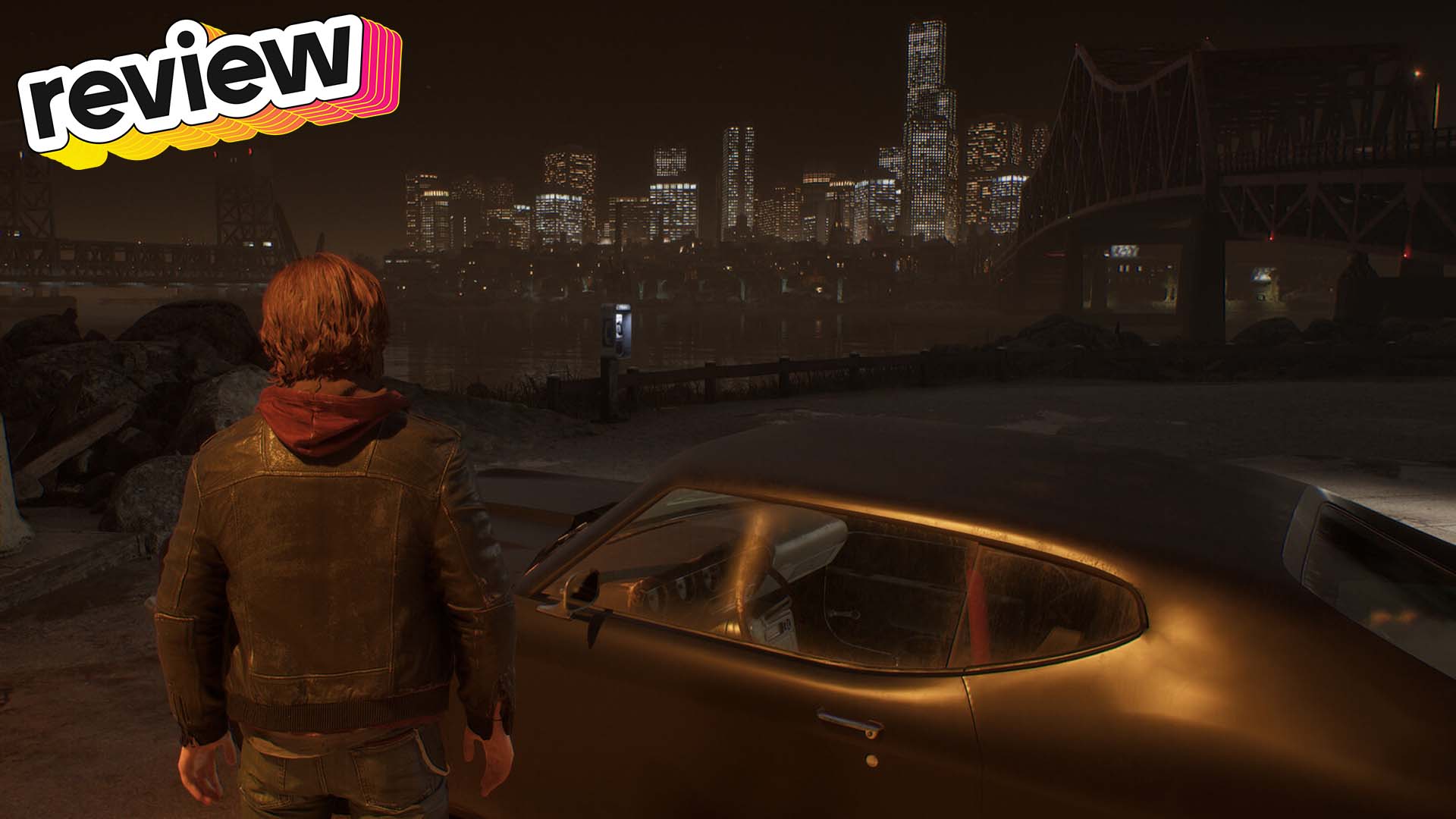
L.A. Noire‘s gorgeous Los Angeles.
The interactive 1947 detective story L.A. Noire is a success for reasons multi-million dollar video games infrequently are: It is a head game and a gut game. It’s a game about thinking at the rate a match burns, slower than a snap, but with the urgency and carefulness to catch a crook. The game was created by an army of developers from the Australian development studio Team Bondi and a collection of teams from the Grand Theft Auto and Red Dead Redemption creators at Rockstar Games. They have not, as has been established repeatedly by those, myself included, who previewed it, made a Grand Theft Auto of immediate action and constant commotion. They have also not made Portal 2, sudoku, chess or any other puzzle game whose solutions can be deduced through an understanding of geometry or arithmetic. What they have made is messier, intentionally.
They’ve made a game that plays as a series of mysteries starring the fictional Cole Phelps, a war hero returned to Los Angeles in 1947 to climb the ranks of the LAPD. Each mystery or case is paced like a TV episode, with a crime at the start and a solution at the end, a forked path in the middle that is travelled differently depending on the player’s skill to properly trust and doubt, to decide to believe the man in the liquor store not because you have lack the evidence to prove he’s lying but you trust him because there’s no reason to doubt. The better L.A. Noire player trusts a man because that man—though maybe not the next man—tells the truth without smirking.
In most video games, you must be right to proceed. Being “right” might involve solving a puzzle, but it could also mean aiming the gun well enough to kill enemy aliens or timing Mario’s jumps well enough to detach enemies from their shell. Being wrong is usually the opposite: you’re stumped by the puzzle, killed by the aliens or falling down a pit, in need of a new life and a do-over. In L.A. Noire being right or wrong about whether the mobster’s wife is lying has no effect on whether the game proceeds. It will proceed, just differently. Being “right” results in the satisfaction of watching a suspect crack rather than being forced, because you failed, to hoof it to two other locations before finding out the information the better-placed doubt would have produced. Being wrong is no story-stopper. You can’t lose and you can only do-over by re-starting the hour-long cases. Being wrong is simply the humiliation of being outwitted by a person—or worse, by a computer simulation of a person.
Phelps investigates a crime scene.
You have just three possible actions when you, as detective Phelps, interview a suspect in L.A. Noire: trust, doubt or present the evidence that calls them a liar. You have slightly more options for searching through crime scenes. You spend much of the game driving to crime scenes, carefully stepping through them, turning the heads and hands of bloodstained dead bodies, searching for clues, and then asking questions—asking so many questions—to fathers and daughters and movie producers and children, to hobos, to bartenders, to cabbies and captains of industry, any of whom might be an innocent or might be a crook. Every clues and each possible question for each suspect is automatically logged in Phelps’ notebook. Each is rigidly attached to a correct or incorrect reply. There is a proper moment in an interrogation to refer to the muddied boot or the torn letter; and there is a proper response—to trust, doubt or present evidence against—for every answer a suspect provides to a question.
L.A. Noire follows April’s Portal 2 as an uncommonly grown-up game. Both contain memorable, well-acted tales. They engage the brain differently. Portal 2 is a funny black comedy wrapped around a serious of brain-twisting locked-room spatial puzzles. L.A. Noire, seldom a laugher, is a seedy stroll through casework, framed in a tale about what men choose to do with their lives. Neither is a body count game nor one that might embarrass an adult for playing. These make them special potential gaming hit, the equivalent of autumn Oscar nominees, when contrasted with most big video game’s Hollywood summer blockbuster style. Ironically, Rockstar’s previous big game, last spring’s acclaimed Red Dead Redemption is considered to have stolen attention from a game called Alan Wake another of these rare games for grown-ups, that like the fine L.A. Noire was structured like a season of TV and told a tale an adult could appreciate.
Sifted apart, the discrete actions of L.A. Noire and the paltry number of ways with which to interact with a suspect could have resigned this adventure to Turning Things Over Near Dead Bodies: The Video Game or Asking Questions: The Video Game or something else similarly tedious. The fact that that is not the sum of L.A. Noire‘s parts is a marvel and a tribute to the game’s writing and to its graphics, twin achievements that make Team Bondi and Rockstar’s creation an over-achiever that exceeds its plain on-paper description. They also produce the unusually internalized style of play—the focus on asking the player to control how a detective thinks.
The narrative is about honor and ambition, told through successive cases that see Cole rise through various assignment desks at the LAPD, from patrolman to traffic detective to homicide and beyond. It’s also told through flashbacks to Cole’s past as an officer during the campaign in the Pacific. The tale is told with what, for a video game, is unusual subtlety. What appears to be a detective story about an innately good man becomes more complex as characters on the periphery of the drama reveal more about the man who is under our control. I usually feel as if I know a video game character better the more I play them; I was fascinated to become aware, over the 22 hours I played L.A. Noire, how little I really knew of the character’s depths.
L.A. Noire mobster, as played by Patrick Fischler, one of the game’s nearly 400 actors who had their performances captured down to the smile-wrinkles.
As the player learns of the mysteries of the man they’re controlling they are aided by the game’s graphics to solve the mysteries around him. Five years into their existence, the so-called high-definition gaming systems like the Xbox 360 and the year-younger PlayStation 3 have seldom run games that required the high-definition TVs on which they can render their best graphics. L.A. Noire demands it, because without a better TV set, you might not see the telltale cigarette butts lying in a front lawn nor best appreciate the barely-there facial twitches of the game’s coolest customers. Like few games of its realistic graphical style before it, L.A. Noire makes the most of visual details and expects its player to scour them, a proper demand to make of proxy detectives. They encourage the wheels to turn in your mind. They make you think. Even as you know that the momentum of the game and the inability for complete failure will keep the game’s narrative flowing, the player will feel the urge to stop, stare, scrutinize and think.
L.A. Noire contains some car chases and shootouts. It also contains the opportunity to drive through a vast and marvelous recreation of one of America’s greatest cities at a time when men wore fedoras, the most glamorous women smoked and the big letters on the hill still read “Hollywoodland.” All of this is skippable, though pity the player who would skip the latest great video game-enabled time-warped vacation. Driving can be skipped by letting any of Cole Phelps’ successive partners take the wheel of a police vehicle. The shootouts and chases can be skipped by players who just want the story. You just can’t skip searching for clues and reading faces because that is the game.
***
As I played L.A. Noire, I first cared about whodunnit. I was, generally, pretty good at figuring it out. I enjoyed staring at a suspect, wondering about the truth of their statement. I didn’t mistake L.A. Noire‘s characters for real people. As richly captured as their actors’ facial expressions are, they still emote with just enough unnatural stiffness to seem like caricatures—just caricatures of a different sort, who can wear recognizable if not perfectly-realized emotions on their faces. (The expressions of the game’s male actors mostly hold up better than the women’s, largely because the latter’s are sabotaged by the game’s unnaturally flattened depiction of ladies’ hair—nevertheless the best visages in the game are split to a man, Aaron Staton in the lead as Phelps and Erika Heynatz as the lounge singer Elsa Lichman.)
The art of the interview.
Early on, I played L.A. Noire with the aplomb an experienced gamer will play any video game, simultaneously buying into its fiction and pulling its strings. I’d take advantage of the Who Wants To Be A Millionaire-style options to eliminate one of the possible incorrect responses to a suspect. Or I’d cash in one of my earned chances to poll the PlayStation 3’s online player base to find out which choice they had gone with in this case. I took on side cases, short car chases and shootouts that flare up in the midst of the game’s episodic 21 cases. I completed them both because they were fun and because they earned me points that elevated Cole Phelps’ numerical rank, and with each promotion, another opportunity to make those emergency Millionaire calls.
While playing the game’s first cases, I deactivated some of the game’s help systems. I stopped my controller from rumbling when I was near a clue and didn’t allow a chime to sound when I was about to find one. I did allow the game’s mysterious investigation music to wander out of my speakers and allowed it to cease as a signal that I’d found all of a crime scene’s clues. As the game rolled on, I allowed my always-interesting partners—a changing cast of colorful fellow detectives that changes as Phelps switches from being a traffic crime detective to a homicide detective, and so on—to drive and therefore to pass time more quickly as we effectively warped to the next place in 1947 where we needed to be.
I played the game with only some nets set up to catch me from my own mistakes. The nets merely reduced the pain of hurt pride when I called an honest person a liar or failed to catch, with evidence, the wretched actress who was lying through her lipstick. The signal that an interview has gone wrong is a simple jingle that became more awful to hear the more I used up my Millionaire-style options. You earn those options by ranking up, by having Phelps stop small side crimes that flare up in the game, by seeing the sights of L.A. and by handling interviews well. Those safety nets help, but eventually the openness of the game world that allowed me to pursue some of those side missions and gain those helpful emergency options succumbed to the constrictions of the game’s plot. Two-third into the game, I felt the throat-clenched despair that most of the nets are now gone.
The liquor store owner. Trust him? Doubt him? Or call him a liar?
Late in L.A. Noire, the cases were tougher. Its suspects become harder to read and the period of time spent staring at faces, wondering what secrets and lies they hold, lasts longer and longer. I wound up not only caught up in the drama but left with only my mind and my gut guiding me. Which would I listen to?
L.A. Noire‘s tale never lost me. I never stopped caring what was happening with Cole Phelps or the people around him. I always had a good idea who was good and who was rotten, but I was seldom confident how to make things right.
It’s fitting that the game’s soundtrack is so mournful, so frequently the musical equivalent of a rainy day or sunset. They make you feel uneasy with this game and then they ask you to set it right, with head or gut. You can hardly fail, but that doesn’t make it simple. It’s uncomfortable, a good kind of uncomfortable.
https://lastchance.cc/14-minutes-of-l-a-noires-unexpected-thrills-5802203%3C/a%3E%3C/p%3E
14 Minutes of L.A. Noire‘s Unexpected Thrills
I need 14 minutes of your time. I’d like just 14 minutes to show you how L.A. Noire, an extraordinary and unconventional interactive detective thriller, plays. More »
https://lastchance.cc/see-how-l-a-noire-does-justice-to-the-faces-of-real-tv-5802757%3C/a%3E%3C/p%3E
See How L.A. Noire Does Justice to the Faces of Real TV Stars
Video games might finally be done ruining the performances of quality actors. For months, the makers of the video game L.A. Noire have boasted that their interactive 1947 detective story would use new technology to transport actors’ real facial expressions into a virtual world. More »
https://lastchance.cc/your-guide-to-the-fancy-hats-of-la-noire-5802956%3C/a%3E%3C/p%3E
Your Guide to the Fancy Hats of LA Noire
The real stars of LA Noire aren’t the cops, or the cars, or the bloody deceased. They’re the fancy hats, of which there are surely more in this single game than there are in every other ever made. More »
https://lastchance.cc/reconsidering-mafia-ii-in-the-lights-of-l-a-30816011%3C/a%3E%3C/p%3E
Reconsidering Mafia II in the Lights of L.A.
In the runup to the game’s release last year, Mafia II‘s development studio and publicity team tried, with limited success, to set reasonable expectations of the game. More »