At first, I thought that Remember Me would be one of those games where I liked its ideas more than its execution. But, even though it’s surrounded by some rough gameplay and well-worn templates, the core concept behind the game—control over what we choose to hold onto—comes to life in ambitious ways.
The first game from French dev studio Dontnod Entertainment puts players in a total re-imagining of the future, like you see in the best sci-fi. Remember Me revolves around the repercussions that scientific advancement has on individuals and society. The world-changing discovery in the game is a virtual memory digitization technology called Sensen, controlled by mega-conglomerate Memorize. Sensen implants started off of as a utopian dream, but, in 2084, memories can be sold, stolen or wiped.
https://lastchance.cc/remember-me-isnt-a-sequel-or-an-old-idea-lets-see-if-493144020%3C/a%3E%3C/p%3E
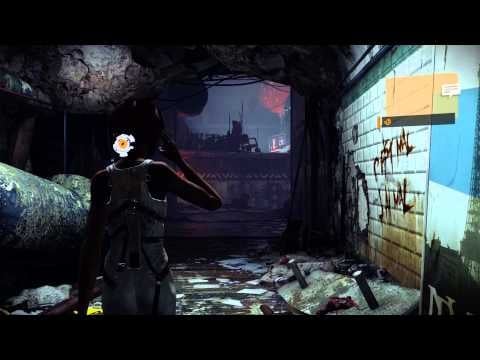
You play as Nilin, an amnesiac memory hunter who’s told that she used to run with a revolutionary group who want to take down Memorize and give people back control of their own memories. Neo-Paris is a glorious construct that manages to combine the old-world charms of the City of Lights with the game’s harsh dystopian imagination. The open-air cafés feels distinctly Euro when you walk past them and distinctly changed when you see the lime-green androgybot waiting to take your order.
But, while Remember Me boasts great world design, it’s frustrating how little of that world you can interact with. Dumpsters that you should be able to scramble onto repel you and ledges that look like you should be able to grab deny your grasp. The trash-strewn streets and gleaming high-rises aren’t fully interactive; they’re just backdrops to set the scene of Neo-Paris.
The game’s combat is almost entirely hand-to-hand, with a few ranged weapons that serve dual purposes for platforming traversal. Combat is rhythmic and combos will stall if you button-mash. That’s significant because Remember Me lets you customize your combos in clever ways. For example, if you order it just so, the third button-press in a combo can fast-forward a cooldown on your special ability, making it available more quickly than if you just waited it out. If you program combos and nail them correctly, you can shave time off cooldowns, give back health and multiply its own damage all in one chain of moves.
It’s a nice evolution of the minimalist combat template made popular by Rocksteady’s Batman games: simple enough to keep you in a flow but layered enough to offer engaging strategy and rewards.
You’ll be stealing the memories of other characters often in Remember Me. Once you do, Nilin will see moments from their pasts holographically projected at nodes called Remembranes. These sections allow you to dodge hidden traps, solve environmental puzzles or sometimes just fill you in on backstory while you move through a level.
Nilin can remix memories, too, vaulting back into the pasts of her targets and tweaking specific moments to make them more vulnerable. Making someone remember something joyous as a trauma can mean that the person hunting Nilin is too filled with regret to deliver the killing blow. Remixing requires you to scrub back and forth through a remembrance—by rolling the left analog stick backwards or forwards—poking at various elements until you find the magic recipe that lets you proceed. There’s trial and error built in to these sequences. You’ll find yourself trying to constantly keep track of what the correct first, second and subsequent steps are to make a remix go right. All of this combines into a nice meta-game that has the player not trying to have his own memory betray him.
Just as meta are the hint screens that show you where to grab pick ups. You’ll have to hold that image of the alleyway with three boxes stacked on top of each other inside your head even as you fight your way through the level. Forget the picture or forget even to collect it and you lose out on upgrading your life and special attack bars.
Back to those remixes: the first time I did one, I felt like an omnipotent film editor, given the unfettered power of final cut over a person’s life. It did what I needed it to, but I’ll admit to feeling a little queasy in the aftermath. What if someone had the power to make me think that my dead mother loved me less than my siblings? What if they could do that without my ever knowing? Even the knowledge that such a person with such power existed would be enough to make you never trust your mind again.
The memory remixing and combo customization impressed me enough to outweigh Remember Me‘s flaws. For one, bad load times threaten to hobble any narrative urgency the game hopes to build. And it’s yet another game where the platforming elements ape Uncharted‘s ledge-clambering and stretched-out jumps. Nothing feels special about moving around the world. Indeed, getting from point A to point B always felt like a chore. For the first half of the game, combat felt similar. You punch and kick through waves for enemies in a moveset that doesn’t quite deliver on the smoothness that it promises. The game’s latter half mixes up enough enemy types, scenarios and customization options to feel interesting and, in flashes, challenging. But you have to slog through some stuff to get to those more inspired moments, like the great boss battle in the game’s fourth episode.
This fumbling feels like growing pains of a new studio, one arguably more concerned with telling a game’s plot and building a world than innovating with combat or locomotion. That story is unquestionably Remember Me’s saving grace. Dontnod seem to genuinely want players to think about the underlying ideas of Nilin’s adventure. The story starts off as a black-and-white drama of oppressors vs. oppressed. But, Remember Me eventually digs a bit deeper to show the moral quandary of using a power like memory-tampering to advance political aims, even if they are righteous. The dialogue feels stiff at time, nestled inside a game that’s a little too in love with its own words and concepts. But those pieces are still a cut above what’s in some many games.
And just because it needs reinforcing: memory remixes are the coolest game mechanic I’ve played with in a long time. They combine elements of a choose-your-own-adventure book with grim psychological consequences. I finished the game wishing there were more of those sequences but each one felt like it was perfectly placed when I came to them.
So, yes: parts of Remember Me feel like cool ideas in search of better gameplay execution. And its writing can come across as flowery, high-minded and overly earnest. But I couldn’t stop thinking about how Sensen is one of those fictional technologies that you’d both love and hate if it actually existed. Moreover, I gasped at some of the things they game had me do as Nilin. And Neo-Paris’ wretched social divide made my skin crawl. People who play Remember Me won’t be talking about what badasses they felt like during their time with it. But they will wonder what they’d do inside the game’s fictional construct. Would you let a significant other download your memories to their brain? Would you excise all those awful adolescent moments if you could? Remember Me plays like a thought experiment set in a world where millions of people have answered those questions—and the many others that extrapolate from its imaginary science. Play it so you can prepare for a future where your personal history lives in a digital cloud, even more than it does now.
To contact the author of this post, write to [email protected] or find him on Twitter @EvNarc