Slay the Spire is a hard game. You know what game is even harder? Slay the Spire 2. I say this after pouring countless hours into the original game and, as of this writing, about 55 hours into the sequel. Some characters are a bit more busted than others for sure. Personally, I think Necromancer is easy mode, with Silent coming in second. And, yes, developer Mega Crit definitely has a lot of card balancing to do (seriously, why is Regent’s Parry card so ass?), but the overall intention behind Slay the Spire 2 is obvious to me: they made it harder on purpose.
If you’ve played the first game as much as I have, you should know what I’m talking about. Obviously, I’ve played that game enough that I know what I’m doing in it now, so it may seem easier in comparison simply due to that, but the scaling on enemies in the sequel is ridiculous. Why the hell is some big-ass eel trying to hit me for 36 damage in Act 1, man? I literally just got here.
But if I’m getting put through the wringer, even with all the experience I’m bringing to the table, how are the people who have started with Slay the Spire 2 faring? Based on all the Reddit threads and Steam Discussion Board posts I keep seeing, not very well. If that sounds like you, then I’ve designed these tips and tricks with you in mind. And hey, even if it doesn’t, I’m probably way better at the game than you anyway, so read ahead regardless.
Ok, now that the really good players have stopped reading and I won’t embarrass myself any further, has anyone got any tips for Ascension 10?
Let the Deck Build Itself
If you either never played the first Slay the Spire or you’re finding the sequel just as impossible as the original game, I think this is the number one piece of advice you probably need to hear: don’t build a deck, let the deck build itself.
This might go against every single Reddit comment you’ve found or every other guide you’ve read, but you shouldn’t aim to build a specific deck in Act 1. Instead, you should take good cards that serve you in the short term, like area-of-effect attacks and high block skills, and then begin to pivot into a specific build toward the end of Act 1/the start of Act 2. I still think this advice applies to the original game, but it’s doubly true in Slay the Spire 2. Why? Because, as someone who’s put close to a thousand hours into the first game, I think Act 1 in Slay the Spire 2 isn’t just the hardest act in the game; it might be the hardest act in the entire series.
Enemy damage is so much higher in the sequel, and this is most apparent during Act 1. With most characters’ starting decks, you’re going to be putting up a maximum of 15 block against enemies that want to hit you for 24 damage. That’s terrible in itself, but it’s doubly terrible if you’ve been building towards a specific deck archetype early on, and your hand is filled with late-game cards that currently do nothing for you. Sure, they might be great later, but you’ll be dead before then.
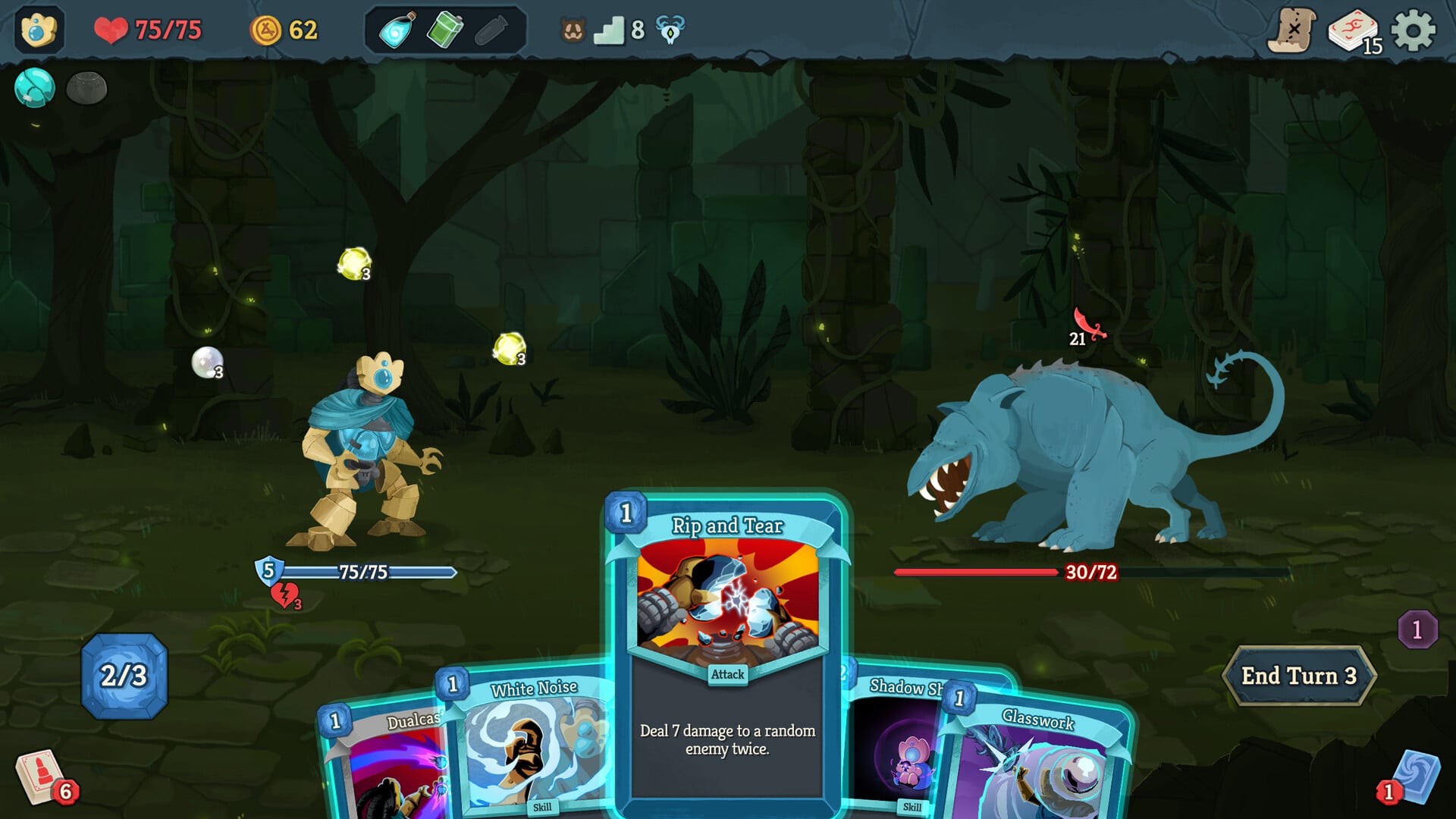
Instead, you should prioritize taking cards that are great in the early game, and build a deck around them as you go. For instance, take Ironclad’s Taunt skill: a 1-cost skill that gives you 7 block and applies 1 vulnerable. Sounds OK in a microcosm, but you’re also being offered Hellraiser alongside it! It costs 2, but you play all your “Strike” cards for free! With some upgraded Pommel Strikes, you could potentially attack infinitely! And it’s gold!
Here’s the issue: Hellraiser is great…later. To get the most out of it, you’ll have to cut some Defends, add some more Strikes, and upgrade a bunch of cards. Also, you’d have to hope that you draw it on the first turn every time for it to be useful in Act 1. In comparison, Taunt is great immediately. Plus, there are plenty of Ironclad cards that synergise with Taunt right off the bat, because it takes advantage of two different Ironclad archetypes: high block decks that convert block into damage, and vulnerable decks that give you extra bonuses like card draw and extra strength. Oh, and speaking of deck archetypes…
Learn the Character-Specific Deck Archetypes
So, I’ll be frank with you here: there are way too many character archetypes to list here. That’s a whole separate article. In fact, it’s actually five separate articles, because there’s no way you could properly explain all of that information without essentially writing a short novella. Instead, let’s explain the basics of deck archetypes, and I’ll give you some resources to build on from there.
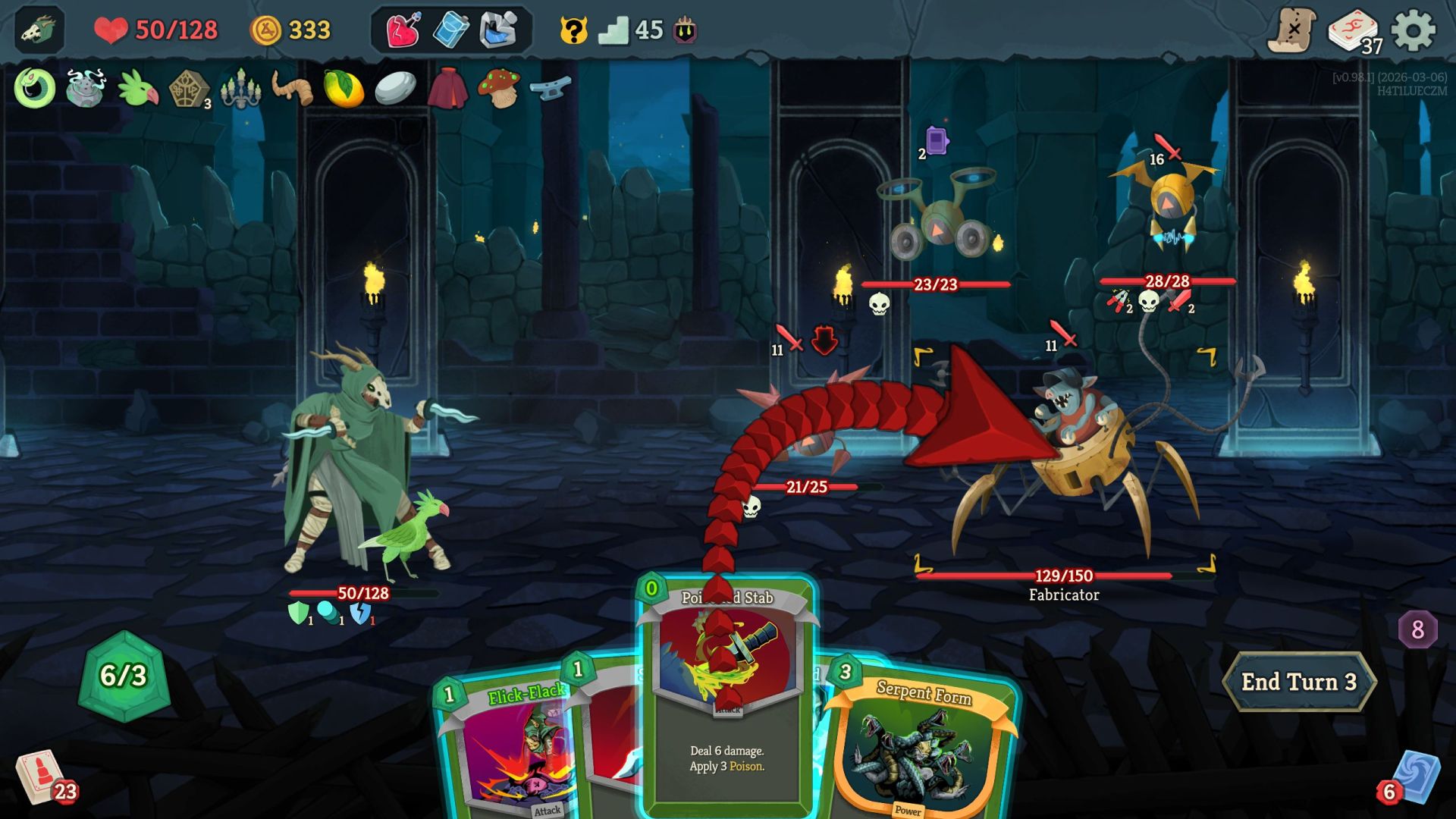
Almost every card you can add to your deck in Slay the Spire 2 synergises with other cards. Exactly how they synergise with each other differs in numerous ways, but the archetypes I’m referring to in this context should slowly start to become apparent as you play, because you’ll notice that you either unlock or run into character-specific cards that all have the same type of effect. For example, you’ll notice the Silent has a bunch of cards that say “Sly,” or add Shivs to your hand, or apply Poison.
You might be thinking that I’m babying you here, because I’m essentially telling you to read the information on the cards. However, understanding the basic archetypes is a precursor to something a bit more complicated: mixing and matching archetypes.
Let’s use two of the Silent’s archetypes as an example: Sly cards and Shiv cards. Sly cards activate for free when you discard them. Shiv cards add Shivs to your hand, or buff your Shiv attacks and skills. You can build a straightforward deck that focuses entirely on just one of these archetypes.
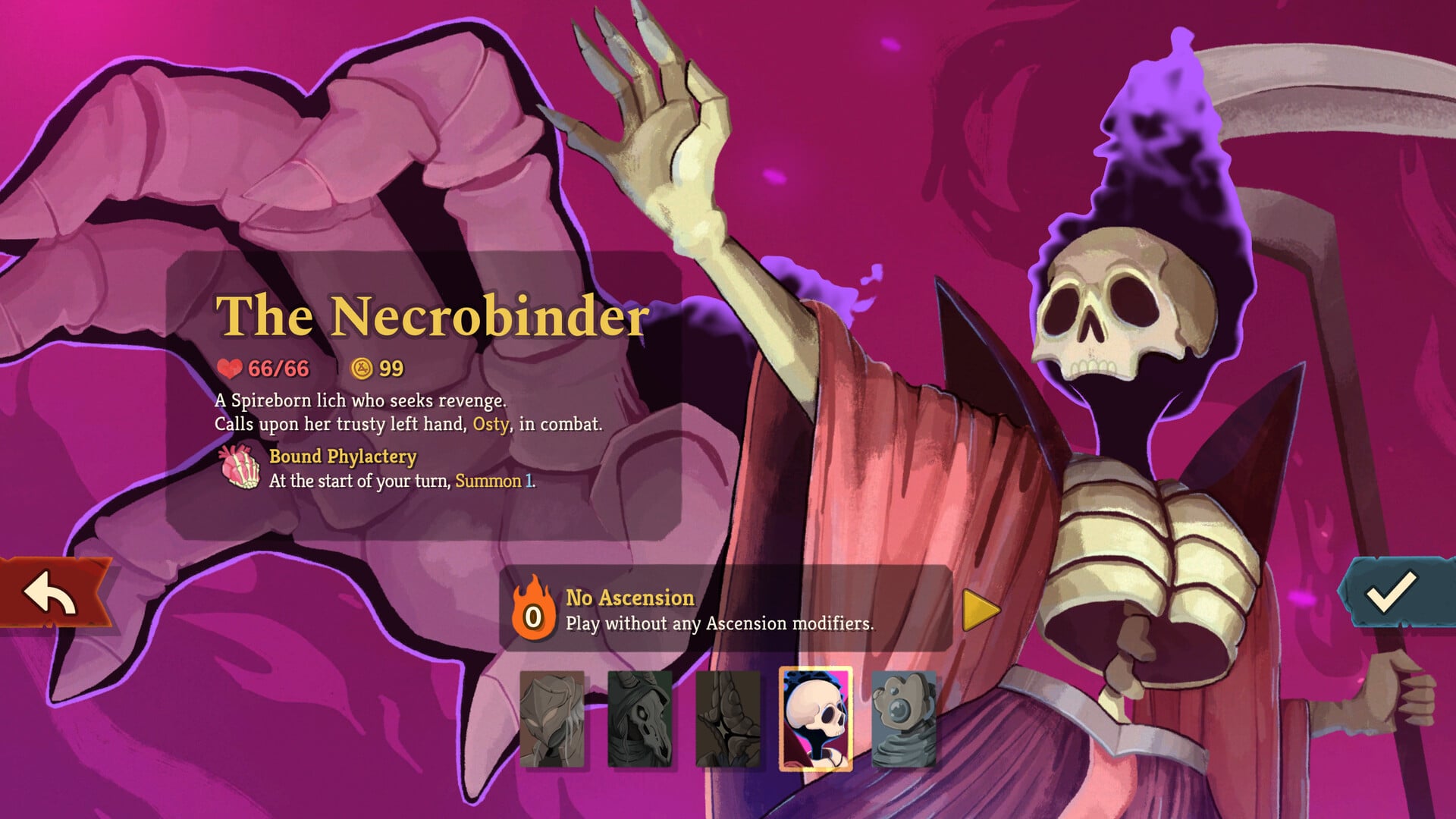
For example, you could build a very good Sly deck by just adding a bunch of cards like Prepared and Calculated Gamble to your deck. Prepared costs 0, and it draws a card and then discards a card. Calculated Gamble costs 0 and discards your whole hand, then draws the same number of cards. These cards are free and allow you to discard Sly cards so you can activate their effects. Easy, simple, and straightforward.
However, there are also Shiv cards that discard. Storm of Steel discards your entire hand and then replaces every card with a Shiv. Hidden Daggers discards two cards and replaces them with Shivs. Plus, there are cards like Master Planner and Hand Trick. Master Planner adds Sly to any skill you play permanently, and Hand Trick gives you 7 block and temporarily applies Sly to a skill. You can probably already see where I’m going with this, but you could use Hand Trick to apply Sly to Hidden Daggers, use a different card to discard Hidden Daggers, and then use the Sly you applied to Hidden Daggers to discard two more cards and get two Shivs.
When you start messing around with mixing archetypes, it can all get a bit too complicated to keep track of, so don’t worry if you end up building a deck that even you get confused by. My best advice would be to familiarise yourself with the cards as you play or, if you don’t feel like dying over and over again just to learn, use a resource like Mobalytics to research all of the available cards.
Alternatively, just watch some other people play. Some of you might balk at this suggestion, considering the likes of Baalorlord, Frost Prime, and Jorbs are certified Slay the Spire experts, but if you’re truly new to the game, I’d recommend watching Northernlion’s Slay the Spire 2 videos. He is, self-admittedly, not the best player in the world, but I actually think that’s more beneficial for newbies. Northernlion plays slower, verbally puzzles out the logic behind his decisions, and he’s made a point of talking to viewers as if they’re starting with Slay the Spire 2. Plus, no offence to the other guys, but at the very least, he’s the funniest StS content creator by a large margin.
Don’t Make Your Deck Too Thin
Here’s another one that’s going to sound counteractive to all the other Slay the Spire 2 guides: don’t remove too many cards from your deck. I know what you’re going to say, so let me get ahead of you here: yes, a smaller deck increases the likelihood of you seeing your better cards sooner, and, yes, you’re probably going to want to cut as many of your basic Strikes and Defends as soon as possible (unless you’re playing something specific that utilizes them, like an Ironclad Perfected Strike/Hellraiser deck).
Thinning your deck is still good for the same reasons it was in the original Slay the Spire, but not to the same degree. That’s why I think so many people are suggesting newbies haphazardly cut their decks down to size, because it worked in the previous game. However, it’s important to keep in mind that Slay the Spire 2’s elites and boss fights are a whole different ball game, because they now throw more status cards your way than before.
Take Act 1’s Phrog Parasite, for example. This fight is designed as a hard counter to players who have thinned their deck too far. Every two turns, it puts three Infection status cards into your discard pile. These deal 3 damage every time they’re in your hand, but worse, they don’t exhaust. If you encounter this guy early, and you only have, say, twelve cards in your deck, it only takes the Phrog Parasite three turns to convert a third of your deck into Infections.
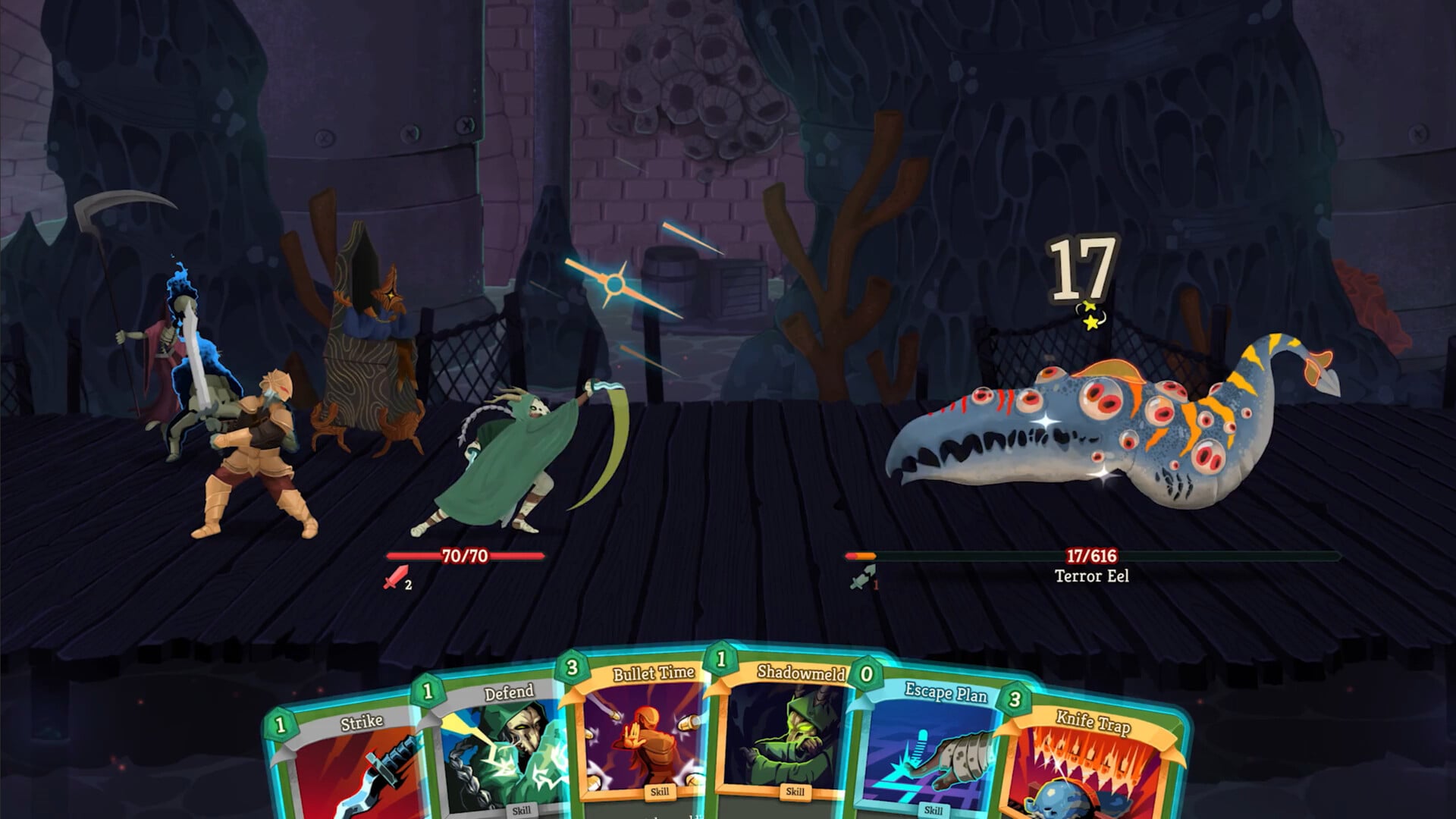
Then there’s Act 2’s Entomancer elite. This guy is Phrog Parasite, but somehow worse, because it adds a Dazed status card directly into your draw pile, not your discard pile, every time you hit it. If your deck is built around multihitting attacks, and/or it’s relatively thin, you’ll be drawing entire hands full of Dazed cards by your third turn. The Entomancer has a chunky health bar and deals anywhere from around 18 to 28 damage per turn, so with a thin deck, this fight can often be decided before it’s even begun.
It Gets Easier
Don’t worry, this isn’t an intervention; I mean that the game just gets easier the more you play it. Now, I could tell you that this is because you’ll start to understand the game properly and become more familiar with the boss fights, but, no offence, that’s not what I’m getting at here.
If you’ve beaten the game at least once, you’ll have unlocked the first Ascension tier for that character. Each Ascension tier you unlock will make the game harder by reducing the amount of health you regain between acts or giving you less gold when you open a chest. Personally, I haven’t beaten the final Ascension tier, Ascension 10, with any character yet, because fighting two bosses back to back at the end of Act 3 is complete bullshit.
But here’s the thing: Ascensions are optional, and there’s no need to tackle them until you’ve finished unlocking most of the Epochs in the Timeline. You’ve probably already unlocked a bunch of these, but the best stuff is hidden right at the end. Instead, I would suggest trying to unlock the “Kill 15 Bosses” and “Kill 15 Elites” Epochs with each character first.
The rewards you get from defeating 15 bosses are arguably the most important, as these unlock character-specific relics. These only show up for those characters when you play them, and some of them are ridiculously good. The Silent’s Twisted Funnel relic is incredible regardless of your deck, because it passively poisons the enemy every turn. That’s just free damage that accumulates and grows. The Regent’s Mini Regent relic gives you 1 strength every turn for just spending a Star. The Defect’s Gold-Plated Cables make your rightmost orb trigger twice every turn.
The only way to unlock all of these incredibly powerful relics is by throwing yourself at bosses over and over again. My point, in a slightly more hammy way than I intended, is that you shouldn’t give up. You’ll get better at the game, but the game will also become more forgiving the longer you play. I believe in you.