Face it: The past year has been…not great. Over the course of 2021, the global temperature rose at a once again alarming rate, Marvel released not one but two panned films, and we’ve all gotta come to terms with the sobering realization that this covid-19 pandemic might never fully end. A fitting timeline for a year was kicked off by attempted insurrection.
Video games didn’t exactly fare so well in 2021, either. It remains largely impossible to source a coveted PS5 or Xbox Series X, despite both having been out for more than a year. Major games were delayed at a regular clip, likely still because of the pandemic. A ton of smaller studios—Harmonix, Housemarque, and Night School, to name a few—were scooped up in acquisitions by industry giants, a worrying trend for the long-term sustainability for indie outfits. Amid it all, blockbuster reports detailing distressing work cultures at mega-sized studios like Activision Blizzard and Bungie continued to roll out.
But 2021 was more than just a rehash of the cavalcade of horrors that defined 2020. Between the doom and gloom, some genuinely good things happened this year. Let’s run down some of the positive surprises of 2021, shall we? We could all use an extra-strong dose of optimism.
Video game companies finally unionize
It’s no secret that working in the video game industry means signing up for career turbulence: long hours, low pay, regular lay-offs, a constant lack of job security. Not to mention, many major firms are rife with well-documented instances of widespread cultural harassment. The first step toward better industry-wide working conditions, as noted in books like Press Reset by not-Kotaku’s Jason Schreier, is for workers to unionize. Once upon a time, that idea seemed like a pipedream, but now it’s looking more and more like a reality.
Read More: Everything That Has Happened Since The Activision Blizzard Lawsuit Was Filed
The push started in full over the summer, as employees at Activision Blizzard staged multiple walkouts in protest of troubling allegations of harassment at the company. A bombshell Wall Street Journal report alleging that CEO Bobby Kotick knew all about, and even covered up, the company’s abuses (and committed his own share of serious transgressions, including one instance in which he reportedly threatened to have his assistant killed) led to another walkout. In December, Activision Blizzard laid off more than a dozen developers at Raven, one of its support studios, which kicked off another walkout and resulted in employees widely signing union cards, paving the pathway to unionization. (As reported by Kotaku, employees at the troubled Activision Blizzard have been pushing internally for unionization for months. To that, Activision executives only have one thing to say: “pwease don’t.”)
But it’s the spark that lights the fire, and it’s in this context that game developers are banding together like never before. In early December, Australian game developers established Game Workers Unite Australia. A few weeks later, Vodeo Games, the independent studio behind Beast Breaker, formed a union with voluntary recognition from management.
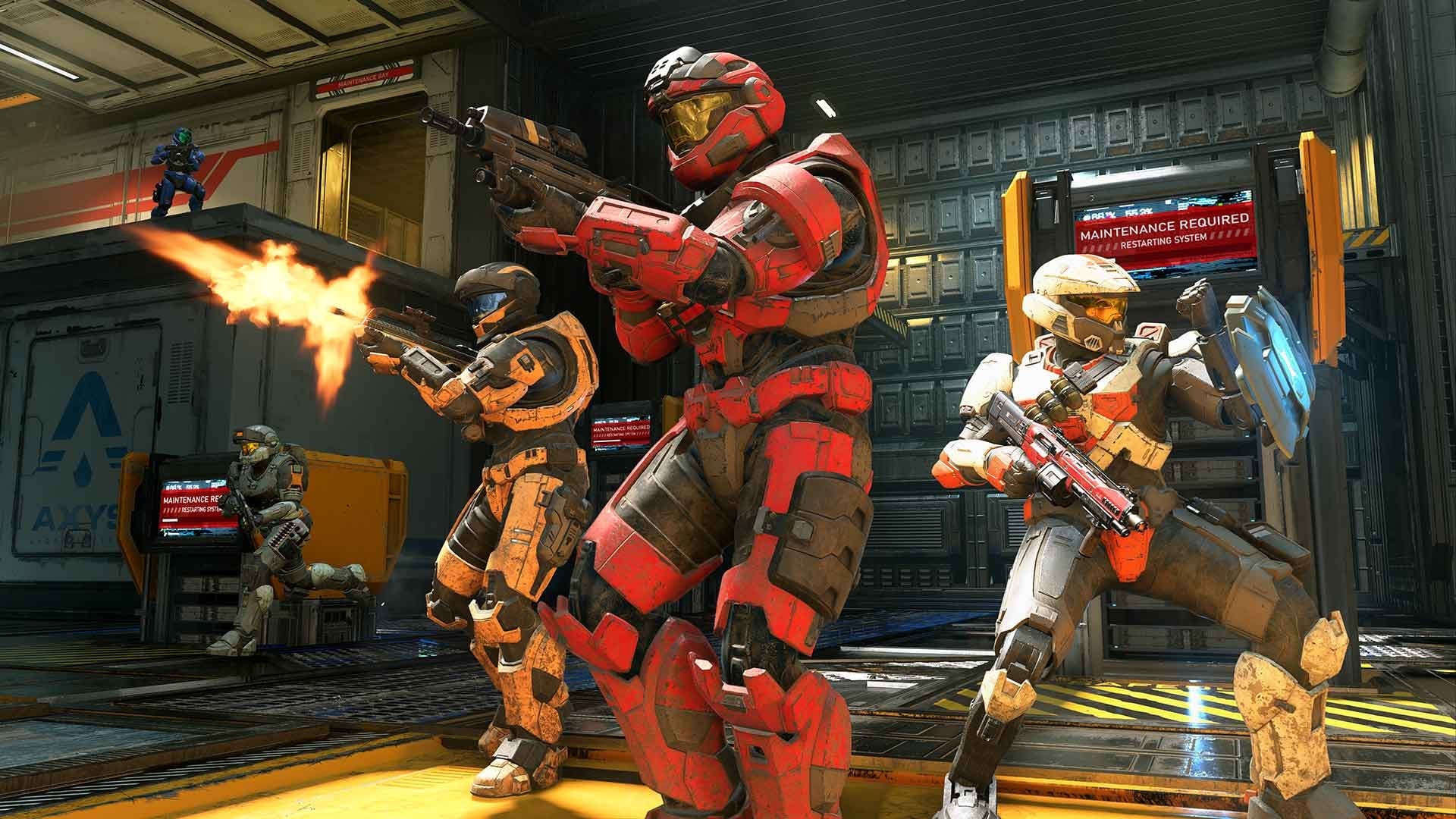
343 Industries surprise releases Halo Infinite’s multiplayer mode
Sure, some observers may have seen it coming a mile away, what with the stars aligning a liiiiittle too perfectly. But make no mistake: Halo Infinite’s multiplayer mode coming out of nowhere on November 15—the 20th anniversary of the franchise and three weeks ahead of Infinite’s planned street date—was a welcome (and free) surprise. The perfect storm has resulted in seemingly everyone, if not playing, at least talking about it, making it feel like cracking open a time capsule to the halcyon days of 2007. Of course, Halo Infinite, while good, isn’t perfect, with players critiquing everything from the initially glacial battle pass to the general lack of cool cosmetics. For its part, the studio has issued regular changes in response to feedback. The result is a Halo Infinite of December that’s already markedly better than the Halo Infinite of November.
Oculus Quest 2 makes VR accessible for the masses
Far be it from us to praise Facebook (sorry…Meta), but there’s no denying that its Oculus Ques…ack, Meta Quest 2 headset was precisely the piece of cleverly designed, powerful yet inexpensive gear needed to allow a great many more folks to take their first steps into virtual reality. It sure sucked that you needed (past tense) a Facebook account to use it, but the hardware was great for its price point and brisk sales lead to unheard-of support by VR developers. Even as we shed a tear for all the poor VR Chat vets suddenly besieged by shrieking “Quest kids,” Quest 2’s success seems a net positive overall. Now, if only some more palatable outfit would feel sufficiently emboldened to give Meta some competition… — Alexandra Hall
Microsoft removes pay-to-play for free-to-play games
Halo Infinite likely wouldn’t have been able to take off the way it did had Microsoft’s online infrastructure functioned as it did in 2020. For ages, Microsoft required players to pay for a subscription for Xbox Live, its online service, to play games online—even for free-to-play games. In January, Microsoft announced a price hike that essentially doubled the price of the service. Players responded loudly, and Microsoft quickly reversed its decision. The company went one step further and said it’d fully lift the Xbox Live requirement for free-to-play online games, meaning games that cost zero dollars would actually cost zero dollars (well, minus any microtransactions).
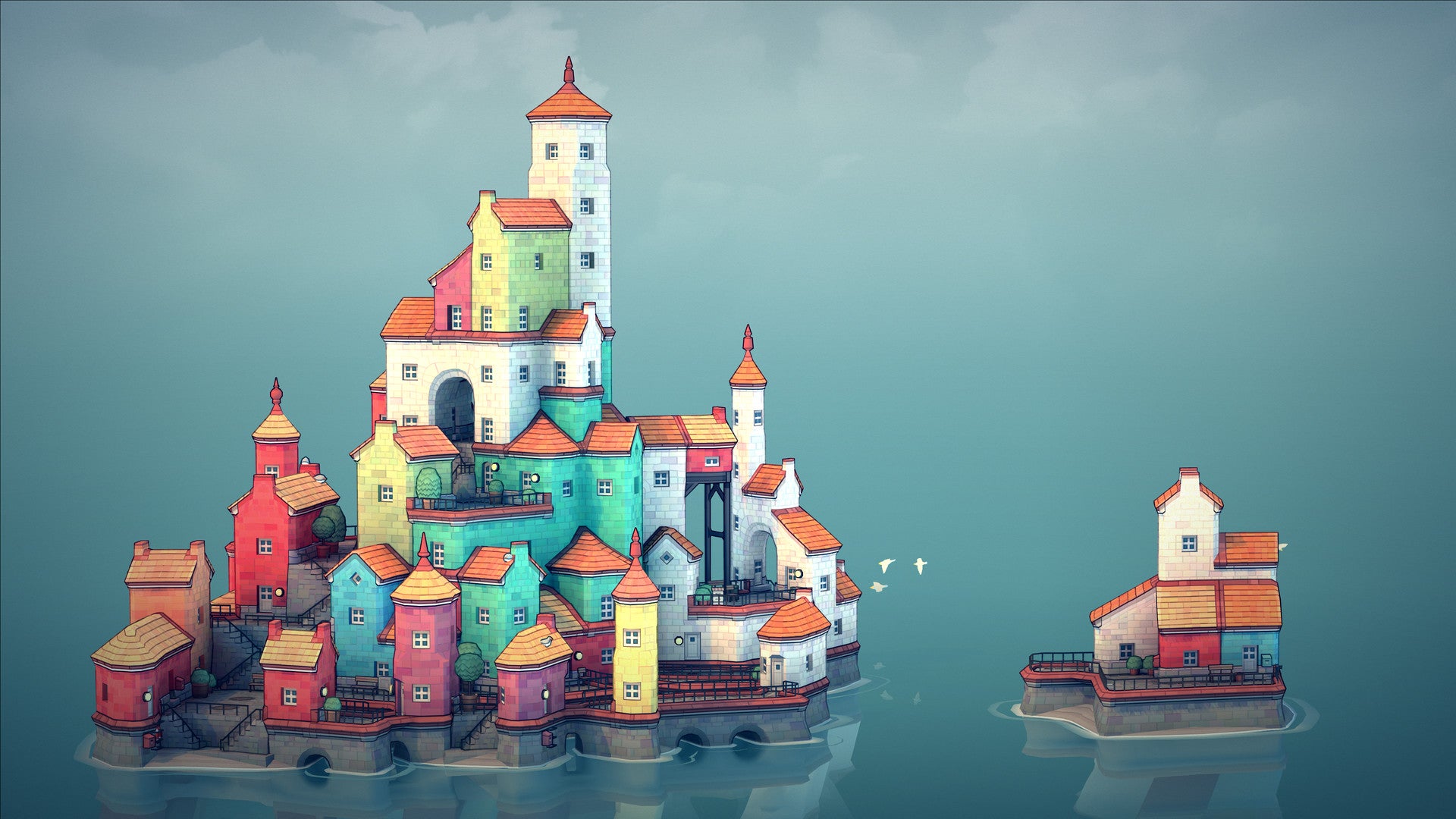
Game Pass starts receiving surprise additions
Every two weeks, Microsoft adds a bunch of games to Xbox Game Pass, its subscription-based games-on-demand service. These lineups are detailed regularly on Microsoft’s press site (and, ahem, on certain gaming news sites you know and trust). But toward the end of the year, Microsoft made a curious tweak to the process: It started quietly adding games outside of the official announcements. First came the city-builder Townscaper and the survival game Generation Zero in early December. Those were quickly followed by Serious Sam 4, the not-so-serious game about shooting aliens. Sure, you could argue that an unexpected addition to your already bloated backlog is kind of a bummer. But the surprise release of available video games is never not a good thing.
Sony gives everyone free games during the pandemic
Remember just after the Before Times ended, when everyone was terrified of the strange new reality and turned to each other for comfort and support? Back in April 2020, Sony did a real nifty thing by giving everyone copies of Uncharted games and Journey, absolutely free, just so they’d have something to do while stuck at home. And a long year later, despite the utter decimation of 2020’s sense of unity, Sony came back and did it again, offering nine free games. Along the way it also gave everyone the kickass Horizon Zero Dawn (with DLC!) and PS4 Ratchet & Clank. At a time when everyone’s optimism was fraying, this was a thoughtful, human gesture that reminded us of, if not better days, less cynical ones. — Alexandra Hall
It Takes Two wins Game of the Year
This isn’t to knock It Takes Two—a ridiculously fun co-op romp and without question one of my favorite games of the year—as an undeserving game. If anything, it’s a knock against The Game Awards, or awards in general. So often, top honors at the annual showcase go to dour, serious action games. (For the three preceding years, the Game of the Year prize went to, in reverse chronological order, The Last of Us Part II, Sekiro: Shadows Die Twice, and God of War.) In contrast, It Takes Two is a vividly colorful, mind-meltingly genre-bending co-op game that constantly challenges expectations. Among a crop of nominees that featured dour action games like Deathloop, Resident Evil Village, and Metroid Dread, it was a delight to see such a mold-breaking game break through.
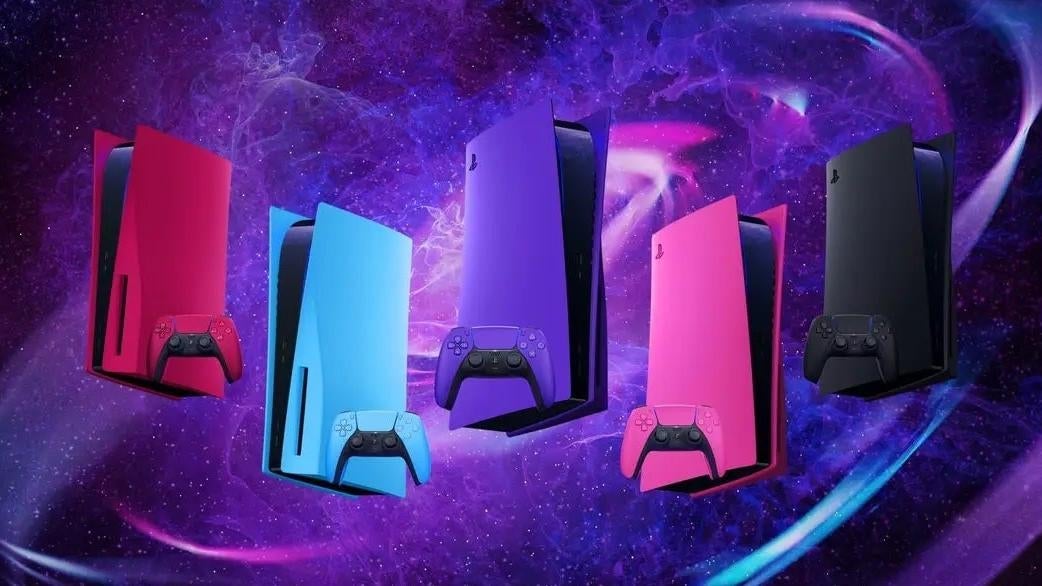
Sony spices up the PS5 color palette
Last year, when Sony first unveiled the PlayStation 5, people teased its looks. The shape was somewhat ridiculous: a boxy machine, flanked by two angular plates, resulting in a device that looked like an obtuse internet modem. But the coloring of those plates, only available in a matte white, raised some eyebrows. And that same coloring extended to the fancy next-gen DualSense controllers. (Side note: Don’t eat Cheetos while playing Returnal.) In May, Sony unveiled two new color options for the DualSense: a vivid red and a jet black. Then, right before the year wrapped, Sony officially unveiled a series of five colored PS5 plates—including a hot pink, a striking light blue, and royally awesome purple. Plus, Sony released DualSense models available in all five new colors. Let’s hear it for the PS5 Crayola revolution.
Guardians of the Galaxy comes out, doesn’t suck
In 2020, Square Enix released Marvel’s Avengers, a third-person action game based on a cast of characters who’ve defined popular cinema for the past decade. The combat and narrative were fine enough, but players bristled at repetitive missions, hamfisted live-service elements, and a cast of characters who veered directly into the uncanny valley of their Marvel Cinematic Universe counterparts. So when Square Enix announced Marvel’s Guardians of the Galaxy, which seemed in a similar vein, earlier this year, many wrote it off. (Guilty as charged.) That assumption couldn’t have been more off the mark, as GotG turned out to be one of the de facto games of the year, a stunning exercise in narrative design with some deliciously inspired visuals to boot. (Guardians of the Galaxy won Best Narrative at the 2021 Game Awards.) Typically, Kotaku doesn’t call out specific games among our annual roundup of the year’s best surprises, simply because so many games each year come out and blow past expectations, and including one game is like bursting the dam of Isengard. But considering the context and history here, Guardians of the Galaxy is worthy of a callout as a positive surprise.
Analogue Pocket actually ships
Way back in October 2019, Analogue, the outfit behind high-end FPGA-based console recreations like the Mega Sg (Sega Genesis) and the Super Nt (Super Nintendo) announced its intent to produce one portable video game console to rule them all: the Analogue Pocket. Preorders opened in August 2020 and sold out in minutes. Then it got delayed from the end of 2020 to May 2021. Then again to October. Then again to December. It was all very wearying, but bless its heart, Analogue finally managed to ship the things this week, just shy of 500 days after taking everyone’s money. And going by just about every review, the Pocket pretty much lives up to its mandate of being the ultimate Game Boy. (And Game Gear. And Neo Geo Pocket. And…) Worth the wait. And you can still order them right now, by the way, though the wait times now go into 2023. — Alexandra Hall
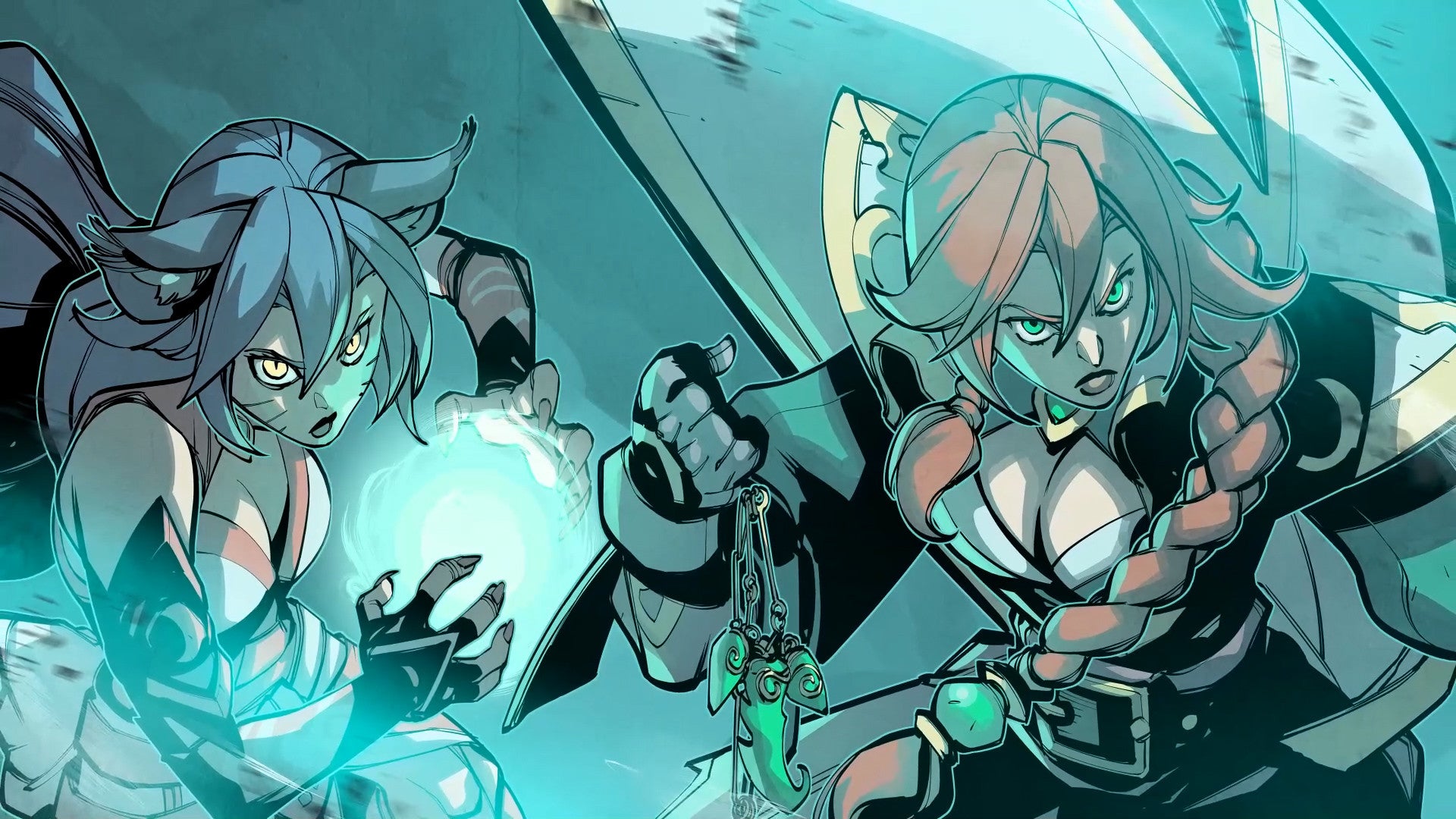
Arcane spearheads a League of Legends revival
Once upon a time, the prospect of adapting a video game for the screen was a recipe for disaster. Then Netflix came in hot with stellar anime adaptations based on Dota 2, Castlevania, and The Witcher. In 2021, the streaming giant followed those up with Arcane, a prequel series focusing on several popular characters from League of Legends canon (and its staggeringly vast 140-hero roster). It easily could’ve been a phoned-in cash grab. Arcane, against all odds, thanks to riveting storytelling and a partitioned release cadence, smashed records and became a cultural tour de force, spearheading a cultural resurgence for its source material. As the show’s popularity reached a fever pitch, Riot released two spinoff games: the rhythm runner Hextech Mayhem and the turn-based RPG Ruined King (which, by the way, is one of the best role-playing games of the year). Two more spinoffs are planned for 2022. A mainline League fighting game, the fantastic-looking Project L, is in the works, with a release date slated for “beyond 2022.” And to top it all off, not that it’s a huge surprise, Arcane is coming back for a second season
Nintendo experiments with open-world Mario, and it’s awesome
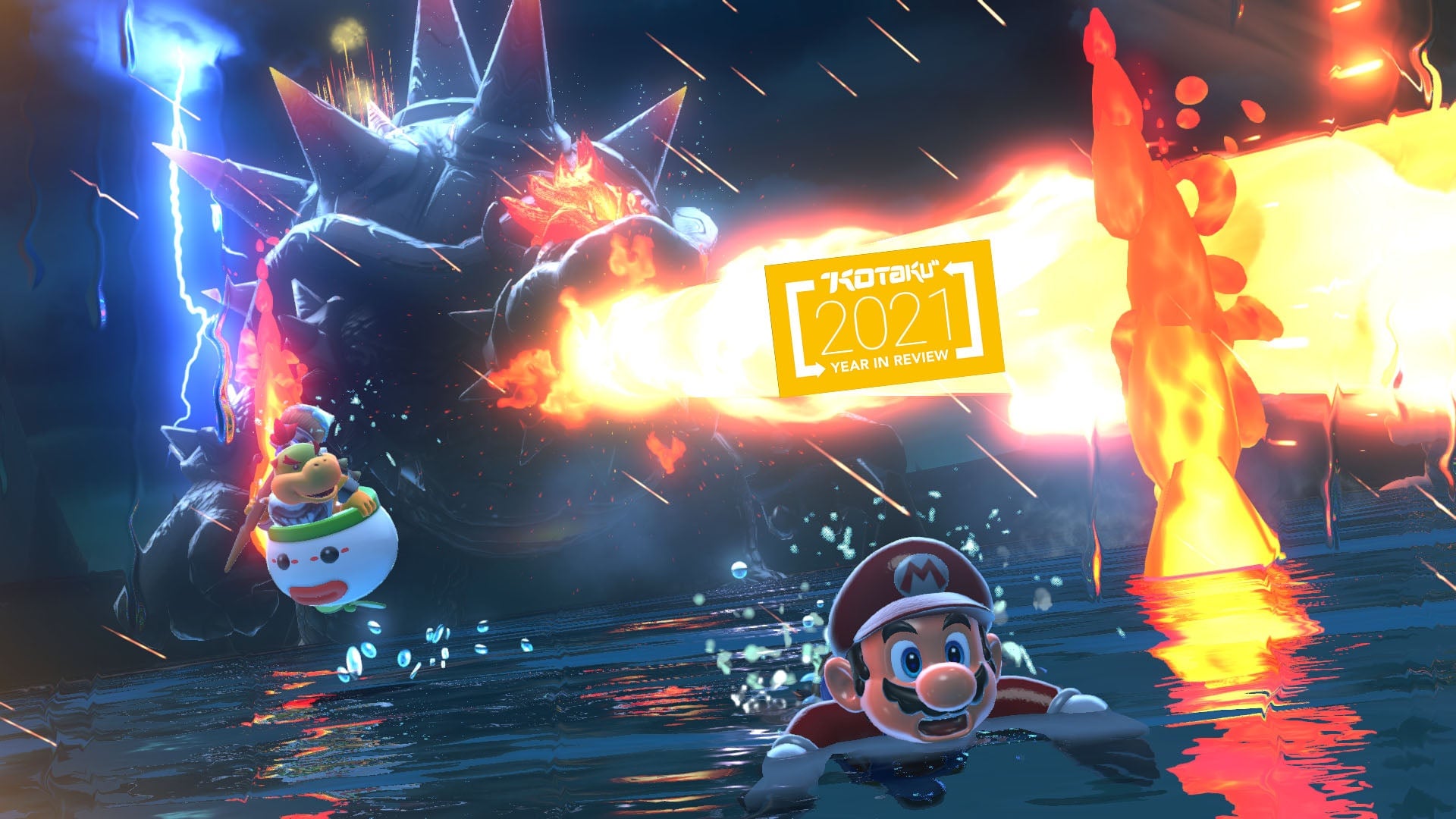
Early this year, the fantastic Wii U platformer Super Mario 3D World got a new lease on life with a Switch release. That’s welcome, but hardly surprising. What is surprising, though, is that the new game it came packed with, Bowser’s Fury, feels like much more than just a nice little bonus. It feels like a potential glimpse of Mario’s future. Sure, its small scale means it’s little more than a proof of concept, but that’s part of what’s so exciting about it. It means that this is Nintendo just dipping its toes in the water, playing with the idea of Mario in an open-world setting to see if it works, to see what new design opportunities and gameplay experiences it might open up. Even here, the results are thrilling and full of promise. Just imagine what it might be like if Nintendo dives in completely. — Carolyn Petit
Squid Game takes over the world
Squid Game wasn’t just the most popular Netflix original series of all time. It was a cultural phenomenon that bled into other popular media, including parody video games and competitions in real life. If you haven’t had enough of this survival drama, there’s good news: Squid Game season two is currently in production. — Sisi Jiang
Valve reveals the Steam Deck
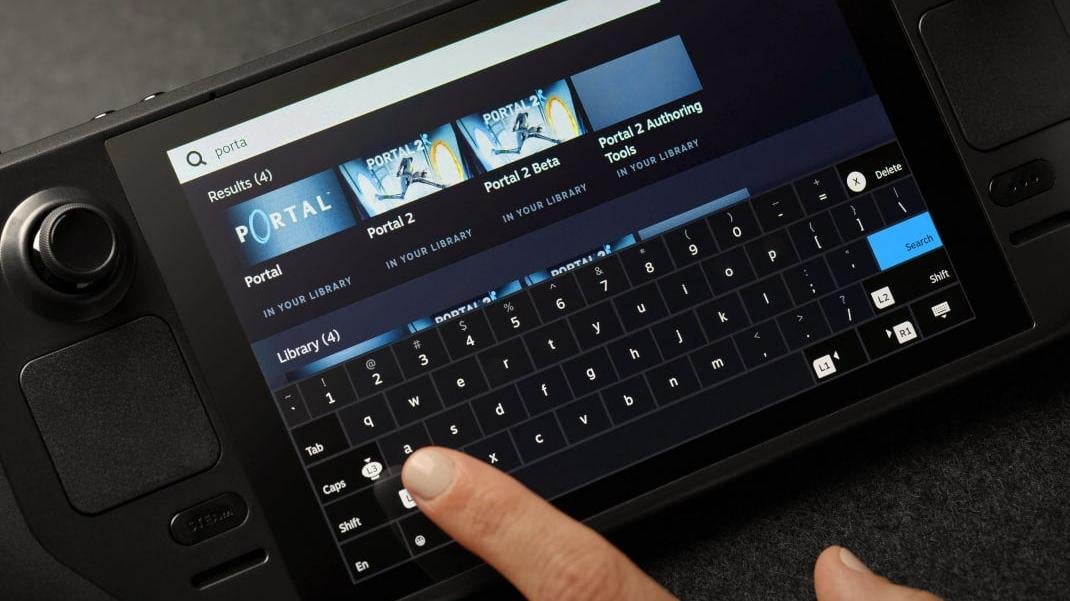
It was beginning to feel a little like Valve had run out of surprises. The studio seemed to have mostly abandoned its awkward foray into VR, and wasn’t exactly dazzling with a forthcoming line-up of games. Then, on July 15 this year, Valve revealed the Steam Deck to the world. A portable PC, about the size of a Switch, capable of playing everything on Steam, but without relying on streaming. It was just to pack all that power into the casing, around a 7” screen. And they’d be available in four months. Inevitably, they sold out in seconds, and shipping dates started to stretch out into the distant future for those arriving late. But for the lucky few who got in off the bat, they would be playing Halo Infinite on a handheld before Christmas. Of course, nothing good is ever allowed to actually happen, and a combination of the global chip shortage and the curse of Valve Time meant that yes, sure, no one is getting one this year. The current estimate for the first round is February 2022, with every other shipping date pushed back the same three months. But still, it remained an excellent surprise, even if we’re still waiting. — John Walker
Animal Crossing drops a massive update
Just as many fans were starting to lose patience with the most popular game during the height of the pandemic, Animal Crossing: New Horizons delivered a surprise update that delivered on most of the lingering complaints. The update added gyroids, Brewster and his Roost café, a new island to visit with Kapp’n, cooking, crops, and more, including new items and DIY recipes. The update also launched the game’s Happy Home Paradise DLC, which adds a ton of items and design gameplay, even when you’re on your main island. — Lisa Marie Segarra
IRL events slowly return
Following last year’s all-digital event, The Game Awards was a full in-person charade this year! Sure, footage from the event shows no shortage of empty seats at the Microsoft Theater in Los Angeles, likely indicating that some folks aren’t quite ready to gather in large audiences. But the event happening at all is a sign that, by prioritizing a safety-first framework—namely, by requiring vaccines and negative tests, plus encouraging attendees to receive booster shots and wear masks—IRL events can continue. We’re not all the way out of the woods yet, not by a long shot. But we’re getting there. In 2021, that deserves a round.