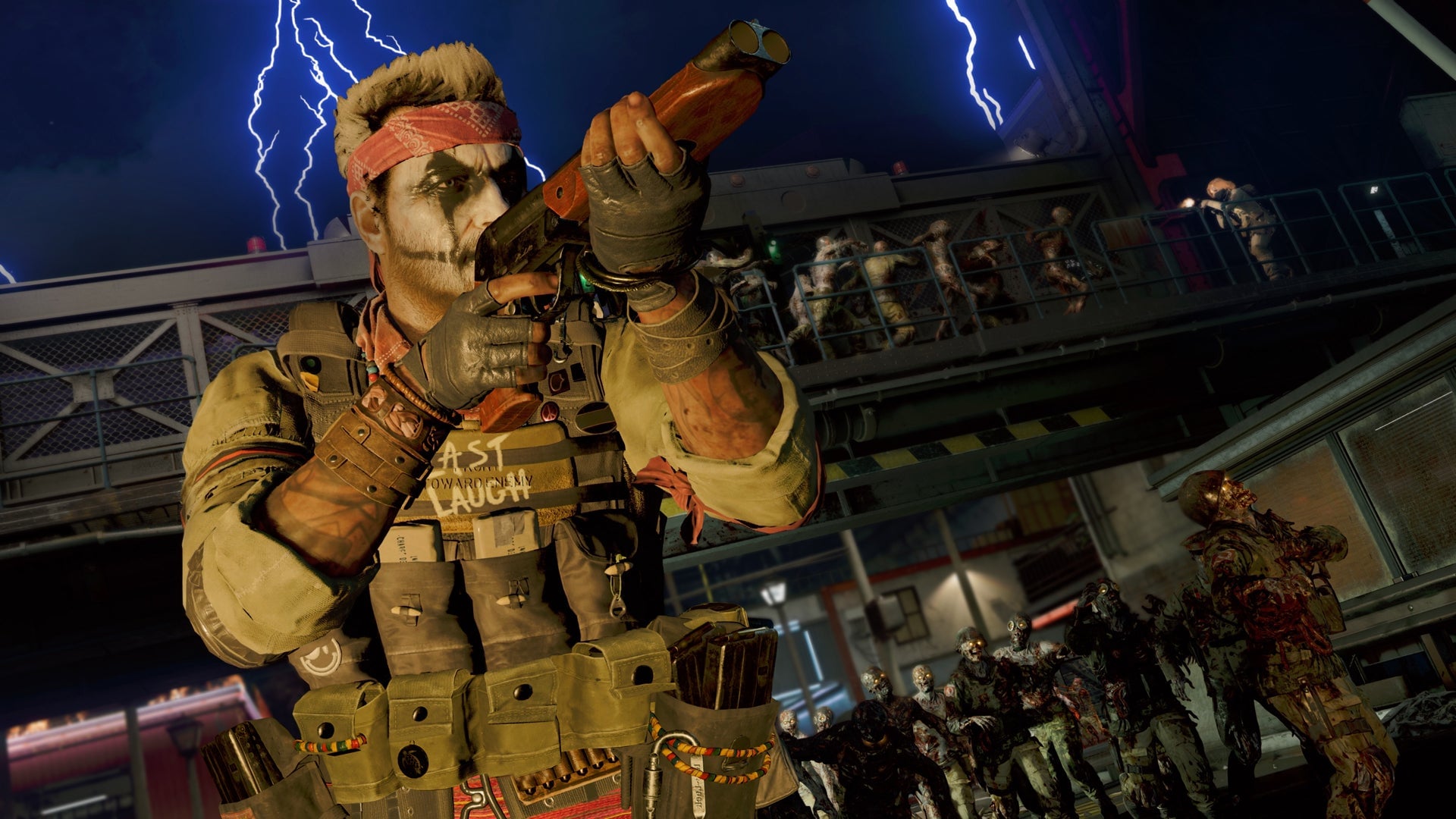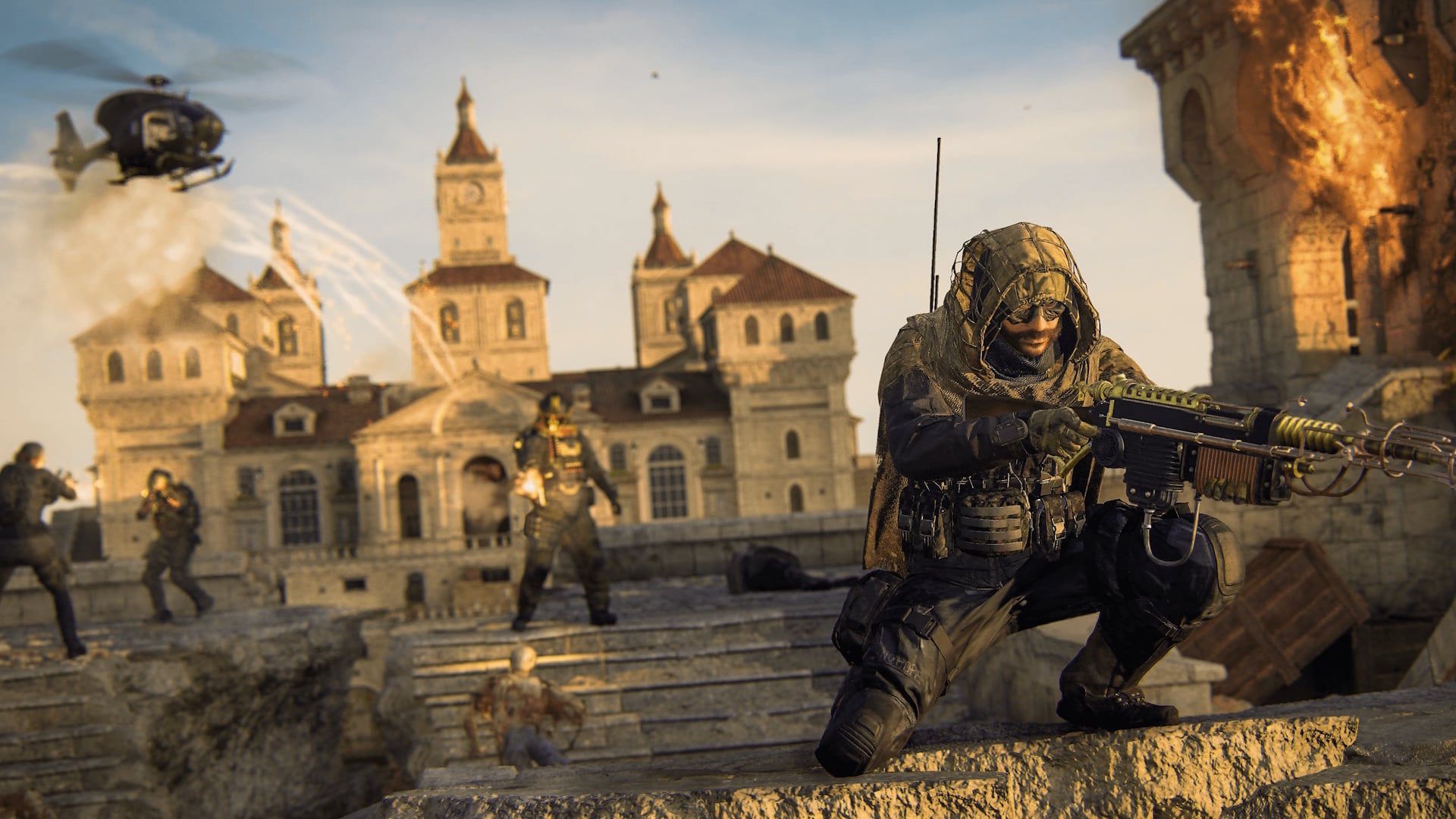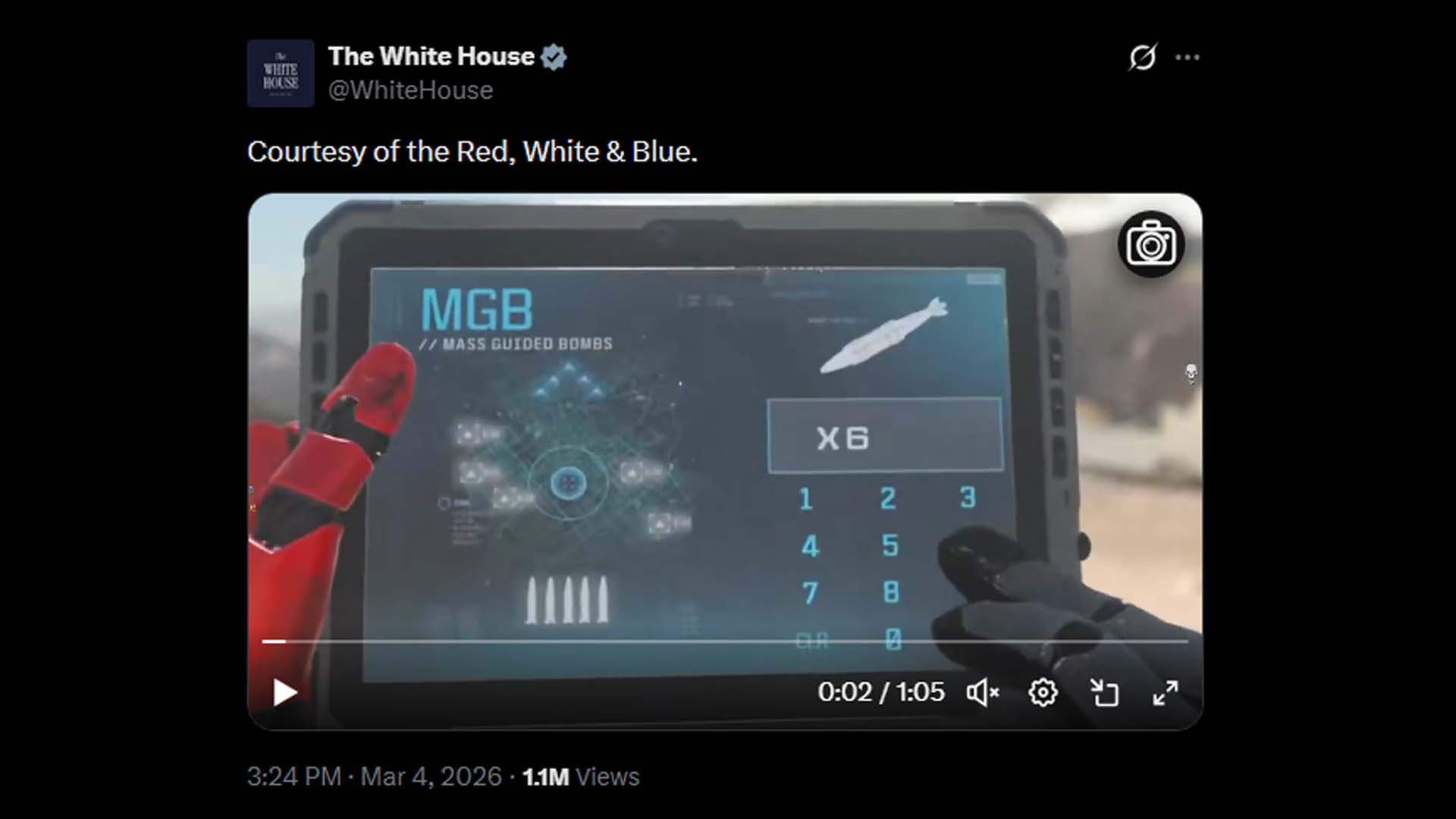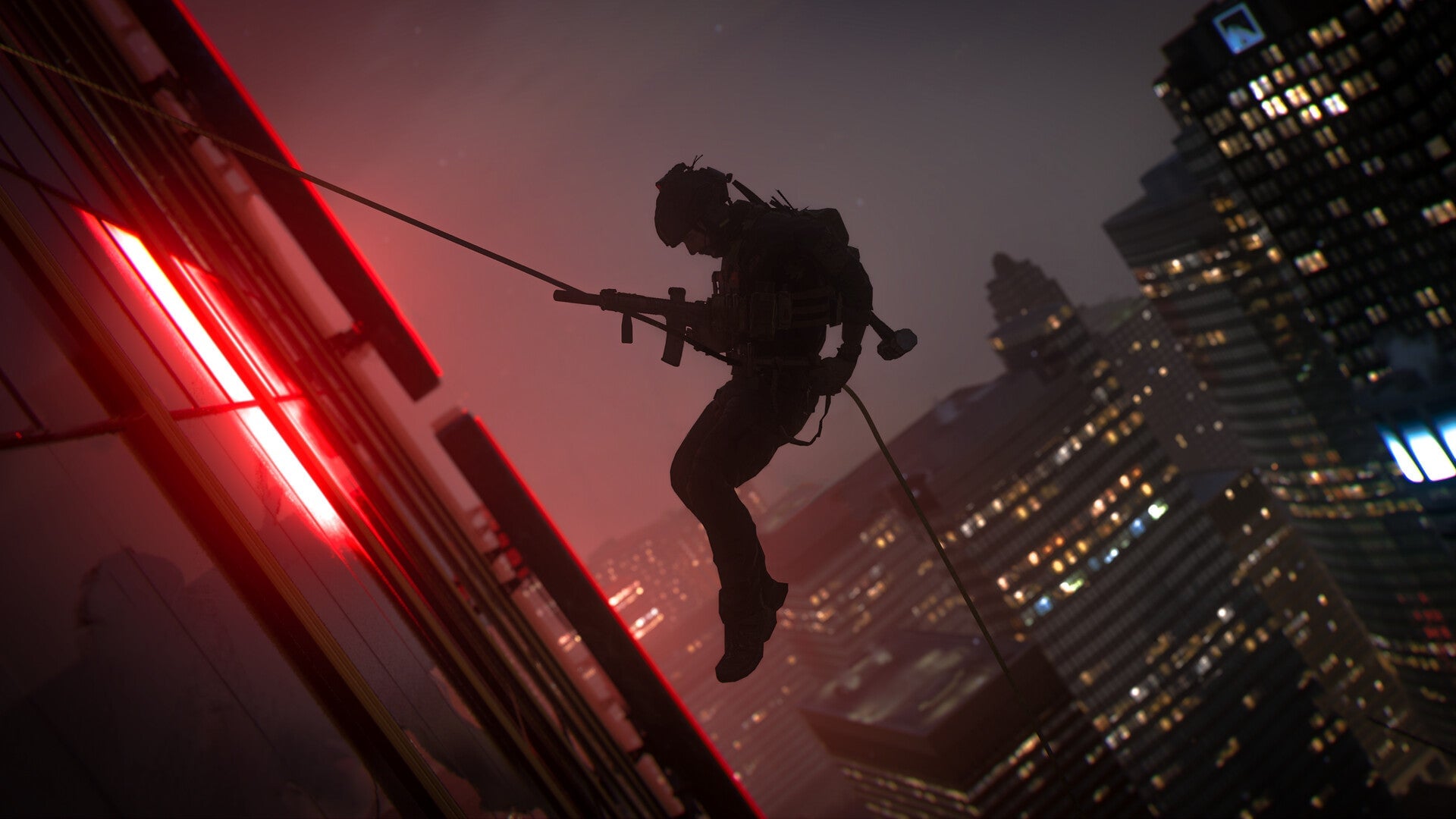
In Modern Warfare 2019, the reboot of the popular Call of Duty series, a 10-person multiplayer killstreak rewards you with white phosphorus, an odorless, waxy chemical you can drop on the battlefield to kill dozens in one fell swoop. It was a controversial addition to an already controversial game series, which has, like others in the genre, historically dehumanized Muslim and Arab people while leaning into its connections with and glorification of the U.S. military.
White phosphorus hasn’t featured in any of the Call of Duty games since. But the chemical, which can cause severe skin and eye burns as well as irritation of the upper respiratory tract according to the World Health Organization, has recently been dropped on Palestinians in Gaza, calling the horrors of its use into conversation yet again. This comes after the October 7 escalation of the decades-long conflict between Israel and Palestine, when militant Islamist group Hamas attacked Israeli citizens. On that day, Hamas took more than 200 hostages and killed around 1,200 Israelis. Israel responded with force. Since then, more than 15,900 Palestinians have been killed
Read More: Game Awards Honorees Demand Show Acknowledge Gaza Humanitarian Crisis
All of this—white phosphorus deployed in Gaza, an Israeli soldier cosplaying as a Call of Duty character, and the recent release of Modern Warfare III—makes it impossible to ignore the role these kinds of games play in shaping how many in the west view this war; who the heroes and villains are, whose lives matter and whose are expendable. The industry is as culpable as it is quiet, which is why people like GameSpot managing editor Tamoor Hussain have continued to ask members to speak out
“Every single one of these things is a choice, and it’s not a neutral one,” Palestinian-American comics and game writer Nadia Shammas told Kotaku.
But, as is the case elsewhere, people are either hesitant to speak or are flat-out barred from doing so—like how this year’s Golden Joystick awards banned political comments during the ceremony, or how pro-Palestinian marches were reportedly removed from Roblox. In light of this, The Game Awards’ Future Class members recently called on the upcoming ceremony to recognize the crisis in Gaza. The organizers of The Game Awards have not responded as of the time of writing.
I spoke to five Muslim and Arab members of the industry about the depictions of Middle Eastern people in widely-known war games like Call of Duty, Six Days in Fallujah, and CS:GO, the harmful narratives those depictions have perpetuated, why that’s important now, and what gamers and industry members can do to help.
Arabs as enemies
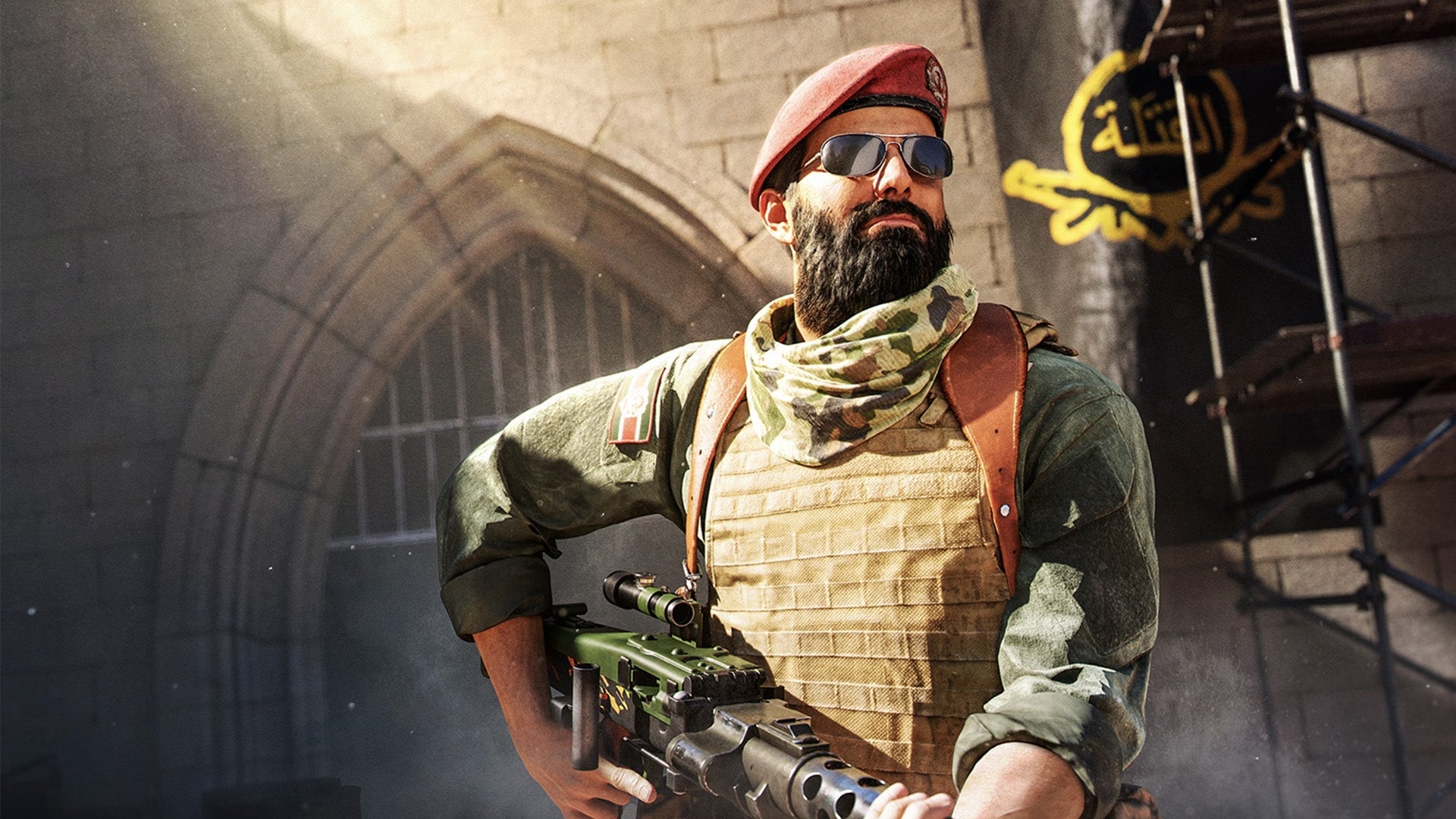
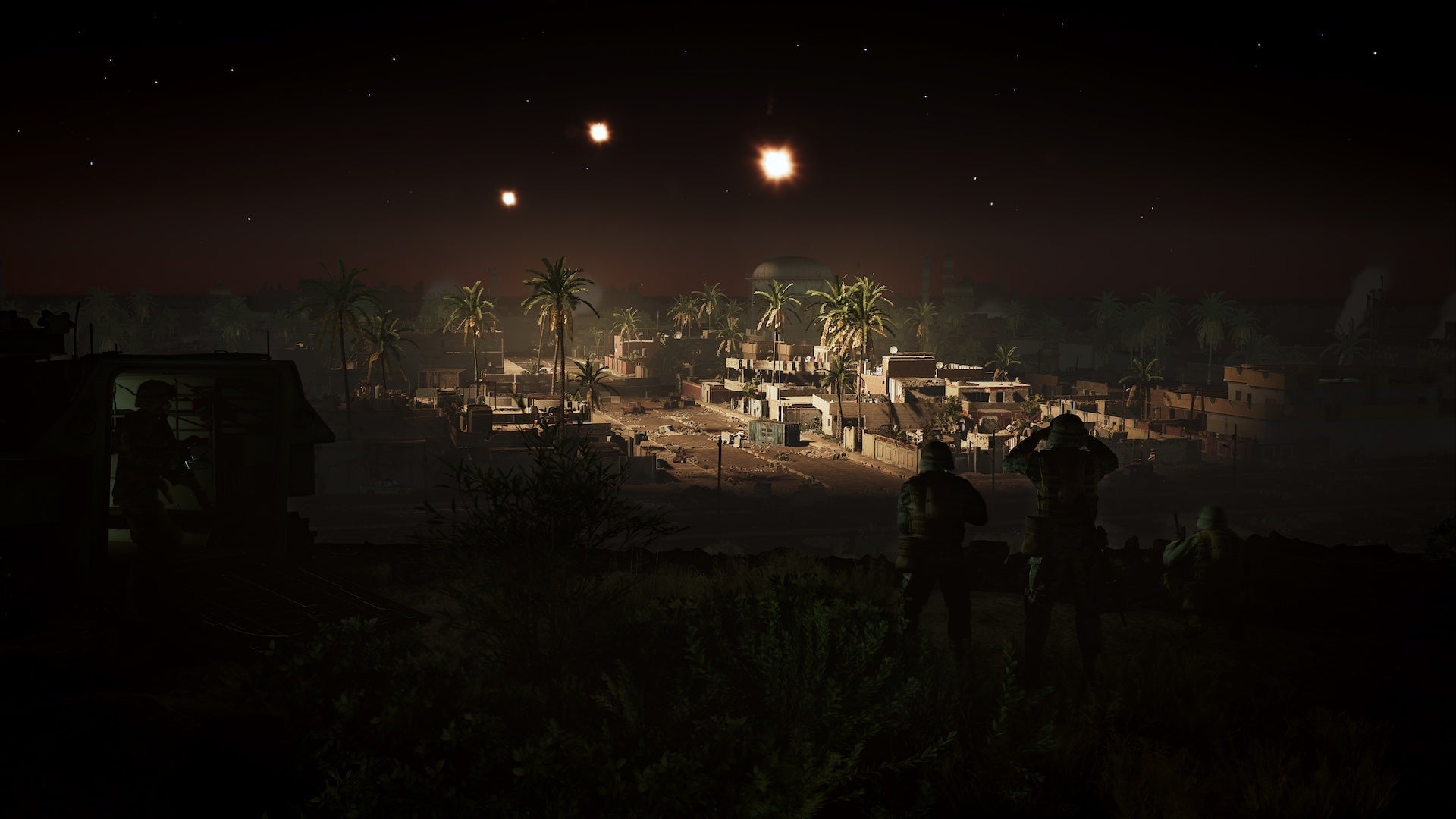
One of the main villains in the first Modern Warfare game (released in 2007) is Khaled Al-Asad, a Saudi Arabian native who becomes the leader of a revolutionary group known as OpFor. Al-Asad, who is openly anti-Western, assassinates the Saudi Arabian president, allowing OpFor to take over an unnamed Middle Eastern “capital city” in a coup d’etat. It’s never clear where OpFor is based, or if the organization has official ties to a specific country. It’s just clear that they’re bad. The vaguely Arab (but clearly evil) antagonists are akin to Hollywood’s “yellow filter,” a visual aesthetic that’s often applied to series or movies set in Central and South America or the Middle East.
“The fact that a ‘shitty Arab country’ visual shorthand already exists says enough,” Nadia Shammas told me during a video call. “A shorthand, that, by the way, did not exist—it had to be punched into culture over and over and over again for it to stick in the subconscious to such an extent that you don’t even question its presence.”
“For as long as I can remember, video games have used Middle-Eastern settings for first-person shooting…that has significantly impacted how the world sees that region and the people from there,” GameSpot managing editor Tamoor Hussain said via email. “[Games and other forms of media and entertainment] present the region as places to be blown up and as having populations that are all evil cave-dwelling terrorists, whether that’s Call of Duty soldiers mounting Spec Ops missions to kill dangerous militants or Tony Stark proudly standing in front of a backdrop that is immediately recognizable as the Middle East…When you see those same settings in real-world news reports for long enough, the line between truth and fiction can blur.”
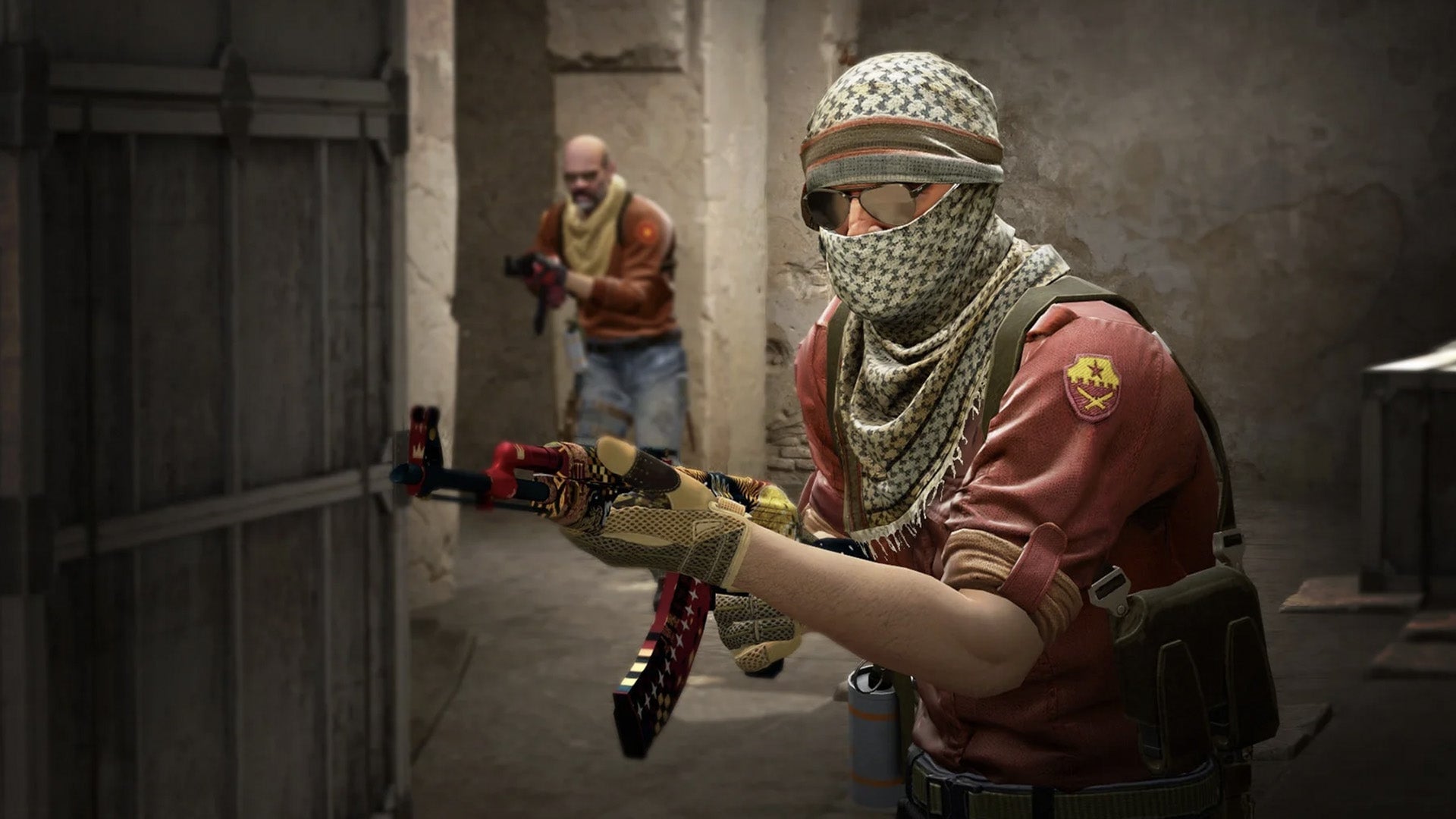
Shammas says these persistently negative depictions of Arab countries also affect the people who live there. “If that’s the framework you’re given…that your country can only look shitty and your people are only poor and they’re only ever screaming, fighting, or dying, then that’s how you see yourself. Then you no longer want to be that—and that pushes you into whiteness.”
She continued: “You want to remove the desire from indigenous Palestinian people to wear the keffiyeh [a traditional Palestininan scarf], so it shows up as the terrorist garb in fucking CS:GO. That’s the point.”
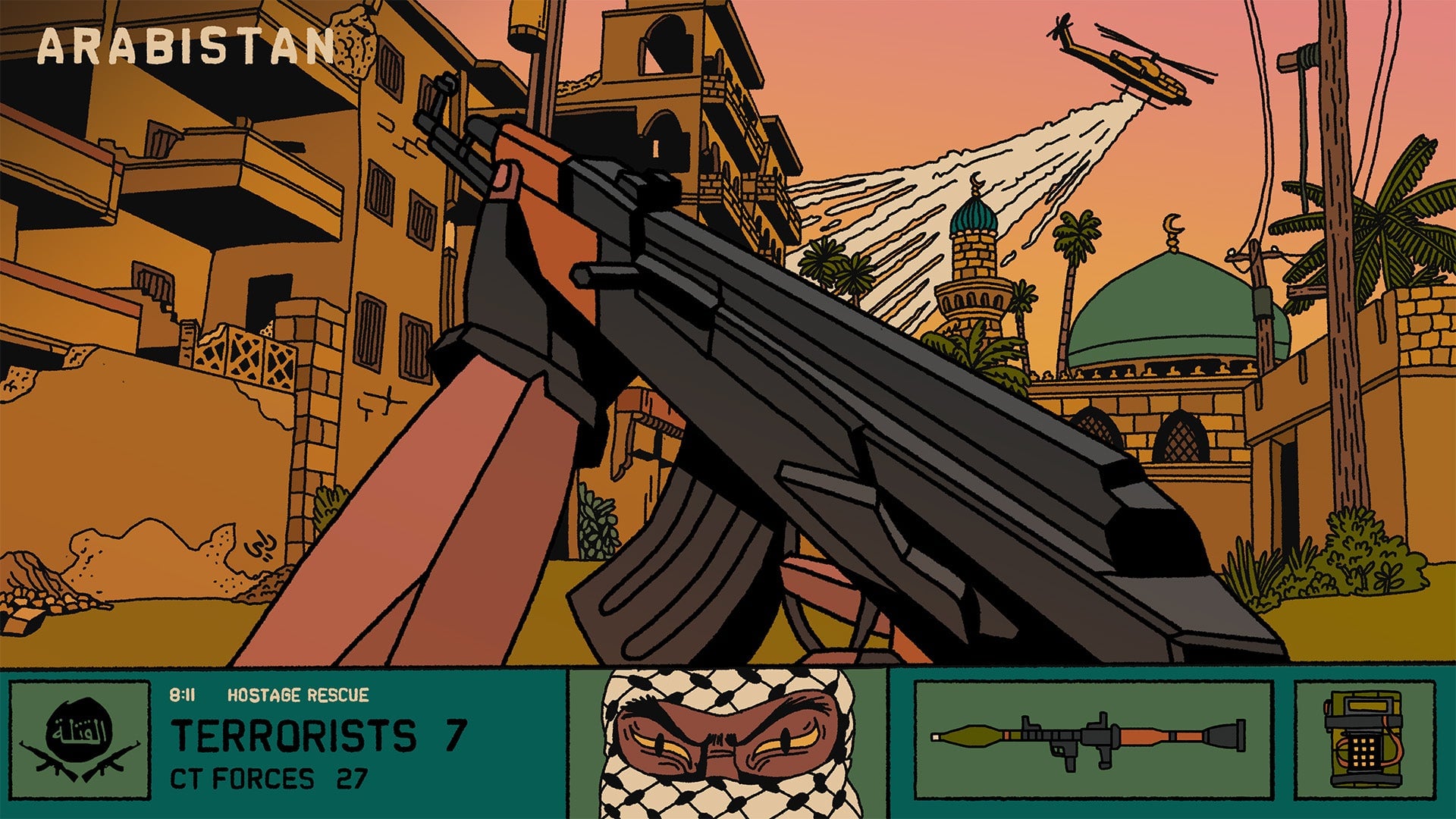
The problem with ‘Arabistan’
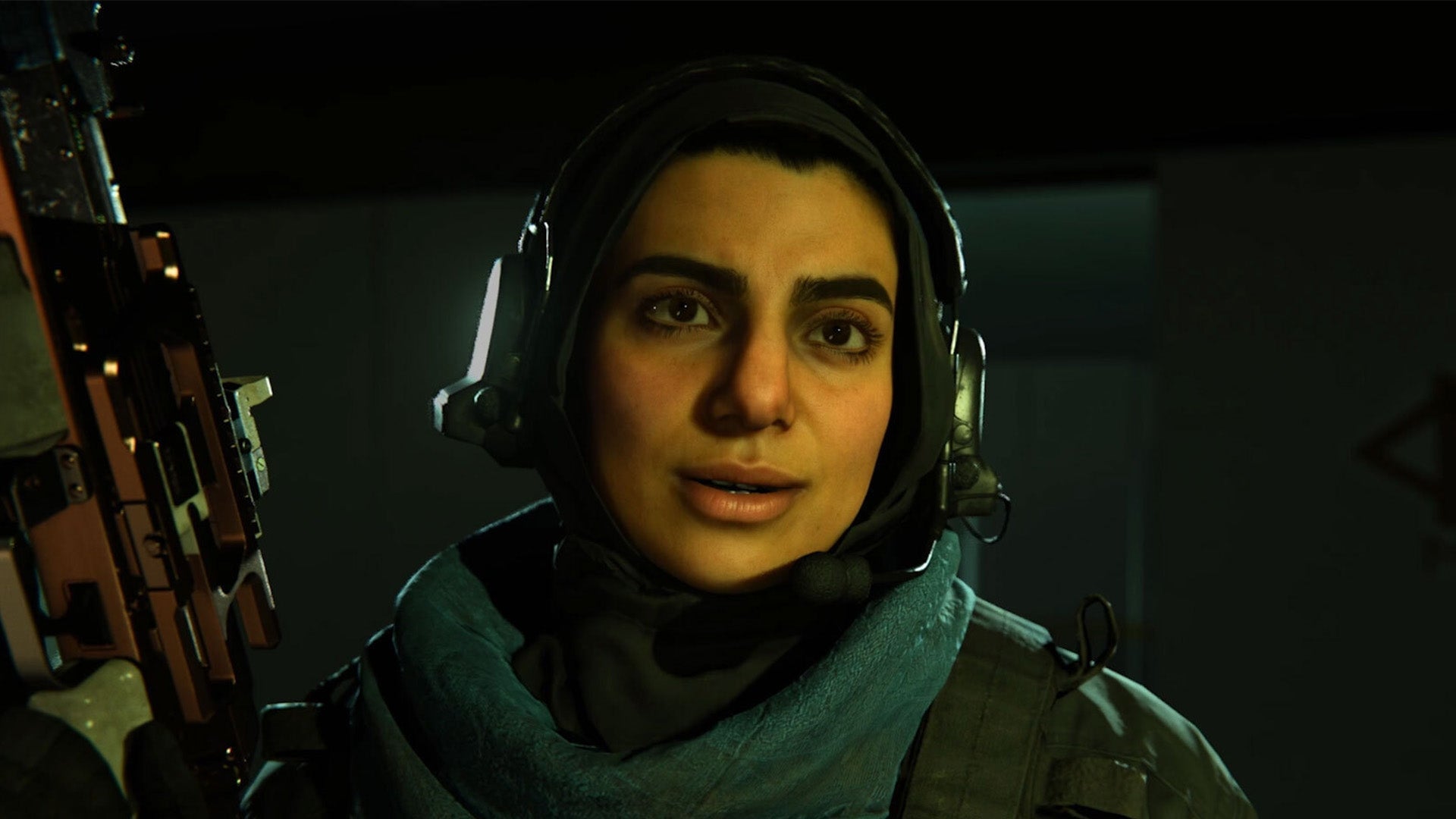
More recently, the teams behind Call of Duty have attempted to give more shade and nuance to their depictions of the Middle East. The Modern Warfare reboot centers on an Arab woman named Farah Karim, one of several playable protagonists. “It’s rare to find a memorable brown protagonist,” Hussain said when discussing the history of video games. But Farah is certainly memorable—she survives a chemical attack in the opening act and leads her home country’s freedom fighters. Even her spoken Arabic is “good,” according to the people I interviewed for this piece, which shows an attention to detail that’s been previously absent.
But there’s one problem: Farah is from an entirely made-up Middle Eastern country called Urzisktan. All the other main characters have their roots in real places (Price is from the United Kingdom, Alex is an American), yet she is from a fictitious Middle Eastern place ravaged by war, divided into people who engage in terrorist acts and those who don’t. The entire region is flattened into homogeneity as a result, and it’s all too common in these types of games.
“We jokingly call it ‘Arabistan,’” game developer and consultant Rami Ismail said via video call. “A game designer once came up with that term…I think a lot of us use [it]. Some people say it’s a nice thing, but I don’t really see it that way. It just means that we’re literally interchangeable, our cultures are interchangeable.”
Ismail continued, “From where I’m sitting it’s like, ‘yes, there’s a country in the Middle East, it needs to be bombed.’ That’s not an improvement to me, at least have the decency of picking a place and then doing it. But by homogenizing it, they can effectively go, ‘no, no, we don’t mean any of the real people. We mean the fictional Arabs that by default are terrorists.’”
Developer Infinity Ward addressed this decision ahead of Modern Warfare’s 2019 release in an interview with Polygon. (Kotaku also reached out to Activision for comment for this piece, and did not receive a response in time for publication.) Single-player design director Jacob Minkoff said that the decision to set its Middle Eastern fighting in a fictitious country had to do with the “politically fraught” climate of these countries.
“When you talk about spending a whole bunch of time in this Middle Eastern country, where we’re going to be tracking down the terrorist leader and working alongside freedom fighters in that country, we just didn’t want to get wrapped up in the politics of any specific real-world country,” he said.
And though Minkoff insisted he wanted players to “understand that Middle Eastern people suffer from terrorism more than almost anyone else in the world,” the devs’ fear of “[getting] wrapped up in the politics of any specific real-world country” undermines their attempts to tell realistic, humanizing stories about the people from there.
“It’s perpetuating the idea that there is a singular, Middle Eastern country,” Shammas said during our chat. ”It actually ties in very strongly [to current events] because we’re seeing people say, ‘Oh, well, just take the Palestinians into Egypt, take the Palestinians into Jordan.’ These are different people with different Arabic languages…Call of Duty reflects the fact that we treat these cultures as totally swappable and why people don’t care about the displacement of Palestinian indigenous people specifically.”
Shammas returned to that concept later, when I brought up the image circulating social media of an alleged Israeli soldier wearing a face covering similar to Ghost from Call of Duty. “Stateless people, unnamed country—Palestine might as well be anywhere else,” she explained. “It helps with the subtle colonialist narrative that the space is empty, barren, and owned by babbling savages that you can now enter and make something of.”
The brutalization of brown bodies
The aforementioned white phosphorus killstreak may only be available in Modern Warfare’s multiplayer, but it’s presented with no frame of reference for the atrocities using such a weapon will cause. Consciously or not, these games have enabled people to become desensitized to violence against brown bodies. And since white phosphorus is currently being used against civilians in the Middle East, that lack of context is troubling.
“Someone who has only seen white phosphorus as a killstreak reward where enemies fall over as a big yellow experience point number pops up probably isn’t going to feel the gravity of what it means to use white phosphorus,” Hussain said. “Its use is a war crime, for good reason.”
And its use is yet another example of games trivializing the horrors of war. “There are currently people in Palestine that are dealing with the aftermath of having white phosphorus dropped on them days ago by the Israeli government. It is so important not to let that disconnect also create a detachment from reality,” he urged.
Elsewhere in Modern Warfare 2019, the “Highway of Death” mission references a real-life strip of land in Iraq that was attacked by American-led forces in 1991 during the Persian Gulf War. U.S. forces bombarded retreating Iraqi troops on Kuwait’s Highway 80, causing so much death and destruction that The Washington Post reported the U.S. “scrambled” to shape the narrative surrounding it. Former Attorney General Ramsey Clark unequivocally called it a “war crime” in his 1992 book. But, as Hussain reminded me, in Modern Warfare, it’s Russians bombing the retreating troops along the Highway of Death, not Americans.
For Hussain, this “[constitutes] a kind of revisionism where real history and fictional history are intertwined…in a series that makes it a point of telling stories ‘ripped from the headlines’ and uses real historical figures and events, there is a strong case to be made for Call of Duty being used as a tool for propaganda. At the very least, it contributes to the further dehumanization of Arabs.”
Keeping Middle Eastern politics out of games
This leads to another major issue in the creation and dissemination of “realistic” war games: the refusal of developers to make design and narrative choices that could be decried as “too political.” Call of Duty is guilty of this via omission and obfuscation, but the refusal to engage in the regional politics of the Middle East—which are often critical of the United States—is something the team behind Six Days in Fallujah has spoken about outright.
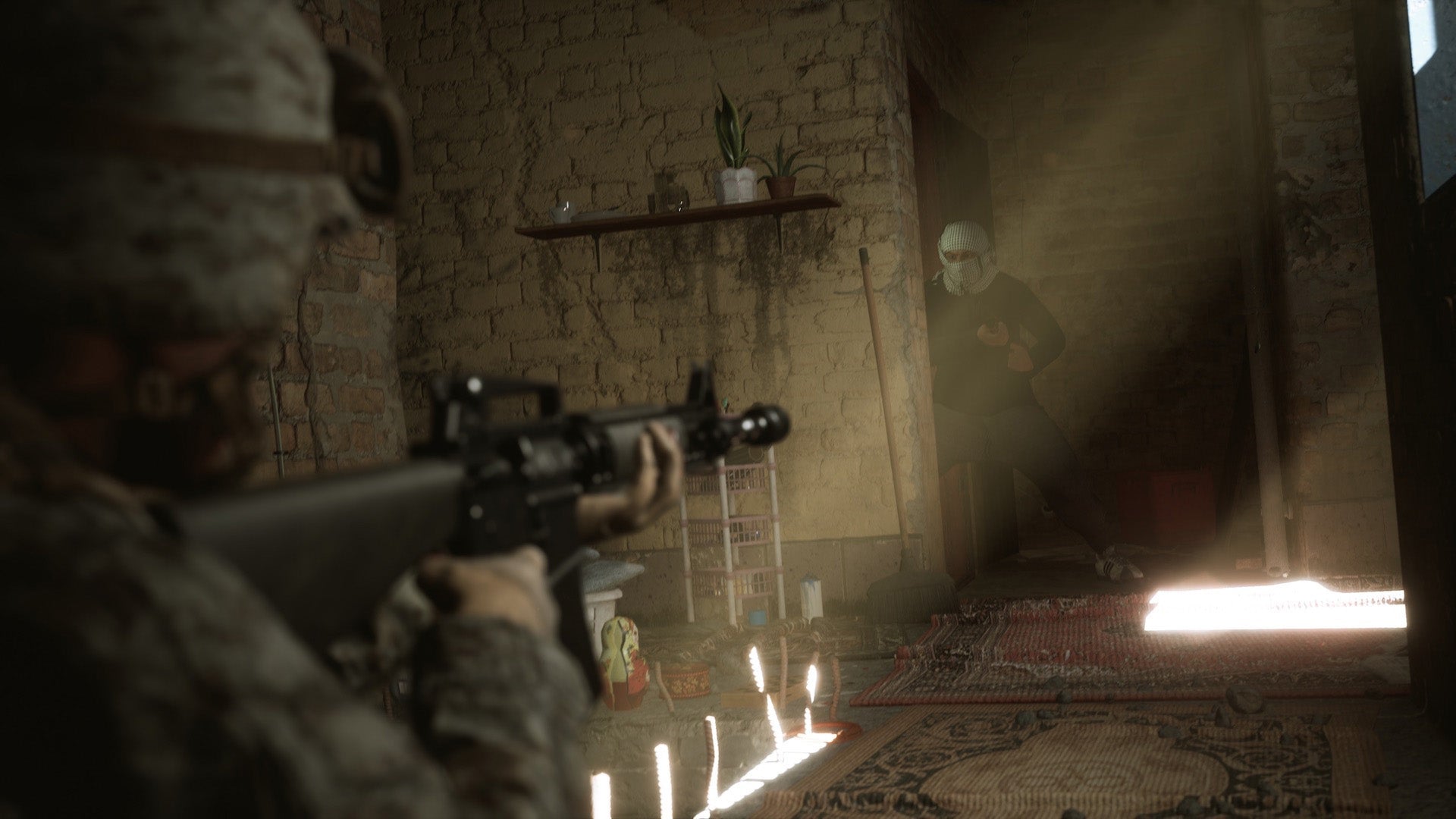
Publisher Victura’s first-person shooter, released in early access this past summer, takes place during the real-life Second Battle of Fallujah, a six-week long, American-led offensive in Iraq that took place in 2003. Six Days in Fallujah has been mired in controversy since its 2009 announcement—first for the short historical distance from the actual battle (it was initially meant to release in 2010, but was dropped by then-publisher Konami after family members of fallen soldiers spoke out), then for its content, and later for Victura founder and CEO Peter Tamte’s tone-deaf response to critics.
In February 2021, Tamte told GamesIndustry.biz that he didn’t believe Six Days in Fallujah “[needed] to portray the atrocities” that took place, referencing the confirmation that the U.S. had used white phosphorus in Iraq, which is not depicted in the game.
Instead, Tamte said that while “reasonable people can argue the War in Iraq should never have happened,” Fallujah would not question why the Marines were in Iraq in the first place—though it would provide “context” elsewhere for players. “Players need that context to understand why they’re in the city fighting those Al-Qaeda people. We are going to provide that context, but keep in mind that we can provide that context without making a political statement, or without in any way disparaging the service of those who are actually there to fight.”
When Tamte was presented with the idea of focusing the game (which includes some levels played as citizens attempting to escape Fallujah) entirely on Iraqis, he balked. “Very few people are curious what it’s like to be an Iraqi civilian. Nobody’s going to play that game. But people are curious what it’s like to be in combat,” he told GamesIndustry.biz. (Kotaku reached out to Victura for comment, but did not receive a reply in time for publication.)
Ismail spoke out against Tamte’s comments back in 2021, and he echoed similar sentiments when we spoke. “Violence is only politicized in one direction: against us. It’s normal. That’s only fair. I’ve said that Arab blood is the cheapest blood on earth…You can spill as much Arab blood as you want, not political, no context required because they’re bad guys. But if you want to hurt somebody else in the game, assuming it’s not a Nazi, or a Russian, or a South American, you need a justification. You can’t shoot an American. That is bad.”
Victura maintained that Six Days in Fallujah should paint an accurate picture of what happened during that battle, but Tamte said he wanted American soldiers to be portrayed heroically. And therein lies the problem: by not engaging with the real-world context, you present it in an ahistorical vacuum, where players can once again kill virtual Arabs without ever questioning why they’re doing so.
“Even if the devs are not sitting there like, ‘Oh, we want to show Arabs as bad,’ they do have a shorthand for the wars that America has been in and for what America has done.” Shammas said. “To represent that without question is in itself propaganda and not neutral.”
Now what?
In the wake of the ongoing genocide of Palestinians in the Middle East and the relative silence across our industry, it’s even more crucial now that we have these kinds of discussions. War games aren’t the only pieces of media contributing to harmful stereotypes of people from the Middle East, but they are the only ones where you can roleplay indiscriminately killing them. They have also, historically, caught the eye of military advisors and officials—a 2014 Guardian article details how a former Call of Duty producer ended up on a panel of experts discussing the future of modern warfare.
So how do developers of games like Call of Duty or CS:GO reckon with this? How do we, as gamers, journalists, or content creators do the same?
For some of the people I spoke to, it’s as simple as talking about the situation in Palestine, or elevating voices from the region. The perceived silence from members of the industry “shocked” Shammas.
But for many, reckoning with the legacy of military games seems nigh impossible. “There is no value in any military game, and honestly, people should find better games to play,” journalist Saniya Ahmed said in an email. “No cultural representation can come from Call of Duty, nor should it.”
Shammas brought up God of War 2018 as an example of a franchise taking its core concept and turning it on its head, questioning protagonist Kratos’ legacy and relationship to violence. Can Call of Duty do something like that? “No. I don’t think it can,” she said.
Ismail agreed. “The problem isn’t necessarily that we shouldn’t have Call of Duty games or that Call of Duty should be different from what it is,” he said. “Changing that would require a level of courage and a level of insight at the corporate level that just isn’t possible within our system of making games…Call of Duty is a roller-coaster built on the American consciousness of war.”
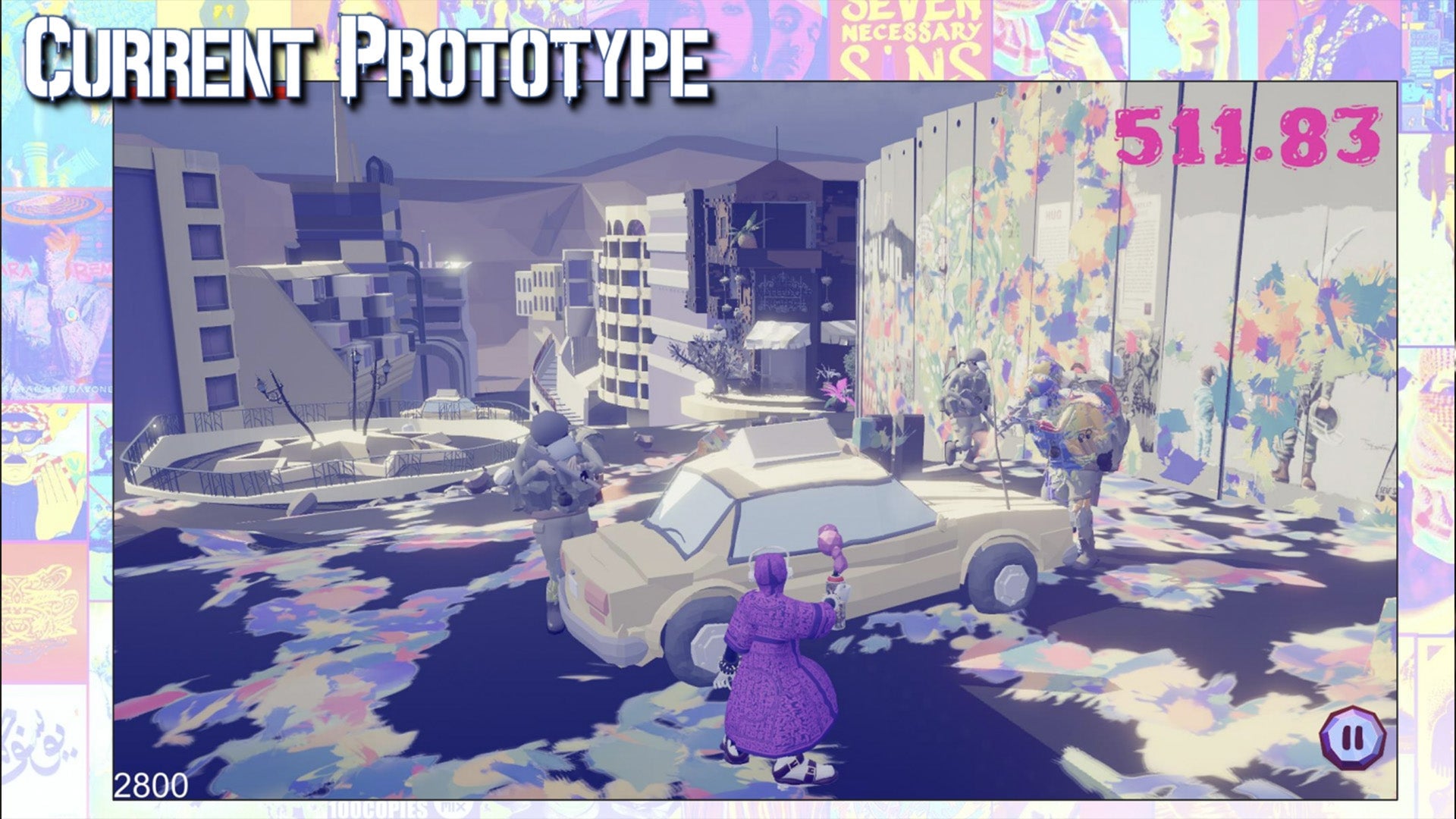
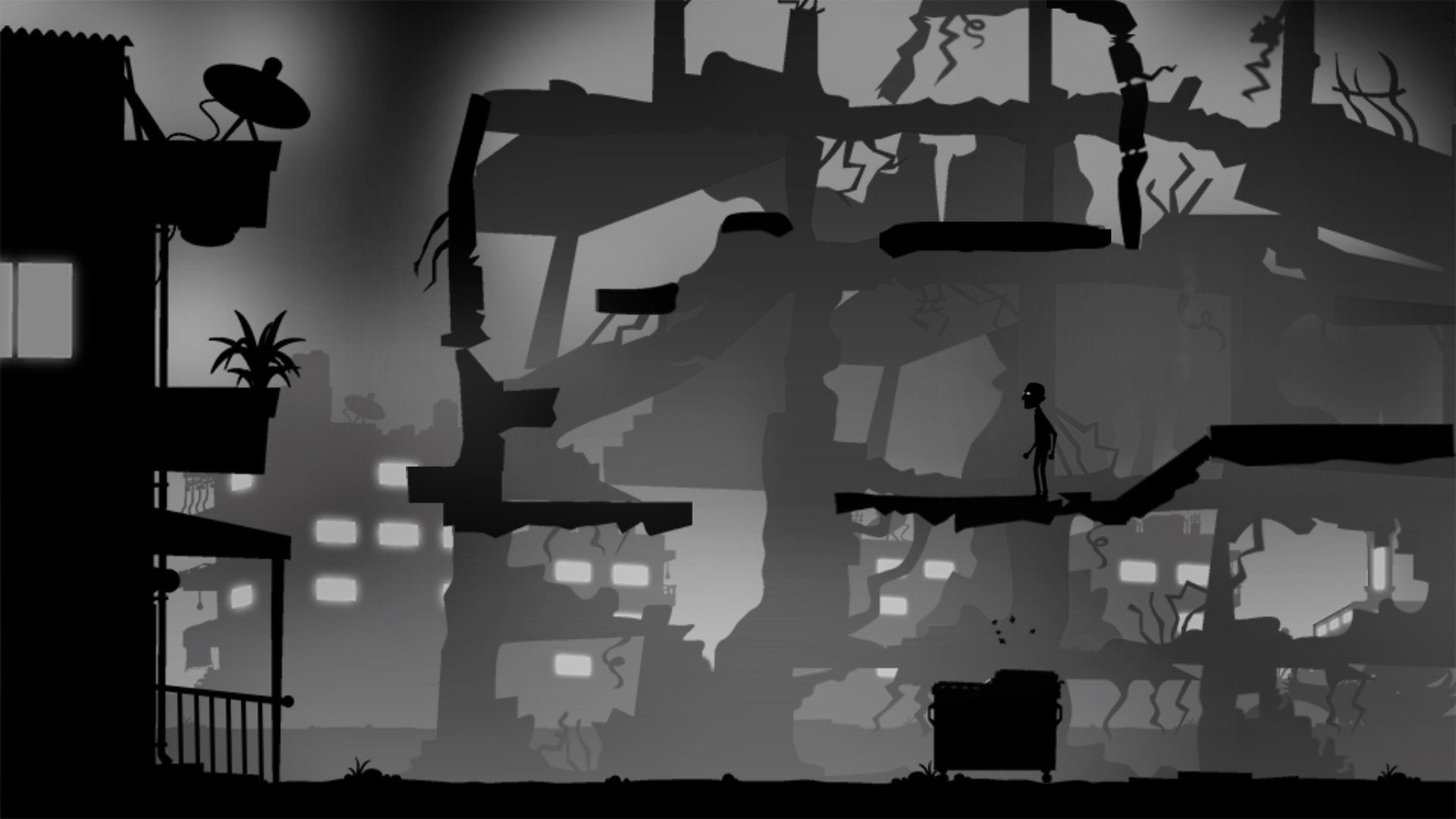
So what about making other kinds of games from other perspectives? Ismail pointed out that Muslim and Arabic developers routinely have difficulty securing funding. “The Palestinian developer that did Liyla and the Shadows of War [a mobile game about the invasion of Gaza] is trying to make a game about the Nakba, the catastrophe that displaced 700,000 Palestinians. That’s not going to get funded. Let’s be honest. There’s no Western publisher that’s going to touch that,” he said.
Take Palestinian Skating Game, which is currently in development from a small team of six, one of whom is based in Gaza, according to a recentAftermath article by Gita Jackson. The website for the game includes a slideshow laying out its premise (“Tony Hawk + ethnic strife”) and requests for funding support. “I hope I can help introduce our cause to many more people,” a developer, who requested anonymity, told Jackson.
Younès Rabii, a member of the Game Awards Future Class and the driving force behind its open letter, told me through DM that they’d “like to challenge anyone reading this to count the number of times they pressed a button to take the life of an Arab character, and compare it to the number of times a game invited you to sit down and eat with one instead. That ratio should scare you.”
Hussain expressed a similar sentiment: “Think about it: when was the last time you were shown a Middle Eastern setting as thriving? Did you ever learn, either through school or any media you consume, about the Middle Eastern world’s contribution to mathematics, medicine, astronomy, language, or music? I bet you know the standard weapons loadout for a Middle Eastern terrorist, though.”
Update 12/07/23 at 9:25 a.m. PT: Adjusted quote from Shammas for accuracy.
Update 12/07/23 at 12:50 p.m. PT: Corrected release date for Call of Duty 4: Modern Warfare