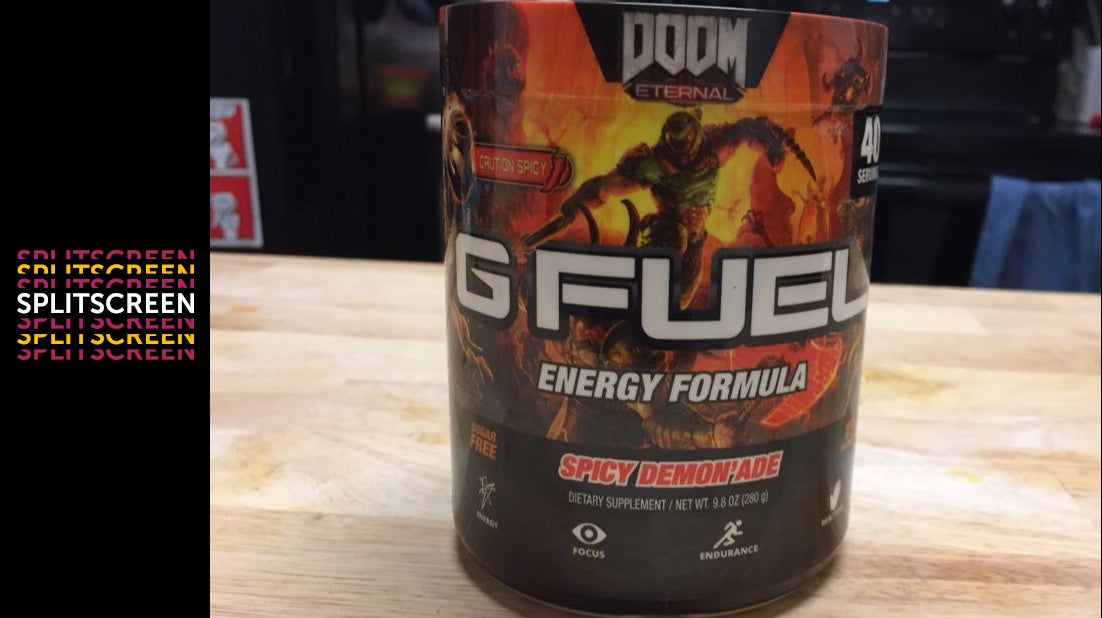
There are snacks, and then there are snacks for gamers. Through chalky chemical combinations of dubious repute, they will somehow make you aim better in Fortnite. How did we reach the point where snacks for a hobby that takes place primarily on the couch are basically workout supplements? On this week’s food-focused episode of Splitscreen, we attempt to trace that lineage.
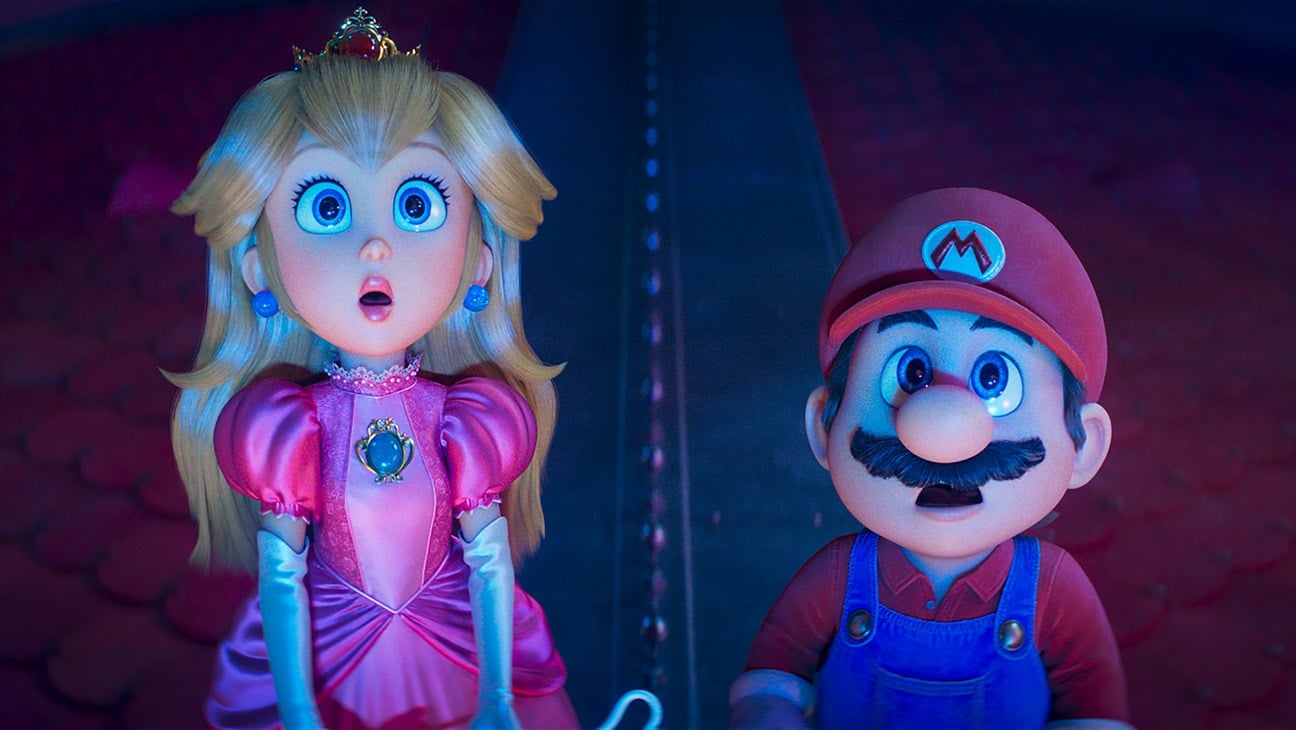
To begin the episode, Ash Parrish, Mike Fahey, and I discuss our favorite examples of in-game food, including Yakuza’s Peking Duck, Final Fantasy XV’s everything, Streets of Rage’s fully-cooked, man-born chickens, and probably the most iconic video game food of all: Portal’s cake. We also debate whether or not Mario mushrooms count as food, and things get tense.
Then we bring on special guest Dan Goubert, cereal expert and cohost of The Empty Bowl podcast, to talk about the history of snacks created specifically with gamers in mind. Somehow, our humble hobby started with cereal, moved on to Mountain Dew and Doritos, and now guzzles G Fuel. Speaking of, for our final segment, we chug G Fuel and let it ravage our bodies. Then we valiantly struggle to figure out how G Fuel became the gamer beverage of choice (?) while trying to keep our eyeballs inside of our heads. Then we die.
Get the MP3 here, and check out an excerpt below.
Nathan: My first question to both of you, Dan and Fahey, is: When did the relationship between games and snacks become codified? When did snacks start getting marketed alongside video games? When did it become this very apparent relationship?
Dan: I don’t know if I can speak authoritatively on every snack getting combined with video games to some extent, but I think cereal and Pop-Tarts have always really been associated with cartoons. Saturday mornings and cereal really started to be a thing in the ‘80s just because cartoons then were becoming marketing vehicles for toys. So the idea of cartoons really being the nexus and Saturday morning being the time when kids had all their eyes on television made it sort of this mutualistic relationship between cereal—which is also something where the characters are marketing vehicles—and cartoons. So those things tend to blend together.
And you have a lot of commercials for cereal during these cartoons, and I think the fact that video games and ‘80s cartoons go hand-in-hand, where if you’re doing one, you’re probably playing the other. So I think it’s this weird nexus of media marketing and food, swirled together—especially during the ‘80s, when this was before child advertising laws. In the late ’90s and early 2000s, it became frowned upon.
Fahey: Exactly that, really. And during that time in the ‘80s when those cartoons were coming out, there was a period when the video games started becoming the cartoons. So you had Donkey Kong, you had Frogger, you had that whole arcade morning block. And that was also when we got that Nintendo Cereal System. That’s probably the earliest game-centric food I can remember. It was a split box. You had a Mario side and a Zelda side.
Dan: Yeah, a split-screen cereal—something that’s been seen very, very few times since then.
Ash: We need to get our marketing people on that.
Nathan: Yeah, we should advertise a defunct cereal.
Fahey: Now if we’re talking about when games and snacks started converging in a more diabolical way, to where they targeted people as gamers—I mean, the Nintendo cereals were the result of Nintendo being so wildly popular and pervasive in our culture that you immediately had millions of people who were willing to eat that cereal simply because it said Nintendo on the front. But I think it’s more recently that we’ve started to have brands dedicated to serving gamers food. The first company that comes to mind for me is Gamer Grub, and I think they started in 2006.
Nathan: Yeah, I was wondering when a lot of these companies realized they could make snacks especially for gamers, put “gamer” in the title, and not have it be a deterrent. Because I think for a long time, a lot of mainstream media looked at video games as something to shy away from, like they were almost shameful. So at what point were companies like “Hey, this is a demographic, and where there are demographics, there is money to be made”?
Dan: That era you’re talking about was right around the introduction of the first Mountain Dew Game Fuel. That was a huge, pivotal moment. I think the first one was branded for the release of Halo 3, and I only have such good memories of this particular first Mountain Dew Game Fuel because I saved four cans of it that I was convinced would be worth something someday. And I still have three of them left, because on the tenth anniversary of Halo 3, my friends and I decided to drink one of them even though it had been expired for a decade. And it was really sad because the decade of aging did not affect the flavor hardly at all. It just tasted pretty normal. So I think we’re gonna wait another seven years to crack open the next one.
Ash: So when did we get from primarily drink-based things to being associated with comestible things like chips? I’m thinking of Doritos, all the Doritos branding back in the day—which was, like, 2008. Which I guess is “back in the day” nowadays.
Nathan: Halo also did Doritos, didn’t it? A lot of it seems to be driven by Halo, specifically.
Dan: Yeah, I’m not sure why Doritos of all things caught on with gamers, considering that it’s one of the nastiest, gnarliest things to get on your fingers and then your game controllers.
Fahey: So Gamer Grub, which was a snack that came in a pouch, their big thing was “This won’t get your hands all cruddy.”
Ash: So what was it?
Fahey: It was almost like a trail mix, in a way. The peanut butter and jelly flavor had these crunchy peanut butter bits, and then they had, like, jelly gummies with a really strong grape taste to them.
Ash: That doesn’t sound appealing.
Fahey: You had to be there.
Dan: I don’t know if it’s any less appealing than nacho cheese and lemon lime, in terms of soda and Doritos.
Fahey: I guess back in the day Mountain Dew and Doritos were the whole extreme sports thing—more Mountain Dew than Doritos, at the time. But it was like you’d been on your BMX bike or you’d been skateboarding, you’d just pulled off a 720. You’re Tony Hawk, and you’re not old yet—sorry, Tony—so it’s time for some Doritos. Then more and more extreme sports people were like “Great, we’re gonna play video games now.”
Dan: Maybe it’s the Tony Hawk’s Pro Skater franchise to blame for bridging the gap between the X-Games and gaming, in terms of food.
Nathan: And introducing the song “Superman” into the cultural lexicon. But yeah, that was actually my next question: You draw the comparison between sports—and especially the extreme sports scene—and video games and snacks related to video games. I think there’s a lot of overlap there in that, even from the beginning with all the “fuel” branding, it seems like snacks oriented toward gamers have always been about performance. Whereas snack food for movies and TV is more like “Hang out, eat it, have a nice time.” Meanwhile, gamer snacks have always been like “OPTIMIZE YOUR GAMING.” When did that become part of it? And has it become more of a thing recently, because it feels like it has.
Dan: I mean, as esports got more popular and prolific, the moment that fuel-based language came onto the scene was the first time gaming could be something super globally competitive and profitable in terms of mass availability of internet, etc. I think any young kid who wanted to prove to their parents that they could make a career of gaming wanted to eat their best and drink their best—any way to fool yourself into believing that what you’re eating and drinking is gonna enhance your performance.
Ash: That’s interesting considering that the two major food brands of the Overwatch League are Cheez-Its and Coke.
Nathan: What a diabolical combination for your stomach.
Fahey: What a really old man combination. You’re not eating Cheez-Its on a regular basis unless you’re 50 or 60.
For all that and more, check out the episode. New episodes drop every Friday, and don’t forget to like and subscribe on Apple Podcasts, Spotify, or Stitcher. Also, if you feel so inclined, leave a review, and you can always drop us a line at [email protected] if you have questions or suggest a topic. If you want to yell at us directly, you can reach us on Twitter: Ash is @adashtra, Fahey is @UncleFahey, and Nathan is @Vahn16. See you next week!
Recommended Stories
https://lastchance.cc/nfts-no-fucking-thank-you-1846515215%3C/a%3E%3C/p%3E