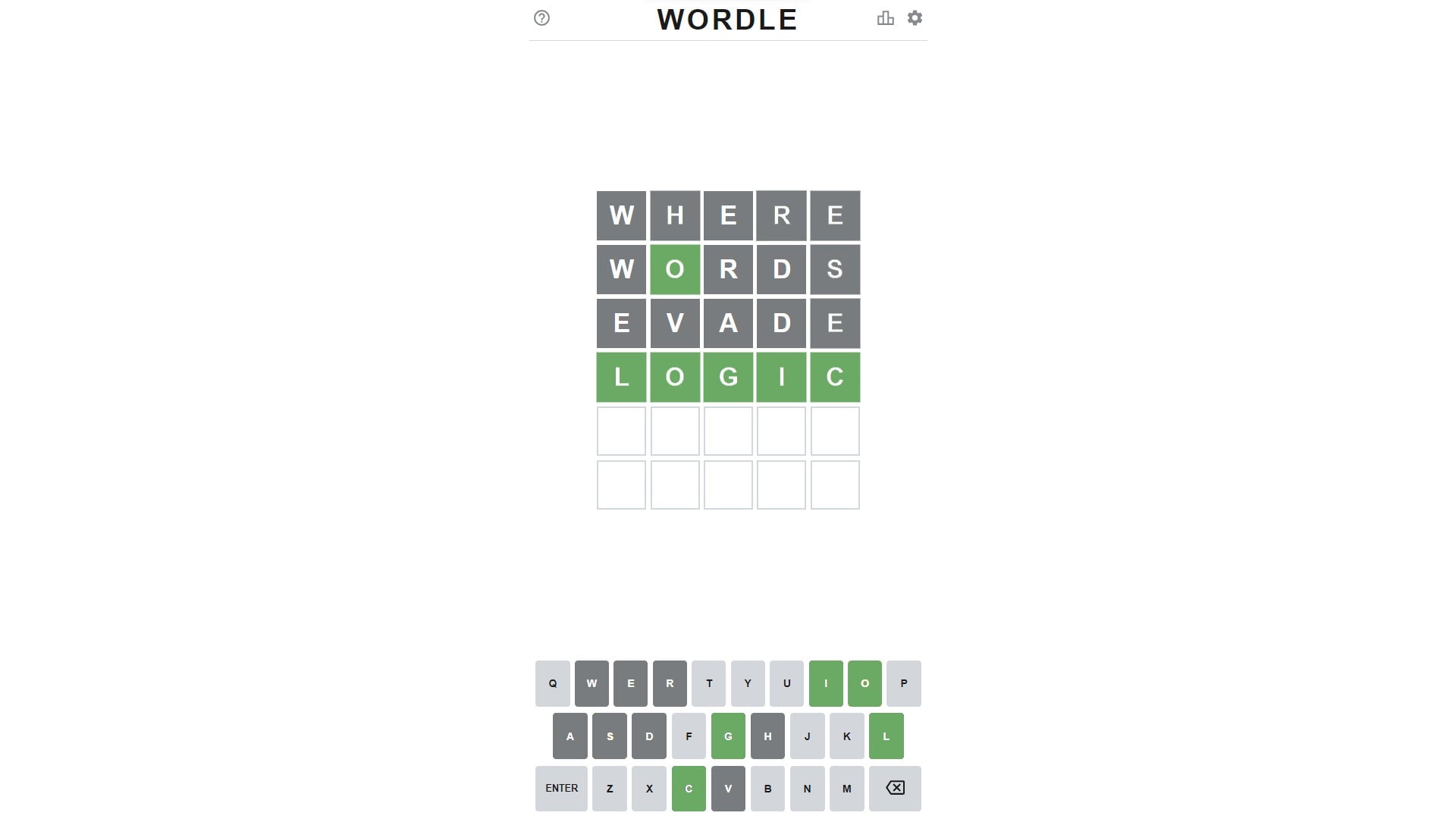
If you’ve grown green with envy seeing everyone’s green emoji squares on Twitter celebrating their Wordle success, these tips will help you up your game. People go back and forth about whether it takes skill or luck to be good at Wordle, but the truth is it’s both. Every once in a while, you’ll likely slip up no matter how good you are.
That said, these tips will make sure those losses are less frequent and help you solve the puzzle in fewer attempts. And if you’re worried about how The New York Times’ purchase of the game might affect your playing—or you just want to get lots of practice in—you can access the Wordle Archive
All screenshots are taken from Wordle Unlimited, which is completely random, so don’t worry about any spoilers if you haven’t played today’s game yet.
Use your first word(s) strategically
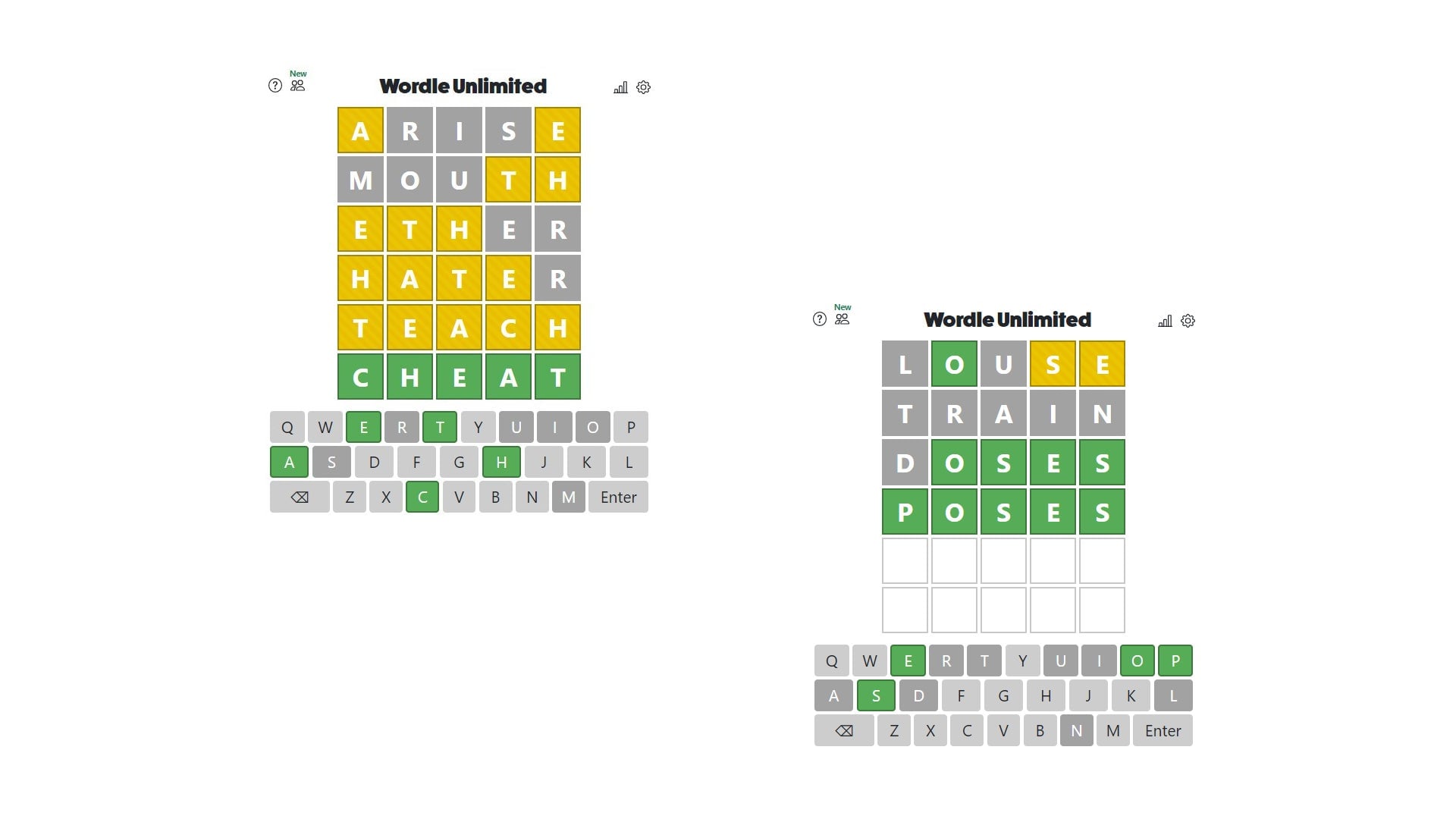
Your go-to opening word is key. To a lesser extent, so is your second word. I’m a big fan of having a solid two word combo. Mine is “arise” and “mouth.” Together, they get all five vowels and some of the most common consonants. With the three vowel combo in “arise,” I get a solid amount of info from just that first attempt. If I get three letters or more, I’ll forgo my second go-to word and start figuring out what goes where.
There are other great combinations out there too. My partner is partial to “louse” and “train.” But the key is get your vowels sorted and knock out those essential consonants as quickly as possible.
If you a challenge you could try the worst starting word I guess.
Think of consonant blends
About those consonants… They’re crucial for going from having a bunch of letters in yellow to getting everything in green. Consonant blends are those pieces of words that aren’t broken up with vowels. Think B and L in “blend.” There are some key ones I always rule out or in, and you’ll notice at least one letter of each is in my two-word combo.
BR
CR
SH
SL
SM
SP
ST
SL
TH
TR
WH
R, S, and T blends. So is L, hence my partner’s love of “louse.” For me, that means L is usually in my next guess. C and K, or even CK, are also in several blends. You can’t get all these key letters in two guesses, but keeping them in mind is extremely helpful when you start narrowing things down.
Made deductions
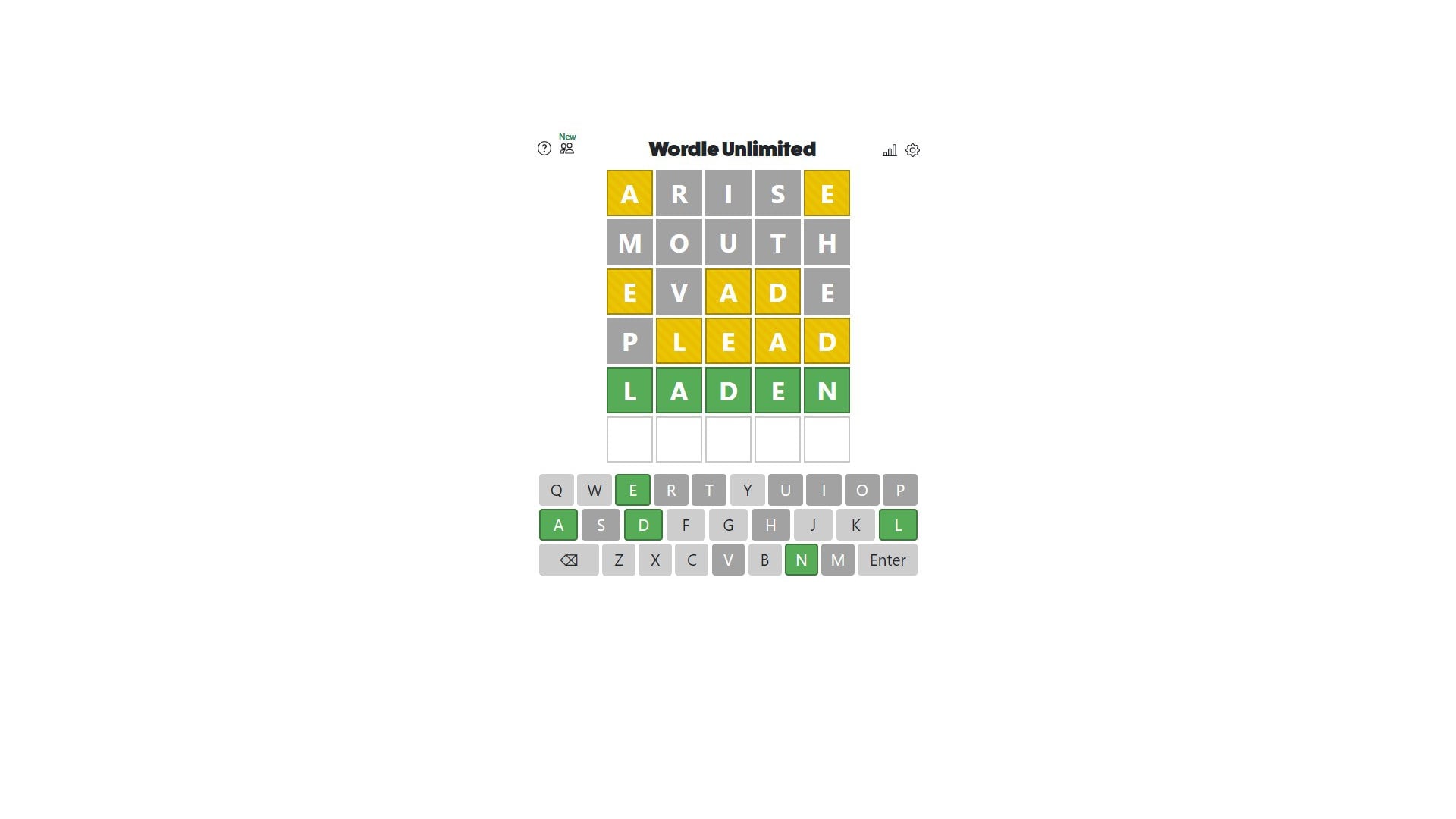
Okay, so you have all your vowels and the key consonants out of the way. You’re still not all the way there, and there’s a lot more yellow than green, maybe even quite a bit of gray. Don’t panic. At this point, you’ve made way more progress than you think. Have an H but no T? All TH words, whether it comes at the start or end or wherever, are out. Where does it fit? A couple questions to ask yourself:
How many vowels are there? Enough to break up all the consonants or is there likely a blend?
Does this letter make sense in all open spots?
If this letter can’t go in three spots, where can it go?
For example, there aren’t a ton of words that end in I. Maybe don’t waste a guess trying to figure out where I is by putting it at the end. It’s not impossible, but when trying to figure placement, think horses not zebras. Letters like K are more often used at the start or end, especially for shorter five-letter words. Use your knowledge of how words look to think about what makes sense where.
Use placeholders
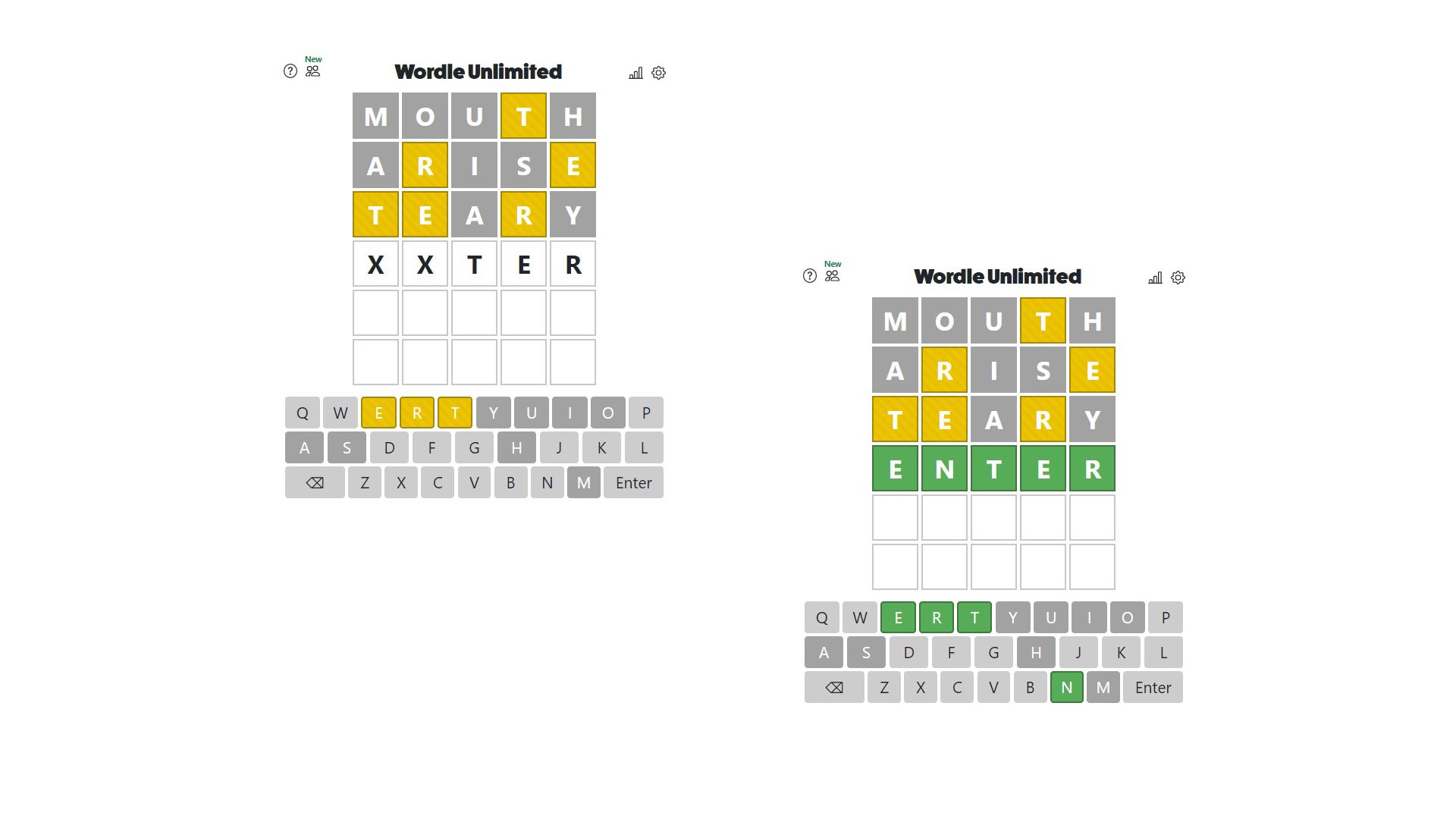
A big help in figuring out what might make sense is to see it visually. I love to use X as a placeholder. I cannot tell you how often trying around combos by moving that one little letter around has helped everything click into place.
Don’t forget the rules of the game…or language
One of the biggest mistakes to make, especially when you’re on guess five or six and starting to sweat, is that letters can be reused. Wordle will also tell you if this is the case if you try it by putting one of the choices in yellow, or hopefully green, and the other in gray. If both are in yellow or one is yellow and the other is green, you’ve got a double on your hands.
This is most important if you have very few vowels. Maybe it’s got a bunch of silent consonants, but maybe it’s just got two Es. Using a double letter can also be helpful and figuring out where the hell it goes, regardless of how many there are.
And don’t forget Y can be a vowel. Think “gym,” “thyme,” or “type.” That Y is doing some serious vowel work. The tricky letter is often used at the end of words, so don’t forget about the forgotten vowel-consonant step-child.
Also, my dear Wordle friends, don’t forget to have fun. At the end of the day, it’s just a game. And you don’t have to share that X/6 if you don’t want to.
I wish you luck on your letter-filled endeavors.
Update: 2/4/2022, 6:02 p.m. ET: This article was updated to reflect news of Wordle’s purchase by The New York Times.