Some things happen slowly and then all at once. So it appears to be with Xbox Game Pass. Once hailed as the “best deal in gaming,” it’s now best known as the deal that just keeps getting worse. A 50-percent price hike this week feels like a death knell, if not for Microsoft’s $5 billion annual subscription business, then at least for the perception that the company is trying to meaningfully compete by rewarding its long-time fans with something they can’t get anywhere else.
It feels like the shift began way back in 2022. “We’ve held price on our console; we’ve held price on games and our subscription,” Xbox boss Phil Spencer said on stage at the Wall Street Journal’s Tech Live conference that year. “I don’t think we’ll be able to do that forever. I do think at some point we’ll have to raise some prices on certain things, but going into this holiday we thought it was really important that we maintain the prices we have.”
After years of Game Pass boosterism, he was also noticeably cool on the subscription service’s long-term growth prospects. “Game Pass as an overall part of our content and services revenue is probably 15 percent,” he announced at the time. “I don’t think it gets bigger than that. I think the overall revenue grows so 15 percent of a bigger number, but we don’t have this future where I think 50–70 percent of our revenue comes from subscriptions.”
He continued, “We’re seeing incredible growth on PC…on console, I’ve seen growth slow down, mainly because at some point you’ve reached everybody on console that wants to subscribe.”
Game Pass now costs more than Netflix
Three years later, with over $70 billion in acquisitions weighing on Microsoft’s gaming division, we’re seeing what that calculus means for the math on the ground. Microsoft has doubled the price of Game Pass in the last two years, in addition to tariff-fueled hikes on its consoles and briefly flirting with releasing its first $80 game this fall. Even as the company has touted Game Pass’ self-sustaining profitability, it’s also laid of hundreds of developers, closed studios, and canceled some of the biggest games it promised players at summer showcases past.
To me, the most shocking part of Game Pass Ultimate’s jump to $30 a month wasn’t the price tag, even if it is more than every other mainstream content subscription service out there (you can currently get Disney+, Hulu, and ESPN bundled together for the same amount). It was how little Microsoft offered in return: Hogwarts Legacy, old Assassin’s Creed games, and Fortnite skins. These are the types of fine-print perks Verizon gives you for adding a new phone line, not the basis for a premium flagship subscription service.
What the latest Game Pass overhaul is really about is extracting a premium from existing customers for day-one access to Call of Duty. Microsoft tested the waters last fall with a $3 a month price hike ahead of Call of Duty: Black Ops 6 and, just as importantly, the removal of day-one access from Game Pass’ middle tier. Microsoft is now promising that all of its first-party day-one Game Pass games will come to Standard, which remains $15 a month, within the first year—except Call of Duty.
That’s on console. The picture on PC is even more explicit. There, the service is going from $12 a month to $16.49 with no other changes. That’s almost a 40-percent increase in exchange for nothing except the ability to continue playing the new Call of Duty each year without paying for it. Microsoft apparently got tired of not being able to charge PC players for online multiplayer, which still costs $120 a year on Xbox.
Microsoft hasn’t announced new Game Pass subscriber numbers in over a year, which strongly suggests that it hasn’t grown much beyond the 34 million number shared in early 2024. Having now hit the ceiling Spencer alluded to back in 2022 on PC as well as console, the company seems content to soak its remaining users for as much as it can. Instead of growing Game Pass revenue by growing the program, it will make the number go up by getting its highest rollers to spend even more time at the tables.
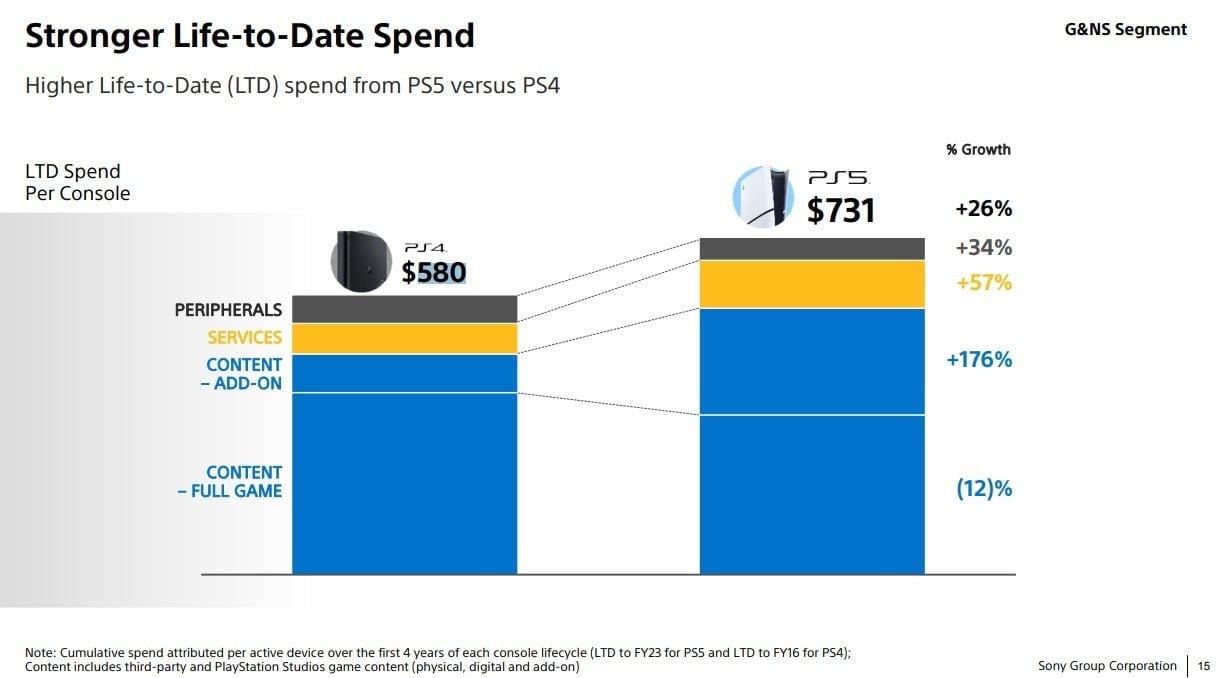
In this regard it’s taking its cues from Sony. Part of what has made the PS5 generation the “most successful ever” is that the most dedicated PS5 players keep spending more and more. While PS5 sales are largely in line with the PS4 before it, fans are buying accessories and Fortnite skins, and staying subscribed to the most expensive version of PS Plus. With sky-high hardware prices and fewer exclusives than ever, Microsoft has clearly given up on growing its own share of the gamer pie. Instead it’s leveraging a massive publishing apparatus to try to squeeze its remaining users for even more cash.
This makes it sound like there is cold, hard financial logic governing Microsoft’s strategy here. But while I concede the new Game Pass might look good in a spreadsheet, I have no idea who it’s actually for anymore. At $360 a year you could buy Call of Duty: Black Ops 7, Gears of War: E-Day, Fable, and Forza Horizon 6 and still have almost enough left over to pay the Xbox online multiplayer tax. If you’re only in it for the service’s impressive parade of neat indie games, well, you could buy A LOT of indie games for that much. And if you are a daily Fortnite player, I mean, are you even playing anything else?
The ‘Play Anywhere” platform is pricing fans out
Perhaps this is just Microsoft’s way of teeing up a cheap, ad-supported tier sometime in 2026. Call it Game Pass Lite. “The big question going forward is if Game Pass can be a sustainable product off console and how best they can reach this audience,” Niko Partners research director Daniel Ahmad wrote on X. “At the very least that’s going to require a lower entry cost (Essential) and experimentation with cloud only, ad supported, or mobile-first offerings.”
In the meantime, the company seems content to price out large parts of its audience that stuck with it for years waiting for Xbox to finally turn a corner. This reflects a larger reality in the current market. The top 10 percent of income earners now account for nearly 50 percent of consumer spending. “Everything is being priced for them while Xbox leaves everyone else behind,” wrote Giant Bomb‘s Jeff Grubb.
Motley Fool recently teased this out using Bureau of Labor statistics. “The top 20 percent of earners spent $1,722 on ‘other entertainment,’ including video games, in 2023, according to BLS,” it reported last month. “The next lowest income quintile spent $657 and the lowest income segment spent just $125 over the course of the entire year. The average spend on ‘other entertainment’ across all income levels was $653.” We don’t how those spending averages breakdown exclusively for games, but it suggests a similar picture: fewer people are accounting for a larger share of total spending on games, at least in the U.S.
Others are seemingly rushing to ditch their Game Pass subscriptions before they auto-renew at the higher price. Microsoft’s webpage for subscriptions was briefly overloaded after the announcement yesterday, and searches for how to cancel peaked. The whole episode might leave a less unpleasant taste in people’s mouths if it seemed like it was all in service of some larger ambition. Instead, it feels like Microsoft is setting a house it spent decades building ablaze and telling everyone inside to strip the copper wiring out of the walls before they leave.