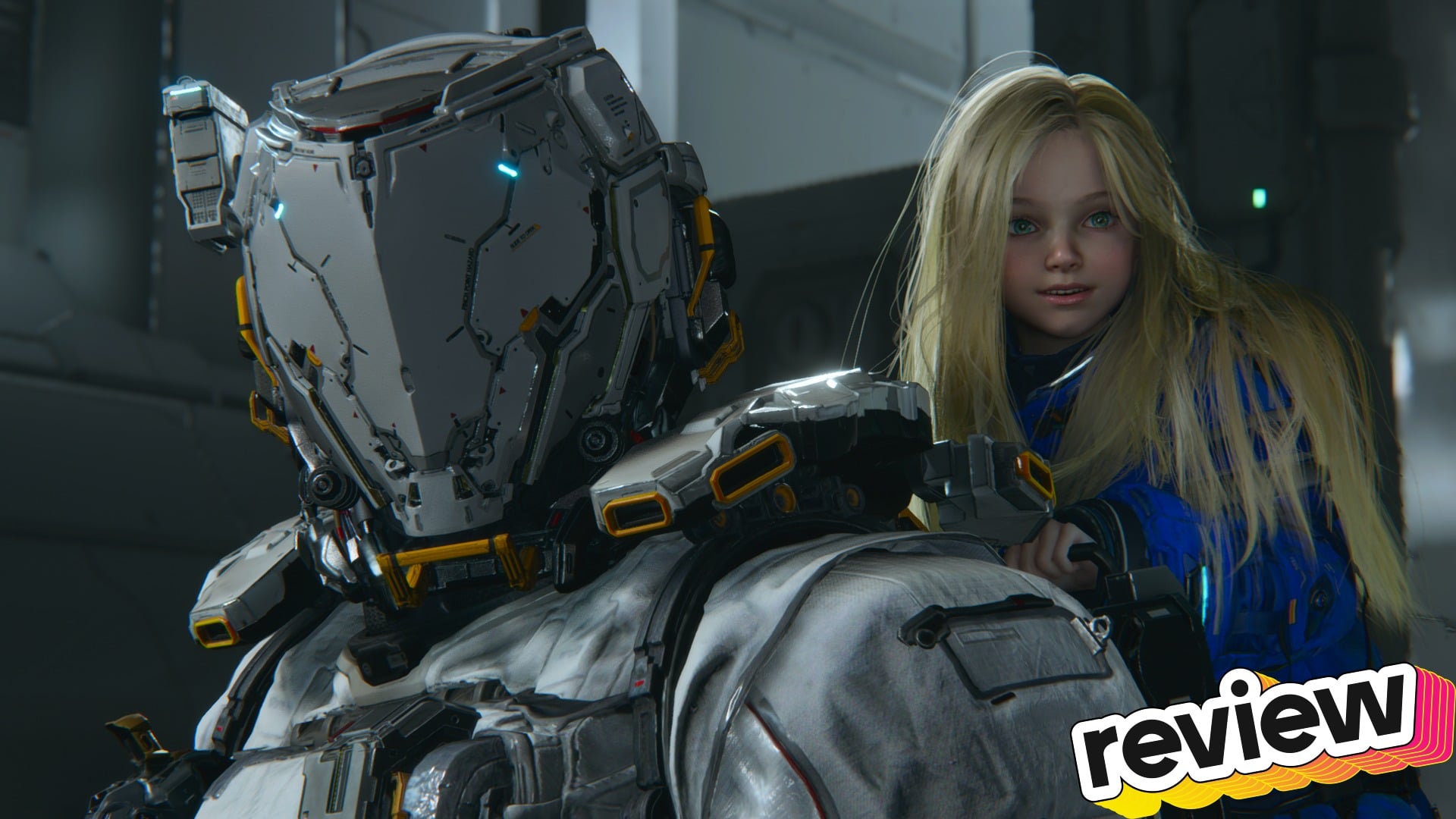
Capcom’s sci-fi puzzle shooter Pragmata almost feels like a game plucked out of a previous generation, and I mean that in a complimentary sense. There’s something refreshing about playing a game that feels devoid of all the modern, pretentious attempts at gravitas, while still feeling robust and innovative enough to hold up to its contemporaries. Pragmata is a game out of time, but it also manages to subvert some of the tropes about parenthood that were so popular during the PS360 era by which it feels so inspired, and that’s because it’s a Dad Game for fathers who actually like their kids.
Pragmata follows Hugh, a space marine who flies up to a facility on the moon for what was supposed to be a routine check-in. Once he and his crew arrive, it becomes clear that the research station has suffered a great catastrophe that has left most people on the station dead. The only signs of life Hugh finds are synthetic, whether it be the hostile AI called IDUS that has taken control of the station, or the robots that are running amok on the station.
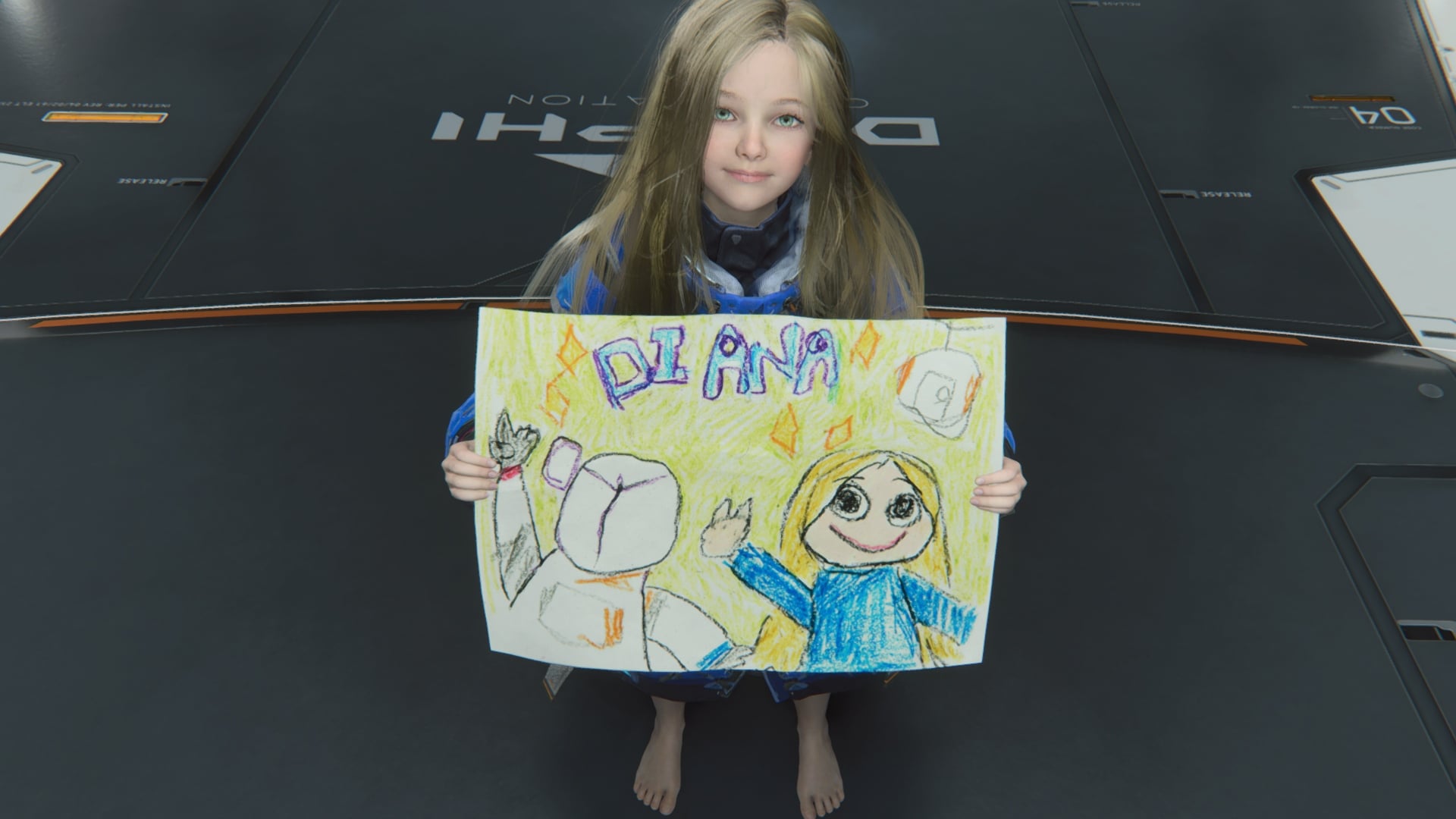
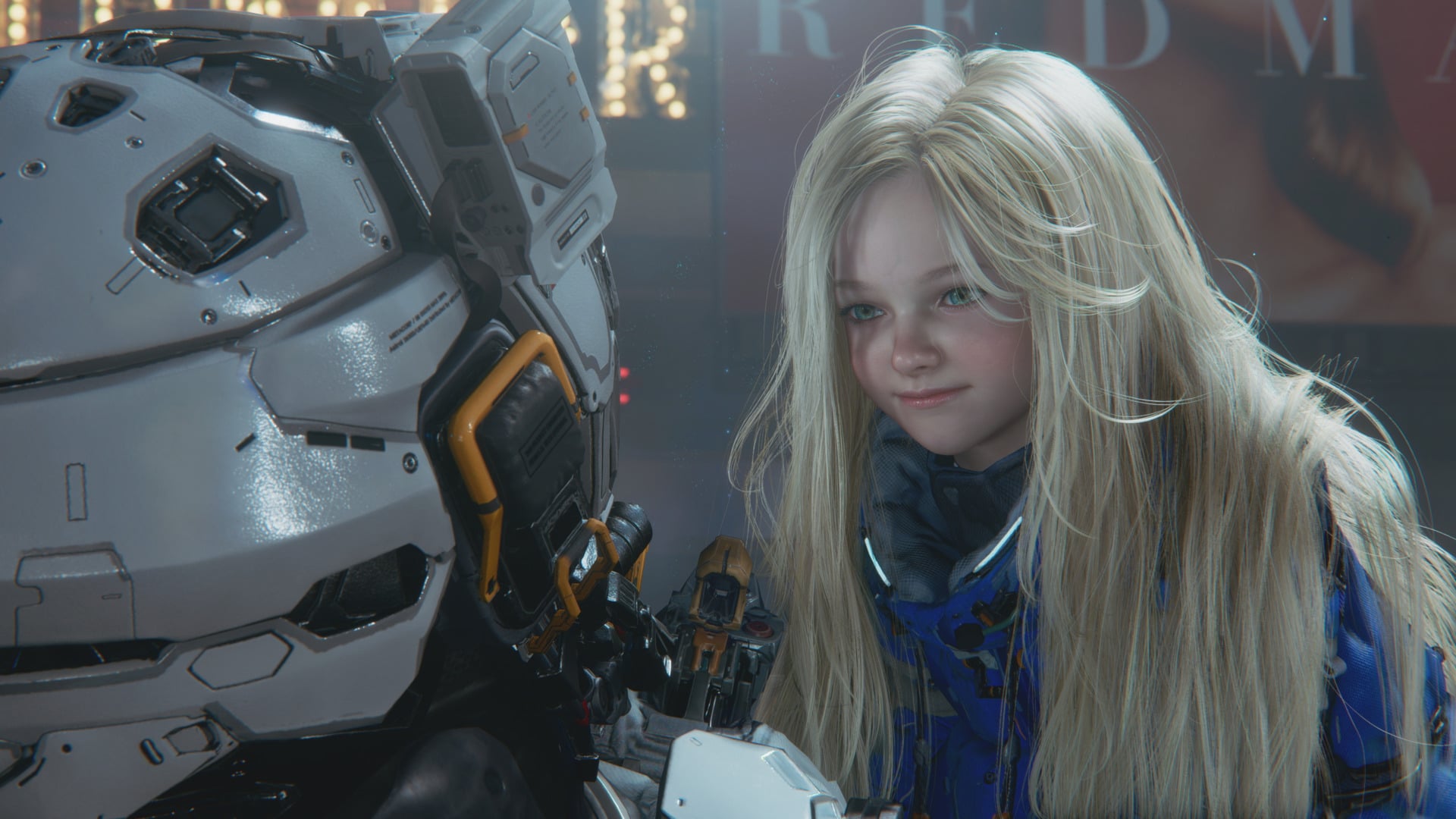
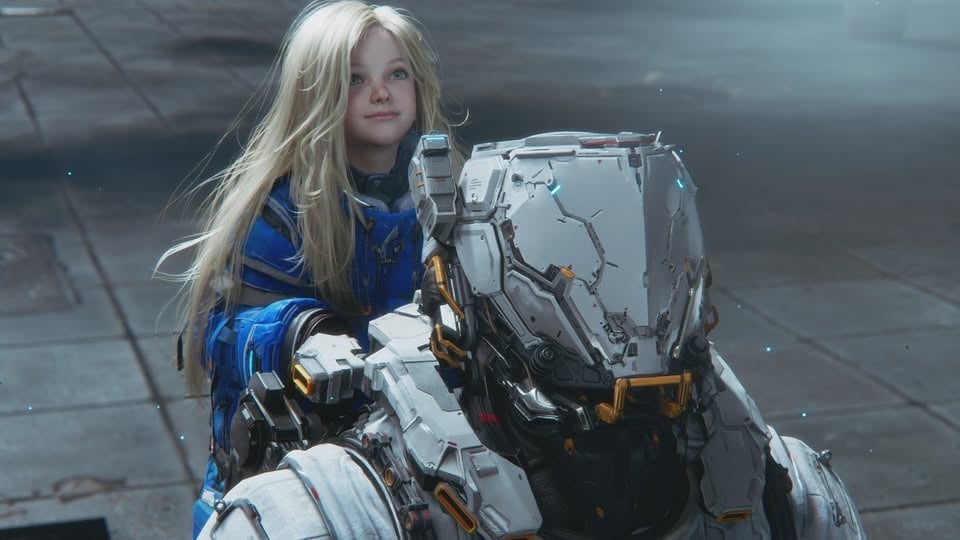
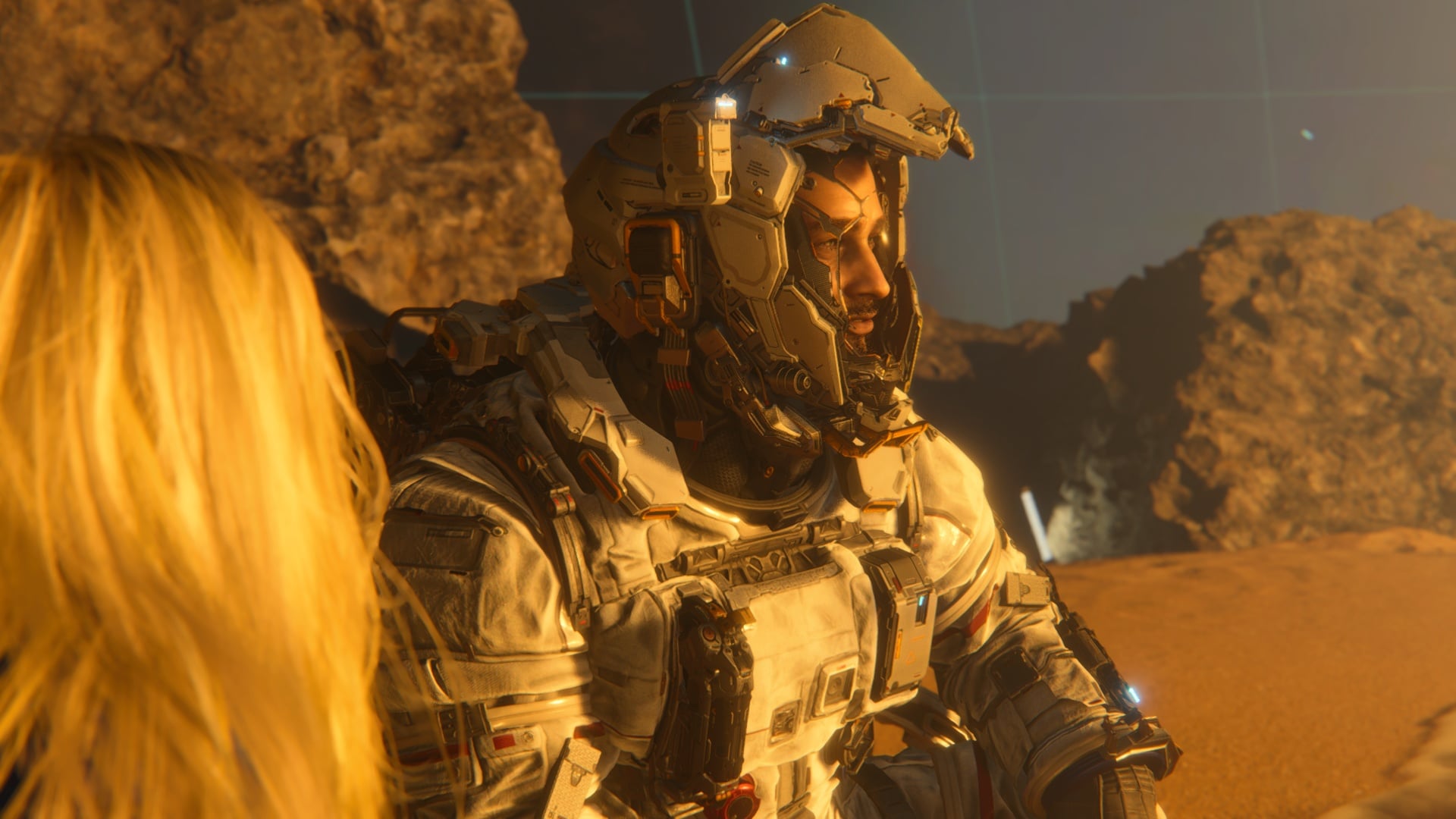
The only friendly presence Hugh comes across is D-I-0336-7, an android made to look like a young girl with an incredible ability to hack through the ironclad defenses of all the robots on board. As she excitedly rattles off the numbers of her name, Hugh decides she needs something a little more simple if they’re going to escape this facility together, and he riffs on the first two letters of her designation to settle on Diana, much to her delight. If the image of a gruff man and a young tagalong didn’t immediately signal to you that Pragmata was a dad game, it becomes very clear when he quite literally names her as a father would their own child.
The difference between Pragmata and dad games of the past like The Last of Us or the God of War reboot is that Hugh and Diana’s relationship starts off sweet and only grows more so as the game goes on. It’s downright saccharine at some points. Hugh subverts the usual angry video game dad trope by never once treating Diana like a burden. She has lived her whole life in space, and is mesmerized by the glimpses of Earth life she sees throughout the facility;Hugh, meanwhile, is more than happy to regale her with tales of his home planet and promises to take her to see all the places he tells her about when they get off the station.
Pragmata wears its heart on its sleeve, which is pretty much Capcom’s M.O. as a company. Its writing doesn’t have to dig deep because it’s readily bringing all its earnest hopes and dreams for its characters to the surface. Hugh and Diana’s relationship is the heartbeat of Pragmata, its warmth contrasting with the cold metal of the space station. And even though its premise is dystopian, it provides a pretty excellent stage for the two to riff on while also letting the game venture into timely speculative fiction about modern-day slop being antithetical to the human experience.
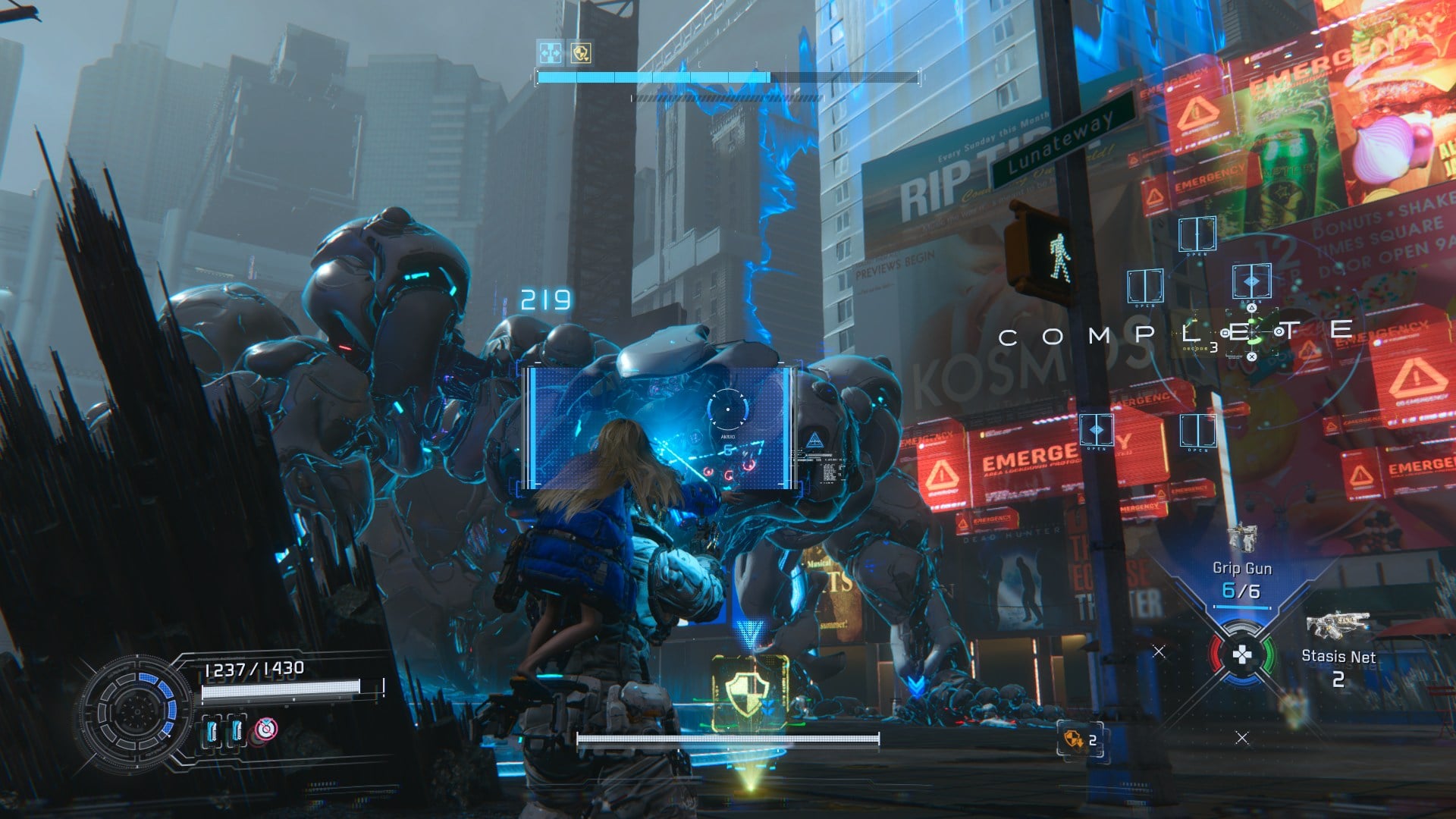
Capcom has said that Pragmata’s 3D-printed cityscapes are meant to look like they were created by present-day generative AI, coming off as an artificial, almost soulless facsimile of the buildings and businesses made by humans on Earth. Pretty much everything in Pragmata is a replica of something someone misses back on Earth, created as they desperately cling to their humanity while separated from the people and places that shaped it. For the humans on board, it’s enough to maintain their sanity; for Diana, it’s the only frame of reference she has. Hugh sees her hopes and dreams of seeing and experiencing Earth as something to be nurtured and supported, and the two’s goal of escaping this facility and venturing back to Earth unites them.
Maybe I’m just used to angsty meditations on fatherhood from video games that seem made for people who only became emotionally aware after they had a child, but Pragmata’s open-armed embrace of its two leads’ relationship is genuinely heartwarming. Coupled with the game’s meditation on how tech is being used as a replacement for the human touch that’s lacking in the sleek, monochrome walls of the station, Pragmata advocates for the blood, sweat, and tears of humanity over the cold lifelessness of an artificial copy, a message I believe in when I play it because Pragmata, with its old-school, PS360-era shooter roots, feels intentional and considered where modern games often feel like the products of an algorithm trying to optimize itself for maximum engagement time.
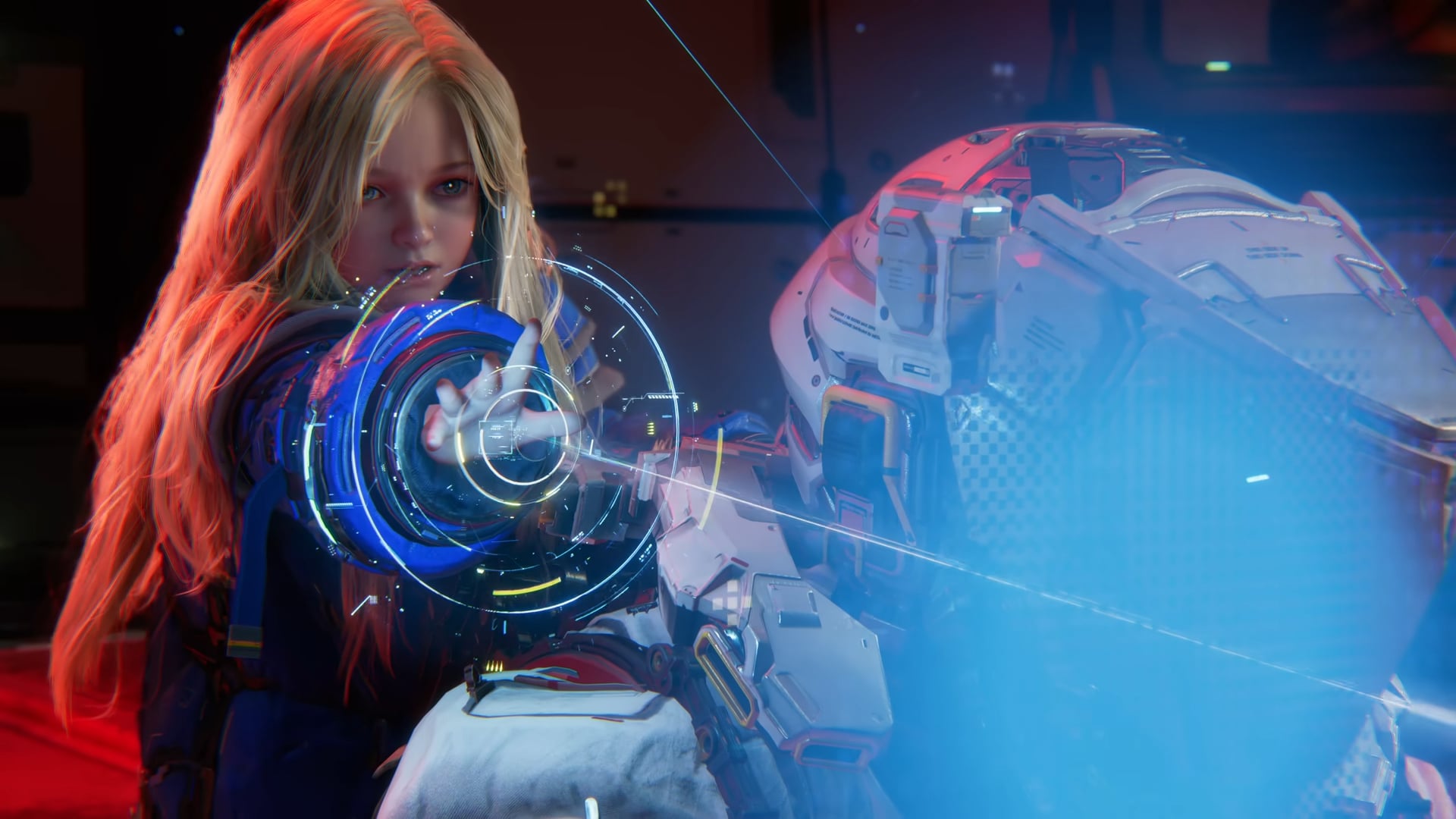
Pragmata does one thing exceptionally well and then riffs on it for a brisk 10 to 12 hours. Hugh shoots, Diana hacks, and you have to juggle both of these systems in real time as a horde of slow-moving but powerful robots saunter in your direction. Hugh’s arsenal is varied and gimmicky enough to keep his side of the game from feeling like it’s merely about pointing at the weak points Diana opens up. He’s got a standard pistol, an assault rifle, and a shotgun, but there are also tricky weapons that allow you to manipulate the battlefield just as Diana does when she pries into a robot’s mainframe. My go-to strategy when I found myself overwhelmed was to fire a decoy that would trick enemies into attacking a copy of Hugh while using this distraction to have Diana burst through firewalls and leave enemies open to damage. Simply pointing and shooting isn’t viable because Hugh’s guns barely scratch robots’ armor, so you have to use all the tools you have at your disposal to effectively fight even the lowest-level machine.
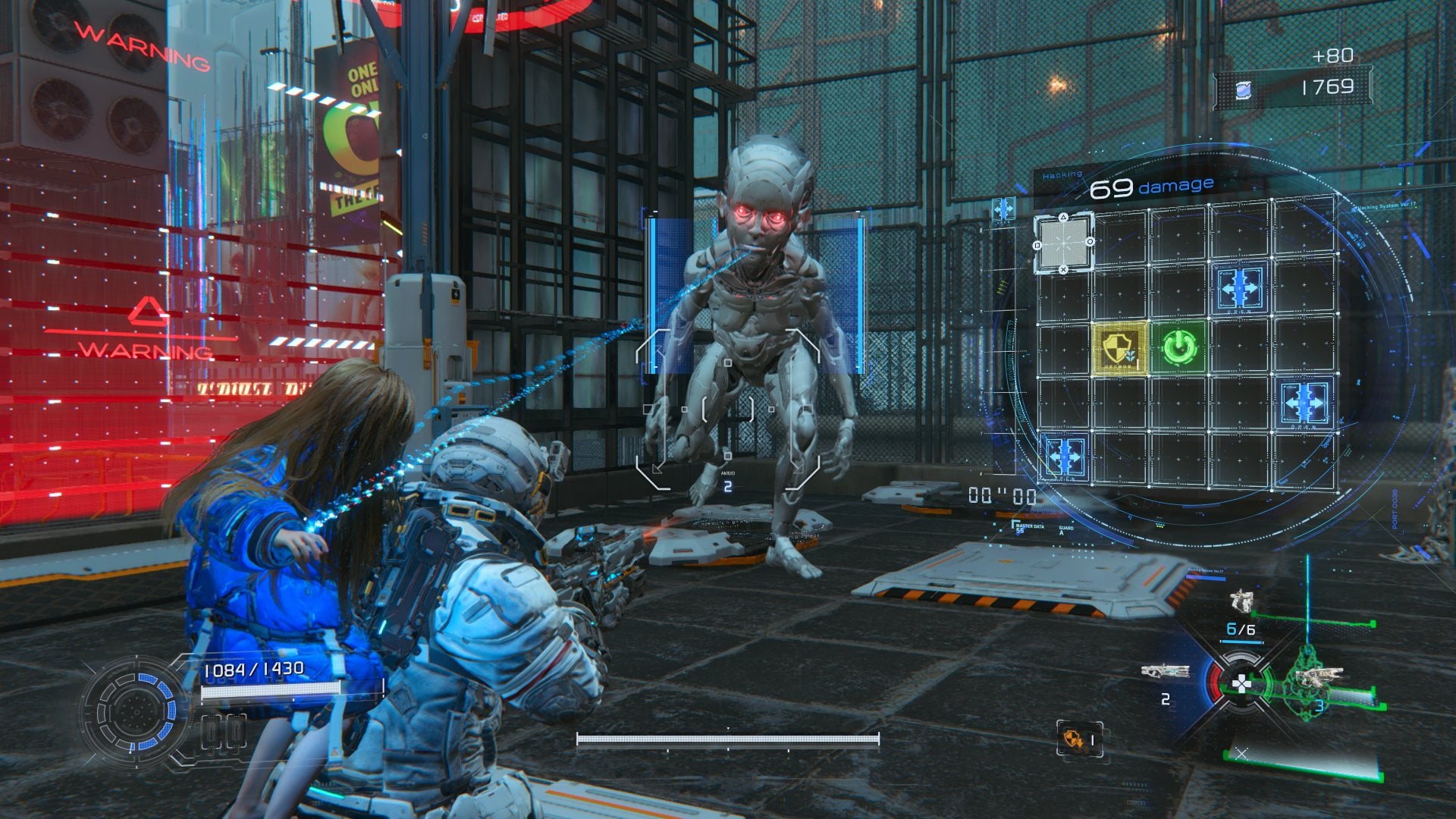
Diana’s hacks are much less straightforward than Hugh’s gunplay. As you aim at an enemy, a grid will appear next to your line of sight that you must navigate through using the controller’s face buttons. Within these mazes you’ll find hazards that can disrupt your hack, powerups that will increase your effectiveness, and obstacles that will get in your way and require you to turn around and try a different route. All of this happens in real time as Hugh shoots, dodges, and flies around a battlefield, and it all makes for a constant test of your hand-eye coordination. Hugh can help streamline the puzzles by firing weapons that will break through enemy defenses, and if you equip Diana with different hacking abilities, she can easily give Hugh an opening to take out foes in one shot. Both characters are key to moving forward, and neglecting one’s upgrade path and prioritizing the other’s isn’t going to cut it.
If you’re coming to Pragmata in the hopes of finding a straightforward shooter, you’re out of luck. Its puzzles aren’t complex, but the way you have to manage all these systems at once brings it to a level of reasonable challenge that’s rewarding to overcome. Pragmata has so many options and upgrades for both Hugh and Diana’s kits that you can handle higher-level enemies in a myriad of ways, but you still can’t excel with one and not the other.
I prioritized giving Diana heat-building hacks that would cause robots to overheat more quickly, opening them up for a high-powered finishing move from Hugh. My upgrades to Hugh’s jetboots and armor gave the otherwise heavy soldier some agility and survivability, which meant that even as I got overwhelmed by a group of enemies I was able to slip and slide my way to safety and give Diana enough distance to hack. Pragmata’s healing items are few and far between, and there were several fights in which I only managed to get out alive by the skin of my teeth, but as I fell into a rhythm of synergized hacks, movement, and gunfire, each win felt satisfying, and like it came from an intimate understanding of both characters’ strengths. Pragmata is slow to start as it introduces you to its multitasking systems, but I reached a flow state by the end, mastering the movement and machine sabotage that once took me a few seconds to adjust to each time prompts popped up on the screen.
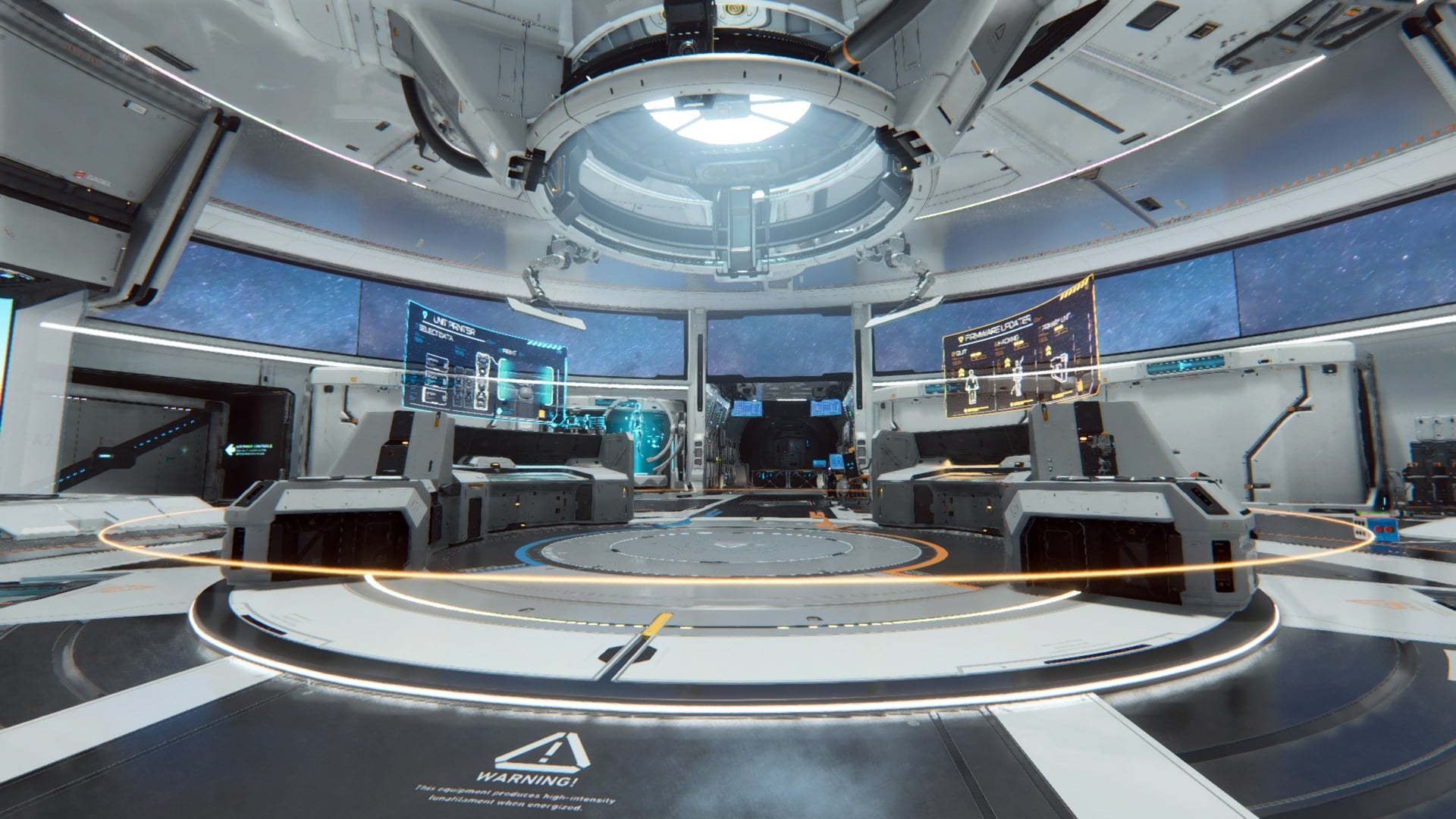
Pragmata weaves its mechanical progression into Hugh and Diana’s relationship. The game’s healing resources are so scarce that you’re encouraged to head back to your base of operations constantly to regroup. Here you change and upgrade your loadouts, gradually unlock new features, and see the pair grow closer. I found holographic recreations of toys and trinkets from Earth that Diana could play with in the shelter, and so she yapped about all the things she couldn’t wait to see on the planet as I was in the middle of powering up our firepower and 3D-printing new guns to take with me as we fought our way home. Pragmata never treats Hugh and Diana’s bond as an afterthought or as something separate from all the pointing and shooting; it’s as fundamental to what makes the game work as its clever marriage of genres.
Pragmata
-
BACK-OF-THE-BOX-QUOTE:
“A dad game for dads who actually like their children.”
-
DEVELOPER:
Capcom
-
TYPE OF GAME:
Sci-fi shooter with real-time puzzle elements.
-
LIKED:
Pretty great mix of genres, Hugh and Diana are a delightful duo.
-
DISLIKED:
Can be a bit saccharine if you’re not into media that wears its heart on its sleeve.
-
PLATFORM:
PC, PS5 (played on), Switch 2, Xbox Series X/S.
-
RELEASE DATE:
April 17, 2026
-
PLAYED:
~11 hours to credits, still going back and searching for collectibles I missed.
Perhaps it’s years of conditioning from games like The Last of Us that’s made me think video games can only ever treat parenthood as a difficult and thorny obstacle to grapple with on the way to true understanding, but what stood out to me most about Pragmata is that both of its leads just seem happy to be here, and with each other. There’s no dramatic warm-up to the two joining together as a cohesive unit. You have a kid who needs some guidance and a man who is more than happy to give her a high-five and a piggyback ride along the way. Pragmata is short, but it’s also sweet. Plenty of games will tell you that parenthood is hard and requires you to self-actualize in ways you never have before, but Pragmata is for those who have already done that work. Pragmata feels like an older game, but maybe it’s also a sign that in the years since the games it was influenced by first came out, the way that games treat parenthood has changed for the better.